- HR:+91-879-9184-787
- Sales:+91-908-163-7774


In the healthcare sector, we are experiencing a paradigm shift with some of the groundbreaking innovations, such as AI in medical device technologies. AI in medical device systems is changing the way care is delivered and experienced, promoting better diagnostic accuracy and simplifying the workflow among clinicians.
Regulatory data show that the U.S. Food and Drug Administration (FDA) has approved more than 1,240 AI-enabled medical devices as of 2025, underscoring the rapid growth of AI in healthcare.
As the use of AI medical and AI in medicine increases, hospitals are getting smarter and more patient-centric.
It is so important in the modern healthcare environment, and before we can dive into actual examples and applications of AI in medical device technology, we should first understand why it is so essential.
Artificial intelligence is no longer what we watch in films or in the future. It is already assisting doctors, nurses, and hospitals to make improved decisions daily. In the case of AI in medical device technology, the machines have the capability of analysing medical data, images, and reports, and identifying the patterns that sometimes go undetected even by experienced doctors.
That is where such related areas as AI in healthcare, AI in medicine, and AI in medical come into play. The combination of the two improves patient diagnosis, treatment, and monitoring.
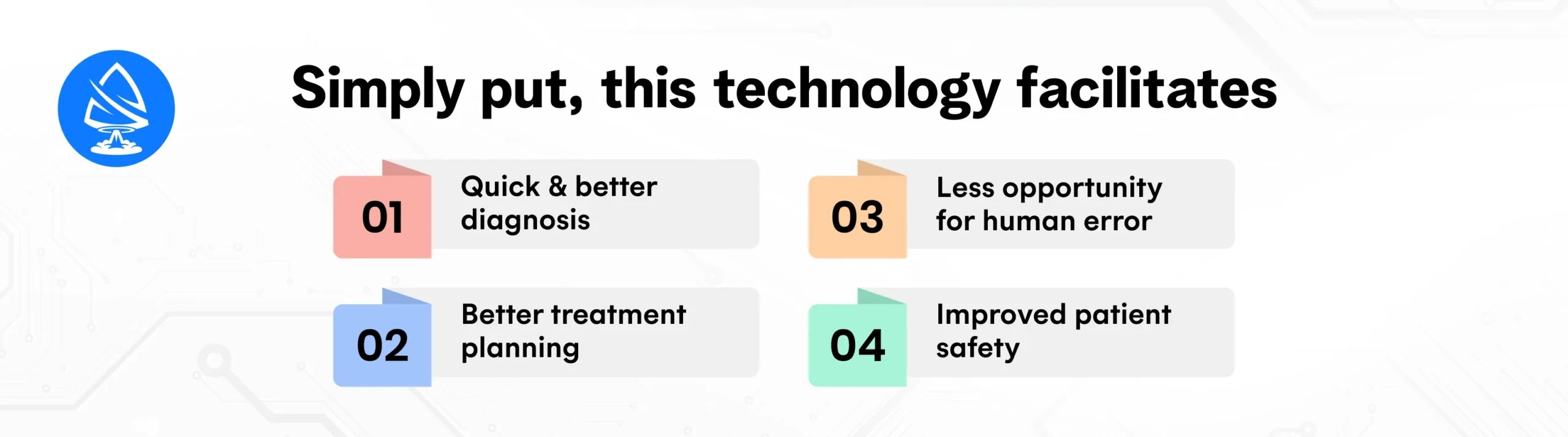
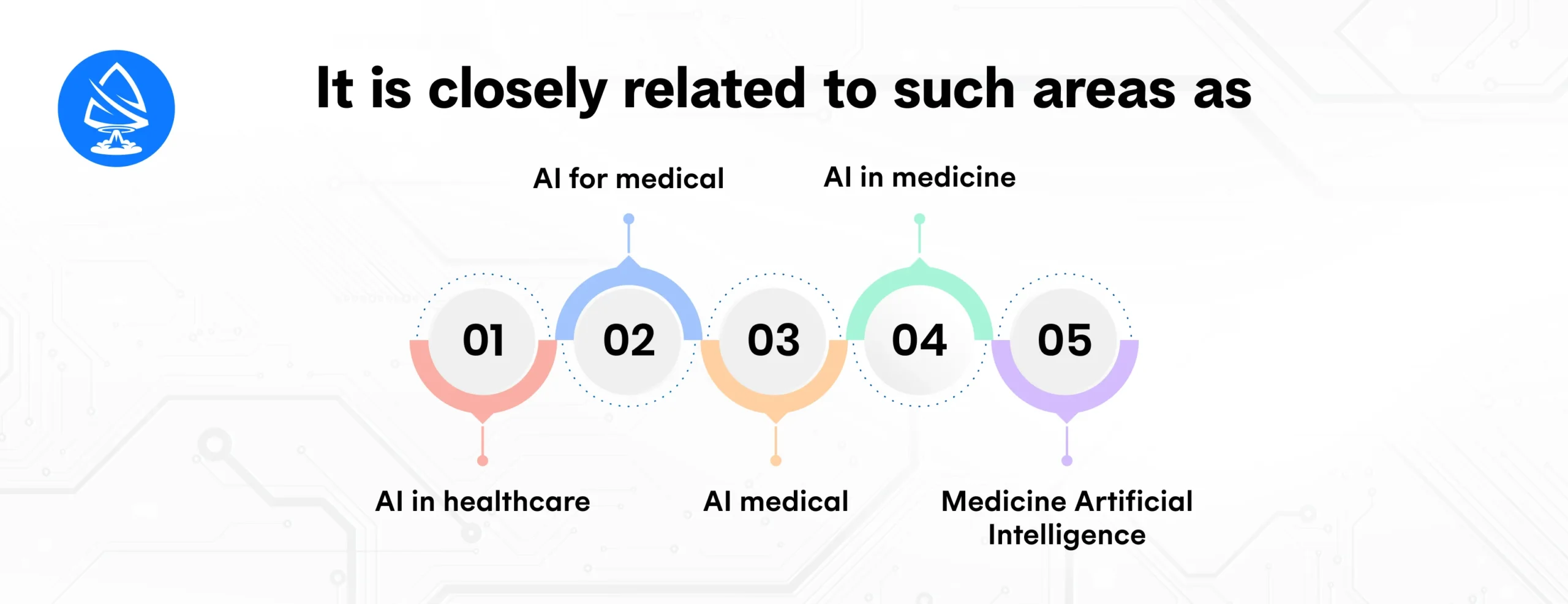
Due to this, AI in medical device technology is now seeing a real impact in various departments, such as radiology, emergency care, general checks, and long-term treatment.
This technology is used like a smart assistant, not to replace doctors, but to enable them to provide you with improved and trusted care.
Medical Device AI: The AI in medical device technology can be defined as hardware or software that is combined with machine learning systems and artificial intelligence systems to aid health professionals in diagnosis, treatment, monitoring, or workflow optimization.
These intelligent tools do not just automate; they learn, optimize, and evolve with each use.
The most used implementations are:
| Application Domain | AI Working Procedure |
| Imaging diagnostics | Faster and more precise detection of a tumor or fracture |
| Vital tracking estimate | Estimate patient risk through trends |
| Workflow | Automate recurring activities such as scheduling |
| Predictive Analytics | Anticipate patient outcome or illness progression |
| Individual Treatment | Individualize patient treatment |
With the application of AI in medical device technology, clinicians will be able to make faster decisions, minimize human error, and offer care on a personalized level on a large scale.
You may also want to know AI Design Tools
The use of AI in medical device technology has one of the largest advantages in terms of enhancing medical diagnosis. The doctors do not need to make use of the manual. analysis only today. The use of AI in the medical field and AI-based medical tools can enable machines to peruse through medical reports, scans, and patient information at an increased rate and with greater accuracy.
These intelligent systems search for patterns and warning signals that might be hard to detect by the human eye. Patients are therefore given more reliable and faster results, which results in early treatment and improved recovery.
Put simply, the role of the so-called medical device is to assist doctors in seeing better and making wiser choices using AI.
One of the first fields in which AI in medical device technology demonstrated strong performance is medical imaging.
With the application of AI in the healthcare industry, the computer is able to scan through X-rays, MRIs, and CT scans to identify issues such as tumors, fractures, or infections. Such tools operate on AI medical and medicine artificial intelligence and are capable of scanning through thousands of images in a few minutes.
This comes in handy, particularly during emergencies when time matters so much.
In the present world, various hospitals incorporate the use of AI in their medical systems to show some areas of risk in a report before they are reviewed by doctors. This saves time and eliminates errors.
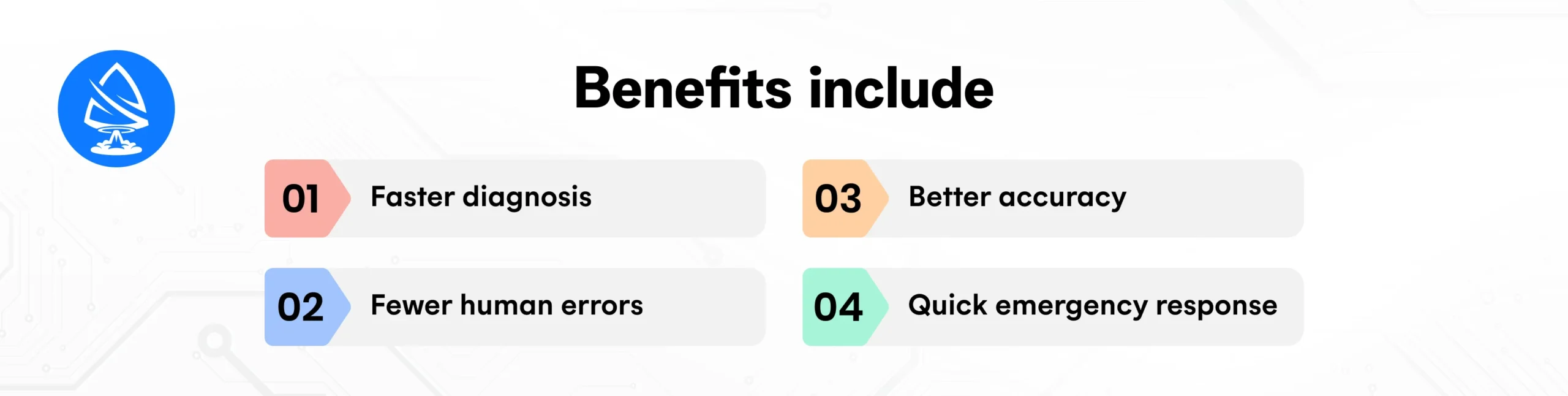
Due to the use of AI in medicine, patients no longer need to wait before scan results are received.
Every patient is different. They have a particular body, lifestyle, medical history, and habits. This is why AI in medical treatment assumes this crucial role.
With the aid of AI in medicine, computers research a great deal of information, such as:
By using this knowledge, medicine AI systems make treatment options that are unique to each patient.
Doctors can now offer personalized care with the assistance of AI in healthcare, as opposed to utilizing the same medicine on everyone.
This leads to:
Simply put, medical device AI personalizes the healthcare system and makes it more efficient.
It is believed by many that AI will substitute doctors. The fact is, though, a medical device is not meant to be the replacement of the doctor, but rather it is intended to help aid the physician.
Medical professionals can have smart assistants to assist them with:
These tools minimize paperwork and repetitive work. Consequently, physicians can devote more time to communicating with the patients and learn about their issues.
In the case of the proper use of artificial intelligence for doctors, several benefits come:
Through the practice of healthcare, doctors are more assisted and not overloaded since they use the application of artificial intelligence in healthcare, and the healthcare system becomes stronger and more humanized.
Imagine the following:
Sarah is a 45-year-old female patient who presents to the primary care clinic due to having constant headaches. An AI in a medical device application has the clinician inputting her symptoms, history, imaging, and vitals, which are instantly processed to offer a diagnosis. The AI provides a list of potential causes, such as a rare yet curable neurological problem.
Sarah is able to be given the appropriate tests and treatment within days, and not months, thanks to early AI-assisted detection.
It is not a science fiction game, but it is becoming a reality.
Efficiency is one of the least recognized advantages of using AI in medical device technology. Take administrative work: booking appointments, reminders, billing, insurance checks, and all activities that require time.
Using healthcare tools with the assistance of AI:
This efficiency breakthrough is transposed into the improved experience of patients and improved workplaces.
Artificial intelligence is driven by big data. The better the predictions, the more data.
With electronic health records (EHR) and data on wearable sensors, the medical systems based on AI are embracing patterns that a human brain would have never recognized.
The following is where artificial intelligence in medicine comes in:
AI is not only used in diagnostics but also in various touchpoints of contemporary medicine.
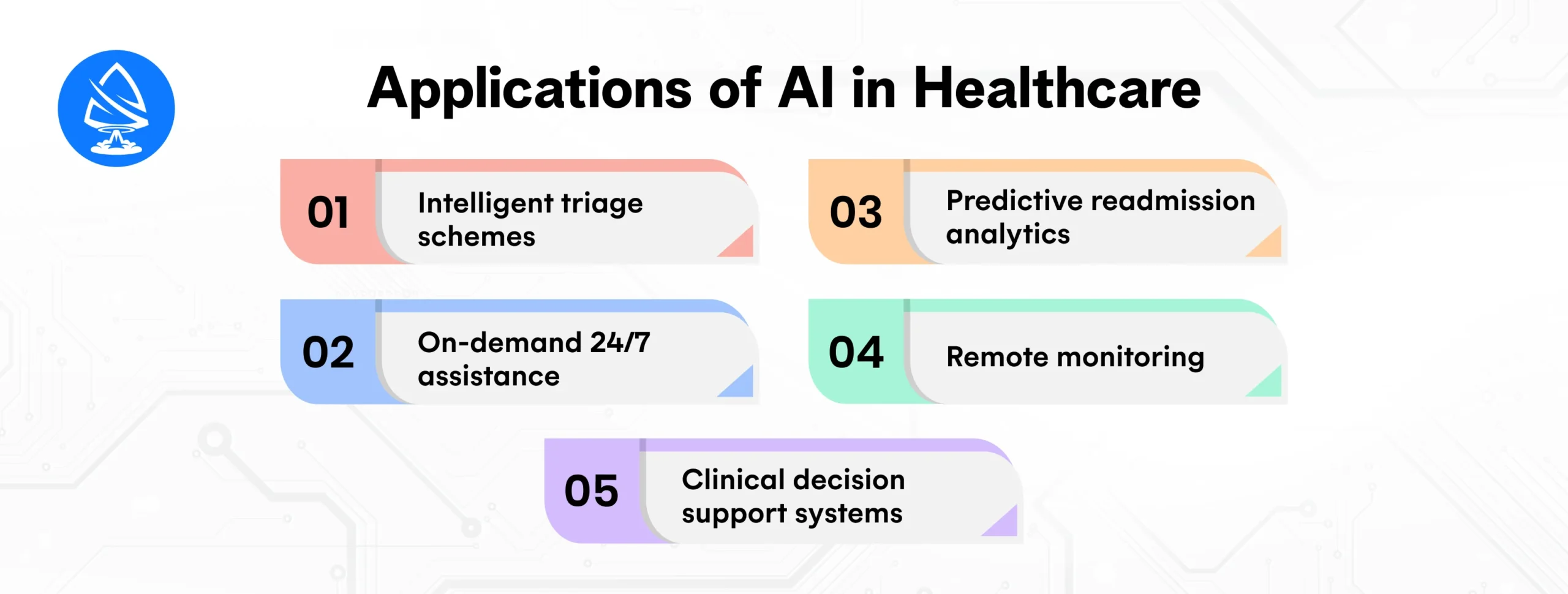
Some of the popular applications of AI in healthcare are:
All of them are some kind of specialization of AI in medical device logic specific to certain clinical results.
Trust is a normal issue with so much data involved. The field is addressing it in the following way:
These precautions make sure that the field of medicine does not rely on the black box of AI as an ally in care.
Smart wearables, such as smartwatches and continuous glucose monitors, are included in AI for healthcare.
These devices capture real-time information and input it into the medical device platforms, which sense anomalies at an early stage.
This form of real-time intelligence would enable clinicians to be able to intervene prior to a health incident turning acute.
The issue of cost still exists as much as the clinical value of AI medical is realized.
Hospitals’ and clinics’ ROI entails:
The current AI systems are cheaper than ever before due to the scalable software systems and cloud platforms
Such tools as an AI cost calculator are helpful in estimating the cost of implementation and operations that may be incurred by the decision-makers before they invest.
AI in medical device technology is transforming healthcare by turning it from an aspect of responsive therapy to proactive and preventive treatment. Doctors and patients can now act at an early age with the assistance of smart systems rather than after the illness has manifested itself.
Suppose in the future you have a wearable device from an AI application developer that warns you of a risk to your health, way before you even start showing any symptoms. This will provide sufficient time to visit a doctor and begin preventive care.
This future is not far away. Medicine is becoming even smarter, faster, and predictive with the help of artificial intelligence, as the quality of data is enhanced and algorithms are improved in the field of AI in healthcare to assist people in living healthy and long lives.
In case you are enthusiastic about this area, you can think of such professional paths as:
Health technology software engineer
In order to develop meaningful and trustworthy healthcare solutions, companies tend to invest in AI application development services that specialize in developing intelligent, secure, and user-friendly medical AI solutions. Such services assist in converting innovative concepts into viable tools to enhance the care of patients and clinical efficiency.
The increasing realization of using AI in medical device technology to diagnose early signs of disease that cannot be detected through standard diagnosis underscores the life-saving capacity of intelligent systems that are designed with precision and care.
Millions of patients are affected by delayed diagnosis. The solutions created by an AI development company can be useful to make sure that AI medical tools assist doctors with the right insights and help them analyze data faster and make better decisions. This innovation empowers patient outcomes, family health, and health care in general.
AI in medical device solutions should be approved by stringent approval procedures and patient data protection laws in order to guarantee patient safety and data security. The legacy systems continue to be the norm in many hospitals, which complicates the integration of AI in healthcare and AI in medical platforms.
The adoption is also impacted by concerns of algorithm bias, quality of data, and lack of transparency. Such initiatives enhance the use of AI in the healthcare industry and facilitate trustworthy artificial intelligence for physicians in everyday healthcare.
The hospitals that adopt AI in medical device platforms are undergoing quicker diagnosis, higher accuracy, and better patient outcomes. These systems assist physicians with smart ideas fueled by AI for medical and medicine AI technologies.
AI medical tools aid in stroke, tumor, and internal bleeding detection at their early phases in emergency care and medical imaging. Current research indicates that healthcare professionals who apply AI in medicine and AI for healthcare solutions report much faster results and have a smaller workload to complete.
These advances indicate that the use of AI in medical device technology is becoming the key component of daily medical practice.
You may also want to know about AI in Fitness
AI in medical device technology is disrupting the conventional healthcare standards by bringing advanced diagnosis, screening, and monitoring services to regions other than the largest hospitals. Such innovations that operate on AI in healthcare are assisting patients to access quality, prompt, and accurate care, irrespective of the location.
To sum up, the future of modern healthcare is AI in medical device technology:
The modern healthcare change is based on these advantages
The development of AI in medical device technology is not merely a technological improvement but a wave of making healthcare more accessible, more accurate, and more patient-focused all over the United States and the world.
We provide healthcare organizations at Artoon Solutions with the ability to deliver new AI solutions that bring about quantifiable results in health. Between problems in healthcare and AI-driven innovation, we bridge the gap between strategy and implementation.
Interested in the investment? Our AI cost calculator helps you estimate your funds for AI-driven medical initiatives.
1. What is AI in medical device technology primarily utilized for nowadays?
Its application is in the support of diagnosis, analysis of images, and constant monitoring of a patient.
2. What is the benefit of the use of AI in medical device technology in the case of emergency care?
It aids in the identification of strokes and life-threatening conditions quickly with the aid of AI in healthcare devices.
3. Does AI in medical device technology follow regulations?
Yes, the majority of systems have high standards of medical safety and compliance standards.
4. Does AI in medical device systems enhance the accuracy of radiology?
Yes, it boosts image analysis and accelerates reporting using AI medical systems.
5. Do physicians have trust in AI in medical device recommendations?
Numerous platforms apply transparent artificial intelligence for doctors in making clinical decisions.
6. Does AI in medical device technology aid chronic disease treatment?
Yes, there are devices that utilize AI in medicine that track heart health, diabetes, and others.
7. What is the role of AI in medical device support for telehealth medical services?
It also allows the process of remote diagnosis and home monitoring through AI for healthcare tools.
8. Does AI in medical device technology minimize medical errors?
Yes, it enhances medical artificial intelligence and real-time analysis accuracy.

Artoon Solutions
Artoon Solutions is a technology company that specializes in providing a wide range of IT services, including web and mobile app development, game development, and web application development. They offer custom software solutions to clients across various industries and are known for their expertise in technologies such as React.js, Angular, Node.js, and others. The company focuses on delivering high-quality, innovative solutions tailored to meet the specific needs of their clients.
 For business inquiries only