- HR:+91-879-9184-787
- Sales:+91-908-163-7774


The era of technology has been dynamic, and AI programming languages are the future pillars of innovation. AI programming language is now being used in smart apps and automated systems, shaping how developers write, test, and deploy software. With the progress of AI programming languages, businesses and programmers are now resorting to AI programming languages to develop solutions that are faster, smarter, and more scalable.
As a novice or an expert coder, the knowledge of AI programming languages will make you stand on the front line in the competitive technology industry. This blog discusses the value of AI programming languages, the most effective tools, examples, trends, and the relationship that exists between the modern AI coding practices and the old versions.
AI Programming Languages nowadays are not necessarily about writing code; they are about facilitating intelligent systems. As AI-driven technologies increase, automation, machine learning, and generative models are becoming more and more popular:
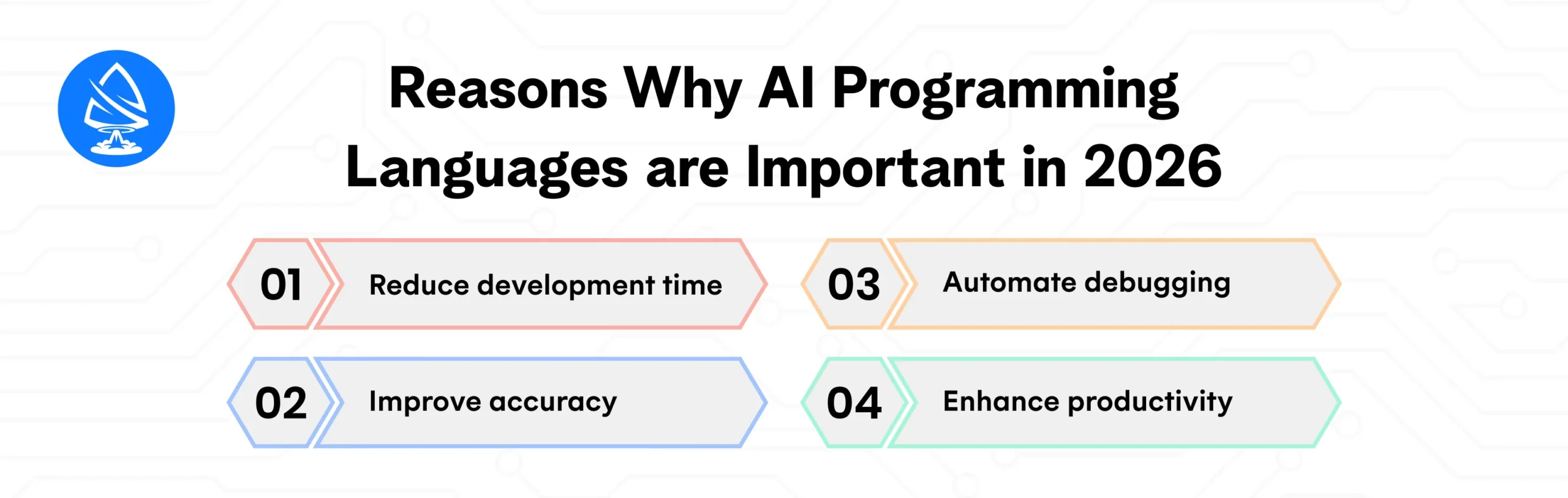
As a matter of fact, AI programming languages are defining the processes of how AI programming and coding AI solutions operate. In a case when you implement the AI programming languages, you will have access to wiser workflows and improved analytics.
In simple terms, AI programming languages enable AI developers to develop the next generation of software with minimal work.
AI programming languages have developed at a very fast pace during the past decade. Previously, the developers were predominantly using manual code. The AI programming languages nowadays are combined with AI coding assistants, as well as AI code assistant tools.
Now with platforms based on AI programming language, you can:
The modern AI coding tools are based on the AI programming language to process millions of code examples. This is faster and more dependable as far as development is concerned.
The following are just some of the widely used technologies in AI programming languages:
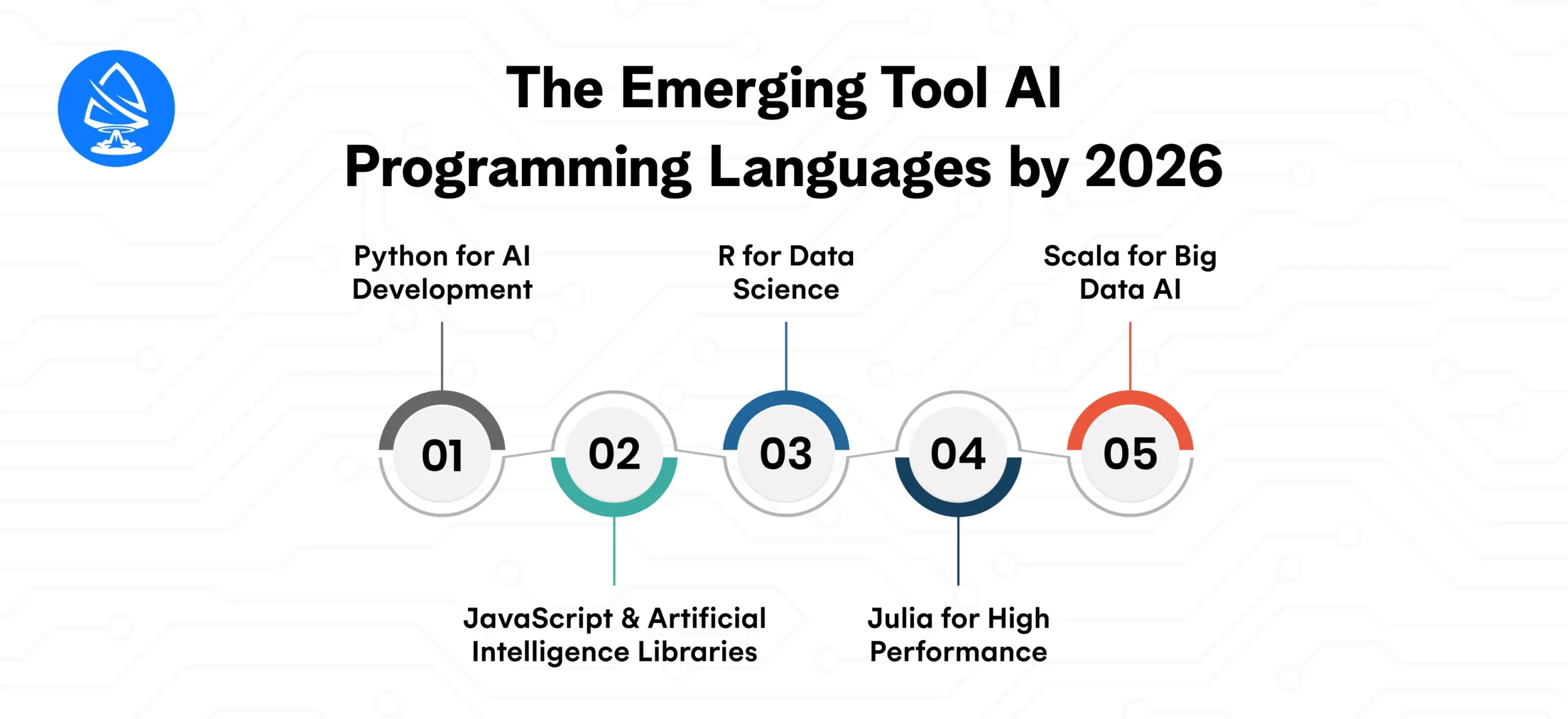
These all assist in the high-level AI language functions in real-life applications.
You may also want to know AI Fraud Detection
The developers of modern development are extensive users of AI code assistants and AI coding assistants driven by AI programming languages. These applications are virtual tutors.
Popular ones are the solutions based on OpenAI, Microsoft, and Google. These tools are capable of using AI programming languages and can:
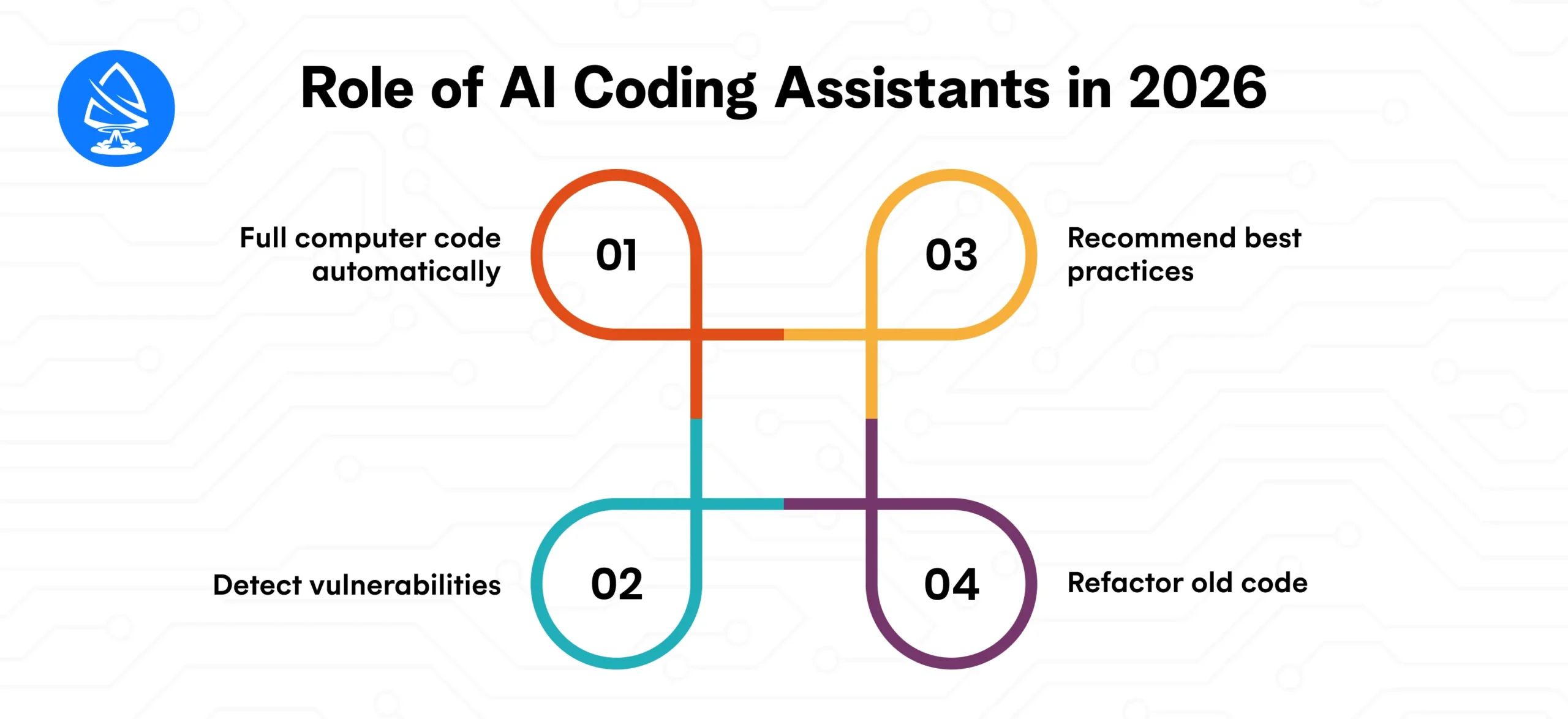
These tools can be referred to as the best AI for coding since they are fast and smart.
AI programming languages are utilized in AI code editors in 2026. These editors have a sense of context and purpose.
Features include:
With the help of AI programming languages, these editors are changing the interaction of developers with software.
Suppose that you are developing an e-commerce application.
Using AI Programming Languages, one can
To give an illustration, an AI code assistant can scan your shopping cart module and propose modifications in real-time. This is the actual strength of AI programming languages in everyday work.
AI Programming Languages: Business Advantages
The significant benefits of AI programming languages in companies are
A lot of companies today engage an AI development company to incorporate the use of AI programming languages into their systems.
AI programming languages can be used by an experienced AI application developer to develop smart healthcare, finance, and education applications.
Professional AI application development services see that the AI programming languages are utilized to the maximum by businesses.
The following are some trending tools for the AI programming language in terms of coding tools:
| Tool Type | Function |
| AI Code Assistants | Code-completion and breakpoints |
| AI Code Editors | Smart IDE features |
| Encoding AI Platforms | End-to-end development |
| Computerized Tests | Computerized Quality Assurance |
Although AI programming languages are efficient, they are also problematic:
The ethical and secure development of AI programming languages can be guaranteed by responsible use of AI programming languages.
The AI programming language of tomorrow (2026 and beyond) will be interested in the following:
The next generation of coding AI systems will be further based on an AI programming language to automate complicated tasks.
You may also want to know AI Milestones
Consider before choosing among the AI programming languages:
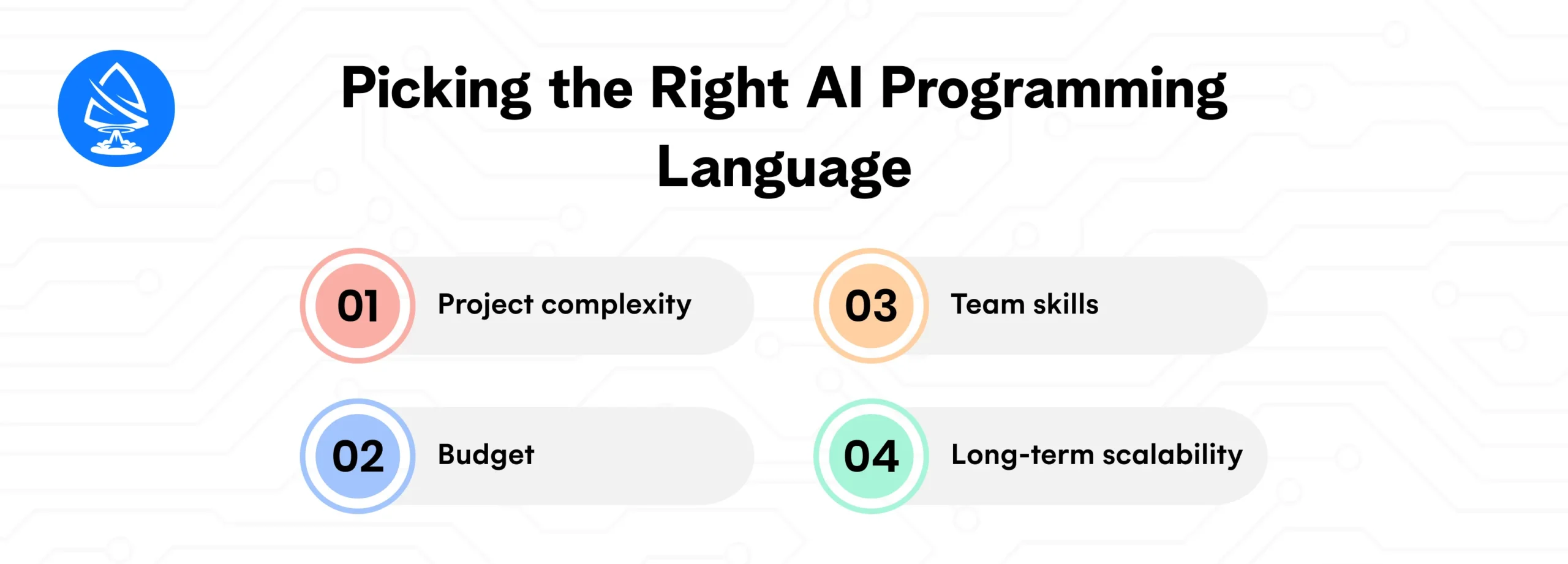
The development with the help of the right AI programming language will guarantee a better ROI and effortless development.
The communication of software construction, testing, and implementation will be determined by AI programming language in 2026. AI programming languages enable developers to create more quickly, whether it is through the use of AI coding assistants or through a smart editor.
With or without being a freelance or startup founder or even an enterprise leader, nowadays it is not a matter of choice but a necessity to master an AI programming language.
Having professional collaborators, such as Artoon Solutions, and a range of innovative tools, including the AI cost calculator, the companies get the opportunity to invest in the development of AI features and remain future-proof.
1. What is the best AI for coding currently used to code?
The tools driven by a sophisticated AI model are leading presently.
2. Can professionals trust AI coding assistants?
Yes, they do make it much faster and better.
3. Are AI programming languages easy to learn among students?
Of course, there are numerous platforms with easy learning directions.
4. Are there developers who are being replaced by AI code assistants?
No, they are in favor of developers, not of replacing them.
5. What is the best AI code editor in 2026?
The most popular are editors that have context-aware AI features.
6. Is AI programming expensive?
The prices are based on instruments, range, and infrastructure.
7. Are there productivity gains with the use of AI coding tools?
Yes, they are capable of increasing productivity by more than 40.
8. What is the future for AI programming languages?
They will empower self-directed and self-optimal systems.

Artoon Solutions
Artoon Solutions is a technology company that specializes in providing a wide range of IT services, including web and mobile app development, game development, and web application development. They offer custom software solutions to clients across various industries and are known for their expertise in technologies such as React.js, Angular, Node.js, and others. The company focuses on delivering high-quality, innovative solutions tailored to meet the specific needs of their clients.
 For business inquiries only