- HR:+91-879-9184-787
- Sales:+91-908-163-7774


Artificial intelligence has revolutionized the way organizations manage information, automate activities, and forecast the future. Nevertheless, most artificial intelligences remain heavily dependent on correlations rather than on causal relationships. This is where the causal AI comes in. Causal Artificial intelligence helps businesses make smarter and more dependable decisions by establishing the reason, as opposed to simply forecasting what could happen.
Causal AI has now become one of the most common subjects in advanced analytics and data science in the past several years. Firms of various industries are looking into the use of causal AI to extract more insights from complex data. Causal Artificial intelligence does not merely recognize patterns; it helps the organization understand what drives those outcomes and how various actions can affect them.
In this blog, the concept of causal AI, its technology, its application, and reasons as to why it is turning out to be one of the most important decision-making tools in organizations today have been explained.
Causal AI is a subfield of artificial intelligence that aims to comprehend the cause-and-effect relationships in data. Conventional approaches to machine learning tend to identify patterns or correlations among variables. Causal Artificial intelligence, on the other hand, tries to establish the direct causality between two events.
Indicatively, an average machine learning model would identify that the sale of ice creams and incidences of drowning are on the rise. But causal Artificial Intelligence finds the actual cause, which is hot weather, as opposed to reasoning that one situation causes another.
Causal AI can simulate real-world conditions and be able to answer questions such as the following:
This is an enormous potential of causal Artificial intelligence in strategic planning and policymaking.
You may also want to know AI Model Development
Algorithms of standard machine learning are useful in making predictions, but fail to give explanations that can be useful in decision-making by the decision-makers. There are lots of predictive models that are black boxes, and it is hard to explain the reasons why some results were obtained.
Causal AI has overcome this limitation by focusing on the mechanisms behind events. Causal Artificial intelligence does not follow statistical patterns but employs rationalized reasoning and causal models only.
The significance of this change is that healthcare, financial, marketing, and governmental decisions demand knowledge of causality rather than prediction.
Causality in machine learning is one of the main ideas underlying causal Artificial intelligence. This term is used when it comes to finding relationships between variables having one variable directly impacting another.
Farmer-Gelli algorithms are based on correlations. Nonetheless, machine learning causality assists in establishing whether something would alter the outcome in the event of an intervention.
For instance:
Through machine learning, data scientists can build models that can imitate the cause-and-effect relationship in the real world.
Causal machine learning is a combination of machine learning, causal inference, and statistical techniques. It is aimed at creating systems that are capable of learning causal relationships and not merely simple correlations.
The major advantages of causal machine learning are:
Companies based on causal machine learning can model what might happen, like changes in pricing, marketing, or even improvements in operations, and then apply them.
Causal model machine learning frameworks are at the center of causal AI. These models are the models of relationships between variables in terms of graphs or networks.
An average causal network in AI is made up of a network of nodes and edges. The networks are useful in enabling analysts to visualize and test cause-and-effect assumptions.
As an example, a retail company can establish a causal network in AI between:
Causal AI systems can determine the result of various strategic choices by examining these relationships.
The other new field is causal deep learning that combines the methods of deep learning with causal inference.
Older deep learning models can be very powerful and lack interpretability. Causal deep learning improves such models by introducing causal reasoning to neural networks.
Being aware of the contributors to artificial intelligence development, one can comprehend why causal AI is gaining momentum.
The creation of causal Artificial intelligence has been hastened by several reasons:
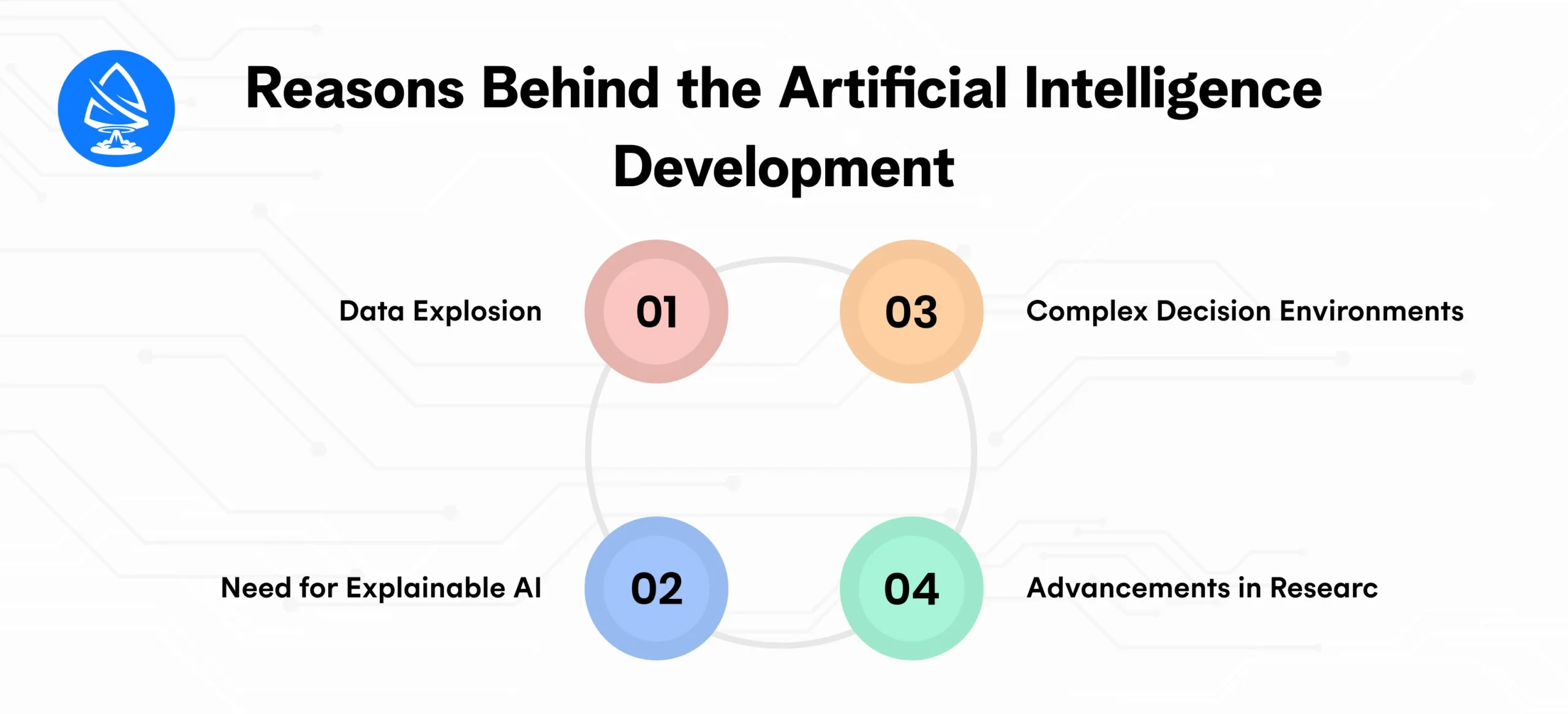
Such factors of artificial intelligence breakthroughs are propelling investments in causal technologies across the globe.
In order to deploy Causal AI, companies use specific causal software platforms. These tools help analysts to construct causal graphs, perform hypothesis testing, and simulate interventions.
Tasks supported by popular causality software solutions include
To improve the decision-making process, many companies combine the use of causal software with the already existing analytics tools.
Intellectual software platforms. Advanced causality software platforms are built to assist data scientists in automating causal discovery and scaling to deploy models.
The causal software and causality software ecosystem is constantly growing as demand increases.
The causal AI market is expanding at a fast rate because organizations understand the weakness of traditional analytics.
Some of the industries that invest a lot in causal Artificial Intelligence are the following:
In the next several years, the market for causal AI globally is likely to grow considerably through the rising need for explicable and reliable AI systems.
Firms that have entered the causal Artificial intelligence market are creating platforms that are a hybrid of machine learning, statistical modeling, and simulation technologies.
However, with increased usage of sophisticated analytics by more businesses, the causal Artificial Intelligence market will most probably become an important segment in the overall AI market.
Causal AI already finds application in industries to resolve complex issues.
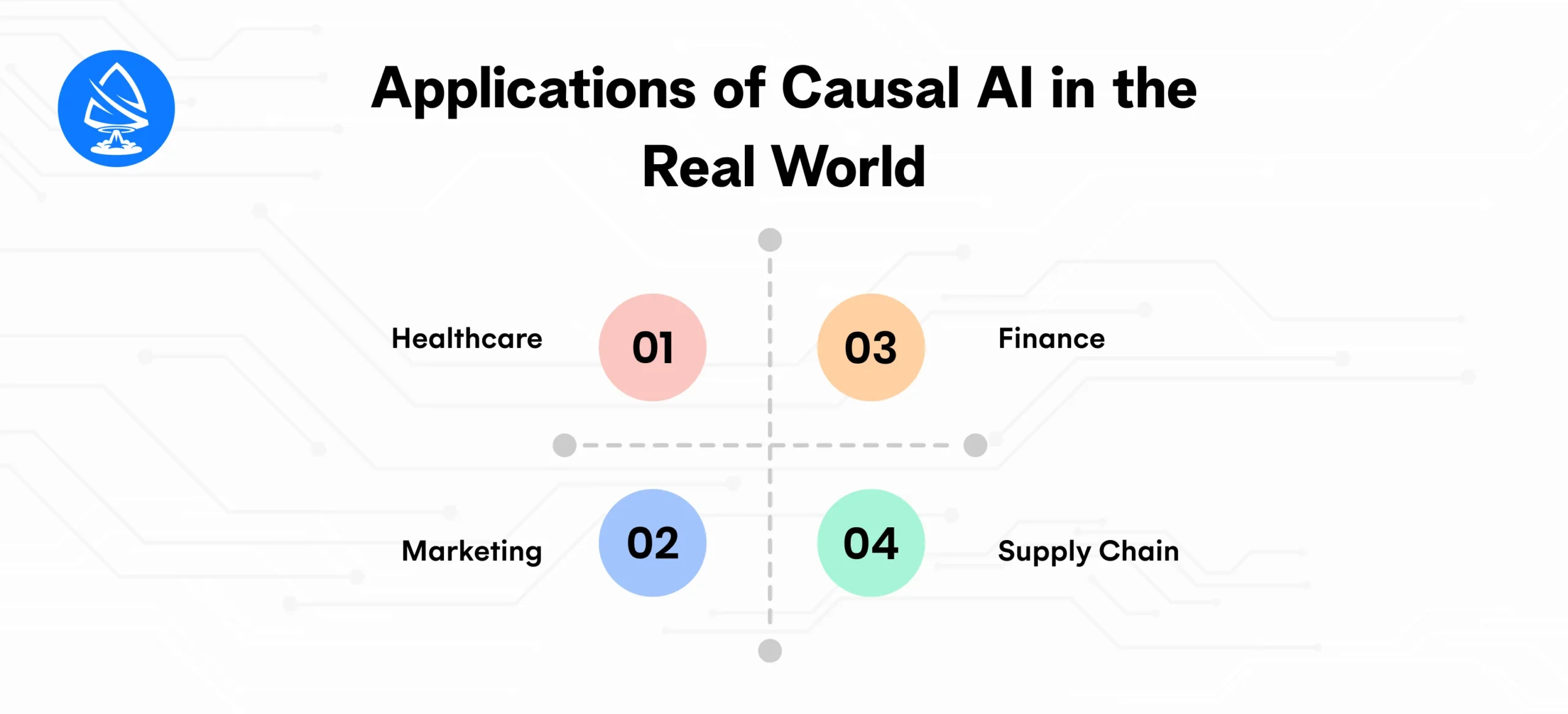
Causal AI allows physicians to determine the real causes of diseases and what treatments yield more advantages.
The application of causal AI to measure campaign impact and optimize customer engagement strategies is applied by marketers.
Use of Causal Artificial Intelligence in financial institutions to detect fraud and risk profile evaluation.
Causal AI helps businesses to comprehend disruptions and enhance operational efficiency.
The applications demonstrate that causal Artificial intelligence does not just make predictions but helps to make more appropriate decisions.
Causal Artificial intelligence is something that should be implemented in a patterned way.
Pay attention to those issues in which the knowledge of cause and effect matters.
Reliable datasets are essential for accurate causal analysis.
Apply causal models and machine learning frameworks in mapping relationships.
Test interventions and evaluate possible results.
Embark on causal AI in the process of operation.
Companies may engage with an AI development company to develop high-end causal analytics.
Equally, the collaboration with an AI application developer may assist businesses in incorporating causal models into their current systems.
The development of causal analytics is being progressively introduced to AI application development services offered by companies.
An implementation of causal Artificial intelligence has some strategic benefits.
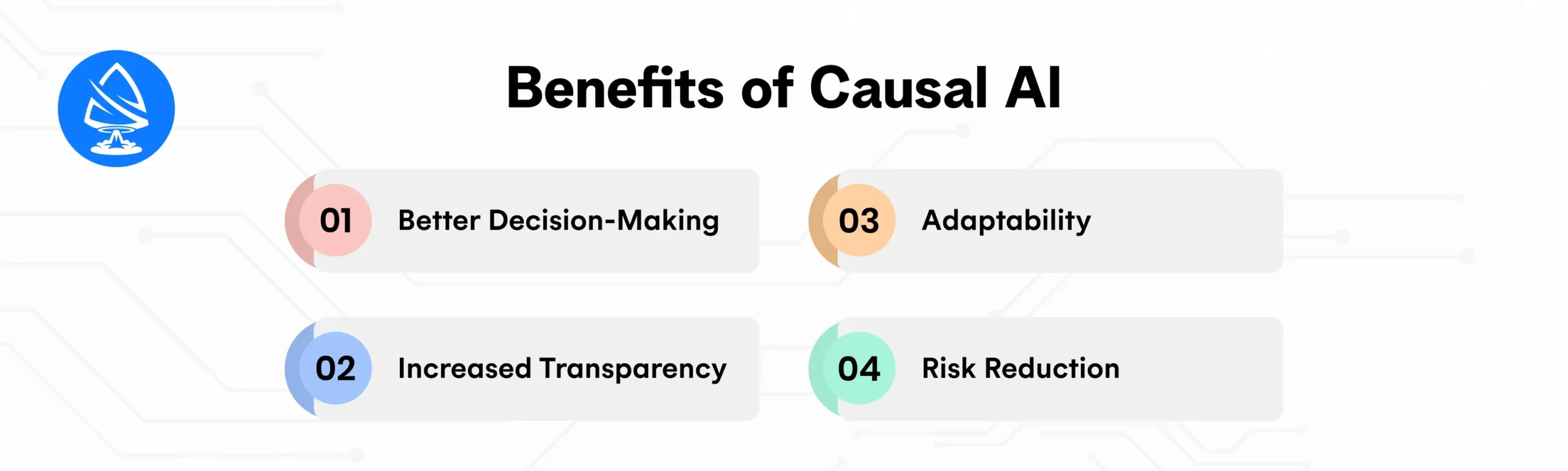
The mentioned advantages are the reasons why causal Artificial intelligence is becoming popular among data-driven companies.
You may also want to know the cost to develop an AI Tool
Causal Artificial intelligence also has its challenges in spite of its potential.
These barriers are, however, being surmounted by the advances of causal machine learning, causal deep learning, and causality software.
Causal AI has a bright future. Scholars are coming up with novel algorithms that integrate reinforcement learning, deep learning, and causal inference.
With the growing availability of tools, causal Artificial intelligence will probably be an expected part of enterprise analytics systems.
According to experts, causal AI will change the way organizations are pursuing decision intelligence. Businesses will not respond to trends but will be proactive in creating outcomes with causal foresight.
Causal Artificial Intelligence, however, is a great change from what was once predicted by artificial intelligence to being cognizant of the events.
The causal AI also leads companies to go beyond mere predictions to reveal true cause-and-effect relationships, thus making better and more confident decisions. With the development of technology, causal Artificial Intelligence will remain one of the important elements in the creation of transparent and intelligent AI systems.
Artoon Solutions assists companies in creating AI-based applications and sophisticated analytics solutions that meet the requirements of the present-day business. They have the ability to develop scalable and innovative AI technologies in organizations with their skilled AI development capabilities.
The AI Cost Calculator is a convenient tool to estimate the amount of money you need to develop your own AI solution.
1. What is causal AI and its functionality?
Causal Artificial intelligence uses cause-and-effect models on data to infer and predict the effects of changes on outcomes through causal models, simulations, and inferences.
2. What is the distinction between causal machine learning and traditional AI?
Causal machine learning is concerned with the determination of causal relationships, whereas traditional machine learning is largely concerned with the determination of correlation.
3. What is the significance of causality in machine learning?
Machine learning causality assists organizations in knowing why something happens and how intervening in it can improve outcomes.
4. In what industries is causal AI the most used?
The spheres of healthcare, finance, marketing, and manufacturing are major industries that use causal Artificial intelligence to make strategic decisions.
5. What are the machine learning frameworks of causal models?
Machine learning frameworks based on causal models are representations of the relationship between variables and assist in the analysis of cause-and-effect relationships.
6. What is causal deep learning?
Causal deep learning is a neural network and causal inference combination that causes explainable and robust artificial intelligence.
7. What is the trend of the causal AI market?
The causal Artificial Intelligence market is on the rise due to the increasing demand of organizations to have more transparent and reliable AI solutions.
8. What are the causal analysis tools?
The specialized causal software and causality software platforms are used to construct causal graphs and test hypotheses in businesses.

Artoon Solutions
Artoon Solutions is a technology company that specializes in providing a wide range of IT services, including web and mobile app development, game development, and web application development. They offer custom software solutions to clients across various industries and are known for their expertise in technologies such as React.js, Angular, Node.js, and others. The company focuses on delivering high-quality, innovative solutions tailored to meet the specific needs of their clients.
 For business inquiries only