- HR:+91-879-9184-787
- Sales:+91-908-163-7774


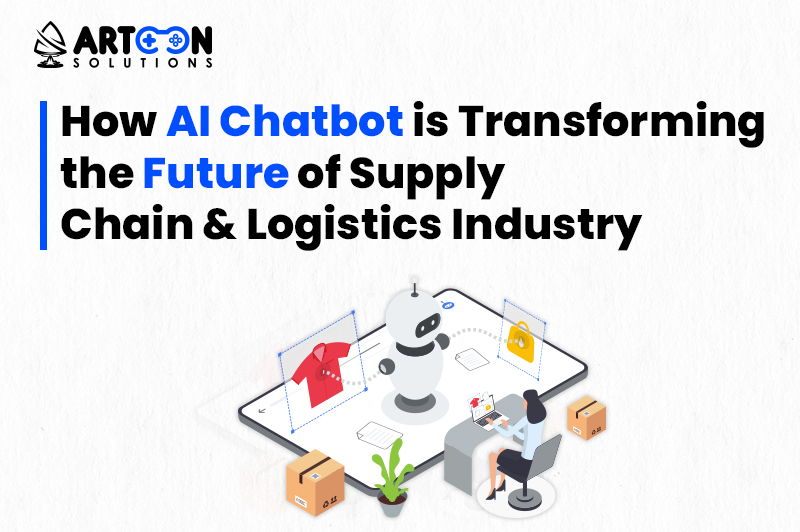
The supply chain and logistics industry is undergoing a revolutionary transformation in 2025, thanks to the advent of an AI chatbot. From automating routine tasks to enhancing communication and improving operational efficiency, AI chatbots have become a vital tool for businesses seeking to optimize their supply chain operations. By partnering with a custom AI development company and integrating artificial intelligence (AI) into their workflows, organizations are enhancing customer experience, streamlining logistics management, and fostering more responsive decision-making.
An AI chatbot is an artificial intelligence-powered tool designed to simulate human conversation in text or voice format. It utilizes machine learning (ML), natural language processing (NLP), and occasionally deep learning algorithms to comprehend, process, and respond to user queries or tasks. These chatbots can interact with users through various platforms, such as websites, mobile apps, messaging services, and voice assistants.
At its core, an AI chatbot is built to handle conversational tasks, providing users with real-time assistance, personalized recommendations, and automated support. Unlike traditional chatbots that follow a rigid, rule-based system, AI chatbots are dynamic and can learn and adapt over time. This makes them far more efficient and effective in providing accurate responses to diverse queries.
AI chatbots can range from simple systems that handle basic tasks to complex systems capable of providing nuanced and detailed responses. They have found significant applications in industries like customer service, sales, marketing, e-commerce, and technical support. With advancements in natural language understanding (NLU) and contextual awareness, AI chatbots are becoming increasingly sophisticated, allowing them to perform a broader range of tasks with minimal human involvement.
AI chatbots rely on various advanced technologies to interpret and generate human-like responses. These key technologies include:
NLP is a branch of AI that focuses on the interaction between computers and human language. For AI chatbots, NLP helps them understand user input, process it, and respond appropriately. It enables the chatbot to handle various language nuances, such as slang, idioms, and complex sentence structures. Key components of NLP include:
ML allows AI chatbots to learn from interactions and improve over time. Rather than relying solely on pre-programmed responses, chatbots using ML can adapt based on user behavior, preferences, and feedback. They can also improve their ability to recognize patterns, making them better at answering increasingly complex or specific questions.
For voice-based AI chatbots, speech recognition technology converts spoken language into text. This enables users to interact with chatbots using voice commands instead of text input, making the experience more natural and engaging. The system can then process the text and generate a suitable response.
Contextual understanding is crucial for AI chatbots to provide meaningful responses. Unlike basic chatbots, which only react to keywords or preset commands, advanced AI chatbots can remember previous interactions, maintain the flow of conversation, and understand the context of user queries. This makes their responses more relevant and helpful.
AI chatbots can be broadly categorized into two types based on their capabilities:
Rule-based chatbots are often simpler and follow predefined rules or scripts. They are usually programmed to respond to specific commands and queries based on keywords or structured input. While they can handle basic tasks like answering frequently asked questions (FAQs), they are not capable of handling more complex or dynamic interactions.
Examples of use: Basic customer support, appointment booking, or FAQ bots.
Intelligent AI chatbots, powered by machine learning and NLP, are much more advanced. These chatbots can understand and process complex queries, generate human-like responses, and learn from interactions to improve their performance. They are capable of carrying on dynamic conversations, performing multiple tasks, and even handling complex user requests such as e-commerce transactions or technical troubleshooting.
Examples of use: Sales assistants, customer service agents, virtual shopping assistants, and AI-powered help desks.
You may also want to know the Best AI for Coding in 2025
AI chatbots bring significant advantages to businesses and consumers alike. Here are some of the key benefits:
AI chatbots enable businesses to provide 24/7 customer support. Whether it’s answering questions, resolving issues, or offering product recommendations, chatbots can handle multiple inquiries simultaneously, reducing wait times and improving customer satisfaction.
By automating routine tasks such as order inquiries, ticketing systems, and general customer queries, businesses can significantly reduce their operational costs. AI chatbots handle a large volume of requests that would otherwise require a human workforce, making them a cost-effective solution for businesses.
Advanced AI chatbots can personalize the user experience based on previous interactions, user preferences, and demographics. This personalization helps businesses provide a more tailored customer journey, whether through product recommendations or personalized responses.
AI chatbots are capable of providing instant responses, eliminating the need for customers to wait in long queues. Whether responding to general inquiries or processing requests, chatbots offer real-time communication that enhances the overall user experience.
AI chatbots are scalable solutions that can handle a large volume of requests simultaneously, making them ideal for businesses experiencing rapid growth or high-demand periods. Chatbots can assist thousands of customers without compromising service quality.
AI chatbots have applications across several industries, enabling businesses to streamline processes, enhance user experiences, and increase efficiency. Here are some prominent use cases:
AI chatbots are frequently used in e-commerce to assist customers in browsing, ordering products, and managing post-purchase issues such as returns or tracking. They can act as virtual shopping assistants, recommend products based on customer preferences, and provide support for online transactions.
In healthcare, AI chatbots help streamline patient engagement, such as booking appointments, reminding patients of medications, or answering common health-related questions. They also assist healthcare providers by triaging patient symptoms and providing initial diagnoses based on patient input.3. Finance and Banking
AI chatbots are transforming the banking and finance industry by providing instant responses to customer inquiries about account balances, transaction history, or loan status. They can also offer personalized financial advice based on user data and spending patterns.
AI chatbots can manage large volumes of customer queries by answering questions related to product features, returns, warranties, and service inquiries. They also reduce the burden on human agents by automating routine inquiries, allowing agents to focus on more complex tasks.
You may also want to know Pgvector vs Pinecone
AI chatbots are transforming supply chain and logistics operations across industries. They automate processes, improve communication, reduce costs, and increase operational efficiency.
In the fast-paced world of supply chain management, where every second counts and communication is crucial, AI chatbots provide significant value by streamlining operations and enhancing customer experience. Let’s dive deeper into how AI chatbots are revolutionizing the supply chain and logistics industry.
Customer support is one of the most critical aspects of any logistics operation. From addressing delivery concerns and tracking inquiries to answering common shipping questions, the volume of customer interactions can overwhelm customer service teams. AI chatbots are ideal for handling these repetitive tasks by providing instant, 24/7 support.
The logistics industry relies on seamless communication between various stakeholders, including suppliers, warehouses, drivers, and customers. AI chatbots serve as a bridge, enhancing real-time communication and improving operational efficiency across the supply chain.
Efficient inventory management is a critical aspect of the supply chain. AI chatbots can automate key tasks in the inventory management process, including stock updates, order processing, and reordering inventory when necessary.
AI chatbots are capable of processing vast amounts of data to provide actionable insights that improve decision-making. By integrating AI chatbots with predictive analytics tools, businesses can gain real-time insights into trends, demand fluctuations, and supply chain risks.
Optimizing delivery routes is essential for reducing costs, improving delivery times, and enhancing overall supply chain efficiency. AI chatbots, integrated with route optimization algorithms, can automate the scheduling and planning of delivery routes, ensuring faster and more efficient transportation.
Personalized customer experiences are crucial for competitiveness in logistics and supply chain management. AI chatbots personalize interactions using customer data like preferences, purchases, and order history.
AI chatbots provide cost savings by automating manual processes and reducing the need for human intervention.
While AI chatbots offer numerous benefits in the supply chain and logistics industries, such as improving efficiency, automation, and customer service, their implementation is not without challenges. These challenges can affect both the technical integration and the user experience. Businesses need to address these hurdles carefully to ensure a successful deployment of AI chatbots.
A major challenge in supply chain chatbots is integration with existing legacy systems. Many logistics firms use older inventory, order, and shipment systems incompatible with modern AI tools.
AI chatbots excel at handling simple, repetitive queries, but they often struggle with complex, nuanced requests. In supply chains, customer inquiries range from simple tracking to complex disruptions needing specialized knowledge.
AI chatbots in logistics often handle sensitive information, such as customer data, payment details, and shipment information. Any breach or vulnerability can have serious consequences for businesses and their customers.
Some customers still prefer human support over AI chatbots, despite technological advancements. This concern increases in logistics when issues are complex, urgent, or require reassurance.
AI chatbots rely on machine learning and natural language processing algorithms, which require continuous training and refinement. To perform effectively, chatbots must be trained with large datasets and real-world interactions, which takes time and resources. Additionally, AI chatbots may require ongoing improvements to stay relevant and effective.
Global supply chains handle shipments, orders, and customer inquiries across multiple regions and languages. AI chatbots must support multilingual communication and regional nuances to operate effectively worldwide.
While AI chatbots can significantly improve efficiency, it’s important to strike a balance between automation and human interaction.
AI chatbots are vital in supply chains, automating tasks, improving customer support, and enabling data-driven decisions. From automating order tracking and inventory management to offering real-time updates and predictive analytics, AI chatbots often developed by an experienced AI application developer are revolutionizing the way logistics and supply chain operations are run.
As AI technology continues to evolve, businesses that implement AI chatbots will benefit from greater efficiency, reduced costs, and improved customer satisfaction. However, organizations must address challenges such as integration with legacy systems and ensuring data security.
1. What is an AI chatbot in supply chain management?
An AI chatbot in supply chains automates customer support, order tracking, and inventory management.
2. How can AI chatbots improve customer service in logistics?
AI chatbots provide 24/7 support, answer tracking queries, and deliver real-time order updates.
3. Are AI chatbots cost-effective for the supply chain industry?
Yes, AI chatbots reduce labor costs by automating tasks and improving supply chain efficiency.
4. Can AI chatbots help with real-time inventory management?
Yes, AI chatbots integrate with inventory systems to provide real-time stock updates and automate reordering.
5. What are the challenges of implementing AI chatbots in supply chain management?
Challenges include legacy system integration, data security, and effective chatbot handling across supply chain stages.
6. Can AI chatbots predict supply chain disruptions?
Yes, AI chatbots with predictive analytics can forecast supply chain disruptions like delays, shortages, and shipping issues.
7. How do AI chatbots handle customer inquiries in real-time?
AI chatbots use NLP to understand queries, automate shipment tracking, and provide instant delivery updates.
8. Are AI chatbots customizable for different supply chain needs?
Yes, AI chatbots can be customized for inventory management, order processing, and customer support across industries.

Artoon Solutions
Artoon Solutions is a technology company that specializes in providing a wide range of IT services, including web and mobile app development, game development, and web application development. They offer custom software solutions to clients across various industries and are known for their expertise in technologies such as React.js, Angular, Node.js, and others. The company focuses on delivering high-quality, innovative solutions tailored to meet the specific needs of their clients.
 For business inquiries only