- HR:+91-879-9184-787
- Sales:+91-908-163-7774


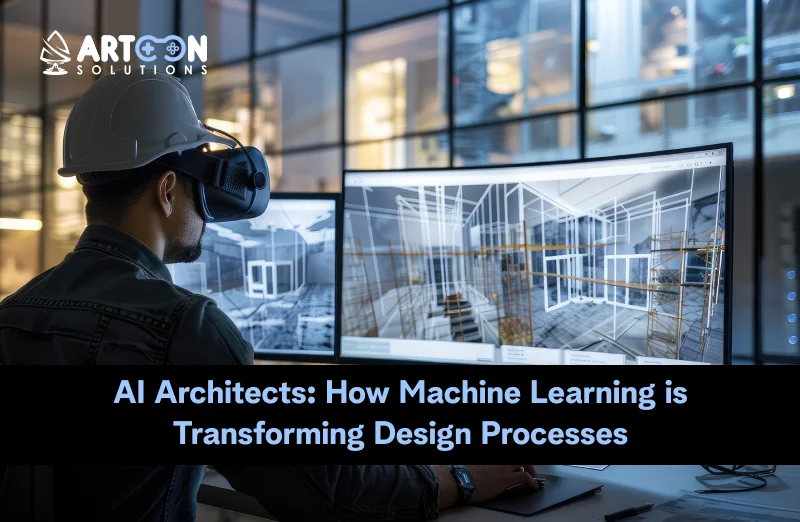
In an era where technology is rapidly reshaping the built environment, AI for Architecture is no longer a distant possibility; it’s becoming an essential tool for forward-thinking design firms, small business owners, and tech professionals across the USA. Imagine presenting potential clients with immersive, photorealistic walkthroughs of future buildings or interiors before a single brick is laid. With AI-driven modeling, generative design, and virtual environments, architects and interior designers can iterate faster, reduce costly changes onsite, and deliver a more compelling vision.
This blog explores how leveraging AI in architecture unlocks immersive structural designs that engage stakeholders, accelerate decision-making, and maintain cost controls. We’ll walk you through the core technologies, real-world use cases, implementation strategies, and future trends. Whether you’re a startup, a small architectural practice, or a technology team looking to partner, you’ll find practical insights plus internal linking suggestions to services like an AI development company in USA and AI app developers to help you bridge the gap from concept to immersive reality.
Traditional architectural workflows typically progress from sketches to 2D plans, then to 3D models, and finally to renderings. However, many clients struggle to visualize the leap from flat drawings to real-world experience. AI enables:
This approach bridges the gap between imagination and reality, letting clients walk through your proposals in a virtual space and provide feedback before construction starts.
AI can optimize repetitive tasks, catch potential design clashes, and validate structural feasibility early. Benefits include:
By integrating these automation layers, architectural firms reduce rework, avoid costly onsite corrections, and deliver higher-quality outcomes.
In a crowded architectural services space, offering AI-enhanced immersive design is a differentiator:
Overall, the use of AI becomes not just a tool but a core value proposition.
You may also want to know AI Workflow Automation

Generative design systems use algorithms to propose architectural configurations based on constraints. Features include:
Computer vision tools analyze images or site scans to generate models or contextual designs:
Immersive experiences depend on real-time rendering engines infused with AI capabilities:
Beyond visuals, AI can simulate structural loads, energy performance, and environmental impacts:
For homeowners, AI can speed up the home design process with immersive previews:
One agency using AI home design tools reduced design iterations by 40% while increasing client satisfaction thanks to immersive previews.
Large-scale commercial projects benefit from AI optimization of space, energy, and aesthetics:
These spaces rely heavily on ambiance and experiential appeal:
AI helps preserve heritage and propose new uses without harming structural or visual integrity:
Implementing AI for Architecture is not just about adopting new tools; it’s about transforming how your firm conceptualizes, designs, and delivers projects. Whether you’re a small architectural studio, a large firm, or a construction tech startup, the goal is to integrate AI strategically to enhance creativity, productivity, and client satisfaction while maintaining your firm’s artistic essence.
Below is a comprehensive step-by-step guide on how to practically embed AI in architecture workflows and deliver immersive structural designs.

Before diving into AI, start by assessing your firm’s existing workflow, tools, and resources.
Key Areas to Evaluate:
Tip: Conduct an internal workshop or audit to map out the “AI-readiness” of your operations before investing in tools or partnerships.
Jumping into AI without direction can lead to inefficiency. Establish clear, measurable objectives tied to your firm’s vision.
Popular AI Use Cases in Architecture:
Each of these applications can deliver substantial value, improving both efficiency and client engagement.
The success of implementing AI in architecture largely depends on your technology stack and integration strategy. Choose tools that align with your existing design software and business goals.
Recommended Tools and Technologies:
Example: If you’re building a residential project, AI can automatically analyze sunlight exposure, generate optimized window placements, and render immersive interiors for client approval in hours instead of weeks.
Integrating AI into your architecture firm often requires specialized technical knowledge beyond traditional design software. Instead of building everything in-house, consider collaborating with AI specialists.
Ideal Partnerships:
Partnering ensures your implementation is scalable, secure, and integrated smoothly with your existing ecosystem.
Before deploying AI firm-wide, test it on a smaller scale. A pilot helps identify gaps, measure ROI, and fine-tune processes.
Steps for an AI Pilot in Architecture:
Case Example: A small U.S.-based firm used AI-driven space optimization on a 10,000 sq. ft. office project and reduced planning time by 35%, improving client approval speed by 50%.
The human factor is crucial. Architects, designers, and engineers must understand how AI enhances, not replaces, their creativity.
Training Areas:
You can also conduct in-house learning sessions with guidance from an AI development company in USA to make the training architecture-specific.
Once your team is trained, establish a systematic workflow where AI complements each design stage.
Example Workflow:
AI integration doesn’t mean discarding your existing process; it means enhancing it with data-driven intelligence and automation.
AI thrives on data. The more project data you collect and refine, the more accurate and creative your models become.
Best Practices:
As you deploy AI in multiple projects, your proprietary data becomes a valuable competitive asset, fueling even more intelligent design outputs.
To justify AI investment, track measurable outcomes.
Metrics to Evaluate:
By monitoring these metrics, firms can calculate clear ROI and refine AI usage further.
After successful pilots, scale AI capabilities across departments and projects. Automate repetitive processes, connect data pipelines, and introduce AI-driven dashboards for insights.
Long-Term Vision:
Partnering with a reliable AI development company in USA ensures that your firm’s AI journey remains future-proof and continuously evolving.
You may also want to know AI and Big Data in Blockchain
While the benefits of AI for Architecture are undeniable, from faster design iterations to immersive client experiences, successful implementation comes with its own set of challenges. Adopting AI in Architecture requires more than just technology integration; it demands cultural, procedural, and ethical adaptation within your firm.
Below, we’ll explore the most common challenges architects face when adopting AI, along with actionable best practices to ensure a smooth, scalable, and sustainable transformation.

AI systems thrive on data project blueprints, 3D models, material libraries, and site analytics. However, this reliance introduces potential risks around data security and ownership.
Common Challenges:
Best Practices:
This approach ensures your innovative designs remain protected while maximizing the potential of AI-driven tools.
One of the biggest concerns in AI for Architects is the “black box” problem when AI generates outputs without clear reasoning. Architects may hesitate to trust AI suggestions without understanding why a particular layout or structure is recommended.
Best Practices:
This transparency fosters collaboration between AI and human creativity, not competition.
Architectural professionals often come from design or civil backgrounds rather than data science or computer engineering. The introduction of AI in Architecture may initially feel intimidating or outside traditional expertise.
Common Pain Points:
Best Practices:
Firms that focus on culture change alongside technology adoption experience far smoother transitions.
Just like human designers, AI can exhibit biases based on the data it’s trained on. For example, a generative model trained mostly on Western architectural styles might not adapt well to cultural or regional aesthetics.
Best Practices:
By curating balanced datasets and embedding human review, you prevent unintentional homogenization of design.
Deploying AI for one project is easy; scaling it across dozens of ongoing projects is harder. Without proper architecture, your AI system can become fragmented and inefficient.
Best Practices:
Partnering with an experienced AI development company in USA helps maintain system health, scalability, and data consistency across all projects.
AI brings enormous creative potential, but it also introduces ethical dilemmas. Who owns AI-generated art or structures? How sustainable are AI-driven building materials or suggestions?
Best Practices:
Perhaps the most important best practice: never let AI overshadow human imagination.
AI can predict, simulate, and optimize, but it cannot feel the emotion behind architectural expression. The ideal approach is synergy:
This human-AI hybrid model ensures efficiency without losing the soul of design.
Soon, clients may adjust room proportions or facades while in VR and see AI re-generate layouts instantly. This fusion of generative design + immersive feedback will blur the line between design and experience.
AI-designed structures might directly feed robotics and automation systems for on-site fabrication, prefabrication, or 3D printing coupled with drone-based inspections.
Instead of only design phase immersiveness, AI can overlay structural blueprints over ongoing construction sites so contractors visualize hidden plumbing or rebar before pouring concrete.
Buildings will learn and adjust themselves using embedded AI sensors. The architectural “design” becomes dynamic, evolving in real time.
AI for Architecture offers a paradigm shift, transforming traditional architectural workflows into immersive design experiences that entice clients, reduce risk, and optimize performance. From generative design systems to structural simulations and AR/VR integration, these tools empower firms to deliver photorealistic walkthroughs before breaking ground. While upfront investment in data, tooling, and expertise is needed, the long-term gains in efficiency, higher win rates, and cost control make it compelling.
If you’re ready to embrace this next frontier, don’t navigate the technical integration alone. Leverage expert teams, including an AI development company in USA, or hire seasoned AI app developers to build tailored, scalable solutions. Use our Cost Calculator to estimate your AI adoption costs based on project scale, data needs, and client deliverables. The future of immersive structural design awaits. Start your journey today.
1. What is AI for Architecture?
AI for Architecture refers to the use of artificial intelligence, such as generative design, computer vision, simulation, and immersive rendering, to augment, streamline, and transform architectural workflows.
2. How does AI improve interior design?
AI-driven interior design apps can generate layouts, suggest furniture, optimize lighting, and even enable immersive walkthroughs, reducing manual iterations.
3. Is AI for architects expensive to adopt?
Initial costs include model training, software integration, and staff upskilling. However, ROI often comes quickly through reduced errors, faster cycles, and competitive differentiation.
4. Can small firms use AI in architecture?
Yes, starting with a pilot project is a realistic pathway. Many AI tools now offer modular or API-based integration.
5. What’s the difference between architecture AI and AI building?
Architecture AI broadly refers to design and planning tools. An AI building often implies embedding AI within the physical building.
6. Are there free interior design AI tools available?
Several platforms offer basic free tiers or AI-based room planners, though immersive, production-grade systems may require investment or subscription.
7. How accurate are AI structural simulations?
Accuracy depends on the fidelity of training data, the simulation engine, and validation. Human review and calibration remain essential.
8. Will AI replace architects?
No, AI acts as a powerful assistant, accelerating ideation and automation. Architects retain creative control, oversight, and client relationships.

Artoon Solutions
Artoon Solutions is a technology company that specializes in providing a wide range of IT services, including web and mobile app development, game development, and web application development. They offer custom software solutions to clients across various industries and are known for their expertise in technologies such as React.js, Angular, Node.js, and others. The company focuses on delivering high-quality, innovative solutions tailored to meet the specific needs of their clients.
 For business inquiries only