- HR:+91-879-9184-787
- Sales:+91-908-163-7774


With customer expectations rising and competition intensifying, businesses must do more than just respond; they must engage, anticipate, and delight. That’s where AI for customer service comes in. By leveraging tools such as the best AI chatbot, AI chatbot customer service, and AI customer support platforms, organizations can deliver faster, smarter, and more personalized experiences. For USA tech professionals and small business owners, this isn’t just about cost savings; it’s about unlocking new revenue streams and deeper customer loyalty. Whether you’re building with an AI app development company in USA or hiring expert AI app developers, understanding how to integrate AI into your customer service workflow is critical. Let’s dive into how AI is changing service, what tools and strategies work, and how you can get started.
Customer expectations are evolving rapidly. In today’s digital age, consumers want immediate, accurate, and personalized responses. Traditional customer service models, which rely on human agents and manual processes, can struggle to meet these rising demands. AI for customer service offers businesses the tools to respond faster, deliver more personalized experiences, and ultimately drive revenue growth by enhancing customer engagement and retention.
Let’s dive deeper into why AI in customer service is so important, particularly for businesses seeking to scale operations, improve customer satisfaction, and optimize costs.
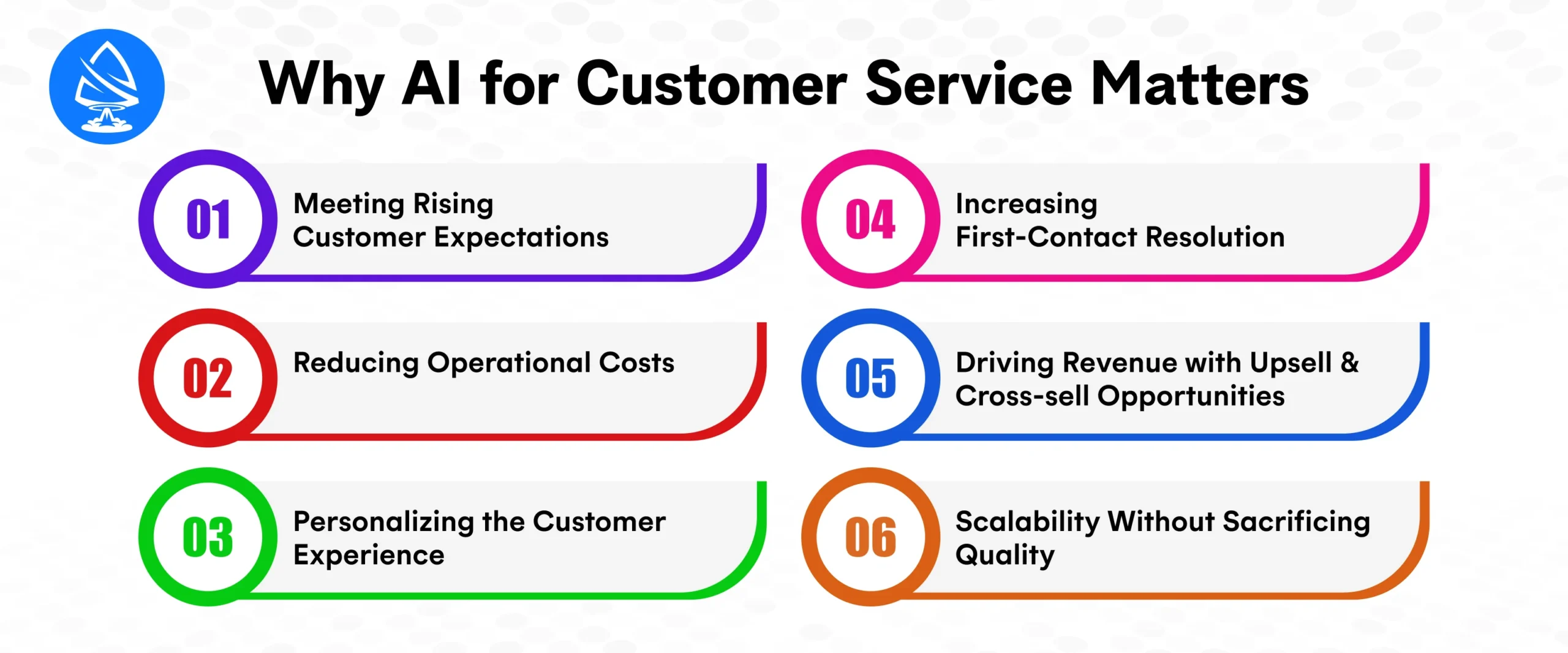
Today’s customers demand instant support, whether it’s during business hours, after hours, or even on weekends. According to a Zendesk survey, 82% of customers expect an immediate response when they reach out to a company for support. However, meeting this demand using only traditional customer service methods such as phone support or email can lead to long wait times, miscommunication, and frustration.
With AI tools like AI chatbots and virtual assistants, businesses can provide 24/7 support, ensuring that customers get the answers they need when they need them, without waiting in line. AI can handle routine queries instantly, offering customers an immediate, personalized response, while human agents can focus on more complex issues.
A retail business uses an AI-powered chatbot to manage customer inquiries about order status, returns, and product availability. The AI chatbot answers customer queries in seconds, ensuring that customers do not have to wait in a long queue. This leads to improved customer satisfaction and faster response times.
Key Benefit: AI enables instant responses and round-the-clock support, reducing customer frustration and enhancing their overall experience.
One of the most significant advantages of AI for customer service is its ability to reduce operational costs. AI tools automate routine tasks, eliminating the need for businesses to rely heavily on human agents for repetitive inquiries. By automating FAQs, common requests, and simple transactions, businesses can streamline their operations, which ultimately leads to lower staffing costs and increased efficiency.
A financial services firm deploys a customer service chatbot to handle basic inquiries like balance checking, account transfers, and credit card limits. With AI handling these routine tasks, the company can free up customer service agents to address more complex issues, such as fraud detection or financial planning. This leads to a significant reduction in labor costs and ensures optimal resource allocation.
Key Benefit: AI provides cost savings by automating routine tasks and reducing the need for large customer service teams. This allows companies to allocate resources more strategically.
In a world where consumers are increasingly looking for tailored experiences, AI-powered customer service tools offer a level of personalization that traditional service models can’t match. AI can analyze data such as past interactions, purchase history, and customer behavior to provide personalized recommendations and targeted responses.
For instance, AI-powered systems can suggest relevant products, services, or content based on a customer’s previous purchases or browsing behavior. This makes interactions feel more personal and relevant, improving customer satisfaction and fostering long-term loyalty.
An e-commerce platform uses AI to analyze a customer’s past browsing history, previous purchases, and product preferences. Based on this information, the AI recommends related products or discounts for items the customer is likely to be interested in. This personalized approach leads to higher conversion rates and more sales.
Key Benefit: AI enhances the customer experience by delivering personalized, relevant interactions, increasing the likelihood of repeat business and customer loyalty.
In customer service, first-contact resolution (FCR) is a critical metric. It refers to the ability to resolve a customer’s issue in the first interaction, without the need for follow-up or escalation. AI for customer service improves FCR rates by providing quick answers to common questions and offering intelligent troubleshooting assistance.
By using AI tools like virtual assistants or AI chatbots, businesses can efficiently resolve a high percentage of customer queries without the need to involve a human agent. This not only improves efficiency but also enhances the customer experience by reducing resolution time.
A telecom provider uses an AI-powered chatbot to help customers with troubleshooting issues such as internet connectivity problems. The chatbot offers step-by-step instructions to resolve the issue, which often eliminates the need for customers to call a live agent. As a result, the company sees an increase in its FCR rate and a reduction in call volume.
Key Benefit: AI improves first-contact resolution by quickly addressing common issues and automating troubleshooting, leading to a more efficient customer service process.
AI doesn’t just improve customer service; it also creates new opportunities for businesses to generate revenue. By analyzing customer behavior and preferences, AI can identify upsell and cross-sell opportunities, helping businesses make additional sales during service interactions.
For instance, AI can suggest upgrades, complementary products, or special promotions based on the customer’s past purchases or inquiries. This proactive sales approach leads to higher average order values and increased revenue.
An online retailer uses AI to analyze customer interactions and recommend upsell opportunities. For instance, if a customer is inquiring about a laptop, the AI chatbot might suggest laptop accessories or extended warranties. This leads to incremental revenue growth through cross-sells and upsells.
Key Benefit: AI can drive revenue growth by leveraging customer data to make personalized recommendations that lead to additional purchases.
As businesses grow, so does the volume of customer interactions. Scaling customer service operations traditionally requires adding more agents, which can be costly and time-consuming. AI provides a more efficient way to scale customer service operations by handling an increasing volume of queries without sacrificing quality or response time.
AI tools like chatbots and virtual assistants can handle a large number of customer interactions simultaneously, enabling businesses to meet growing demand without the need for significant increases in staffing.
A global airline deploys an AI-powered chatbot to handle flight status updates, reservation changes, and frequent flyer inquiries. As the airline expands to new markets, the chatbot can handle a growing number of customer inquiries, ensuring consistent service quality without increasing the number of human agents.
Key Benefit: AI allows businesses to scale operations efficiently and cost-effectively, ensuring high-quality service even as customer volume increases.
You may also want to know the Artificial Intelligence Challenge
Artificial Intelligence (AI) is rapidly transforming the landscape of customer service. The ability to leverage AI for customer service enables businesses to optimize processes, improve customer satisfaction, and drive business growth. Below, we dive into the key AI use cases in customer service, showing how organizations are using this technology to enhance engagement, automate tasks, and create a better overall experience for customers.
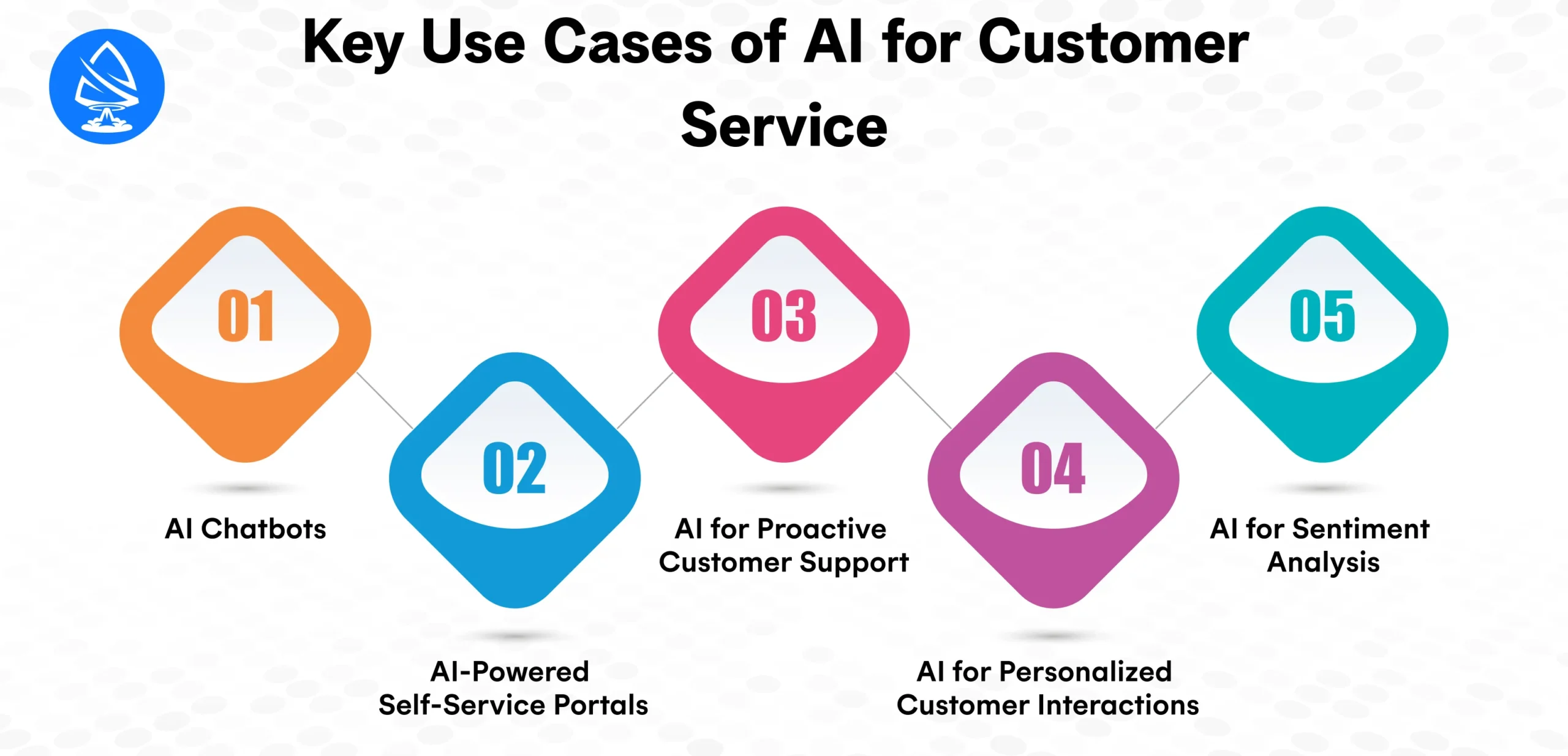
AI chatbots are one of the most widely used tools in customer service today. These AI-driven solutions can instantly handle customer queries, guide users through FAQs, and even complete tasks like booking an appointment or processing a return.
A retail brand uses a chatbot to answer common inquiries about product availability, delivery tracking, and order status. This not only improves customer satisfaction by providing instant responses but also reduces the volume of live agent calls, freeing up agents to handle more complex issues.
Key Takeaway: AI chatbots help businesses deliver quick, cost-effective service without sacrificing quality.
AI is also widely used in self-service portals, where customers can independently resolve issues or find answers to their questions. AI systems can help customers by suggesting knowledge base articles, troubleshooting guides, and FAQs based on the nature of their inquiry.
A tech company uses an AI-driven self-service portal to help customers troubleshoot common issues with their devices. Based on the customer’s description, the AI suggests relevant articles, troubleshooting steps, and videos to resolve the problem. If the issue remains unresolved, the system seamlessly transitions the customer to a live agent.
Key Takeaway: AI-powered self-service is a key driver for improving customer experience and reducing service load on human agents.
AI doesn’t just wait for customers to reach out; it can be used proactively to engage customers before issues arise. By analyzing customer behavior, AI can identify potential problems and reach out to offer support before the customer even knows there’s an issue.
An e-commerce company monitors customer activity and uses AI to identify when a customer is about to abandon their shopping cart. The system sends a reminder or offers a discount to encourage them to complete the purchase. Additionally, the AI predicts when a customer might need product restocking and sends them a notification.
Key Takeaway: Proactive AI engagement drives higher conversion rates, improved customer retention, and enhanced loyalty.
One of the most powerful capabilities of AI in customer service is its ability to offer personalized experiences. AI systems can analyze vast amounts of customer data from browsing history to purchase behavior and provide tailored recommendations and responses.
A bank uses AI to offer personalized financial advice based on a customer’s transaction history. For example, if the AI notices the customer frequently spends on travel, it might suggest a credit card with travel rewards or notify them of a limited-time offer on travel insurance.
Key Takeaway: Personalization through AI enhances the customer experience and drives revenue through targeted upselling.
Sentiment analysis powered by AI can be a game-changer for understanding customer opinions and improving services. By analyzing interactions such as chat conversations, social media posts, emails, or customer reviews, AI can determine the mood of customers and highlight areas of concern.
A software company uses AI to analyze customer feedback from emails and support chats. The AI detects whether the tone is positive, negative, or neutral, and prioritizes follow-ups accordingly. If a customer expresses frustration, the system escalates the case to a senior support agent.
Key Takeaway: Sentiment analysis provides valuable insights into customer satisfaction, enabling businesses to act proactively on feedback.
Implementing AI for customer service can be a game-changer, enhancing customer experience, reducing operational costs, and driving revenue. However, successfully deploying AI requires a structured approach, strategic planning, and careful integration with existing workflows. Here’s a step-by-step guide on how to implement AI in your customer service operations effectively, from initial planning to full deployment and ongoing optimization.
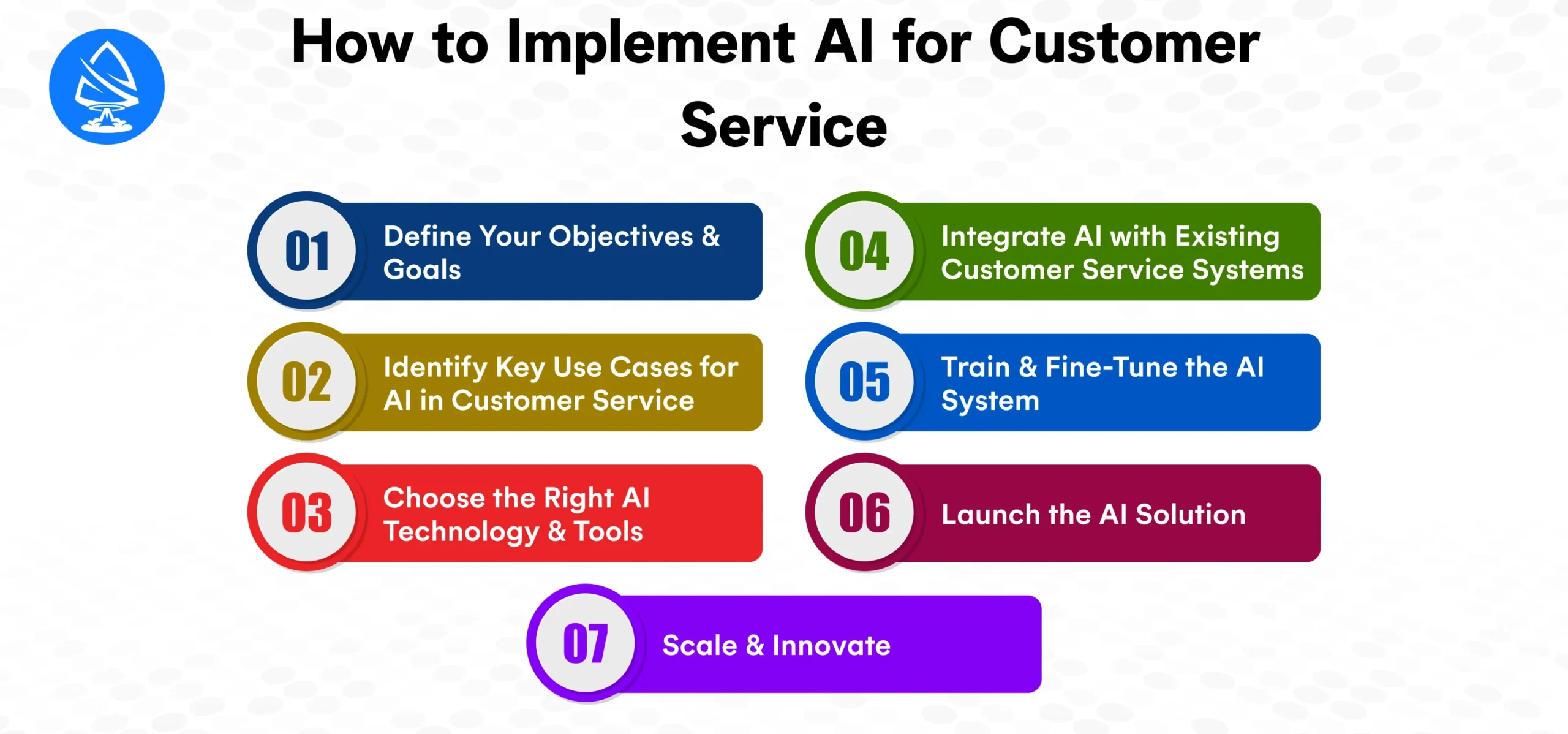
Before diving into the technical aspects of AI, it’s crucial to define clear objectives for what you hope to achieve with AI in customer service. Having well-defined goals helps ensure that AI tools are used effectively and align with your overall business strategy.
Key Takeaway: Define measurable outcomes such as improving efficiency, reducing costs, and enhancing customer satisfaction to track the success of your AI initiative.
Once you’ve defined your objectives, the next step is to identify key use cases where AI can provide the most value. This involves analyzing common customer queries, pain points, and areas where automation can improve service quality or speed.
Key Takeaway: Focus on automating high‑volume, repetitive tasks and creating a seamless transition between AI and human agents for complex inquiries.
The success of your AI initiative depends heavily on selecting the right technology. Several AI tools are available, ranging from chatbots and voice assistants to natural language processing (NLP) engines and AI-powered analytics platforms.
Key Takeaway: Evaluate AI tools based on your business needs, whether it’s a customer service chatbot, an AI-powered knowledge base, or an integrated AI customer service agent solution.
Integration is a critical step in ensuring that your AI solution works seamlessly with your current customer service tools. This could mean connecting AI chatbots to your CRM system, integrating them with your ticketing systems, or using AI to pull customer data from e-commerce platforms for personalized service.
Key Takeaway: Proper integration ensures a smooth, unified experience for both customers and agents and minimizes any friction in your customer service workflow.
AI is only as good as the data it’s trained on. During this phase, you’ll need to train the AI system using historical customer service data, such as support tickets, emails, and chat logs. Fine-tuning AI models will improve the accuracy of responses and enhance the system’s ability to understand and respond to customer queries.
Key Takeaway: Ongoing training and feedback loops help the AI stay relevant and improve its performance, providing more accurate and effective customer service over time.
Once the AI system is trained and integrated, it’s time for launch. However, AI deployment doesn’t end with go-live. Continuous monitoring and performance tracking are crucial to ensuring that the AI is functioning as expected and meeting business goals.
Key Takeaway: Regular monitoring and optimization ensure the AI system continues to provide value and improves over time.
Once your AI system is running smoothly, you can look for ways to scale and innovate. As your business grows and customer demands evolve, the AI system should be able to handle more complex queries, integrate with new channels, and expand its functionality.
Key Takeaway: Scale and innovate with your AI system to enhance service quality, reach new audiences, and adapt to changing customer needs.
You may also want to know Devin AI Clone
Artificial intelligence (AI) has become a transformative tool in customer service, delivering significant business benefits and revenue impacts. By automating processes, improving customer interactions, and providing actionable insights, AI is helping businesses not only enhance the customer experience but also boost profitability. From cost savings to revenue growth, AI provides measurable value that can directly contribute to the success of your customer service strategy. Here’s how.
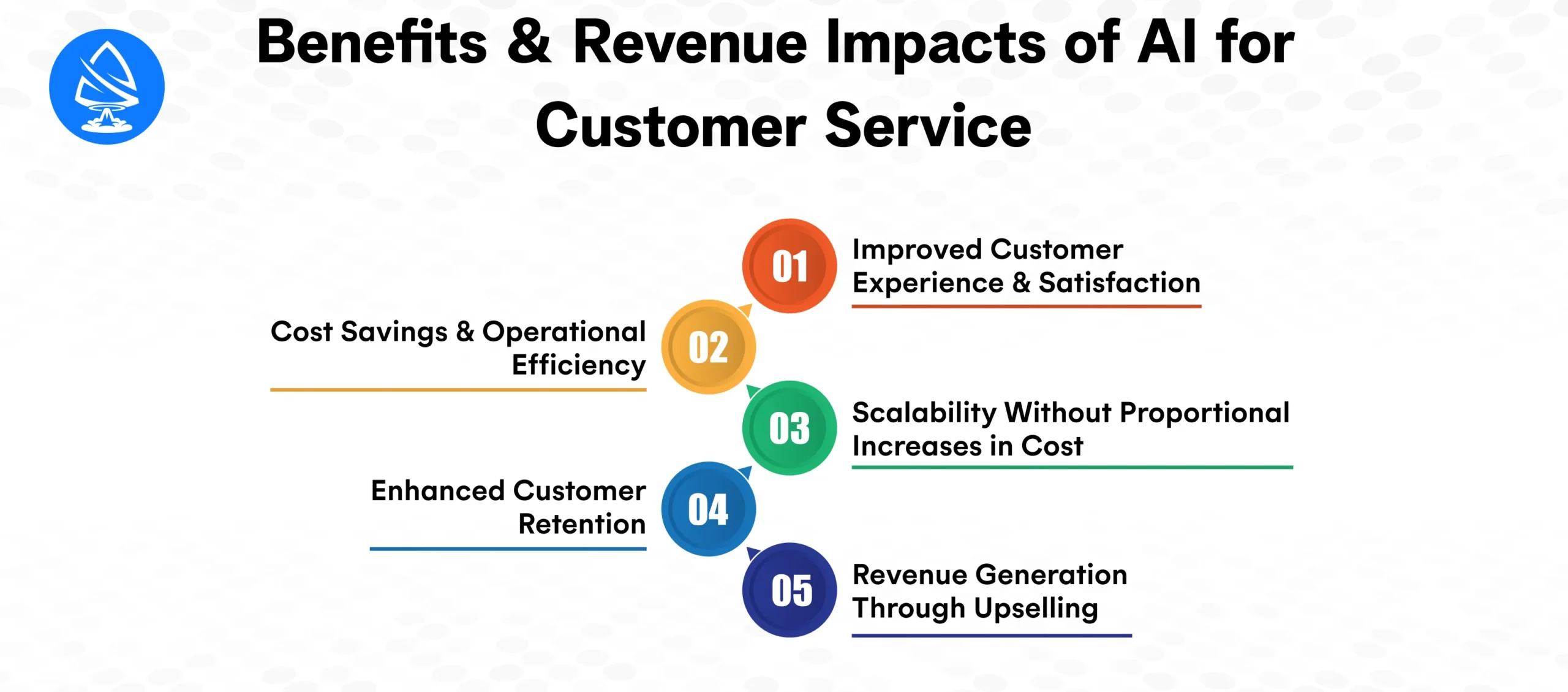
At the heart of AI for customer service is the goal to improve customer experience (CX). AI tools like chatbots, virtual assistants, and voice recognition systems can provide instant responses to customer inquiries, ensuring customers get the help they need without delays. Whether it’s through handling common queries, offering 24/7 support, or personalizing the customer interaction, AI is transforming the way customers interact with businesses.
An online retailer uses an AI-powered chatbot to handle product inquiries, order tracking, and returns. Customers receive immediate, personalized responses based on their previous purchases, resulting in a more seamless and satisfying shopping experience.
Revenue Impact: Improved customer satisfaction leads to higher retention, increased loyalty, and more repeat purchases, all of which contribute to revenue growth.
One of the most significant benefits of AI for customer service is its ability to reduce operational costs. By automating repetitive tasks such as answering FAQs, processing simple orders, and handling routine support inquiries, AI allows businesses to optimize resources and focus human agents on more complex or high-value tasks. This reduction in labor costs is often one of the primary reasons companies choose to integrate AI into their customer service operations.
A telecommunications provider integrates an AI-powered customer service chatbot to handle common inquiries like billing and service outages. This reduces the number of customer calls that need to be handled by live agents, enabling the company to reduce the size of its customer service team and cut labor costs.
Revenue Impact: Cost savings from automation and improved efficiency allow businesses to reinvest savings into growth initiatives, contributing to higher profit margins and the ability to offer better prices or more value to customers.
As your business grows, so does the volume of customer interactions. Scaling customer service typically requires hiring more staff, which can become expensive and difficult to manage. AI offers a more efficient way to scale operations without the need to hire additional customer service agents at the same rate.
A global software company uses AI-driven customer support to manage interactions across multiple time zones. As the customer base grows, AI can handle more requests without the need to hire a large number of new support agents, thus scaling operations cost-effectively.
Revenue Impact: By scaling customer service operations efficiently, businesses can meet increasing customer demands without corresponding increases in operational costs, leading to improved profitability.
AI not only improves service speed and accuracy, but it also helps businesses build deeper, more meaningful relationships with customers. Through the use of personalization and predictive analytics, AI can anticipate customer needs, engage with them at the right time, and offer solutions that enhance their overall experience. This leads to stronger customer loyalty and higher retention rates.
A subscription-based service uses AI to monitor customer activity and detect signs of potential churn. The system automatically reaches out to offer personalized discounts or services to re-engage the customer.
Revenue Impact: Higher retention rates and stronger customer loyalty translate directly into increased customer lifetime value (CLV), boosting overall revenue over the long term.
AI can significantly enhance revenue generation by identifying upsell and cross-sell opportunities during customer interactions. By analyzing customer data in real time, AI can recommend products, services, or upgrades that customers are likely to be interested in. This creates new opportunities for incremental sales during customer support interactions.
An online retailer uses an AI chatbot to recommend related products during the customer’s support conversation. If a customer is inquiring about a laptop, the AI might suggest accessories like a laptop case or mouse, leading to higher revenue per transaction.
Revenue Impact: AI can drive incremental sales through upselling and cross-selling, contributing to higher average revenue per user (ARPU) and boosting the company’s overall earnings.
Implementing AI for customer service is not just a cost‑saving tactic; it’s an engagement and revenue engine. By deploying the best AI chatbot, integrating AI customer support tools, and creating seamless human‑and‑bot experiences, businesses can delight customers and boost business performance. For USA tech professionals and small business owners, working with an AI app development company in USA or experienced AI app developers can accelerate your journey from pilot to full transformation. Ready to estimate investment and expected outcomes? Use our AI App Cost Calculator to project your implementation cost, savings, and revenue uplift. The future of customer interaction is here. Make sure your business is part of it.
1. What is AI for customer service?
It’s the use of artificial‑intelligence technologies chatbots, virtual agents, and conversational AI, to automate, personalize, and optimize service interactions.
2. How do I choose the best AI chatbot for my business?
Look for features – NLU accuracy, multichannel support, backend integration, analytics, ease of setup. Compare platforms and pilot before full roll‑out.
3. Will a chatbot replace human agents?
No, its role is to handle high‑volume, repetitive tasks so human agents focus on complex, high‑value, empathetic interactions.
4. How does AI for customer service generate revenue?
By improving engagement, identifying upsell opportunities during service sessions, boosting retention, and reducing churn.
5. What internal team do I need?
You’ll need a cross‑functional team: service/business leads, data/insights, integration/IT, and possibly external help AI app development company in USA or AI app developers.
6. Is AI customer service suitable for small businesses?
Yes, many ready‑to‑go platforms exist, and even small firms can deploy bots for FAQs or chat‑based sales, often with quick returns.
7. How long does it take to launch a bot?
With a focused use case and good preparation, businesses can go live in weeks rather than months.
8. What metrics should I monitor?
Response time, resolution rate, deflection rate, CSAT/NPS, conversion/upsell rate in chat, and cost per contact.

Artoon Solutions
Artoon Solutions is a technology company that specializes in providing a wide range of IT services, including web and mobile app development, game development, and web application development. They offer custom software solutions to clients across various industries and are known for their expertise in technologies such as React.js, Angular, Node.js, and others. The company focuses on delivering high-quality, innovative solutions tailored to meet the specific needs of their clients.
 For business inquiries only