The automotive industry is rapidly evolving, with technology playing an increasingly pivotal role in shaping its future. One of the most transformative technologies to emerge in recent years is Artificial Intelligence (AI). From autonomous vehicles to predictive maintenance and smart manufacturing, AI in the auto industry is revolutionizing how companies operate, deliver services, and engage with customers.
AI is not only enhancing the driving experience but also improving efficiency, reducing costs, and boosting safety across the entire automotive value chain. Companies in the auto industry are leveraging a wide range of AI tools, models, and tech stacks to stay competitive and meet the demands of modern consumers.
This blog will explore how AI is being used in the auto industry, explain the key tools and models driving innovation, and break down the tech stack required for successful AI implementation. It will also highlight how partnering with an artificial intelligence app development company can help automotive businesses design, build, and deploy scalable AI-driven solutions. By understanding the potential of AI and working with the right development experts, automotive companies can harness its power to innovate, improve efficiency, and optimize overall operations.
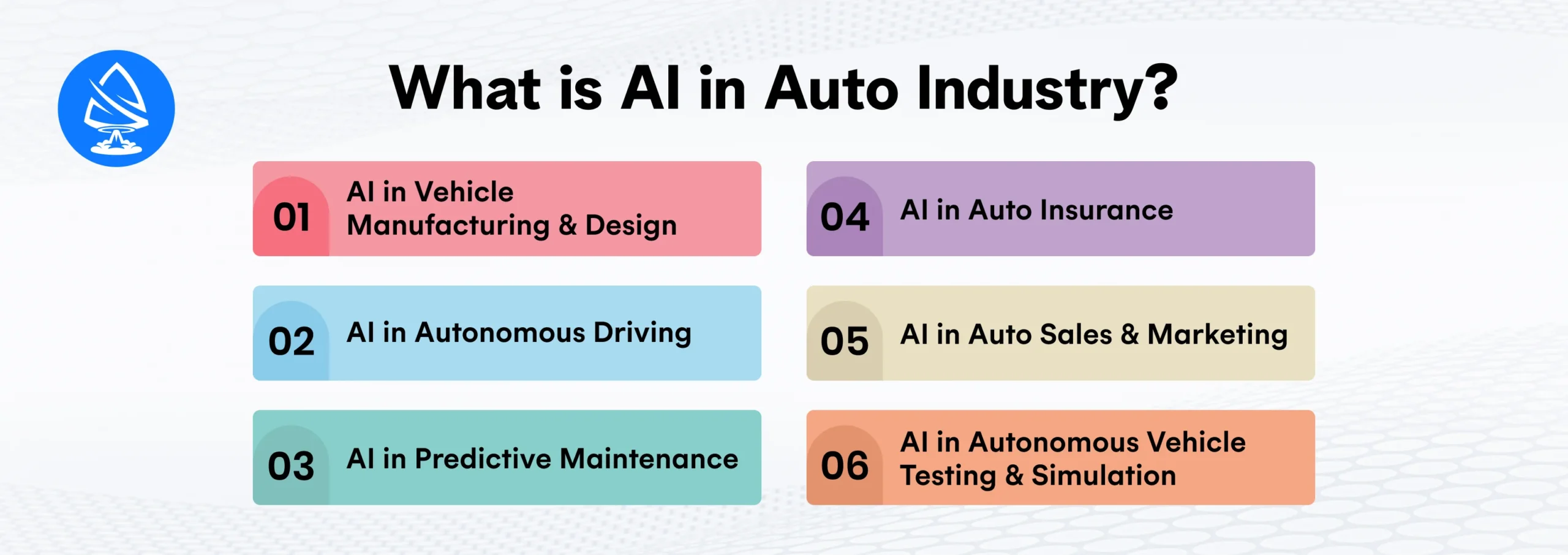
What is AI in Auto Industry?
AI in the auto industry refers to the integration of artificial intelligence technologies into various aspects of the automotive sector, including manufacturing, vehicle design, customer service, marketing, and operational management. AI technologies are designed to mimic human intelligence and enhance the capabilities of systems, machines, and devices within the automotive sector. This integration is driving the transformation of the industry by making operations more efficient, improving vehicle safety, and offering new, innovative services.
AI in the auto industry encompasses a wide array of technologies such as machine learning (ML), natural language processing (NLP), computer vision, and predictive analytics, all of which have been adopted across different stages of vehicle development, operation, and customer engagement.
Let’s break down the key areas where AI plays a role in the auto industry:
1. AI in Vehicle Manufacturing and Design
AI is used extensively in the automotive manufacturing process to enhance production efficiency, improve product quality, and enable smart design innovations.
Automated Manufacturing: AI-driven robots and automation systems handle repetitive tasks such as assembly, welding, and painting in vehicle production. These machines ensure precision, consistency, and safety, reducing human error and production costs.
AI in Design: AI tools assist automotive designers by automating design processes, analyzing market trends, and generating creative suggestions for new car models. These tools help designers create aesthetically appealing and functional vehicle designs.
2. AI in Autonomous Driving
One of the most exciting and discussed applications of AI in the auto industry is in the development of autonomous or self-driving vehicles. AI systems enable cars to perceive their environment, make decisions, and navigate without human intervention.
Machine Learning and Computer Vision: These AI technologies are used in autonomous vehicles to process data from cameras, radars, and LiDAR systems. This allows the vehicle to detect objects, identify road signs, and track the movement of pedestrians and other vehicles in real-time.
Safety and Navigation: AI also powers key features of advanced driver-assistance systems (ADAS), including lane-keeping assistance, collision avoidance, and adaptive cruise control. These systems enhance the driving experience by providing additional safety measures and improving vehicle control.
3. AI in Predictive Maintenance
AI in auto industry operations also extends to vehicle maintenance. Predictive maintenance leverages AI to predict when vehicle components will need repairs or replacements, helping companies and car owners reduce costs and downtime.
Real-Time Data Monitoring: AI-powered systems continuously monitor the health of various vehicle components and use sensor data to predict when failure is likely to occur.
Cost Reduction: Predictive maintenance helps avoid emergency repairs and expensive part replacements by addressing problems before they escalate. This technology improves vehicle reliability and prolongs their life.
4. AI in Auto Insurance
The auto insurance market has also been significantly impacted by AI. Insurance companies use AI tools to assess risks, personalize policies, and automate claims processes, making insurance more efficient and customer-centric.
Risk Assessment and Pricing: AI uses historical data, driving behavior, weather patterns, and accident records to assess risks and determine appropriate pricing for policies. This enables insurance companies to provide personalized premium rates based on individual driving habits.
Claims Automation: AI can automate the claims process by analyzing images of vehicle damage, processing paperwork, and evaluating repair costs. This leads to faster claims resolution and improved customer satisfaction.
5. AI in Auto Sales and Marketing
AI tools are transforming auto sales and marketing, enabling car dealerships to better understand customer needs, predict sales trends, and personalize marketing efforts.
Personalized Marketing: AI-powered systems analyze customer data to create personalized advertisements and promotions. By tracking customer behavior, preferences, and purchase history, AI can deliver highly targeted campaigns that resonate with potential buyers.
Lead Generation: AI chatbots and virtual assistants are being used by dealerships to interact with potential customers, answer questions, schedule test drives, and assist with the purchasing process, improving lead conversion rates.
6. AI in Autonomous Vehicle Testing and Simulation
Testing and simulation are crucial steps in developing autonomous vehicles, and AI plays a significant role in these areas. AI-powered simulation tools allow engineers to test how autonomous systems will respond in different driving conditions and scenarios.
Simulated Environments: AI can create simulated environments that replicate real-world driving conditions, such as traffic, road signs, weather, and pedestrian movements. This helps manufacturers and developers test the performance of autonomous systems without the need for physical testing.
AI is playing an increasingly pivotal role in reshaping the auto industry. From revolutionizing vehicle manufacturing to enhancing customer experiences and streamlining operations, AI is transforming the auto industry in a multitude of ways. As AI technologies like machine learning, computer vision, and natural language processing continue to evolve, the automotive sector is experiencing unprecedented innovation. Here, we will explore the key areas where AI is making an impact and how it’s driving transformation within the industry.
1. Autonomous Vehicles
One of the most significant and talked-about applications of AI in the auto industry is the development of autonomous vehicles. AI systems allow vehicles to navigate and make decisions independently, eliminating the need for human drivers. Here’s how AI contributes to autonomous driving:
Computer Vision: AI uses computer vision to interpret visual data from cameras, radar, and LIDAR sensors. This enables vehicles to detect objects, road signs, other vehicles, and pedestrians in real time, ensuring safe navigation.
Machine Learning: Machine learning models are trained on vast amounts of data to improve decision-making over time. These models help autonomous vehicles learn from their environment and adapt to new driving conditions.
Real-Time Decision Making: AI allows autonomous vehicles to make split-second decisions, such as adjusting speed or steering to avoid collisions. These decisions are based on continuous input from sensors and real-time data analysis.
2. AI in Vehicle Manufacturing
AI is also revolutionizing the way vehicles are designed and manufactured. AI-driven automation and smart manufacturing techniques are enhancing productivity, improving quality control, and reducing production costs.
Robotic Automation: AI-powered robots are used in assembly lines to perform tasks such as welding, painting, and assembling components with precision and efficiency. These robots are capable of working 24/7 without fatigue, significantly increasing manufacturing throughput.
Predictive Maintenance in Manufacturing: AI systems monitor factory equipment and machinery, analyzing sensor data to predict when parts will fail or need maintenance. This helps avoid costly downtime and ensures that production lines remain operational.
Design Assistance: AI tools assist designers in creating innovative vehicle designs by automating elements of the design process, such as optimizing aerodynamics or simulating different materials’ behavior.
3. AI in Predictive Maintenance and Repairs
AI is significantly improving the way vehicles are maintained, leading to cost savings and enhanced vehicle performance. Predictive maintenance models allow businesses to address issues before they cause significant problems, reducing downtime and improving the lifespan of vehicles.
Real-Time Monitoring: AI-powered systems continuously collect and analyze data from sensors embedded in vehicles to track their health. This data is used to predict potential failures, allowing for timely repairs and preventing breakdowns.
Maintenance Scheduling: AI can predict the optimal time to service or replace vehicle parts based on usage patterns and sensor data, reducing unnecessary repairs and maximizing efficiency.
Cost Reduction: Predictive maintenance helps reduce repair costs by preventing major breakdowns and enabling businesses to perform maintenance only when necessary, instead of following a rigid schedule.
4. AI in Customer Experience and Sales
AI is transforming the customer journey in the automotive sector, from sales and marketing to post-purchase support. Automakers and dealerships are leveraging AI to provide personalized experiences that enhance customer satisfaction and engagement.
Personalized Recommendations: AI-powered recommendation engines analyze customer preferences and behavior to suggest the best vehicle options based on individual needs, preferences, and budget.
AI in Auto Sales: AI is also transforming the sales process by automating lead generation, answering customer inquiries through chatbots, and providing real-time information about car models, availability, and pricing.
Virtual Assistants and Voice Technology: Voice assistants, powered by AI, are increasingly being integrated into vehicles, allowing drivers to interact with their car hands-free. These systems can assist with navigation, media control, climate settings, and more.
5. AI in Auto Insurance
AI is reshaping the auto insurance market by enabling more personalized policies, improving risk assessment, and automating claims processing. Insurance companies are leveraging AI to enhance their offerings and streamline operations.
Risk Assessment: AI tools analyze driving behavior, vehicle conditions, and external factors to better assess risk and set personalized insurance premiums.
Claims Automation: AI accelerates the claims process by automating tasks such as evaluating accident damage, processing photographs, and determining repair costs. This results in quicker claims resolution and improved customer satisfaction.
Fraud Detection: AI systems can analyze vast amounts of data to identify patterns that might indicate fraudulent claims, helping insurers minimize losses and improve claim accuracy.
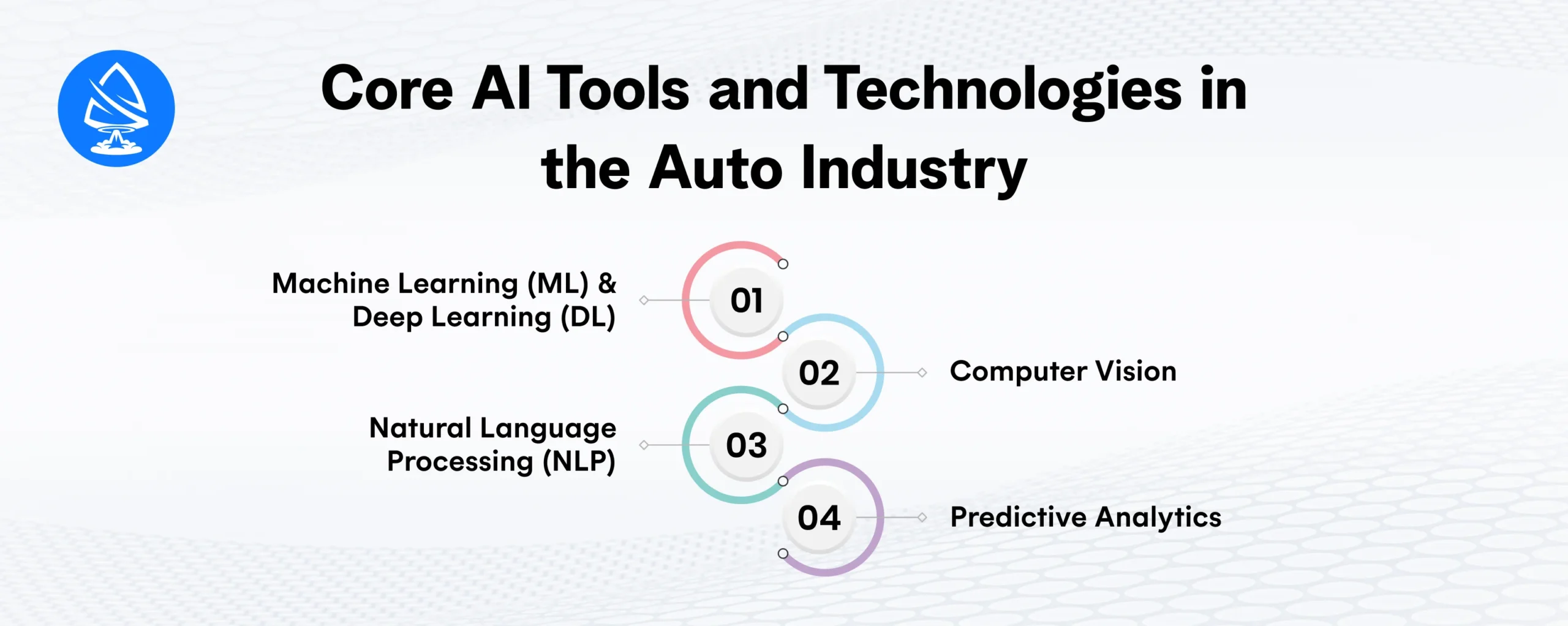
Core AI Tools and Technologies in the Auto Industry
To successfully implement AI, automotive businesses must rely on a range of tools and technologies. Let’s explore some of the core AI tools and models that are transforming the industry.
1. Machine Learning (ML) and Deep Learning (DL)
Machine learning (ML) and deep learning (DL) are the backbone of many AI applications in the automotive industry. These technologies help vehicles make decisions, predict future outcomes, and optimize operations.
Supervised Learning: In predictive maintenance, supervised learning models can be trained on historical data to predict when components are likely to fail.
Unsupervised Learning: This is useful in anomaly detection, such as identifying unusual driving behavior or mechanical issues.
Reinforcement Learning: Used in autonomous vehicles, reinforcement learning allows the system to improve driving decisions by interacting with the environment and learning from the consequences of those actions.
2. Computer Vision
Computer vision is a critical AI technology in the auto industry, especially for autonomous vehicles and driver assistance systems.
Object Detection: Computer vision algorithms analyze video feeds from cameras mounted on vehicles to detect objects, road signs, pedestrians, and other vehicles.
Lane Detection: AI-powered systems help vehicles stay in their lanes by detecting lane markings and adjusting the steering accordingly.
Facial Recognition: Used in driver monitoring systems, facial recognition helps ensure that the driver remains alert and can provide personalized features such as seat adjustments or music preferences.
Example: AI-powered ADAS rely on computer vision for tasks like collision avoidance and emergency braking.
3. Natural Language Processing (NLP)
Natural language processing (NLP) is a crucial AI technology for enhancing user interaction with vehicles.
Voice Recognition: Voice assistants in vehicles, like Amazon’s Alexa or Google Assistant, use NLP to understand and respond to voice commands. This allows drivers to control various in-car functions, like navigation, entertainment, or climate control, without taking their hands off the wheel.
Chatbots and Customer Service: AI-powered chatbots in the auto industry help customers book services, schedule test drives, or get support for vehicle issues. These chatbots understand and respond to natural language queries.
Example: Many modern vehicles come equipped with NLP-based voice assistants that allow drivers to interact with their vehicle hands-free, improving safety and convenience.
4. Predictive Analytics
AI in the automotive industry is heavily reliant on predictive analytics to forecast future events and optimize operations.
Demand Forecasting: AI tools analyze historical data to predict customer demand, helping manufacturers adjust production schedules accordingly.
Market Insights: Predictive analytics also allows companies to analyze consumer behavior and preferences, leading to more targeted marketing and better product offerings.
Example: AI in auto insurance uses predictive analytics to estimate the likelihood of claims and set appropriate premiums for policyholders.
Key Use Cases of AI in the Auto Industry
The use of AI in the auto industry spans several areas, each offering distinct advantages. Below are some key use cases that demonstrate AI’s transformative power:
1. Autonomous Vehicles
Autonomous driving is one of the most well-known applications of AI. AI algorithms help self-driving cars perceive their environment, make decisions, and navigate safely.
Example: Waymo uses AI to operate fully autonomous vehicles, providing transportation services in select cities.
2. AI in Auto Insurance
AI is also playing a major role in the auto insurance market. Insurers use AI to assess risk, personalize policies, and automate claims processing.
Claims Automation: AI helps process insurance claims faster by analyzing accident reports, photos, and other data to assess damage and determine payouts.
Risk Assessment: AI models can analyze a customer’s driving history and other data to assess risk and calculate personalized premiums.
Example: AI in auto insurance allows insurers like Progressive and Allstate to offer more customized pricing based on individual driving habits.
3. AI in Auto Sales
AI is reshaping the way cars are sold, providing personalized experiences for potential buyers and helping dealerships improve their sales processes.
Lead Generation: AI-driven tools analyze customer data to predict which leads are most likely to convert into sales. AI can also automate communication with prospects via chatbots or email.
Virtual Showrooms: AI-powered virtual reality (VR) and augmented reality (AR) tools allow customers to explore car models and features without visiting a dealership physically.
Example: Carvana uses AI to provide customers with an online car-buying experience, including 360-degree vehicle views and automated financing options.
4. AI in Fleet Management
AI is streamlining fleet management by helping companies track vehicles, optimize routes, and reduce costs.
Route Optimization: AI algorithms calculate the most efficient routes for delivery trucks, saving fuel and time.
Fleet Maintenance: AI predicts when vehicles need maintenance based on real-time data from sensors, helping businesses avoid costly repairs.
Example: Companies like UPS and FedEx use AI to manage their fleets, optimize delivery routes, and track vehicle health.
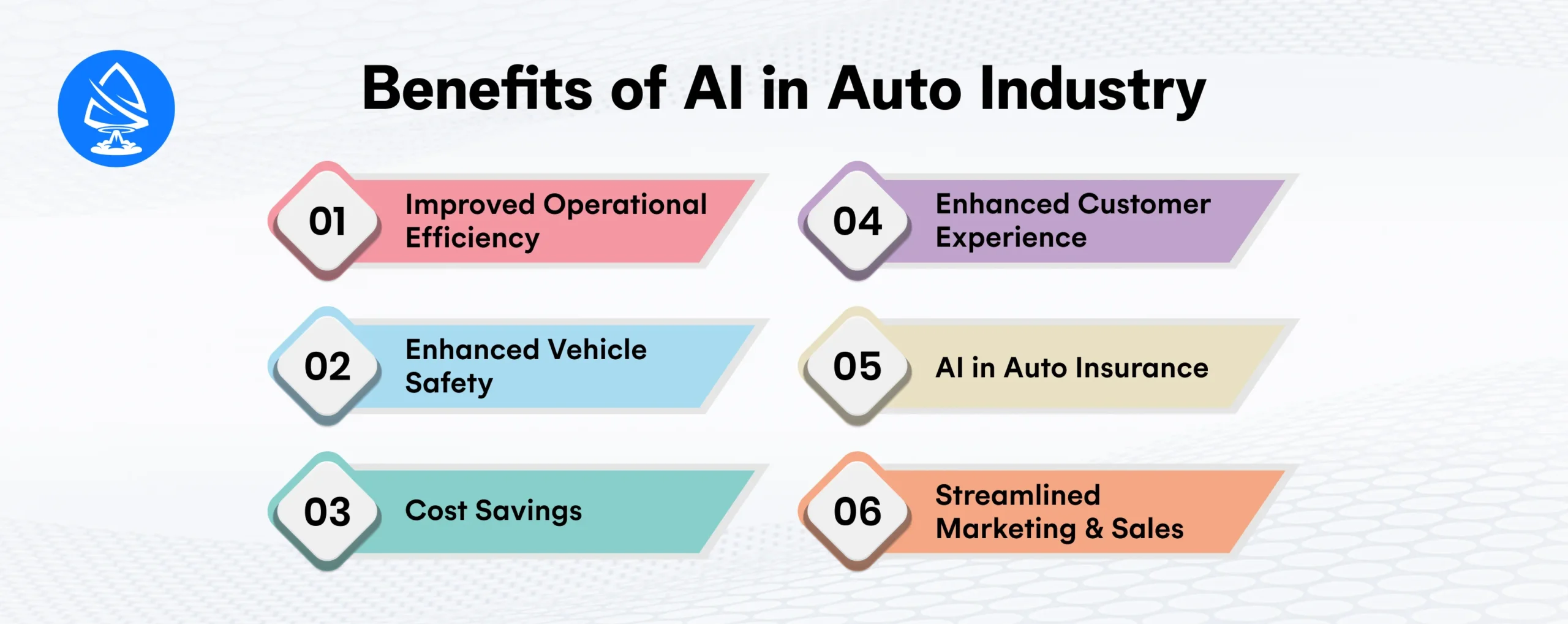
AI in the auto industry is revolutionizing the way manufacturers, service providers, and customers interact with vehicles, helping to create smarter, more efficient processes and systems. From enhanced safety features to cost-saving measures, AI is transforming every stage of the automotive lifecycle from design and manufacturing to sales and customer service. Let’s dive deeper into the significant benefits of AI in the auto industry, showcasing how it is optimizing operations, improving safety, and delivering value across the sector.
1. Improved Operational Efficiency
AI drives operational efficiency by automating tasks that were traditionally manual, speeding up processes, and reducing human error. In the auto industry, this results in optimized manufacturing, smarter inventory management, and streamlined workflows.
Automation of Repetitive Tasks: AI automates repetitive and time-consuming tasks like vehicle assembly, inspection, and quality control. In manufacturing, AI-driven robots can perform tasks with high precision and consistency, reducing the need for human labor and minimizing the risk of defects.
Smart Supply Chain Management: AI helps automotive companies optimize their supply chains by predicting demand, managing inventory levels, and reducing excess stock. This leads to cost savings and more efficient resource allocation.
Manufacturing Process Optimization: AI also helps in optimizing manufacturing schedules, reducing downtime, and improving throughput. Predictive models can determine the optimal times for machinery maintenance and prevent disruptions in the production process.
2. Enhanced Vehicle Safety
AI in the auto industry plays a crucial role in improving the safety of vehicles, reducing accidents, and enhancing overall road safety. Advanced AI-powered systems are built into modern vehicles to protect drivers, passengers, and pedestrians.
Advanced Driver Assistance Systems (ADAS): AI is at the heart of ADAS, which includes technologies like lane departure warnings, adaptive cruise control, automatic emergency braking, and parking assist. These features help drivers avoid accidents and navigate more safely.
Collision Avoidance and Emergency Braking: AI algorithms process data from various sensors and cameras to detect potential collisions in real time. If the system detects a risk of collision, it can automatically apply the brakes or steer the vehicle to avoid an accident.
Pedestrian Detection and Lane Keeping: AI in vehicles can identify pedestrians, cyclists, and other obstacles, and it can also assist in keeping the car within its lane, further reducing the risk of accidents.
3. Cost Savings
AI can help businesses in the auto industry significantly reduce costs, particularly in areas such as maintenance, fuel consumption, and production.
Predictive Maintenance: AI can predict when a vehicle or machinery is likely to fail by analyzing data from sensors and systems. This allows for proactive maintenance, reducing the risk of expensive emergency repairs and minimizing downtime.
Fuel Efficiency: AI is used to optimize routes and driving behavior, improving fuel efficiency and lowering operational costs, particularly for logistics companies and fleet managers.
Reduced Labor Costs: The automation of tasks such as assembly, inspection, and customer service through AI reduces the need for human labor, leading to long-term savings for automotive companies.
4. Enhanced Customer Experience
AI plays a key role in improving customer experience in the auto industry. It enables personalized services and more seamless vehicle interactions.
Personalized Services: AI helps automotive companies offer personalized experiences based on customer preferences and behavior. AI helps recommend suitable vehicle models for customers. It also enables tailored insurance policies and personalized maintenance schedules. This allows businesses to meet individual customer needs effectively.
AI-Powered Virtual Assistants: Many modern vehicles are equipped with AI-driven voice assistants that allow drivers to control various vehicle functions, like navigation, media, and climate, hands-free.
Chatbots and Virtual Showrooms: AI-driven chatbots provide 24/7 customer service, answering queries, scheduling test drives, and even processing purchases online. Virtual showrooms powered by AI allow customers to explore different car models and features from the comfort of their homes.
5. AI in Auto Insurance
AI is also transforming the auto insurance market by improving risk assessments, personalizing policies, and speeding up claims processing. It is helping both insurers and consumers navigate the complexities of the insurance process more efficiently.
Personalized Insurance Plans: AI analyzes data from driving behavior, vehicle condition, and external factors to tailor auto insurance premiums, ensuring that drivers are only paying for coverage that reflects their actual risk levels.
Automated Claims Processing: AI automates the claims process by analyzing accident reports, photos, and vehicle damage, speeding up the approval process and reducing errors.
Fraud Detection: AI systems detect anomalies and suspicious activity by analyzing patterns in claims data, helping auto insurers identify fraudulent claims more accurately.
6. Streamlined Marketing and Sales
AI is changing how automakers and dealerships market and sell vehicles. It automates customer interactions, analyzes buyer behavior, and personalizes marketing campaigns.
Lead Generation and Conversion: AI systems analyze data from customer interactions to identify the most promising leads and predict which potential buyers are most likely to make a purchase. AI-driven chatbots also assist with sales by providing immediate responses to customer inquiries.
Targeted Marketing: AI enables businesses to analyze customer data to create targeted marketing campaigns that resonate with specific audiences. AI-driven algorithms can recommend the right vehicles to potential buyers based on their preferences, lifestyle, and budget.
Challenges of AI in Auto Industry
While AI offers many advantages, there are also significant challenges to overcome:
1. High Implementation Costs
Integrating AI into automotive systems can be expensive, especially for autonomous vehicles and advanced technologies.
2. Data Privacy Concerns
AI systems need large data volumes to work effectively. This raises concerns about data collection, storage, and usage. The risks increase when customer personal information is involved.
3. Ethical and Legal Issues
Autonomous vehicles raise questions about responsibility during accidents. AI-driven decisions may also contain biases that require careful attention.
How Businesses Implement AI in the Auto Industry Successfully
To successfully implement AI in the auto industry, businesses must take a strategic approach:
1. Partner with AI Experts
Businesses should collaborate with an AI app development company or AI development services to ensure they are leveraging the best tools and expertise for AI integration.
2. Focus on Data Quality
To get the most out of AI, businesses must ensure their data is accurate, clean, and relevant. Poor-quality data can lead to incorrect AI predictions and reduce effectiveness.
3. Ensure Collaboration Between AI and Human Teams
AI should be seen as an assistant, not a replacement for human creativity and decision-making. Businesses must ensure a collaborative approach between AI systems and human experts to maximize results.
4. Test and Optimize Regularly
AI systems need continuous monitoring and optimization to ensure they are delivering the desired outcomes. Regular testing and feedback loops will help improve AI models and drive better results.
Conclusion
AI in the auto industry is unlocking new possibilities across multiple areas. It supports autonomous vehicles, predictive maintenance, and AI-powered insurance and sales. With the right AI tools and tech stack, automotive businesses can improve efficiency and reduce costs. AI also helps brands deliver more personalized customer experiences.
Successful AI adoption requires careful planning, high-quality data, and strong collaboration between humans and AI. Businesses can maximize AI benefits by partnering with an AI app development company. Hiring skilled AI developers also helps unlock the full potential of this technology.
Ready to explore AI solutions for your business? Contact Artoon Solutions today for a personalized consultation. Use our AI Development Cost Calculator to estimate your AI investment for the auto industry.
Frequently Asked Questions
1. What are the main applications of AI in the auto industry?
AI is used in autonomous driving, predictive maintenance, insurance, sales, and fleet management.
2. How does AI help with vehicle safety?
AI-powered systems like collision avoidance, lane detection, and autonomous driving improve vehicle safety.
3. Can AI improve vehicle maintenance?
Yes, AI predicts when maintenance is needed and helps avoid costly repairs by monitoring real-time data from vehicle sensors.
4. How is AI used in auto insurance?
AI is used to personalize policies, assess risks, and automate claims processing in the auto insurance market.
5. What are the benefits of AI for auto manufacturers?
AI improves operational efficiency, reduces production costs, and allows for more personalized customer experiences.
6. What are the challenges of using AI in the auto industry?
High implementation costs, data privacy concerns, and legal issues around autonomous vehicles are some of the challenges.
7. How can businesses implement AI in the auto industry?
Businesses should partner with AI experts, ensure high-quality data, and focus on collaboration between AI and human teams.
Written By :
Artoon Solutions
Artoon Solutions is a technology company that specializes in providing a wide range of IT services, including web and mobile app development, game development, and web application development. They offer custom software solutions to clients across various industries and are known for their expertise in technologies such as React.js, Angular, Node.js, and others. The company focuses on delivering high-quality, innovative solutions tailored to meet the specific needs of their clients.




 For business inquiries only