- HR:+91-879-9184-787
- Sales:+91-908-163-7774


The field of mental health care is facing significant challenges, including rising mental health conditions, a shortage of mental health professionals, and the stigma around seeking help. In response to these challenges, artificial intelligence (AI) is stepping in as a powerful tool to revolutionize how mental health care is delivered. From AI therapy chatbots to predictive analytics for early intervention, AI is shaping a new era of mental health solutions that are accessible, scalable, and efficient.
With the global burden of mental illness on the rise, AI in mental health provides an opportunity to enhance traditional therapy methods, making mental health care more accessible, personalized, and effective. AI solutions can assist in diagnosing mental health conditions, provide therapy through digital assistants, and support mental health professionals with advanced tools to improve patient care.
In this blog post, we’ll explore how Artificial intelligence in mental health is transforming the healthcare landscape, the benefits of AI-driven solutions, and the potential future of AI in providing more accessible and effective mental health care.
AI in Mental Health refers to the application of artificial intelligence technologies and algorithms to enhance the diagnosis, treatment, and management of mental health conditions. AI is revolutionizing mental healthcare by automating processes, offering personalized care, and providing real-time support to both patients and clinicians. Through tools like AI-powered chatbots, predictive analytics, and machine learning models, Artificial intelligence can assist in identifying early signs of mental health conditions, guide therapy, and improve the overall efficiency of healthcare systems.
AI in mental health encompasses various technologies, including natural language processing (NLP), machine learning (ML), and deep learning, which allow machines to analyze vast amounts of data to detect mental health issues and predict future health trends. Artificial intelligence helps to supplement traditional mental health services, making them more efficient and scalable, especially in a world where mental health professionals are in high demand and short supply.
Here are the key components of AI in mental health:
AI can analyze historical data, such as medical records, therapy notes, and social media posts, to predict future mental health risks. For example, AI can assess data from a patient’s past behavior and interactions to forecast potential relapses in conditions such as depression, anxiety, or psychosis.
NLP allows AI to analyze human language, enabling tools like AI-powered therapy chatbots to understand and respond to patients’ emotions, moods, and language patterns. NLP is also used to identify keywords or emotional tone in written or spoken communication, which can help diagnose mental health issues.
AI systems can analyze facial expressions, voice tones, and physiological signals to detect signs of emotional distress. This technology is especially useful for tracking changes in mood or detecting conditions such as anxiety, depression, or PTSD in real-time.
AI-powered chatbots and virtual assistants, like Woebot and Wysa, engage users in conversation and provide support using therapeutic models like Cognitive Behavioral Therapy (CBT). These AI tools offer a safe, anonymous environment for patients to discuss their feelings and receive instant feedback.
AI can continuously monitor a patient’s condition through wearable devices, health apps, or other sensors to track behavioral patterns, emotional states, and even physiological signals like heart rate and sleep patterns. Based on this data, AI systems can issue real-time alerts or suggestions to both patients and healthcare providers if they detect any significant changes.
AI can personalize mental health treatment plans by analyzing individual data points, including preferences, past responses to therapy, and ongoing progress. This allows for a more customized approach that ensures patients receive the right treatment at the right time.
You may also want to know AI in Project Management
AI in mental health is powered by machine learning algorithms and advanced data processing techniques. Here’s how it typically works:
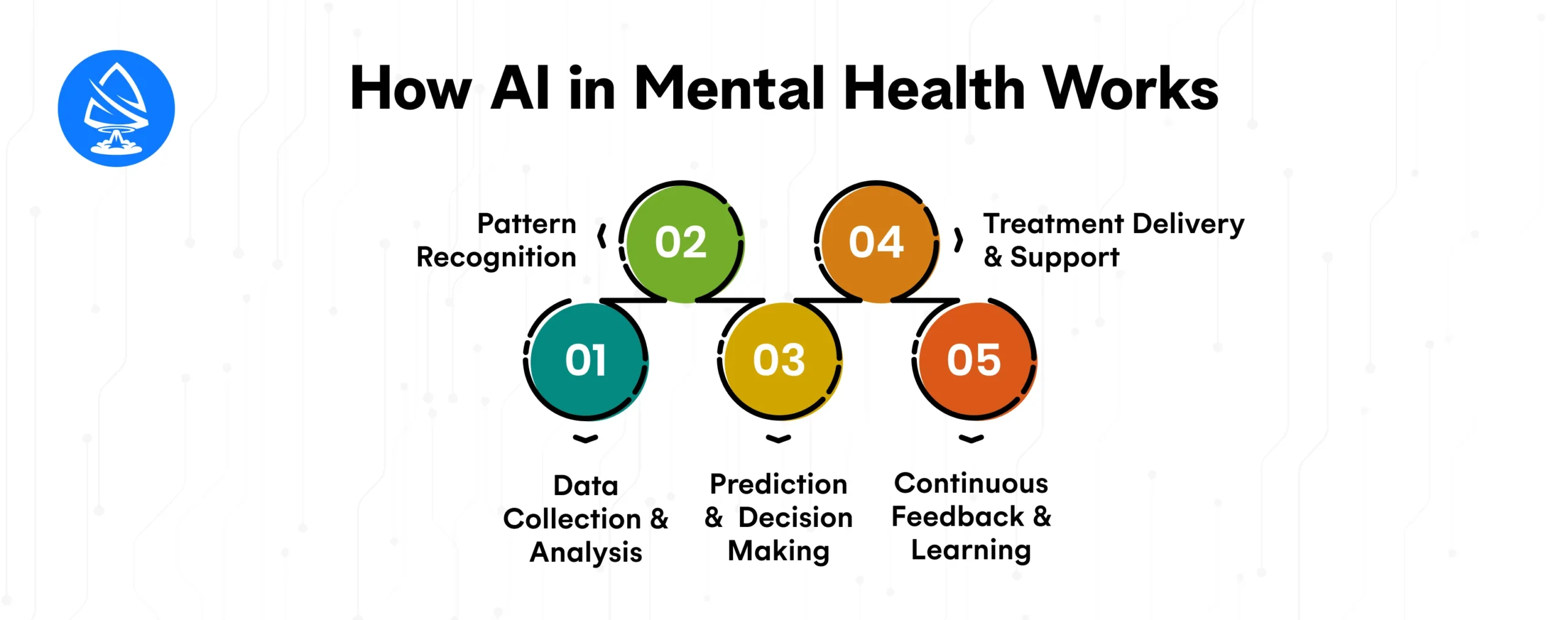
AI systems in mental health rely on data to make informed predictions and recommendations. This data can come from multiple sources, including electronic health records (EHRs), patient surveys, wearable devices, social media activity, and even conversations with therapy chatbots.
Once the data is collected, AI algorithms analyze it to identify patterns and correlations. For example, AI can track emotional cues from written messages or voice data to identify signs of mental health issues like depression or anxiety. AI can also look for historical patterns, such as recurring behaviors or symptoms, to predict future episodes.
With the data and patterns at hand, AI uses predictive models to forecast mental health conditions and offer real-time recommendations. This can range from suggesting specific therapeutic exercises to flagging a patient’s emotional distress level or predicting a potential relapse in chronic conditions like depression.
AI tools such as therapy chatbots or mental health apps then deliver personalized interventions based on the data collected. These tools may provide Cognitive Behavioral Therapy (CBT), mindfulness exercises, mood tracking, or real-time emotional support, depending on the patient’s needs.
As AI systems interact with users and gather more data, they continually improve their understanding of each patient’s mental health. AI models “learn” from ongoing interactions and adapt treatment plans accordingly, providing more accurate and effective support over time.
AI in mental health is being used in various ways, from virtual therapy sessions to real-time emotional support. Here are some of the most common applications:
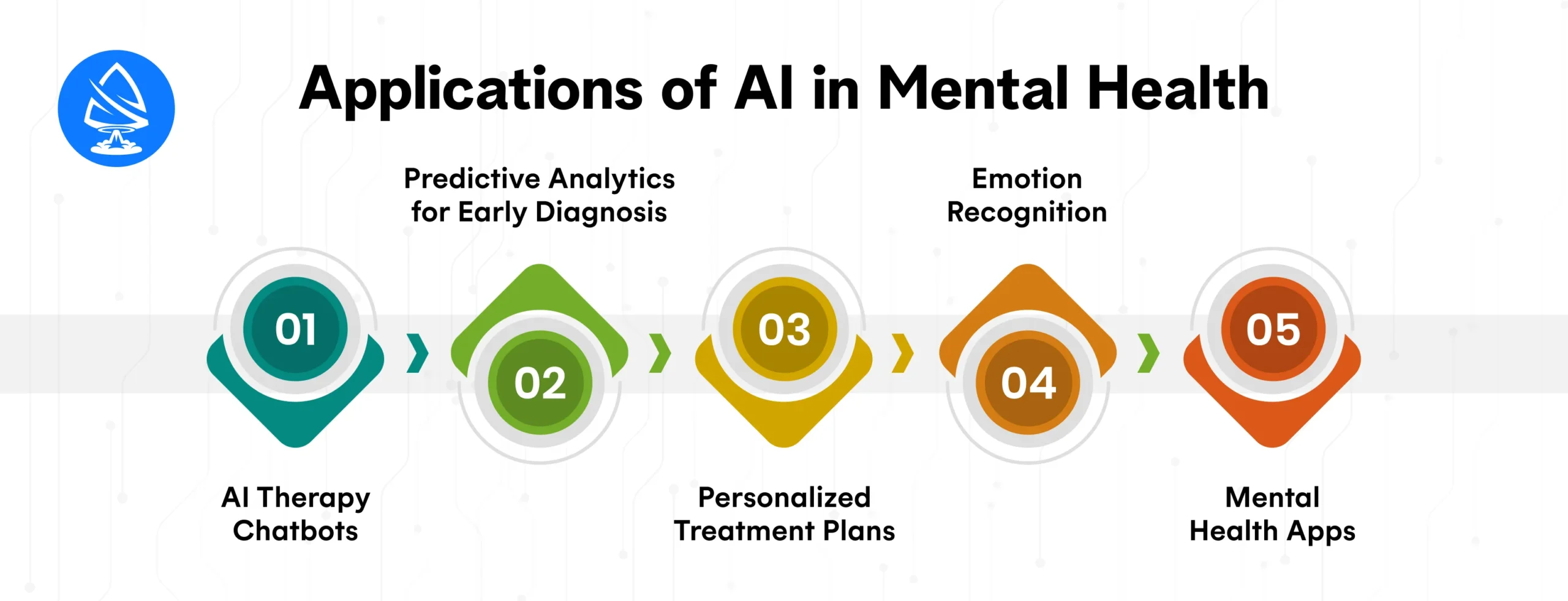
These AI-driven chatbots use Cognitive Behavioral Therapy (CBT), dialectical behavior therapy (DBT), and other therapeutic approaches to offer automated support for individuals suffering from anxiety, depression, or stress. These chatbots are available 24/7, providing immediate help whenever needed.
AI tools can predict mental health issues before they become severe. By analyzing large datasets, AI can flag early warning signs of mental health conditions and alert healthcare providers, enabling early intervention.
AI systems can analyze patient data to create highly personalized mental health treatment plans. These plans are adjusted based on real-time data and ongoing feedback, ensuring that patients receive the most effective care.
AI tools are increasingly used to track and analyze emotions through facial recognition, voice modulation, or text sentiment analysis. This can help identify signs of emotional distress and adjust care accordingly.
AI-powered mental health apps offer users a variety of tools to track their mental health journey, such as mood tracking, therapy exercises, and stress management techniques. These apps can be integrated with wearables to provide continuous monitoring and offer personalized insights.
The integration of AI in therapy is one of the most promising advancements in mental health care. Artificial intelligence tools help therapists provide better, faster, and more personalized treatment by automating many of the tasks involved in the therapeutic process, such as note-taking, appointment scheduling, and managing treatment plans. AI tools can also support therapy chatbots that offer support outside of traditional therapy sessions.
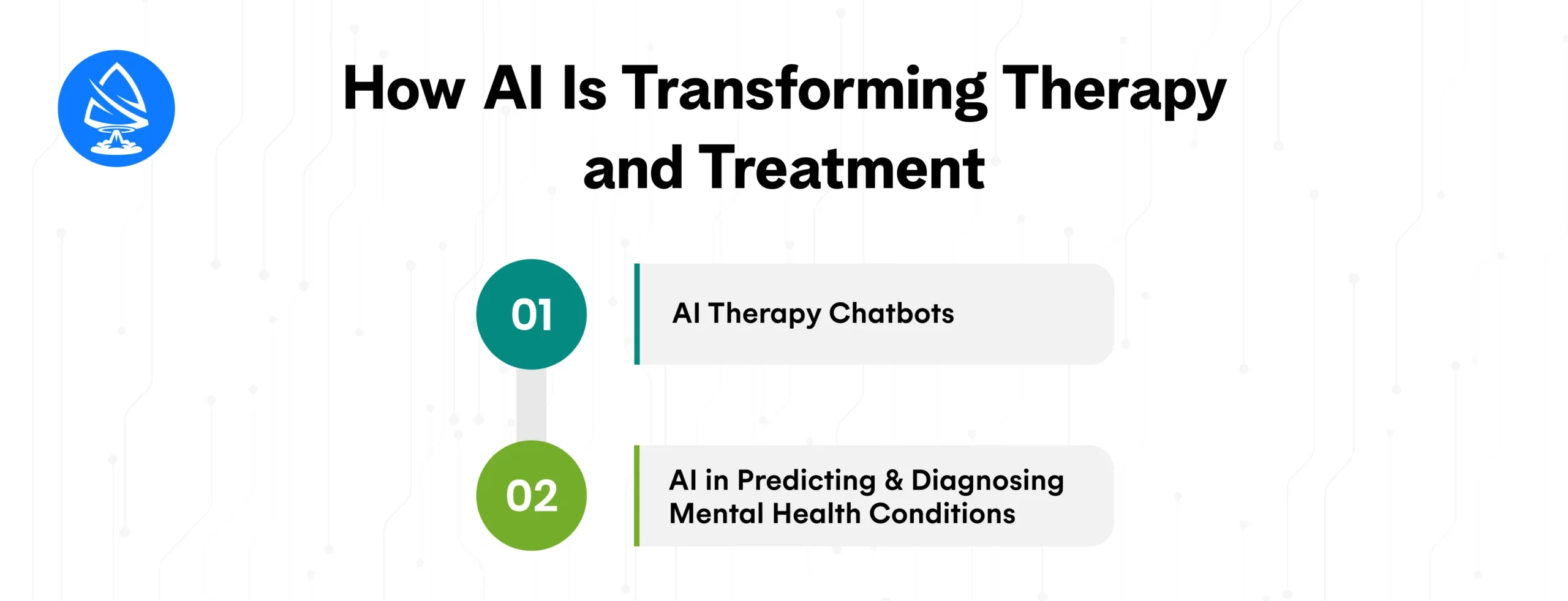
AI-powered therapy chatbots are becoming increasingly popular as part of the digital mental health ecosystem. These chatbots use NLP to engage in conversations with users, offering emotional support, providing self-help tips, or guiding them through mental health exercises such as cognitive behavioral therapy (CBT) or mindfulness.
Example: Woebot is an AI chatbot that uses CBT techniques to help users manage stress, anxiety, and depression. The bot is designed to provide interactive conversations and self-guided therapy sessions.
AI also plays a significant role in the early detection and diagnosis of mental health conditions such as depression, anxiety, and psychosis. By analyzing vast amounts of patient data, AI algorithms can identify patterns and early warning signs that may not be immediately apparent to human therapists.
Example: AI can analyze speech patterns, facial expressions, or social media activity to detect early signs of depression or psychosis, allowing for earlier interventions.
The integration of AI in mental health brings several benefits to both patients and healthcare providers:
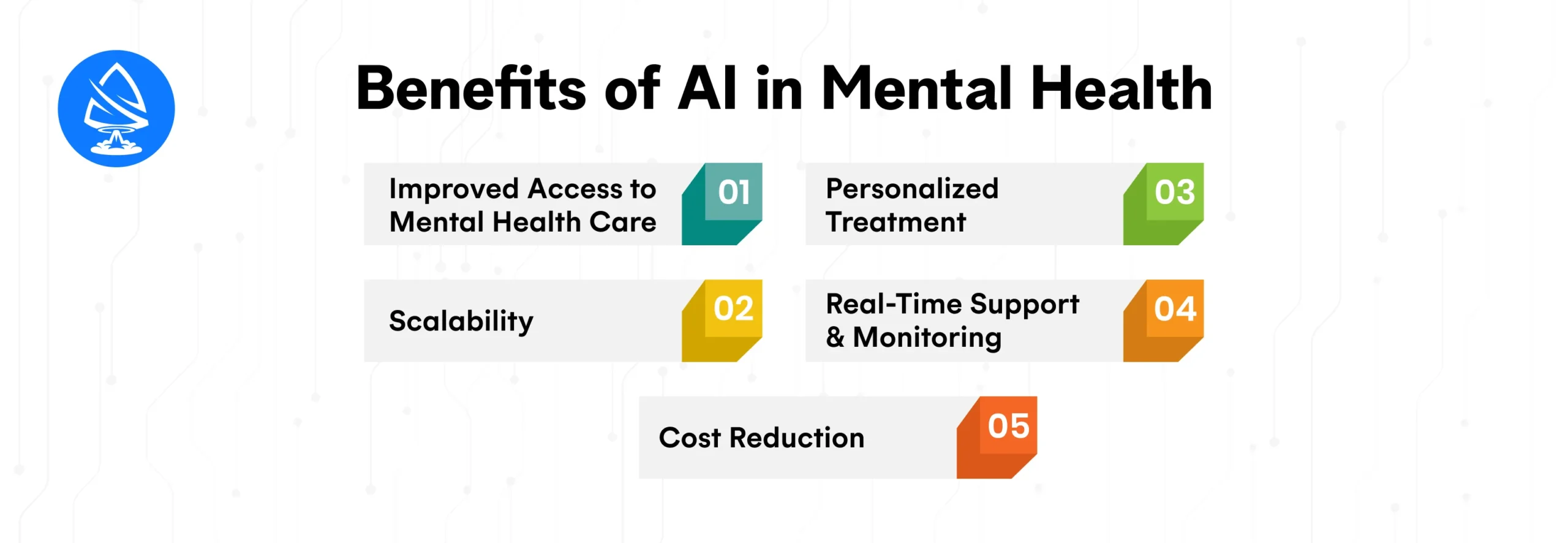
AI enables mental health care to be more accessible by offering virtual therapy through chatbots, mental health apps, and online resources. This is especially beneficial for individuals in remote areas or those who cannot access traditional therapy services due to stigma, cost, or other barriers.
With AI-powered tools, mental health care can be scaled to meet the needs of a larger population. AI-driven apps and chatbots can handle hundreds or even thousands of users at the same time, providing support at scale without overwhelming human therapists.
AI tools can analyze individual data to offer personalized treatment plans. Whether it’s adjusting therapeutic techniques or recommending specific mental health exercises, AI allows for a more tailored approach to each patient’s unique needs.
AI-powered apps can provide continuous support and track patient progress over time. Real-time monitoring and data collection allow healthcare providers to adjust treatment plans as needed, ensuring patients receive optimal care throughout their journey.
By automating routine tasks like intake, triage, and follow-ups, Artificial intelligence helps reduce the administrative burden on therapists, leading to cost savings. Additionally, AI allows therapists to focus on more complex cases, improving efficiency and the overall cost-effectiveness of mental health services.
AI can be applied in various aspects of mental health care to improve treatment and support. Some key use cases include:
AI can assist clinicians by analyzing various forms of data, such as text, speech, or video, and detecting early signs of mental health conditions like depression, anxiety, or psychosis. This allows for earlier diagnosis and treatment.
AI can provide automated CBT interventions through chatbots or apps. These AI tools offer users personalized cognitive restructuring techniques to help them manage negative thinking patterns and emotions.
AI chatbots can provide immediate mental health support in times of need, offering conversations and exercises to help individuals manage their mental health symptoms.
Example: Wysa is an AI chatbot that uses CBT techniques and other therapeutic models to help individuals with stress, anxiety, and depression.
AI can analyze data from various sources, including wearables, to predict mental health trends and the likelihood of a mental health crisis. This helps healthcare providers intervene early to prevent escalation.
AI is not only transforming the way mental health care is delivered, but it also plays a significant role in improving patient outcomes. Here are a few ways Artificial intelligence is helping mental health patients achieve better results:
AI can analyze patients’ behavior, communication patterns, and even physiological data to identify early signs of mental health issues. Early detection allows for timely intervention, leading to better treatment outcomes.
With AI tools, mental health professionals can monitor patients continuously, providing feedback and adjusting treatment plans based on real-time data. This ensures that patients receive personalized care throughout their treatment journey.
AI-enhanced tools like therapy chatbots and apps provide real-time feedback and personalized interventions, helping patients engage more effectively with their therapy. These tools supplement traditional therapy and enable patients to work on their mental health outside of scheduled sessions.
You may also want to know about AI in Agriculture
While AI in mental health presents numerous benefits, such as improved accessibility, enhanced decision-making, and personalized treatment, its integration into the healthcare ecosystem is not without challenges. The adoption of AI-powered tools in mental health care requires careful consideration of several factors. These challenges must be addressed to ensure that AI systems provide real value without compromising patient care or violating ethical standards.
Below are the key challenges and considerations when implementing Artificial intelligence in mental health care:
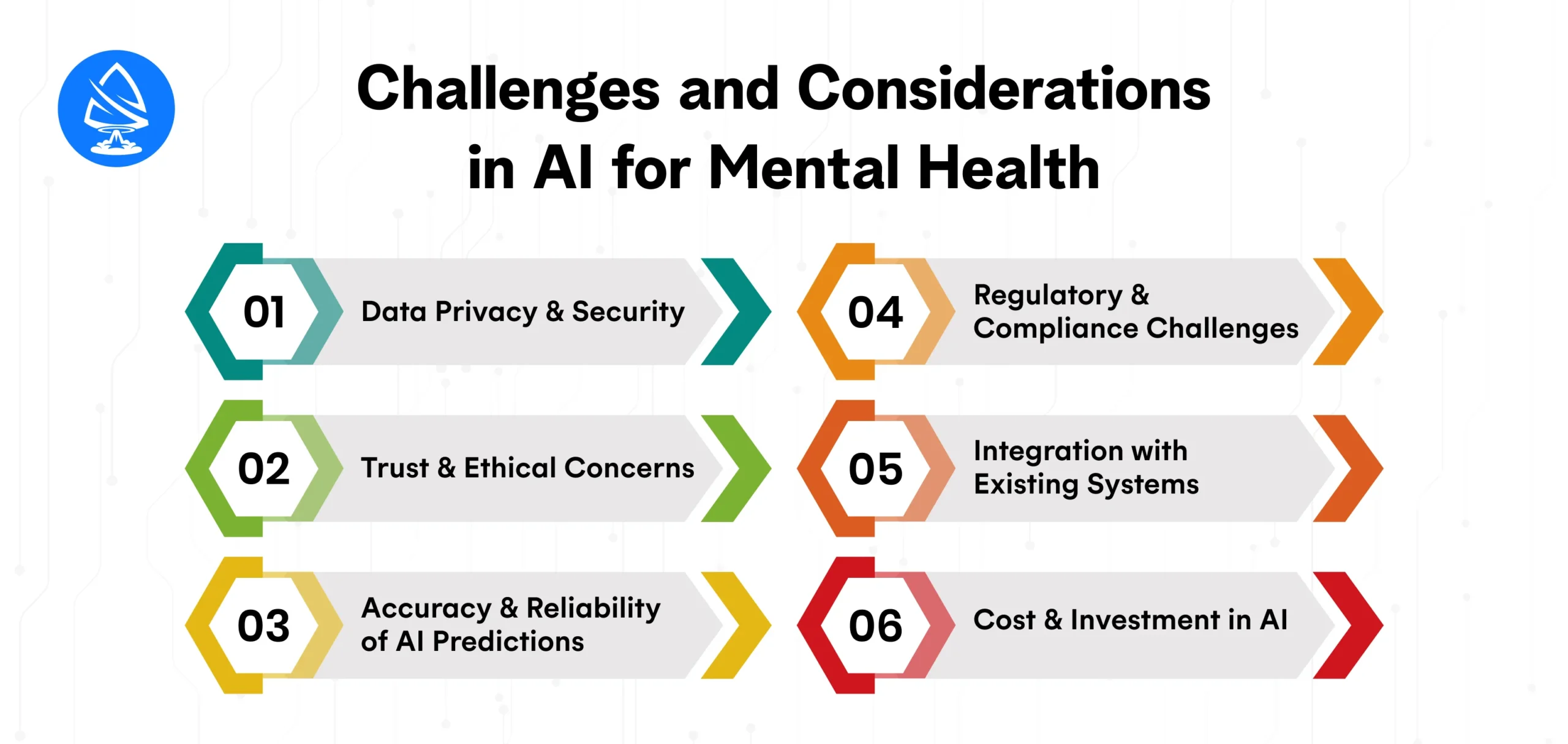
The most significant challenge when implementing Artificial intelligence in mental health is data privacy and security. Mental health data is highly sensitive and must be handled with the utmost care. The risk of data breaches or unauthorized access to personal and health information poses serious concerns for both patients and healthcare providers. AI systems require vast amounts of personal data, such as therapy sessions, behavioral data, and even biometric information, making it critical to secure this data.
The adoption of Artificial intelligence in mental health care requires overcoming skepticism and trust issues. Many patients and clinicians may be hesitant to trust AI tools with their mental well-being, especially when it comes to sensitive mental health issues. There is a concern that Artificial intelligence systems may not be able to fully understand the complexities of human emotions, making it challenging for AI-driven therapy tools or diagnostic models to gain trust.
AI systems, especially those used for diagnosis and treatment recommendations, rely on historical data to make predictions. If the data used to train these models is incomplete, outdated, or of poor quality, the AI predictions may be inaccurate. For example, an AI system predicting depression severity based on a limited dataset may overlook specific symptoms or misinterpret data, leading to unreliable outcomes.
The integration of Artificial intelligence in mental health care is subject to strict regulations that govern the use of medical devices, data protection, and patient safety. Navigating the regulatory landscape can be complex, especially with the evolving nature of AI technologies and varying laws across regions. Artificial intelligence tools in mental health must comply with both healthcare regulations and AI ethics standards to ensure patient safety, transparency, and accountability.
Integrating Artificial intelligence tools into existing mental health care systems and workflows can be challenging. Many mental health organizations already rely on traditional methods and software systems to manage patient data, track progress, and deliver care. Introducing AI requires careful planning to ensure compatibility and minimize disruption.
While AI has the potential to transform mental health care, the initial cost of implementing Artificial intelligence technologies can be a barrier for many organizations. Developing or purchasing AI-driven tools, training models, ensuring data security, and integrating AI with existing systems all come at a high cost. Additionally, ongoing monitoring, optimization, and updates are necessary to maintain the AI system’s effectiveness.
Artificial intelligence in mental health is set to revolutionize how mental health services are delivered, making them more accessible, affordable, and personalized. From Artificial intelligence powered therapy chatbots to predictive analytics for early intervention, Artificial intelligence is playing a crucial role in reshaping the mental health landscape.
At Artoon Solutions, we specialize in creating AI-driven applications for businesses in the mental health space. Whether you’re looking to integrate Artificial intelligence powered therapy tools or build a comprehensive mental health Artificial intelligence app, we have the expertise to help you achieve your goals.
Ready to innovate in mental health care with Artificial intelligence? Contact us for a consultation or use our AI App Cost Calculator to understand the potential ROI of AI-driven mental health solutions.
1. What is Artificial intelligence in mental health?
Artificial intelligence in mental health refers to the use of artificial intelligence tools like chatbots, predictive analytics, and machine learning to support diagnosis, therapy, and patient management in the mental health field.
2. How can AI help in diagnosing mental health disorders?
AI can analyze data from various sources to detect early signs of mental health issues, enabling early intervention and better treatment outcomes.
3. Can AI replace human therapists?
AI can assist and augment human therapists by providing support through chatbots, automated therapy, and data analysis, but it does not replace human expertise and judgment in therapy.
4. What are some AI tools for mental health care?
AI tools for mental health care include therapy chatbots like Woebot, predictive analytics tools for early diagnosis, and mental health apps that provide personalized interventions and coping mechanisms.
5. Is Artificial intelligence in mental health effective?
Yes, Artificial intelligence in mental health has shown effectiveness in automating tasks, predicting mental health risks, providing real-time support, and offering personalized therapy options, ultimately improving patient outcomes.
6. How secure is patient data with Artificial intelligence in mental health?
AI solutions for mental health must comply with privacy regulations such as HIPAA to ensure that patient data is protected. Ensuring data encryption and secure data storage is essential.
7. What are the challenges of using Artificial intelligence in mental health?
Challenges include data privacy concerns, skepticism about AI’s effectiveness, and ensuring that AI tools are regulated to meet healthcare standards and regulations.
8. How can Artoon Solutions help with Artificial intelligence in mental health?
Artoon Solutions specializes in developing custom AI applications for the mental health industry, helping businesses integrate Artificial intelligence powered tools for therapy, diagnosis, and patient management.

Artoon Solutions
Artoon Solutions is a technology company that specializes in providing a wide range of IT services, including web and mobile app development, game development, and web application development. They offer custom software solutions to clients across various industries and are known for their expertise in technologies such as React.js, Angular, Node.js, and others. The company focuses on delivering high-quality, innovative solutions tailored to meet the specific needs of their clients.
 For business inquiries only




