- HR:+91-879-9184-787
- Sales:+91-908-163-7774


The fast rate of AI in modern healthcare is changing the way medical practitioners relate to patients. Healthcare is no longer diagnosis and treatment, but it is more a question of developing meaningful, personalized, and seamless experiences for patients. As more medical providers are using AI to provide medical care and artificial intelligence in health care, now better opportunities are available to them to enhance engagement, establish trust, and provide care based on value.
Patient satisfaction, patient retention, and better outcomes have become central issues revolving around customer engagement in healthcare. With the help of AI and the medical industry, organizations will be able to improve communication, anticipate patient needs, and provide proactive care solutions. The five useful AI strategies we discuss in this blog would go a long way in enhancing customer engagement in the healthcare industry.
Among the most significant advantages of AI in modern healthcare, personalized patient experiences can be listed. The use of AI in medicine is transforming the traditional healthcare systems that use a one-size-fits-all approach.
Using advanced algorithms, the AI medical systems examine the data of patients, such as their medical history, lifestyle, and preferences. This facilitates personalized treatment, reminders, and communication by health professionals.
As an illustration, healthcare artificial intelligence software can be used to send automated notifications on drugs or visits, which could be triggered by the behaviors of the patients. This is the artificial intelligence healthcare that enhances compliance and develops trust.
In addition, AI in modern healthcare makes it possible to predict analytics, where the needs of patients can be predicted even before they occur. This is very proactive in improving engagement.
AI-powered chatbots are another potent AI in modern health care. These applications offer real-time support, where queries from patients are responded to immediately.
Medical technologies using chatbots with AI technology may perform numerous functions, including:
In medical solutions, patients do not have to wait hours or days to get responses with the use of AI. Real-time communication improves patient satisfaction and interaction.
Hospitals that adopt AI in modern healthcare will be able to deploy chatbots on websites and apps that will guarantee regular communication. The role of artificial intelligence in assisting physicians also enables the physician to concentrate on vital cases and not on routine questions.
Chatbots are also extremely critical in modern AI healthcare strategies as they enhance accessibility and responsiveness.
One of the most revolutionary things with AI in modern healthcare is predictive analytics. With the help of big data, AI systems are able to anticipate any possible health risks and recommend preventive actions.
An example is using AI medical machinery that will analyze trends in patient data to identify diseases early. This will enable medical practitioners to prevent situations that lead to deterioration of conditions.
Predictive analytics can improve interactions between patients and health care providers with the help of artificial intelligence in health care. Patients are also better engaged in their health care process because they are warned and advised promptly.
Such proactive interaction forms one of the pillars of AI in modern healthcare.
AI in Modern Healthcare, particularly over the last several years, has led to the acceleration of the development of telehealth. Healthcare-driven remote monitoring enables patients to be in touch with physicians without having to visit them regularly.
These gadgets transmit real-time information to their healthcare providers, which allows healthcare providers to monitor 24/7. Such application of AI in medicine makes it opportune to intervene.
Virtual consultations are also available through telehealth platforms that apply artificial intelligence in healthcare, thus making healthcare more accessible. Patients have a chance to interact with doctors from the comfort of their homes, thus engaging them.
Remote monitoring enhances the role of AI in modern healthcare in enhancing engagement by bridging the gap between patients and providers.
Effective management of data is essential in the provision of good healthcare. The use of AI in modern healthcare helps organizations to store and analyze large volumes of information within a short period of time at an effective level.
Given the medical systems that are based on AI, the providers can access detailed information about the patient in real time. This will make sure that the patients have the relevant and timely care.
Also, doctor-assistant artificial intelligence saves time spent on administration and facilitates the doctor communicating with patients more often. The resultant patient satisfaction and engagement are improved through this improved attention.
One of the contributors to the success of AI in modern healthcare is the integration of AI with healthcare in data management.
Healthcare organizations need to engage a company with a strong track record of developing AI-based solutions to make these strategies effective. These firms concentrate on developing scalable and efficient AI-based solutions to healthcare.
A professional AI application developer can create systems that work in harmony with current healthcare systems. These professionals are involved in the smooth deployment and functionality of chatbots for predictive analytics.
Also, by investing in the development of AI applications, the services enable organizations to be competitive in the fast-changing industry. These services offer tailor-made services that can meet the business objectives and patient demands.
Although the AI in modern healthcare has many advantages, it is also associated with challenges:
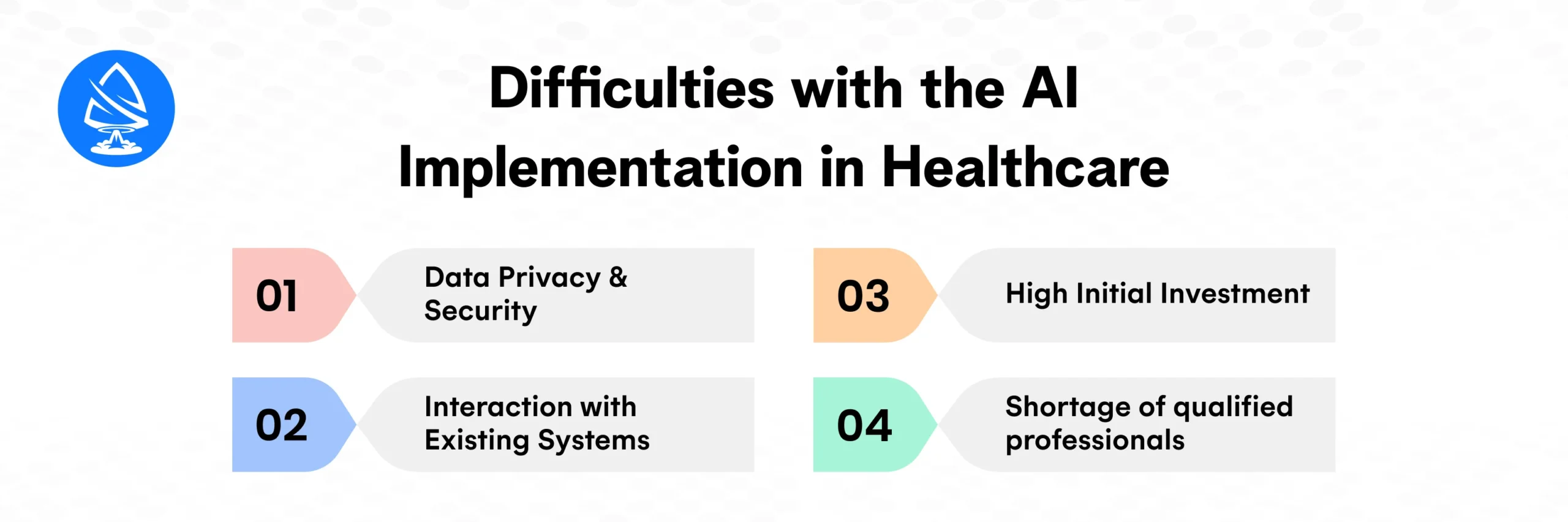
Nonetheless, the advantages of AI in modern healthcare substantially exceed the obstacles in the long run.
The potential of an AI development company in contemporary healthcare is extremely bright. As we continue to make progress, we shall have the following:
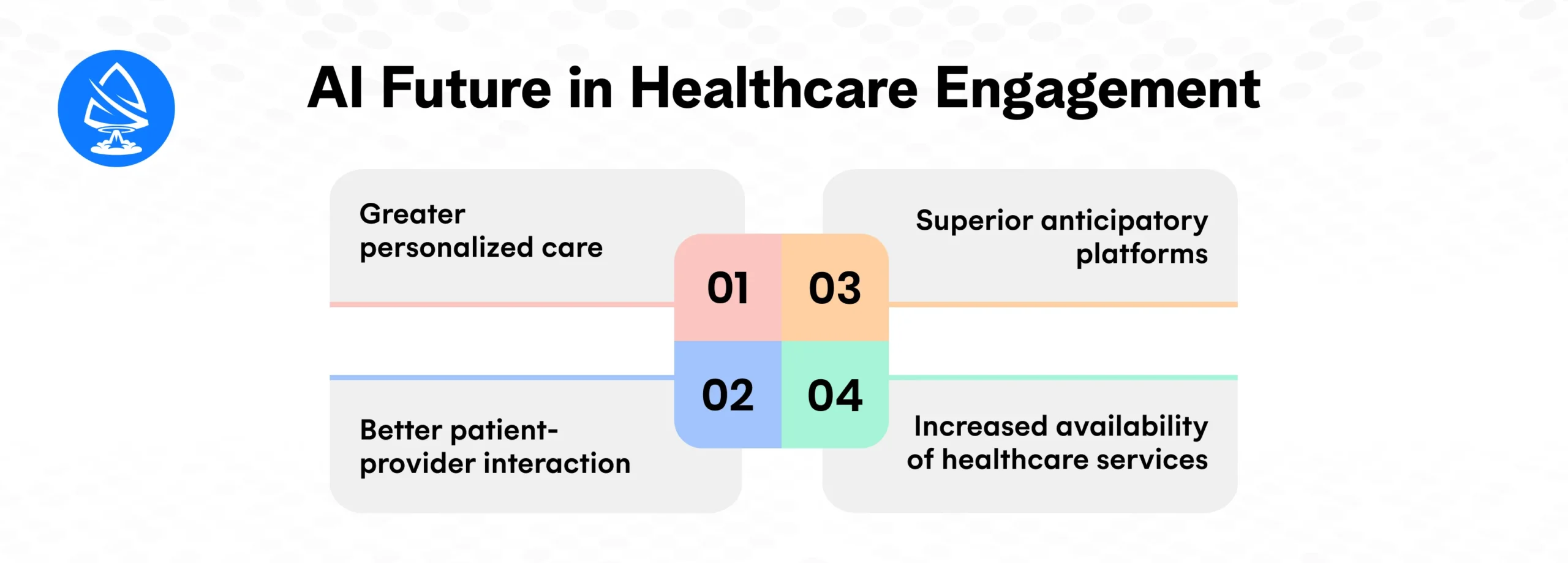
Such technologies as artificial intelligence, healthcare, and AI medicine will keep on advancing and will make healthcare more efficient and patient-oriented.
The increasing sophistication of AI in modern healthcare will enable medical professionals to provide extremely personalized care, which will improve trust even more.
AI in modern healthcare is revolutionizing the way patients interact by providing smarter, faster, and more individualized care experiences. It would help healthcare providers to improve by providing predictive insights for the intelligent automation of healthcare services and boost operational efficiency.
With the adoption of the concept of AI and healthcare solutions, organizations are able to enhance their relationship with patients, streamline workflows, and remain competitive. The future of artificial intelligence in health care is still developing, and the innovation should be applied in order to create a patient-centric healthcare ecosystem of the future.
The collaboration with Artoon Solutions will provide you with the innovative, scalable AI-elaborated healthcare solutions developed by skilled developers to address the requirements of the modern industry, whereas an AI cost calculator will help you estimate budgets and plan your AI medical projects effectively.
1. What is AI in Modern Healthcare?
Intelligent systems are being tried in modern healthcare with the aim of enhancing the process of diagnosis, treatment, and communication with patients.
2. What does the medical use of artificial intelligence do?
It helps to increase precision, accelerate diagnosis, and individualize treatment.
3. What is the importance of AI and healthcare?
It assists in cost reduction, efficiency, and better patient outcomes.
4. What is artificial intelligence in medicine?
It is applied in diagnostics, drug discovery, and patient monitoring.
5. What is the medical system of working with AI?
They use machine learning and algorithms to analyze big data.
6. What is healthcare artificial intelligence?
It is the application of AI technologies in healthcare services.
7. What are the benefits of healthcare AI in hospitals?
It is a computerized way of doing things and enhancing patient care.
8. What is the healthcare innovation of artificial intelligence?
It incorporates such tools as chatbots, predictive analytics, and robotic surgery.

Artoon Solutions
Artoon Solutions is a technology company that specializes in providing a wide range of IT services, including web and mobile app development, game development, and web application development. They offer custom software solutions to clients across various industries and are known for their expertise in technologies such as React.js, Angular, Node.js, and others. The company focuses on delivering high-quality, innovative solutions tailored to meet the specific needs of their clients.
 For business inquiries only




