- HR:+91-879-9184-787
- Sales:+91-908-163-7774



In recent years, the use of artificial intelligence (AI) has made significant strides across multiple industries, and the legal sector is no exception. Law firms are increasingly turning to AI legal assistants to streamline operations, improve efficiency, and enhance client service. The rise of AI legal assistants, including AI-powered chatbots, legal AI software, and AI legal research assistants, is transforming how law firms handle tasks such as legal research, document review, and client interactions. With the continuous growth of AI in the legal industry, law firms are discovering innovative ways to automate routine tasks, reduce human error, and increase profitability.
This blog explores the benefits of adopting AI legal assistants in law firms, the specific tasks they assist with, and the future impact of AI on the legal industry. Working with an artificial intelligence app development company can help law firms implement these solutions effectively and enhance their operations.
An AI Legal Assistant is a sophisticated software application powered by artificial intelligence (AI) designed to assist legal professionals in performing a wide range of tasks more efficiently and accurately. AI Legal Assistants leverage the power of natural language processing (NLP), machine learning (ML), and data analysis to automate and streamline complex, time-consuming processes typically handled by human legal professionals.
These AI-powered assistants are not just tools for answering basic queries; they are designed to enhance the capabilities of law firms, providing support in legal research, document management, client communications, contract analysis, and more. By utilizing cutting-edge technologies, AI Legal Assistants are able to analyze legal data, retrieve relevant case law, and even draft and review contracts, reducing the burden on lawyers and legal teams.
An AI Legal Assistant can be used for a variety of purposes within the legal industry. Here are some of the primary tasks they perform:
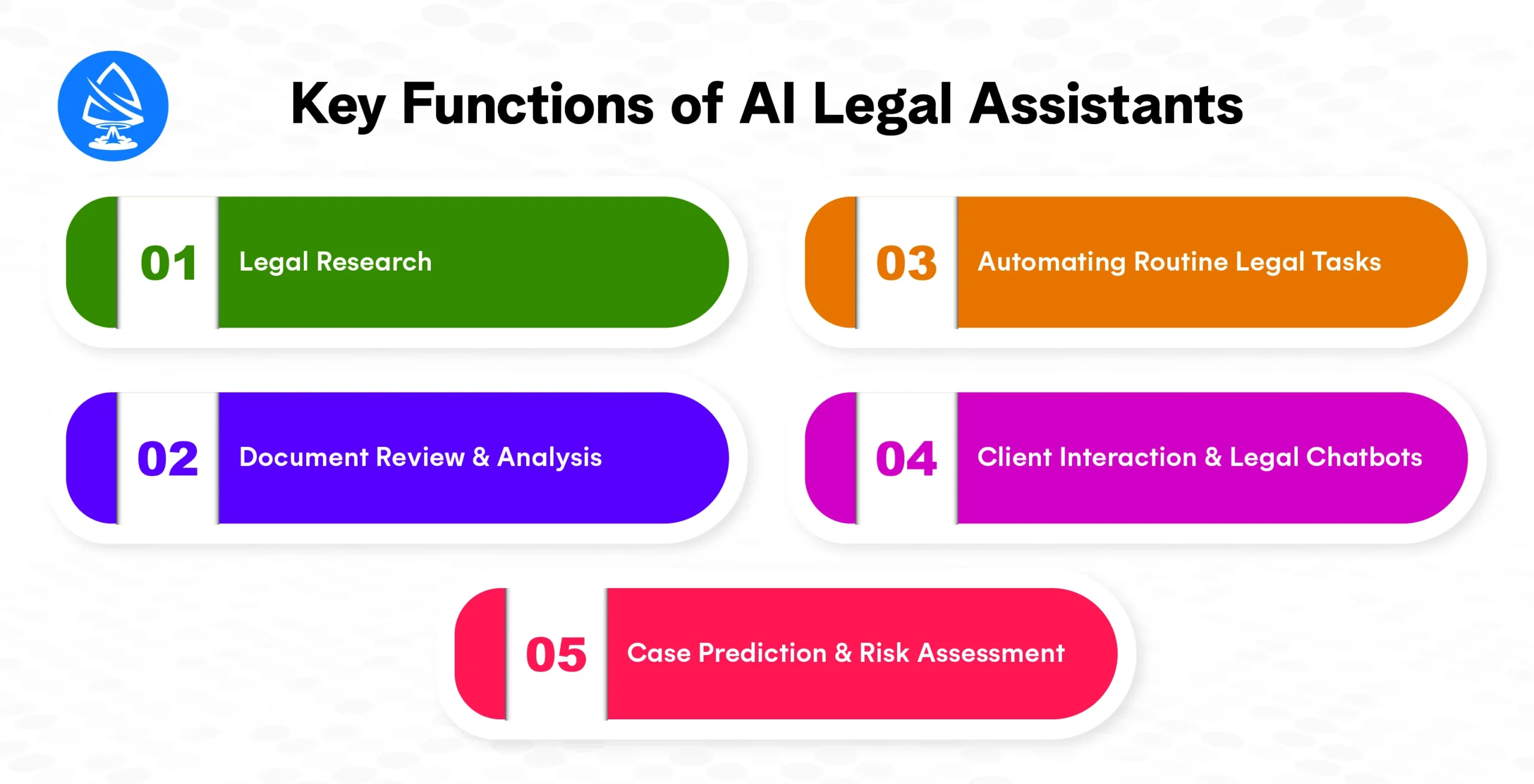
One of the most valuable functions of an AI Legal Assistant is its ability to conduct legal research quickly and accurately. Using advanced algorithms, the assistant can search through vast amounts of legal databases, case law, statutes, and regulations to provide the most relevant information.
Reviewing legal documents is another task that can be greatly enhanced by AI. AI Legal Assistants can analyze contracts, agreements, and legal briefs to identify key clauses, terms, and potential risks. This significantly speeds up the process of reviewing large volumes of legal paperwork.
Many routine tasks, such as document generation, contract drafting, and legal research summaries, can be automated with the help of AI Legal Assistants. This automation frees up lawyers and paralegals to focus on higher-level, strategic work.
AI legal chatbots are used for managing client communications and providing initial consultations. These bots can respond to basic client inquiries, explain legal terms, or schedule appointments, all while reducing the need for human involvement in low-level tasks.
AI Legal Assistants can also assist with case prediction and risk analysis. By analyzing historical legal data, including case outcomes, trends, and other relevant information, AI can help legal professionals assess the likelihood of success for a particular case.
You may also want to know Visual ChatGPT
AI Legal Assistants rely on several advanced technologies to deliver their functionality effectively. These include:
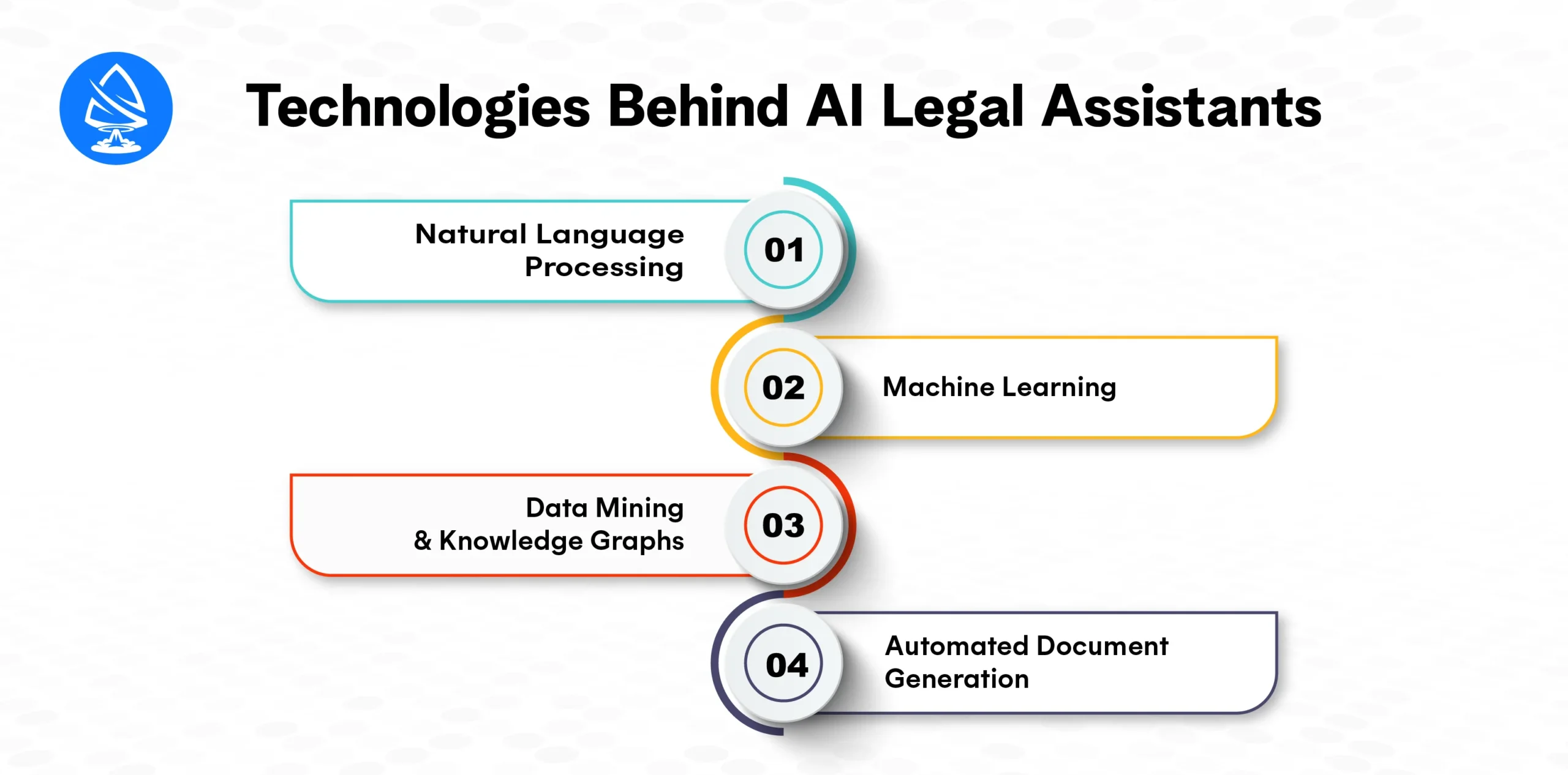
NLP allows AI to understand and process human language, enabling the assistant to interpret complex legal documents and respond to user queries in a human-like manner.
Machine learning algorithms enable the AI Legal Assistant to learn from data, improving its accuracy over time.
AI Legal Assistants use data mining techniques to extract relevant information from vast legal datasets.
AI Legal Assistants can generate legal documents using predefined templates or through natural language generation (NLG). NLG helps the system transform structured data into readable legal text.
The use of AI Legal Assistants offers several advantages for law firms and legal professionals, including:
One of the most significant benefits of AI Legal Assistants is the time savings they provide. This results in cost savings for the firm and faster turnaround for clients.
AI Legal Assistants reduce the risk of human error, which is crucial in the legal industry.
AI can handle large volumes of tasks simultaneously, making it a scalable solution for law firms of all sizes.
This ensures that clients receive prompt responses and that legal teams are always equipped with the tools they need.
This makes it easier for clients to interact with the law firm, improving their experience and satisfaction.
The integration of AI legal assistants is transforming the legal industry in profound ways. As law firms adopt these tools, the following changes are being observed:
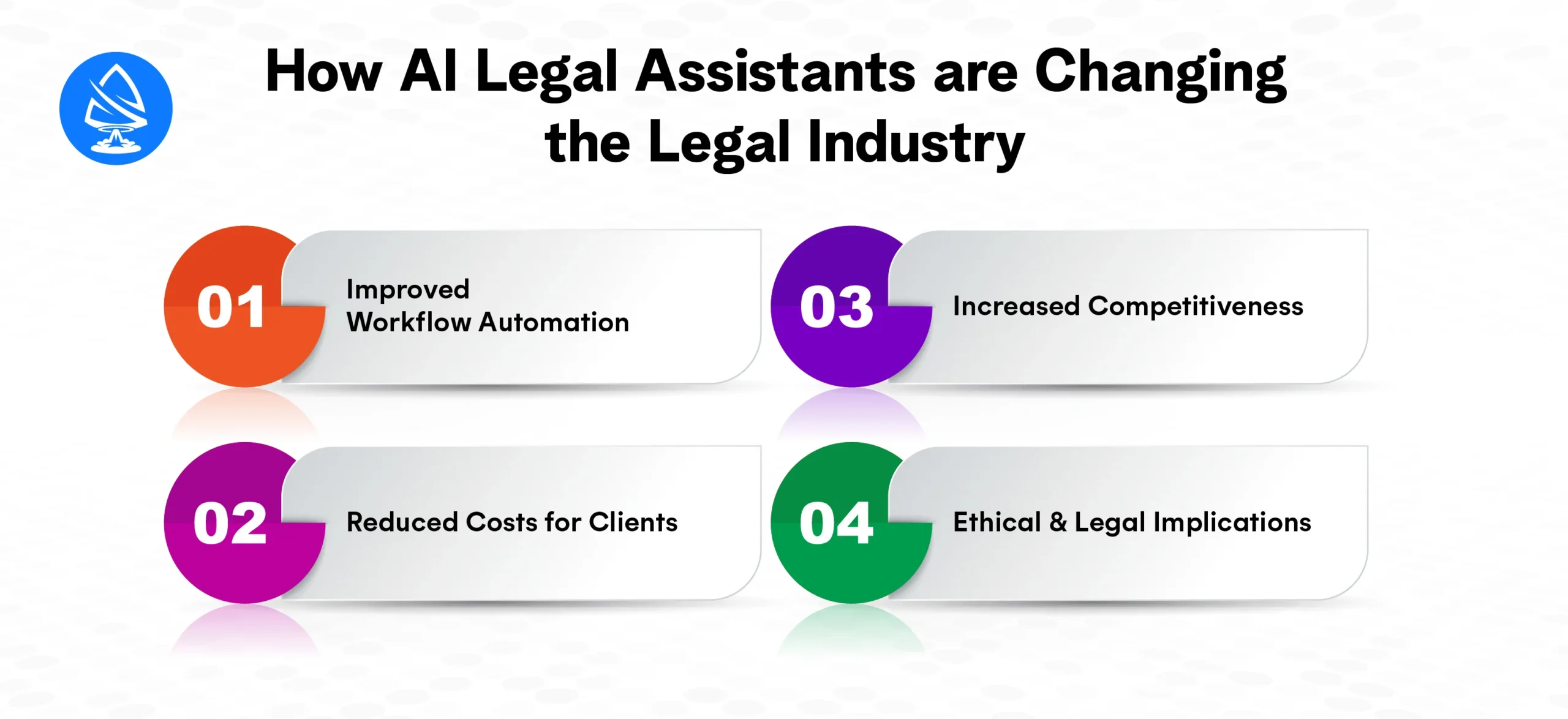
AI legal assistants automate routine tasks such as document preparation, contract review, and legal research, allowing law firms to run more efficiently and reducing the risk of errors.
By automating time-consuming processes, law firms can reduce operational costs, which in turn can lower fees for clients. This makes legal services more accessible and cost-effective for both firms and clients.
As law firms embrace AI, they become more competitive by offering faster, more accurate services. Firms that leverage AI tools can handle more cases, deliver higher-quality legal advice, and improve client retention.
The use of AI in legal work raises questions around ethics, particularly with regard to data privacy, transparency, and decision-making. As AI becomes more integrated into legal workflows, the industry will need to address these concerns to ensure responsible use of AI technology.
The legal industry, known for its traditionally labor-intensive processes and complex documentation, has witnessed a significant shift in recent years due to the integration of Artificial Intelligence (AI).
So, why are law firms adopting AI legal assistants? The answer lies in the multiple benefits these AI-powered tools bring to the table, from streamlining workflows to reducing costs and enhancing client satisfaction.
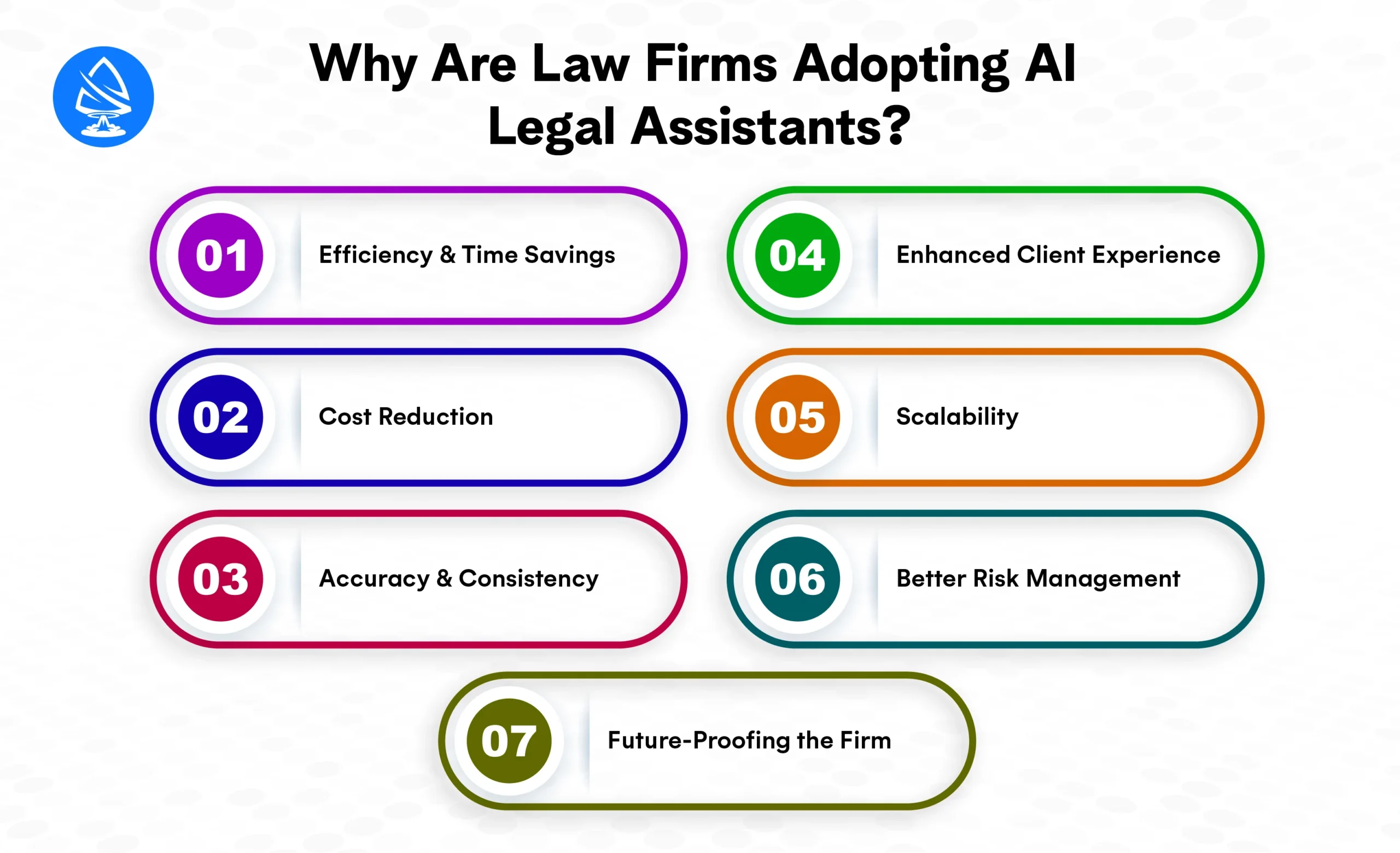
The legal profession involves managing large volumes of documents, contracts, and case files, all of which demand significant time and effort to process and analyze. AI Legal Assistants help law firms save substantial time by automating repetitive and time-consuming tasks, allowing legal professionals to focus on higher-value work.
Running a law firm can be expensive, especially when it comes to administrative costs. Tasks like document review, legal research, and client communication require substantial human resources, driving up operational expenses.
Human errors in legal work can have serious consequences, from missed deadlines to inaccurate interpretations of laws and regulations. AI Legal Assistants excel at performing repetitive tasks with consistent accuracy, reducing the risk of mistakes that could impact case outcomes or legal compliance.
In today’s fast-paced world, clients demand quicker, more efficient service. They want timely responses, streamlined communication, and proactive updates. By adopting AI Legal Assistants, law firms can enhance the client experience in several ways:
As law firms grow, managing increased workloads and scaling operations can become challenging. AI Legal Assistants provide a scalable solution that grows with the firm. Unlike human staff, AI tools can handle an increased volume of work without the need for hiring additional employees or expanding office space.
AI Legal Assistants are increasingly being used to identify potential legal risks early in the process, which helps law firms make more informed decisions. AI systems analyze data from contracts, legal precedents, and case law to highlight areas of concern and provide risk assessments.
The adoption of AI legal assistants helps law firms future-proof their operations in an increasingly digitized and automated world. As the legal industry continues to evolve and more firms embrace technology-driven solutions, those that fail to adopt AI may fall behind their competitors.
By adopting AI Legal Assistants, law firms demonstrate their commitment to innovation, ensuring that they remain relevant and competitive in the legal landscape.
You may also want to know AI in Oil and Gas
The integration of AI Legal Assistants in law firms has revolutionized the way legal professionals perform their day-to-day tasks. These AI-powered assistants combine machine learning (ML), natural language processing (NLP), and data analytics to assist lawyers in making more informed decisions, improving accuracy, and offering faster service to clients.
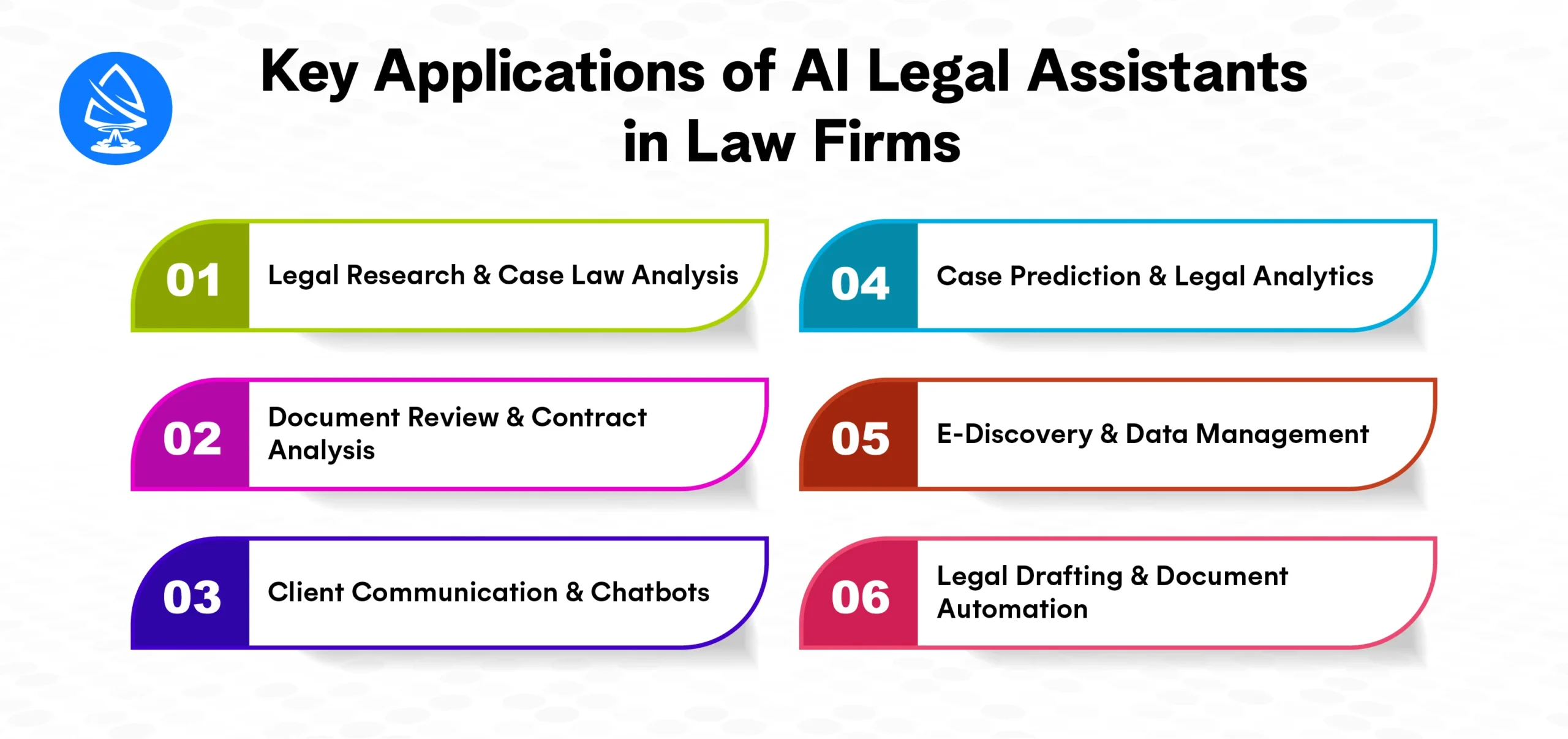
One of the most time-consuming tasks for legal professionals is legal research.
AI Legal Assistants are widely used for document review and contract analysis, two crucial tasks in law firms. Reviewing large volumes of contracts and legal documents can be extremely time-consuming and prone to human error. AI can automate this process by scanning contracts and documents for key clauses, legal terminology, inconsistencies, and potential risks.
AI Legal Chatbots are increasingly being used in law firms to handle initial client inquiries, provide updates on ongoing cases, and assist with scheduling appointments. These AI-powered chatbots can engage in natural, intelligent conversations with clients, providing immediate responses to frequently asked questions and delivering timely updates.
AI Legal Assistants are increasingly being used to help law firms predict the outcomes of cases and assess legal risks. By analyzing large datasets, including historical case law, judicial rulings, and even societal trends, AI tools can help lawyers make more informed decisions about whether to pursue a case or settle.
In large-scale litigation, e-discovery is a crucial part of the process, requiring lawyers to sift through vast amounts of electronic data to find relevant information. AI Legal Assistants can automate the e-discovery process, making it easier to locate important documents, emails, and communications relevant to a case.
AI Legal Assistants can assist law firms with the legal drafting process, particularly when creating standard contracts or legal documents. These AI tools can automatically generate contracts, NDAs, wills, and other legal documents based on predefined templates and user input.
The legal industry is undergoing a significant transformation with the rapid adoption of artificial intelligence (AI).
The future of AI in the legal industry is driven by several factors:
The role of AI in the legal industry has already expanded beyond simple automation of repetitive tasks.
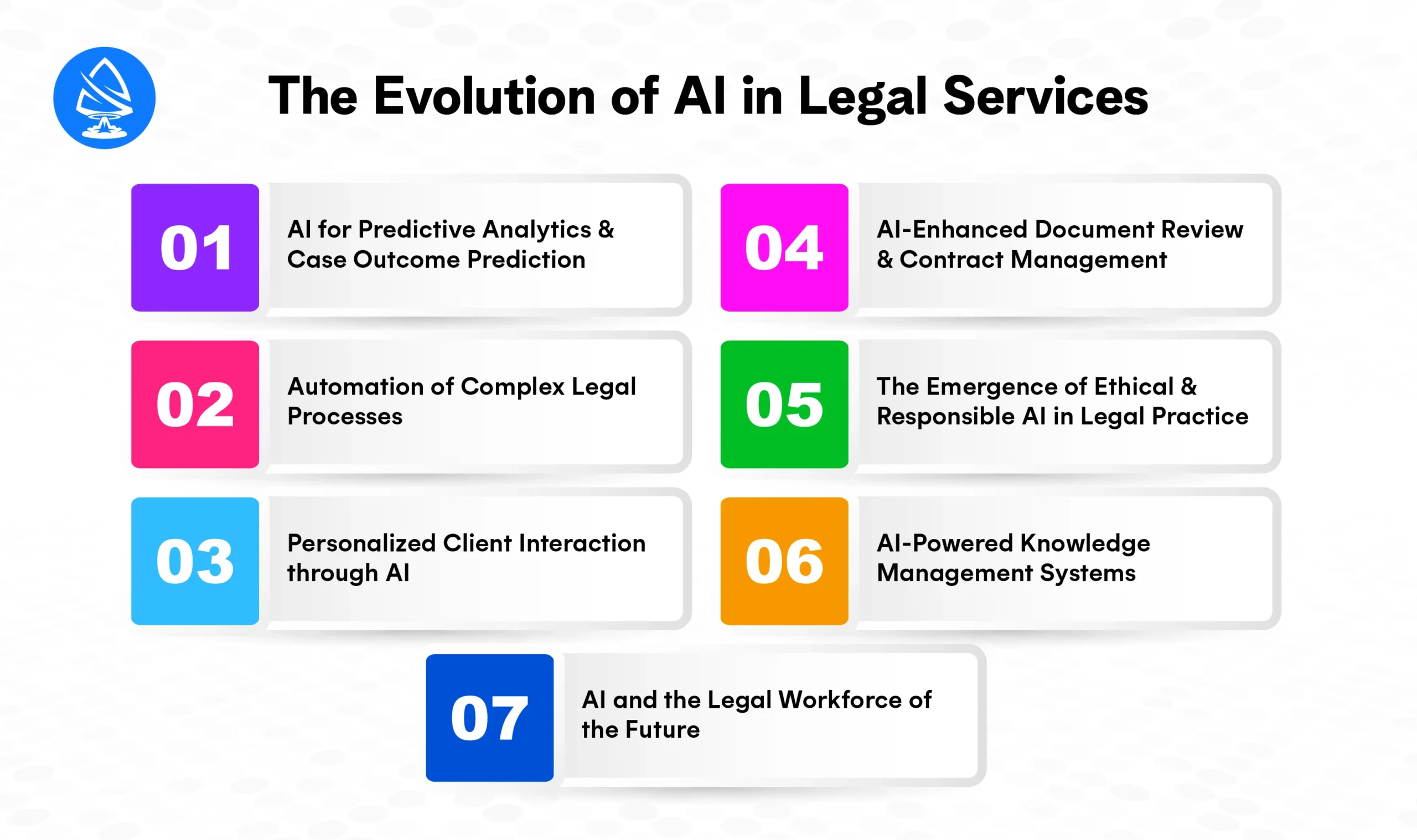
One of the most promising developments in the legal sector is the use of predictive analytics.
While AI tools currently automate many routine tasks, such as document review, contract generation, and legal research, the future of AI in law will involve the automation of more complex legal processes.
As AI becomes more advanced, personalized interactions with clients will become more common.
The future of AI in document review is set to revolutionize how law firms handle legal contracts and large volumes of documentation. AI will be capable of performing real-time contract analysis, identifying risks, discrepancies, and regulatory violations, and even suggesting modifications.
As AI adoption increases in law firms, the focus on the ethical use of AI will become even more critical.
In the future, AI will be used to create intelligent knowledge management systems within law firms.
As AI takes over repetitive tasks, the role of lawyers will evolve. The adoption of AI in law firms will likely lead to a shift in the skills required from legal professionals.
While the future of AI in law presents many exciting opportunities, some challenges need to be addressed:
The legal profession continues to evolve rapidly. AI legal assistants help law firms stay competitive and reduce human error. They also enhance the overall client experience. Law firms must integrate these technologies into their workflows. This allows automation of routine tasks. Lawyers can then focus on higher-value legal work. Collaborating with an Artificial Intelligence Developer can ensure smooth integration and maximize the potential of these AI-driven solutions.
1. What is an AI legal assistant?
An AI legal assistant is an AI-powered tool for law firms. It automates legal research, document review, and contract management. It also supports client communication.
2. How do AI legal assistants improve efficiency in law firms?
AI legal assistants automate repetitive and time-consuming tasks. These tasks include document review and legal research. This allows legal professionals to focus on higher-value work. Overall efficiency improves significantly.
3. Can AI be used for legal research?
Yes, AI legal research assistants analyze vast amounts of legal data quickly. This data includes case law and statutes. They provide relevant information and precedents within seconds. This saves time and improves accuracy.
4. What are the benefits of AI-powered legal chatbots?
AI-powered legal chatbots provide 24/7 client support. They answer basic legal questions and schedule appointments. They also deliver a more interactive client experience. This happens without the need for human intervention.
5. Is AI legal assistant software expensive?
The cost of AI legal assistant software varies depending on the features and functionality. However, the benefits, such as cost savings, time efficiency, and improved accuracy, often outweigh the initial investment.
6. How secure is AI in the legal industry?
AI tools in the legal industry are typically highly secure. They use advanced encryption and data protection protocols. These measures keep sensitive client information confidential and safe.
7. Can AI predict the outcome of legal cases?
Yes, AI case prediction tools analyze historical legal data and trends. They predict the likelihood of success in a case. These insights help lawyers before proceeding with litigation.

Artoon Solutions
Artoon Solutions is a technology company that specializes in providing a wide range of IT services, including web and mobile app development, game development, and web application development. They offer custom software solutions to clients across various industries and are known for their expertise in technologies such as React.js, Angular, Node.js, and others. The company focuses on delivering high-quality, innovative solutions tailored to meet the specific needs of their clients.
 For business inquiries only