- HR:+91-879-9184-787
- Sales:+91-908-163-7774


Artificial intelligence (AI) is reshaping the way companies conduct business with data and end users. Chatbots and virtual assistants, as well as high-tech automation, are assisting companies in becoming more efficient and user-friendly with the help of AI technologies. Natural Language Processing (NLP) and Large Language Models (LLMs) are two key terms that are mentioned frequently in the AI discussion.
Most of these businesses cannot comprehend the distinction between these technologies and the kind of technology to suit them. That is why it is important to comprehend NLP vs LLM when developing a successful AI strategy.
This guide will discuss the differences between NLP vs LLM and their functionalities, their main peculiarities, applications, their pros and cons, and how companies can determine which technological solution fits their purposes.
There is a need to understand what NLP is before proceeding further with the comparison between NLP vs LLM.
NLP in AI is the technology that enables the use of computers in creating, interpreting, and understanding human language. It is a convergence of linguistics, machine learning, and AI to process speech or text.
NLP models are applied to large amounts of text data in businesses to derive valuable information.
As an example, a customer may also submit their feedback, such as “The delivery was delayed, but the quality of the product is excellent,” and an NLP model can handle the sentence and identify both positive and negative sentiments.
The comprehension of this functionality is critical when comparing NLP vs LLM technologies.
You may also want to know AI Strategies
NLP models are algorithms that are used to process and comprehend human language.
These natural language models examine the text data patterns and transform the text language into structured data that is readable by computers.
The NLP models can perform some common tasks, and these include
Conventional NLP model systems are based on machine learning algorithms and given rules to a great extent. These systems are the basis of models’ natural language understanding.
For example:
An e-commerce company can use NLP models to classify product reviews into positive, neutral, and negative categories.
Knowledge of how models’ natural language works can be used to explain differences between NLP vs LLMs.
Large language models are highly developed AI models that are capable of comprehending and writing text as human beings do. Speaking about NLP vs LLM, one should understand that the latter is created on the basis of deep learning and huge datasets.
The majority of the modern LLMs are based on transformer language architecture, enabling them to comprehend context more than the old-fashioned NLP models.
An LLM transformer architecture processes the associations between words in a sentence and produces sensible answers.
Examples of LLM capabilities are the following:
In the context of the comparison between LLMs and NLP, LLMs are an improved development of natural language models.
When a person queries, “What is quantum computing in terms that a normal person can understand?” An LLM can produce an explanation of quantum computing in detail, not just by accessing stored information.
In order to see the differences between NLP and LLM, we must examine the history of natural language model development.
Initial NLP systems were based on rule systems.
Machine learning enhanced statistical-based natural language processing later on.
Lastly, deep learning presented strong transformer language models that developed current LLMs.
Natural language model. Stages in the evolution of natural language models include:
This development is the reason why the LLM transformer architecture has gained such popularity.
It is possible to say that understanding the key distinctions between NLP vs LLM is the way in which businesses make the right choice.
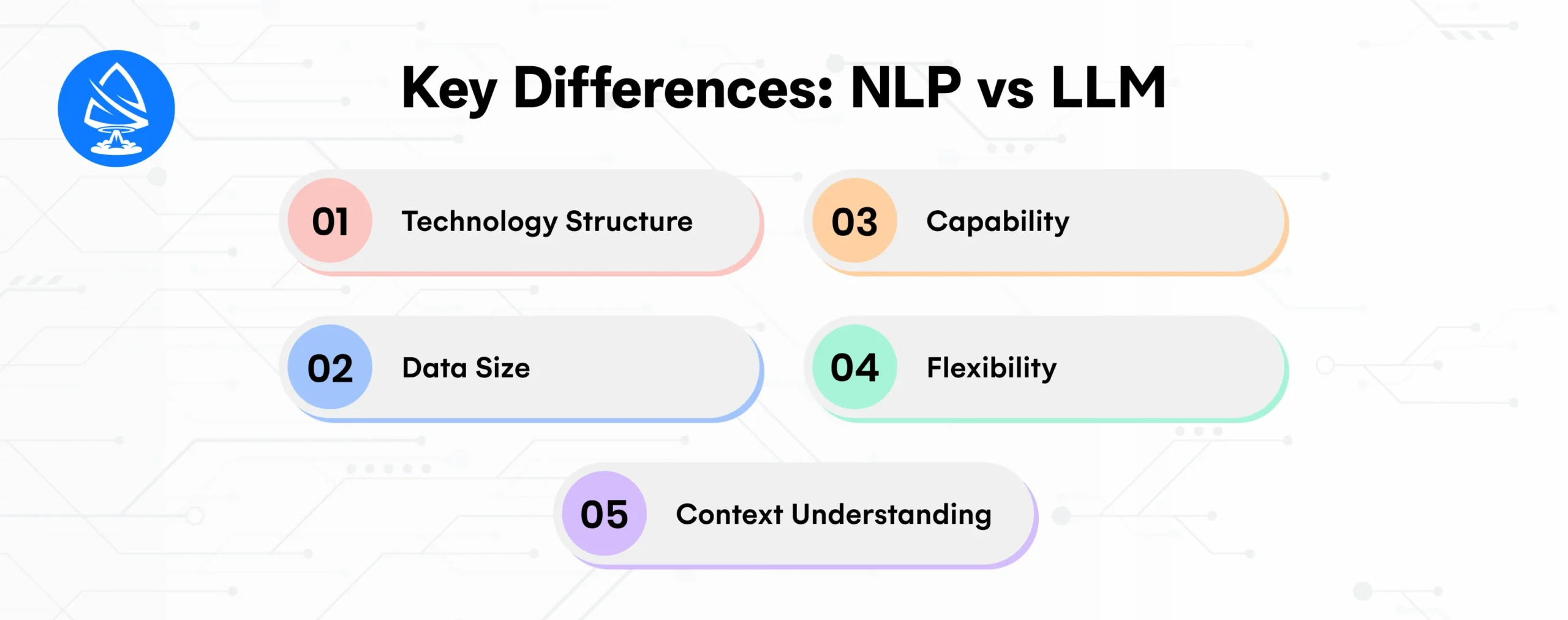
This improvement is a major reason why businesses prefer LLMs in the NLP vs LLM debate.
The other question that businesses are always posed is NLP vs machine learning. A general area in which algorithms are trained to learn using information is machine learning. NLP in AI is a particular use of machine learning that concentrates on language.
In simple terms:
In the analysis of NLP vs machine learning, NLP is viewed as a branch of machine learning. This relationship can be understood to explain the meanings of LLM vs ML and NLP vs LLM.
The analysis of the difference between LLM vs ML also matters. Many different models are present in machine learning: regression, decision trees, clustering algorithms, and others.
LLMs are a special kind of deep learning model that can be used to perform language tasks.
In the LLM vs ML debate:
When comparing NLP vs LLM, keep in mind that both of them are programs created based on machine learning.
You may also want to know about Artificial Intelligence in Retail
Although the LLMs are popular, there are still some advantages of the traditional NLP models.
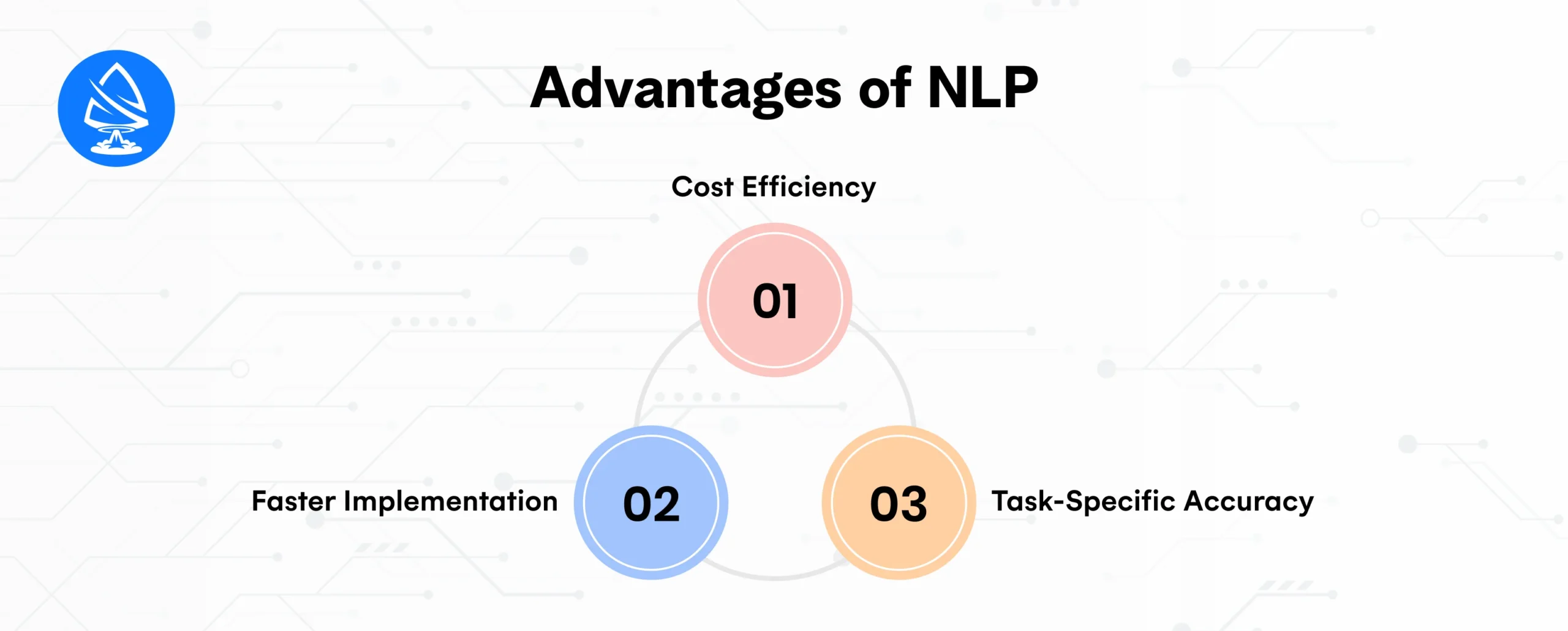
Although NLP models are effective, LLMs have high-level features.
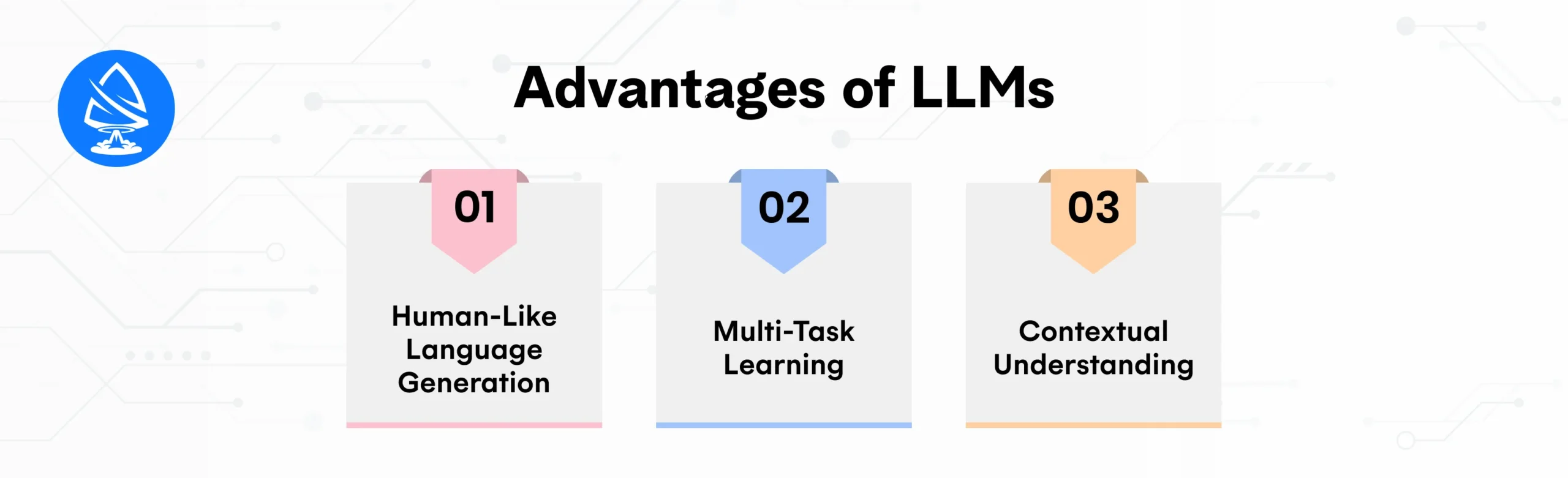
To get a better feel of what NLP and LLM are and how they are put into practice, we will look at a few examples of the real world where business people employ language technologies to enhance their operations and customer experiences.
NLP models could also be used by a small company to create a chatbot that responds to some commonly asked questions.
Nonetheless, when more intelligent chatbots are required that can read between the lines and engage in natural dialogue, users turn to LLM-driven systems. Businesses can collaborate with an AI development company to create highly usable and personalized chatbots that deliver dynamic responses.
This clearly shows the distinction of the capabilities between LLM vs NLP.
Spam filters based on email platforms tend to utilize NLP models.
These natural language models test suspicious keywords, patterns of messages, and the behavior of the sender to identify suspicious emails as spam or legitimate.
The LLM transformer architecture is used by modern content generation platforms.
Such tools are able to create articles, summarize documents, create marketing content, and aid in writing work.
As an illustration, one can input a brief query, such as writing a product description of a smartphone, and the system will produce an entire paragraph with the use of a powerful natural language model.
It is a good example of ways in which the LLM technology outperforms the traditional NLP models in the NLP vs LLM comparison.
The selection of the appropriate technology between NLP vs LLM is essential in the case of the development of effective AI systems as companies move towards AI. Businesses are usually in need of professional advice to develop and implement smart applications that can interpret and comprehend human language.
Professional AI application development services are often used by organizations that want to incorporate new and modern natural language models, chatbots, or automation tools to develop scalable and efficient AI-powered systems. The services support the business in choosing the optimal mix of NLP models and LLM technologies depending on the requirements of their operations.
NLP vs LLM is likely to see a combination of both technologies in the future.
A lot of organizations are combining classic NLP models with state-of-the-art transformer language structures to make smarter systems.
Hybrid systems are further applications that combine both the efficiency of the NLP model and the intelligence of advanced natural language models that are applied in LLMs. This way enables companies to automate business processes without sacrificing the strengths of powerful contextual understanding.
With the further development of artificial intelligence, the models’ natural language processing will be more precise, larger, and able to respond to highly intricate language dynamics.
In the choice between NLP vs LLM, there are a few factors that should be taken into account by businesses:
When companies have intentions to apply AI solutions, they must critically consider the use of either traditional NLP models or superior natural language models to meet their organizational requirements. In most situations, having an experienced AI application developer may assist the business in identifying the appropriate course of action and developing solutions that meet its technical and business needs.
Traditional NLP model solutions can be adequate in simple cases of automation, such as sentiment analysis or spam detection. But in more complicated conversational systems, content generation, or intelligent assistants, transformer language architecture-based LLM systems can offer more sophisticated features.
Knowing the advantages of using the technologies, businesses can make wiser choices in constructing the AI-powered solutions and implement the appropriate strategy successfully in the NLP vs LLM context.
Classical NLP models are effective, low-cost, and suitable when it comes to certain activities such as sentiment analysis and spam removal. Conversely, transformer language architecture-based LLMs have advanced features, including natural and regular conversation, content creation, and situational intelligence.
Companies that are well aware of the power of natural language models can create smarter AI applications and provide users with enhanced experiences.
Companies such as Artoon Solutions assist companies in adopting AI technologies, creating intelligent systems, and creating a scalable solution based on the requirements of modern business. Their experience makes businesses overcome the NLP vs LLM battlefield.
An AI cost calculator will also allow you to estimate project budgets before embarking on the quest towards developing AI.
1. Are LLMs a part of NLP in AI?
Indeed, the implementation of deep learning and transformer language architecture to process natural language qualifies LLMs as an advanced type of NLP in AI.
2. What are NLP models used for?
Sentiment analysis, chatbots, translation, spam detection, and the extraction of insights in text data are some of the common applications of NLP models.
3. How does an LLM transformer work?
An LLM transformer is a neural network based on transformers that learn to use context between words to create text responses that are meaningful.
4. LLM vs NLP: Which is superior to business?
LLM vs NLP has its choice of business goals. NLP will be more useful in easy text analysis, whereas LLMs will be beneficial in chatting with complex AI.
5. What is the difference between NLP vs machine learning?
Machine learning is a more general concept in comparison to NLP vs machine learning because NLP is more specific to language knowledge and communicative activities.
6. In what industries are NLP models most commonly used?
Such industries as healthcare, finance, e-commerce, and customer service extensively use NLP models to automate their systems and chatbots and analyze data.
7. What is the difference between LLM vs ML?
In LLM vs ML, ML are general learning algorithms, and LLMs are language task-specific deep learning natural language model systems.

Artoon Solutions
Artoon Solutions is a technology company that specializes in providing a wide range of IT services, including web and mobile app development, game development, and web application development. They offer custom software solutions to clients across various industries and are known for their expertise in technologies such as React.js, Angular, Node.js, and others. The company focuses on delivering high-quality, innovative solutions tailored to meet the specific needs of their clients.
 For business inquiries only