In today’s fast-paced digital world, having an online presence is essential. Whether you are a business owner, content creator, or individual looking to establish a personal brand, having a website is no longer optional. But building a website can be time-consuming, costly, and sometimes technical, especially for those who don’t have coding experience. This is where an AI Website Builder comes in, offering an efficient, cost-effective, and user-friendly solution to create a professional website without the need for technical skills.
In this article, we will explore the concept of an AI website builder, the benefits of using AI to create websites, key features of these platforms, and some of the best tools available. Additionally, we will look at how you can use AI to design your website, customize it, and even launch it within minutes. If you want to take your website to the next level, you can hire AI developers to integrate more advanced AI features and ensure a more personalized and optimized user experience.
What is an AI Website Builder?
AI website builders leverage machine learning (ML) and natural language processing (NLP) technologies to understand your requirements and translate them into a functional, professional website. These platforms take your preferences and use AI to generate all the necessary elements, such as the layout, design, fonts, and content, based on your answers. The result is a dynamic, well-structured website that is optimized for both aesthetics and functionality.
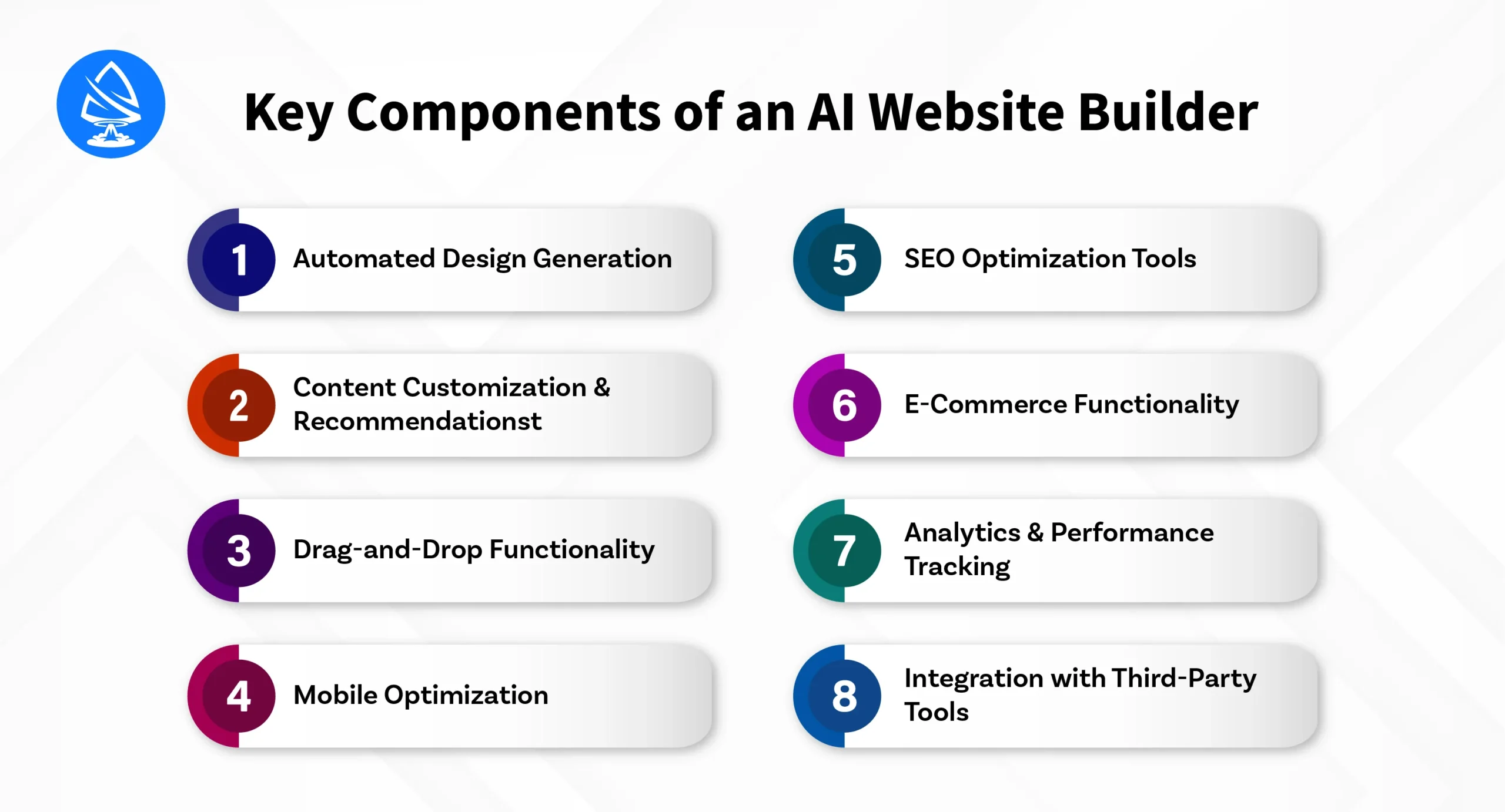
Key Components of an AI Website Builder
AI website builders are designed to automate the website creation process, making it faster, more efficient, and accessible to everyone, whether you’re a business owner, a content creator, or someone with no technical skills. These platforms combine artificial intelligence, machine learning, and advanced algorithms to create customized websites in minutes. To achieve this, AI website builders consist of several key components that work together to make the website development process seamless and user-friendly.
Let’s take a closer look at these core components that power AI website builders:
1. Automated Design Generation
At the heart of any AI website builder is its automated design generation capability. Once you provide some basic information about your business, preferences, and goals, the AI uses its pre-existing database of design elements to create a fully customized website design. This process involves several steps:
Layout Generation: The AI suggests a layout based on the type of website you’re building, such as a business website, personal blog, portfolio, or online store.
Template Selection: AI-powered platforms analyze your content and choose the most suitable template for your website, which can be customized based on your needs.
Responsive Design: The AI automatically optimizes the layout for mobile devices, ensuring your website is mobile-friendly and looks great across all screen sizes without additional effort.
2. Content Customization and Recommendations
An essential feature of AI website builders is their ability to provide content suggestions and help customize content based on your business or personal brand. AI-powered platforms analyze the context of your inputs to recommend relevant content for your website.
Content Generation: AI can generate placeholder text, product descriptions, and other text-based content. This feature is helpful for those who are unsure what to write or who don’t have the time to create copy from scratch.
Image and Video Recommendations: Based on the type of website, the AI can suggest relevant images or even automatically generate images that align with the overall theme and messaging of the site.
SEO Content Optimization: AI also analyzes the website’s content and recommends improvements for SEO, such as adding keywords, optimizing metadata, and improving headings and descriptions to increase search engine visibility.
3. Drag-and-Drop Functionality
While AI automates much of the website creation process, most AI website builders still allow you to fine-tune the design using a drag-and-drop editor. This component gives you control over specific elements, such as:
Adding Widgets: You can drag and drop widgets for contact forms, social media buttons, maps, e-commerce elements, or call-to-action buttons.
Customizing Layouts: While the AI provides an initial layout, you can rearrange sections, adjust column sizes, or change how content is displayed by simply dragging and dropping elements into place.
Interactive Design Features: Some AI website builders offer interactive features such as parallax scrolling, hover effects, and animations that you can easily add to your site without needing coding knowledge.
4. Mobile Optimization
With the majority of website traffic coming from mobile devices, mobile optimization is a critical component of AI website builders. AI automatically adjusts your website’s design to ensure it is responsive and optimized for mobile use.
Adaptive Layout: The AI adjusts the layout of your website based on the device being used. For example, it might display fewer columns on a mobile device and ensure that navigation elements are easily clickable.
Text and Image Resizing: The AI resizes images and text automatically, ensuring the content remains clear and visually appealing on smaller screens.
Mobile-First Approach: Many AI website builders follow a mobile-first design philosophy, meaning they prioritize mobile optimization when generating the website’s structure and elements.
5. SEO Optimization Tools
Search Engine Optimization (SEO) is vital for making your website discoverable on search engines like Google. AI website builders often include built-in SEO tools that automatically optimize your website’s content, structure, and metadata.
Keyword Suggestions: Based on the type of content and your target audience, the AI suggests relevant keywords to include in your website’s text, headings, and meta descriptions.
SEO-Friendly URL Creation: AI can generate SEO-friendly URLs for your pages and posts, ensuring they are easy to index and rank on search engines.
Meta Tags and Descriptions: The AI automatically generates or suggests appropriate meta titles, meta descriptions, and alt texts for images to improve SEO performance.
SEO Analytics: Many AI website builders provide an SEO analytics dashboard that allows you to track your website’s search engine rankings and suggest further optimizations.
6. E-Commerce Functionality
For businesses looking to set up an online store, many AI website builders include e-commerce capabilities. These features allow you to create an online shop quickly and easily, with the AI handling most of the setup.
Product Pages: AI helps you design product pages, including product descriptions, pricing, and product categories. It also suggests the best layout for your store, depending on the type of products you sell.
Payment Gateway Integration: AI-powered platforms typically integrate with payment gateways such as PayPal, Stripe, and credit card processors, allowing you to accept payments directly through your website.
Inventory Management: AI also helps you manage your inventory by tracking stock levels, suggesting automatic reordering, and displaying product availability on your website.
Personalized Shopping Experience: Some advanced AI website builders include AI-powered recommendation engines that suggest products to customers based on their browsing behavior and past purchases.
7. Analytics and Performance Tracking
To ensure that your website is effective, AI website builders often integrate analytics tools that provide insights into your website’s performance. These tools track visitor behavior, site traffic, bounce rates, conversion rates, and more.
Visitor Behavior Insights: AI can analyze how visitors interact with your site, such as which pages they visit most, where they drop off, and which actions they take. This data helps you refine the website’s design and user experience.
Performance Reports: The AI generates performance reports that show how your website is performing in terms of speed, user engagement, and SEO rankings. It also provides suggestions for areas of improvement.
A/B Testing: Some AI platforms also allow for A/B testing to experiment with different website elements and see what resonates best with your audience.
8. Integration with Third-Party Tools
AI website builders typically support integrations with various third-party tools and platforms, allowing you to enhance your website’s functionality. These integrations may include:
Use email marketing platforms like Mailchimp or Constant Contact to automate newsletters and customer communication.
Social media sharing tools to increase engagement and drive traffic from platforms like Facebook, Instagram, and Twitter.
CRM systems are used to manage customer data and interactions.
Analytics tools like Google Analytics for deeper insights into user behavior and site performance.
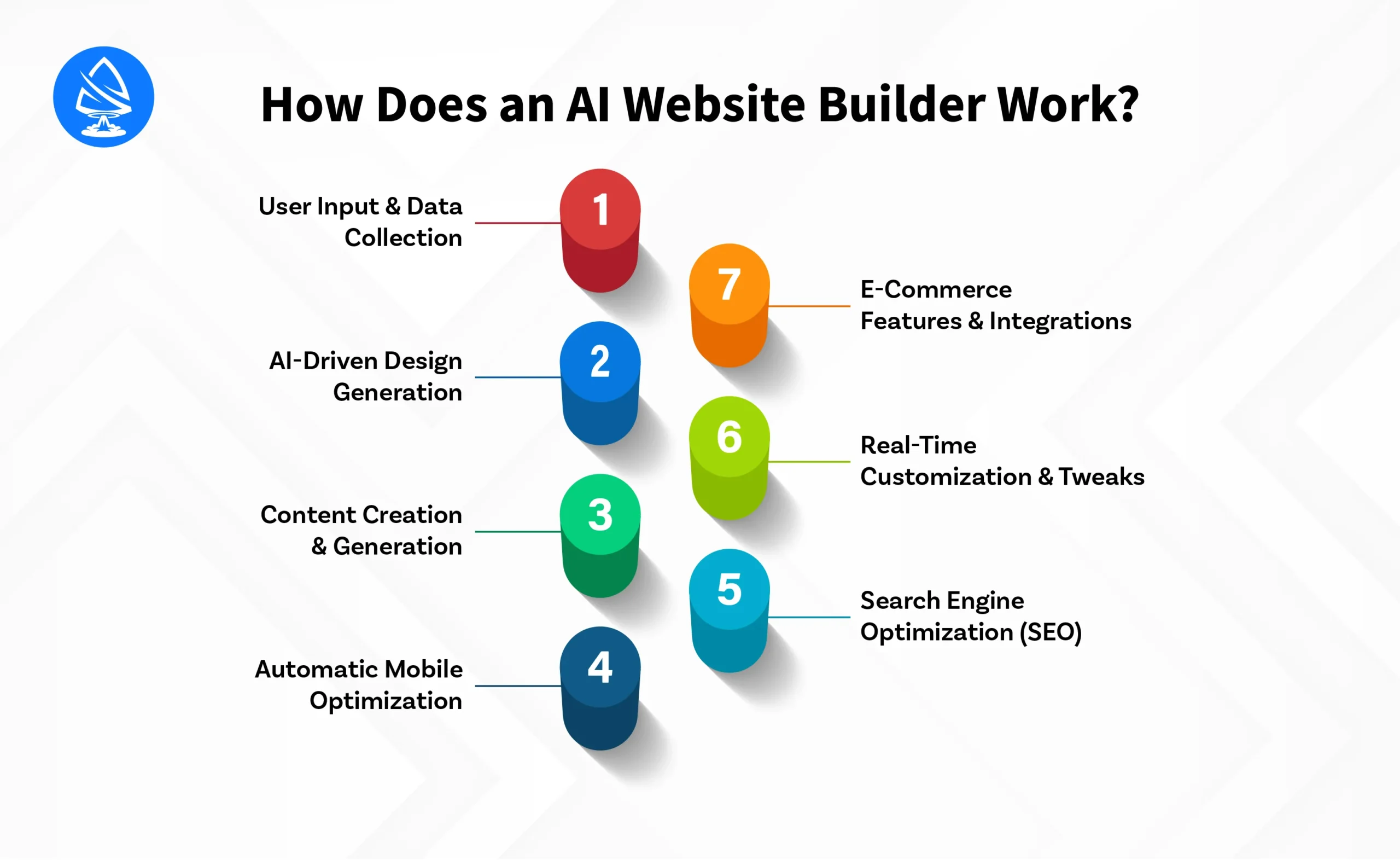
In simple terms, AI website builders use artificial intelligence to streamline and automate website creation. Let’s dive into the key steps involved in how these tools work:
1. User Input and Data Collection
The first step in the AI website builder process is gathering user input. Some of the common questions may include:
What is the purpose of your website?
What is your preferred design style?
What content do you need on your website?
Do you have specific colors or branding guidelines?
2. AI-Driven Design Generation
The AI uses a combination of pre-built templates, machine learning algorithms, and design principles to create a professional-looking layout. Here’s how this process works:
Template Selection: Based on the answers to the earlier questions, the AI automatically selects a template that matches the user’s preferences and the type of website they want to build. The platform may offer multiple design options for the user to choose from.
Design Customization: The AI customizes the layout of the selected template by adjusting elements such as fonts, colors, buttons, images, and navigation bars to align with the user’s brand identity and preferences. The AI ensures the design is cohesive, aesthetically pleasing, and functional, ensuring all elements are placed logically and intuitively.
Responsive Design: The AI automatically optimizes the design for mobile devices as well, ensuring the website is fully responsive. It adjusts the layout to fit different screen sizes and ensures that mobile users have a seamless browsing experience.
3. Content Creation and Generation
An AI website builder doesn’t just focus on design; it also assists with content creation, making it easier to build a fully functional website without writing text or manually selecting images. Here’s how it works:
Content Recommendations: Based on the type of website you’re building, the AI can recommend content to help fill out the site.
AI Content Generation: Some AI website builders integrate content generation tools that automatically create text content.
Image and Media Selection: AI platforms often come with image libraries or use AI-driven stock image generators to suggest or create images that fit the content and design of the site. AI might also recommend video content or allow you to upload your media to enhance the site.
Personalized Recommendations: AI-based content tools can even suggest keywords, text optimizations, and SEO strategies that can make your website more search engine-friendly, ensuring higher visibility on search engines like Google.
4. Automatic Mobile Optimization
Given the growing importance of mobile usage, AI website builders ensure that every site is automatically optimized for mobile devices. Here’s how this works:
Mobile-Friendly Layouts: When the AI designs the website, it automatically adapts the layout to make it responsive across all screen sizes, especially smartphones and tablets. Elements like text size, navigation menus, and images are adjusted to maintain readability and functionality.
Touch Optimization: AI also ensures that interactive elements such as buttons, sliders, and forms are optimized for touchscreens, making it easier for mobile users to interact with the website.
Speed Optimization: Mobile websites often face challenges related to load time.
5. Search Engine Optimization (SEO)
An important aspect of any website is its visibility on search engines, and SEO optimization is where AI website builders shine. AI website builders typically have built-in SEO features that automatically optimize your site to increase search engine rankings. Here’s how the process works:
Keyword Analysis: Based on the content of your site, AI suggests relevant keywords to help your website rank for important search queries. It may also recommend changes to your content to incorporate these keywords naturally.
Metadata Generation: The AI automatically creates meta titles and meta descriptions for each page, ensuring that your website is optimized for search engines.
Alt Text for Images: AI adds alt text to all images to help search engines understand what the images represent, improving the website’s search visibility.
Mobile Optimization for SEO: As mobile-friendliness is a key ranking factor for search engines, AI ensures that your website is optimized for mobile devices, which can positively impact your search engine ranking.
6. Real-Time Customization and Tweaks
Although AI does much of the heavy lifting in creating a website, it still allows for real-time customization. Users can tweak various elements of the site after the initial design and content generation. The AI platform provides a drag-and-drop editor or similar tools that allow you to modify:
Layouts: You can move sections around, change column sizes, or add new content blocks.
Design Elements: The AI allows you to adjust the fonts, colors, and styles based on your brand identity.
Content Adjustments: If you want to change the copy or upload new images, the platform makes it easy to update your website in real-time without needing to rewrite code.
7. E-Commerce Features and Integrations
For those looking to build e-commerce websites, AI website builders come with integrated e-commerce features that allow you to set up an online store quickly and easily. These features include:
Product Pages: The AI automatically generates product pages, including product descriptions, images, prices, and categories. Some AI platforms even help you optimize product descriptions for SEO.
Shopping Cart Integration: The AI can integrate an online shopping cart and payment gateway, enabling you to accept payments through platforms like PayPal, Stripe, or credit cards.
Inventory Management: Some AI website builders automatically manage your product inventory, keeping track of stock levels and providing notifications when items are running low.
Order Management and Customer Interaction: AI can also assist in order management by sending automated confirmations, tracking information, and customer communications.
AI website builders are revolutionizing the way websites are designed and created, offering an automated, user-friendly approach to website creation.
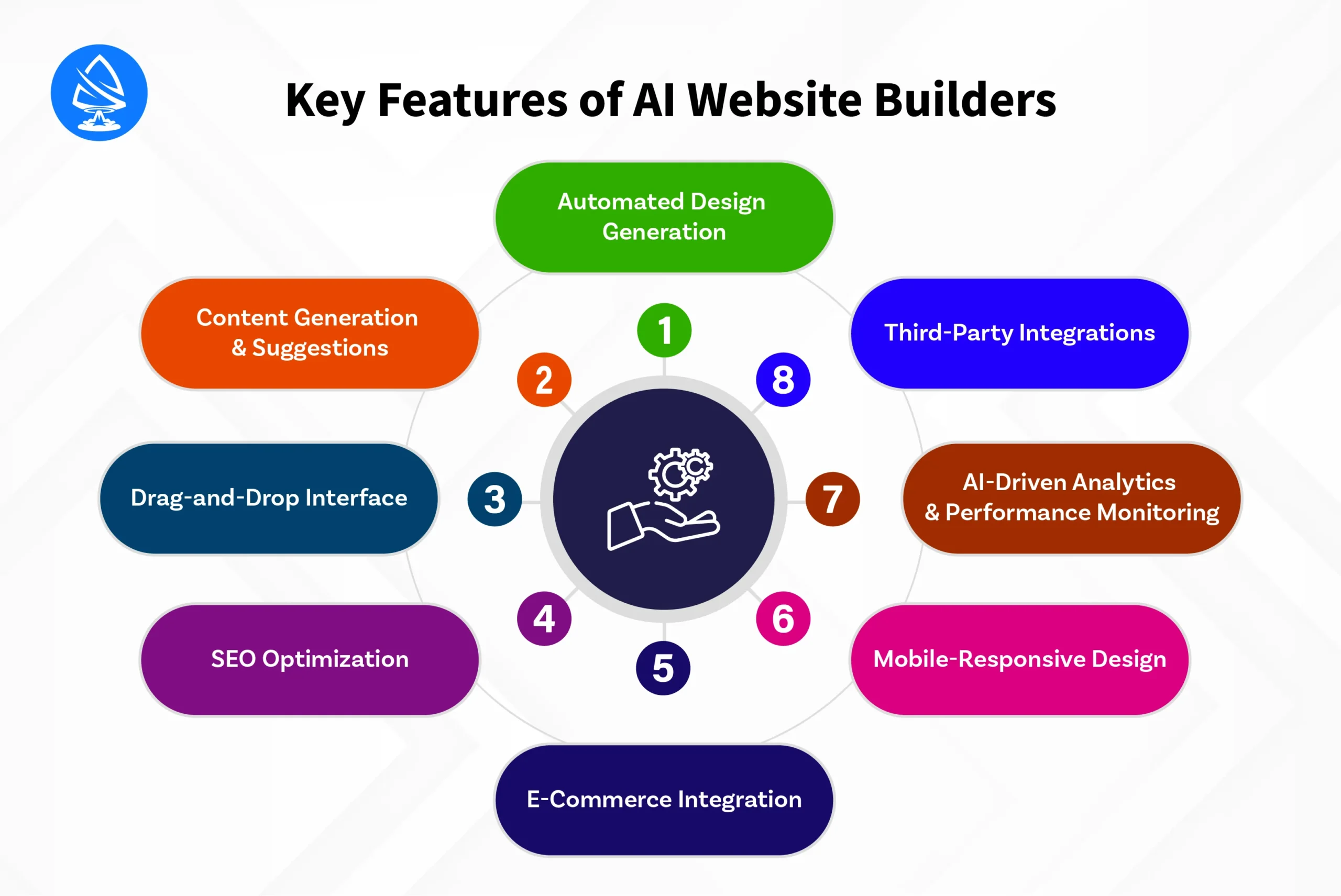
Below are the key features of AI website builders that contribute to their growing popularity:
1. Automated Design Generation
One of the standout features of AI website builders is automated design generation. The AI uses your input to create a website design that fits your needs. This process typically involves:
Selecting Templates: AI analyzes your answers and chooses an optimal template from its library of pre-designed templates that match your website goals.
Customizing Layouts: The AI automatically adjusts the layout of the template to match the content, ensuring an intuitive flow and attractive presentation.
By automating these steps, AI website builders save users time while providing attractive, functional designs without the need for manual intervention.
2. Content Generation and Suggestions
AI website builders are equipped with the ability to generate content, making the website creation process even easier. Here’s how AI assists with content generation:
Pre-written Text and Content Suggestions: The AI can suggest or generate placeholder text based on the type of website you’re building. It helps speed up the process by providing initial drafts or recommendations.
Custom Text and SEO Optimization: AI can help write product descriptions for e-commerce sites, blog posts for content-driven sites, or service descriptions that align with industry standards and best practices. Additionally, it can automatically optimize text for SEO, suggesting keywords to include in headings, body content, and metadata.
3. Drag-and-Drop Interface
Despite being AI-powered, most AI website builders come with a drag-and-drop interface that allows for further customization. This feature gives users the ability to adjust elements and make changes quickly and efficiently:
Ease of Customization: You can rearrange content blocks, images, videos, and widgets on the page by simply dragging them to the desired position.
Flexible Editing: While AI does most of the heavy lifting, the drag-and-drop functionality lets you fine-tune the design and layout as needed.
4. SEO Optimization
An SEO-optimized website is crucial for visibility on search engines like Google, and AI website builders often include built-in SEO tools to ensure your site is optimized right from the start. Here’s how they help:
Keyword Suggestions: The AI will suggest relevant keywords based on your industry, business type, and the content you provide, ensuring you include important search terms in headings and body text.
Mobile Optimization for SEO: AI website builders also ensure your site is mobile-optimized, which is an important ranking factor for search engines. Mobile responsiveness is automatically handled, ensuring you rank higher in mobile search results.
5. E-Commerce Integration
For businesses looking to sell products online, many AI website builders come equipped with e-commerce functionality. The AI will automatically add the necessary elements to turn your website into an online store. Key features include:
Product Pages: AI helps generate product pages with descriptions, images, pricing, and categorization. It ensures that each page is optimized for clarity and ease of navigation.
Inventory Management: The platform can automatically manage inventory, alerting you when stock is low or when to restock products.
6. Mobile-Responsive Design
In today’s mobile-first world, having a mobile-responsive website is critical. Here’s how the AI handles mobile optimization:
Adaptive Layouts: The AI analyzes the size of the user’s screen and adjusts the layout accordingly. It ensures that content is displayed properly on smaller screens without the need for additional design work.
Fast Loading Times: AI ensures that mobile sites load quickly by optimizing images and reducing unnecessary code. This is essential for improving user experience and SEO ranking.
7. AI-Driven Analytics and Performance Monitoring
Many AI website builders include built-in analytics tools to help track the performance of your website. These tools provide valuable insights into user behavior, helping you optimize the site for better engagement and conversions. Key features include:
Traffic Monitoring: AI tools can monitor your website’s traffic, showing you how many visitors you’re getting, which pages are most popular, and where your visitors are coming from.
Conversion Tracking: AI can track specific actions to measure your site’s success in converting visitors into customers.
8. Third-Party Integrations
AI website builders often support third-party integrations, which allow you to connect external tools and services that enhance the functionality of your site. These integrations may include:
CRM Systems: Integrating a Customer Relationship Management (CRM) system like Salesforce or HubSpot helps manage customer data and communications.
Google Analytics: AI website builders can integrate with Google Analytics for deeper insights into your website’s traffic and performance.
AI website builders have become a game-changer in the world of website development. Traditionally, building a website required coding knowledge and design expertise, or the cost of hiring professionals.
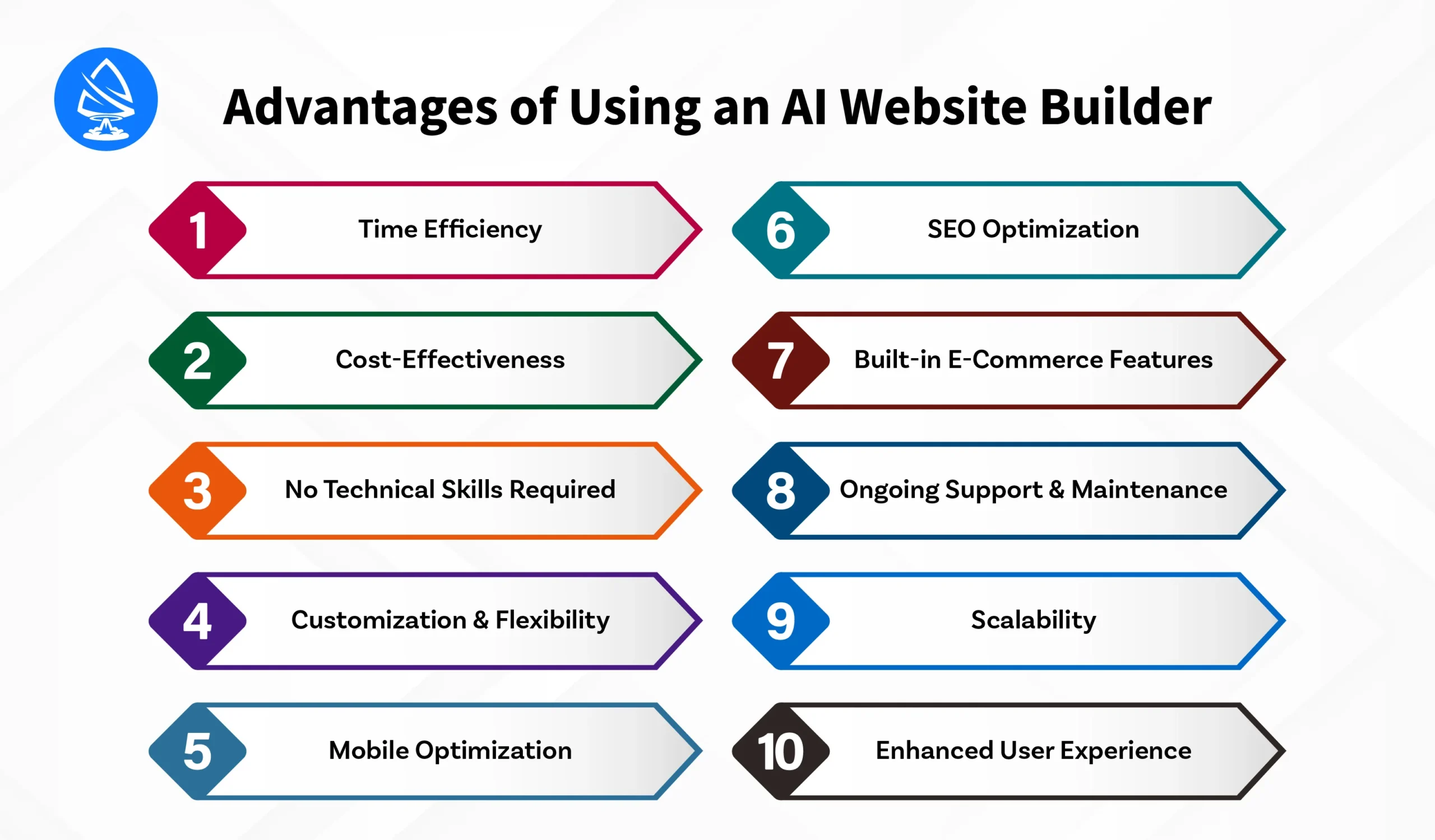
Here are the key advantages of using an AI website builder:
1. Time Efficiency
With AI, the process is automated, allowing users to create a fully functional website within minutes.
Automatic Design: AI automatically selects templates, layouts, colors, and fonts based on the type of website you’re creating and your preferences, eliminating the need to manually design every element.
Content Suggestions: AI can suggest content for your website, speeding up the content creation process.
2. Cost-Effectiveness
Hiring a professional web designer or developer can be expensive, particularly for small businesses or individuals who are just starting.
No Need for Developers: You don’t need to hire an AI developer, as the AI handles the design and development process.
Affordable Subscription Models: Many AI website builders operate on affordable subscription models, where you pay a one-time fee or a monthly fee, often less than what you’d spend on hiring a web design team.
3. No Technical Skills Required
One of the biggest barriers to creating a website is the technical knowledge required for coding and design.
Drag-and-Drop Functionality: Most AI website builders feature a drag-and-drop editor that allows users to move content blocks without writing a single line of code.
No HTML or CSS: The AI takes care of any backend coding, meaning you don’t need to understand programming languages to create a professional site.
4. Customization and Flexibility
While AI website builders automate much of the website creation process, they still offer a significant number of customization options to meet specific needs. This balance between automation and customization is a key advantage.
Design Personalization: You can personalize your site by selecting from a range of templates, adjusting fonts, changing colors, and adding your branding elements like logos.
Feature Additions: Depending on the platform, you can add specific features to your site, such as contact forms, blogs, social media integration, and e-commerce capabilities.
5. Mobile Optimization
In today’s digital age, mobile responsiveness is essential.
AI website builders automatically ensure that your website is mobile-optimized:
Responsive Layouts: AI automatically adjusts the design to look great on any device, including smartphones, tablets, and desktops.
Mobile-Friendly Features: Interactive elements such as buttons, sliders, and forms are automatically optimized for touchscreens, ensuring that users have a seamless experience on all devices.
6. SEO Optimization
Search Engine Optimization (SEO) is a key factor in increasing your website’s visibility on search engines like Google. However, SEO can be complicated, especially for those who aren’t familiar with best practices.
Most AI website builders come with built-in SEO tools that help optimize your website automatically:
Automatic Metadata: AI can generate meta titles and meta descriptions for each page, which are essential for SEO.
Content Structuring: AI ensures that your website’s structure is optimized for SEO, organizing content with proper headings and formatting to improve search engine readability.
7. Built-in E-Commerce Features
For businesses looking to set up an online store, many AI website builders come with e-commerce functionality that simplifies the process of creating a fully functional online store.
Payment Gateway Integration: AI-powered platforms integrate payment processors like PayPal, Stripe, and credit card systems for secure online transactions.
Product Pages: AI generates optimized product pages with descriptions, prices, images, and a user-friendly layout.
8. Ongoing Support and Maintenance
Maintaining a website can be time-consuming, especially when it comes to software updates, security patches, and performance improvements. AI website builders take care of much of the ongoing maintenance automatically:
Automatic Updates: AI platforms automatically update the platform, templates, and features to ensure that your site remains up-to-date with the latest features and security measures.
Backup and Recovery: Some AI website builders provide automated backups, meaning you don’t have to worry about losing your data or content if something goes wrong.
9. Scalability
As your business grows, your website will need to evolve to accommodate new features, content, and functionalities.
Easy to Add New Pages: Adding new sections, pages, or features to your website is a simple process with AI-powered tools.
Integration with New Tools: If you need to integrate new tools, AI website builders often support third-party integrations.
10. Enhanced User Experience
AI website builders ensure an optimal user experience (UX) by using AI-driven analytics and performance tracking. They provide insights into how users interact with your site, enabling you to make data-driven improvements. These tools ensure that your website is user-friendly, intuitive, and easy to navigate, encouraging longer visits and higher conversion rates.
Best AI Website Builders
AI website builders help businesses and individuals create professional websites quickly and affordably. These platforms use AI to automate design, content creation, and optimization.
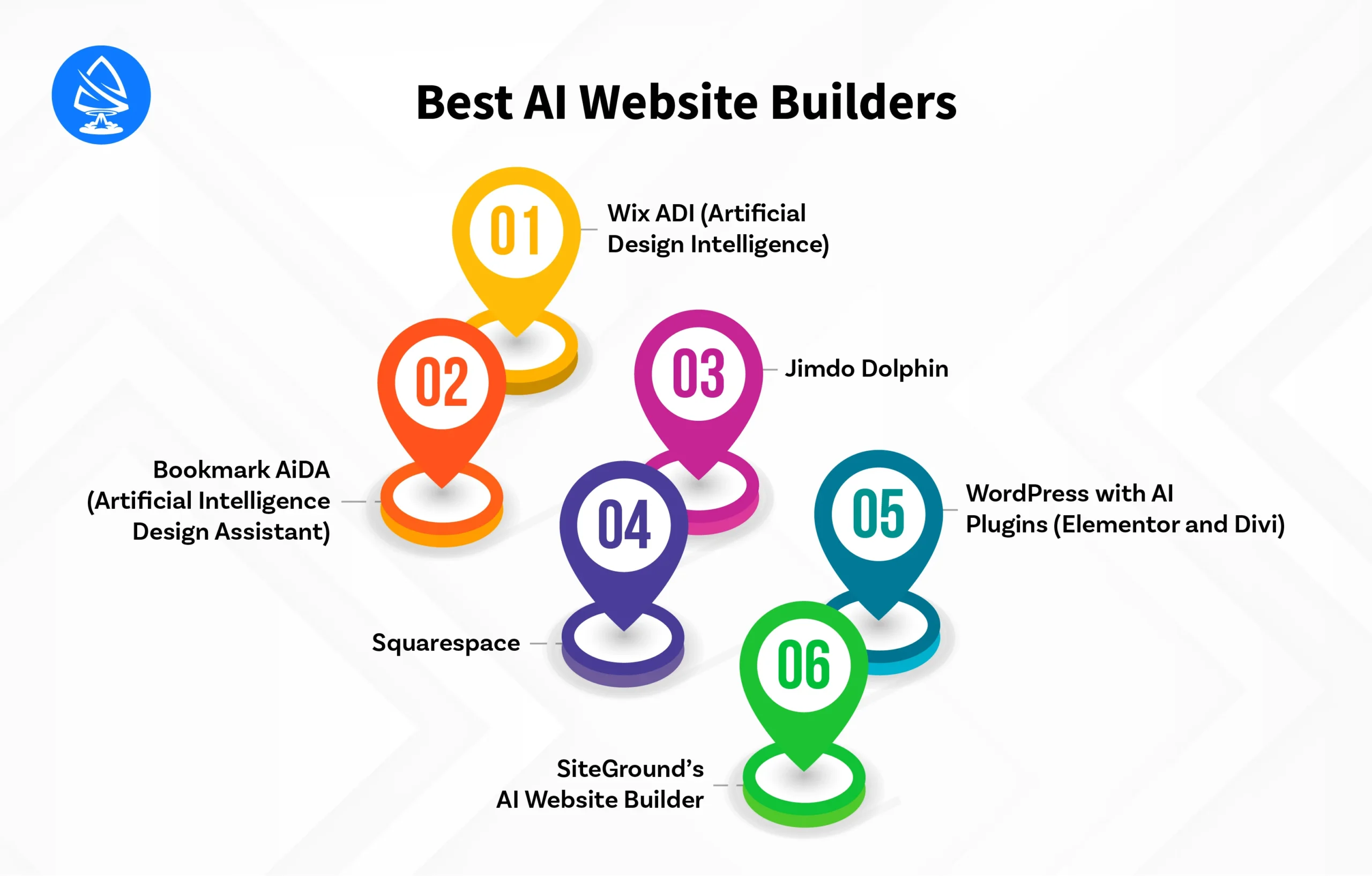
Let’s take a closer look at some of the best AI website builders available today and the features they offer:
1. Wix ADI
Wix is one of the most popular website builders, and its Wix ADI tool is among the best AI-powered website builders on the market. It is designed to make website creation incredibly easy, even for users without any design or technical skills. Here’s how Wix ADI stands out:
Automatic Design Generation: Wix ADI generates a fully customized website based on a few simple questions.
Customization: After Wix ADI generates the website, you can still customize it by changing fonts, colors, and adding new features. Wix’s drag-and-drop editor allows you to tweak the website as needed without needing to touch any code.
Best For: Users who need a fast, intuitive website builder that allows for further customization after the AI-generated design.
2. Bookmark AiDA
Bookmark AiDA is another exceptional AI-powered website builder that prides itself on being one of the fastest options available. Key features of AiDA include:
Instant Website Creation: AiDA creates websites in a matter of minutes based on your input.
Design Flexibility: Once the AI creates the website, you can customize the design elements like text, images, and layout. The platform provides a straightforward drag-and-drop editor, allowing for quick adjustments without any coding.
SEO Optimization: AiDA automatically optimizes your website for SEO, ensuring that it is ready to rank well on search engines. It incorporates SEO best practices, including meta tags, keywords, and responsive design.
E-Commerce Features: AiDA also offers e-commerce capabilities, making it suitable for businesses that want to sell products online. You can add product pages, set up a shopping cart, and integrate payment gateways.
Best For: Users who need a website quickly and want a tool that can handle both design and functionality without complexity.
3. Jimdo Dolphin
Jimdo Dolphin is a user-friendly AI website builder that helps users create websites without any technical knowledge. Its AI-driven design tools are excellent for people who want a fast and easy website setup with minimal effort. Features include:
Automatic Website Creation: Jimdo Dolphin uses AI to generate a personalized website design based on your answers to a few simple questions about your business and preferences.
Content Suggestions: The AI provides content suggestions for various sections of your site, including text, images, and business descriptions.
Best For: Individuals or small businesses looking for a fast, efficient, and easy-to-use AI website builder that also includes basic e-commerce functionality.
4. Squarespace
While Squarespace isn’t fully automated like some other AI website builders, it incorporates AI-driven tools to streamline design and development:
Mobile-Responsive Websites: All Squarespace templates are mobile-friendly, and the AI helps ensure that your site looks great across all devices. No need to worry about making adjustments for mobile viewing.
Advanced Features: Squarespace offers built-in tools for blogging, portfolio sites, and e-commerce, including payment processing and inventory management.
Best For: Users looking for beautiful, high-quality website templates with AI-driven design assistance and flexibility for customization.
5. WordPress with AI Plugins
WordPress integrates AI through plugins like Elementor and Divi to simplify website creation.
Elementor AI Features: Elementor, a popular drag-and-drop page builder, has integrated AI-powered widgets that help automate website design and content suggestions. It also has AI-driven SEO tools that optimize your content for search engines automatically.
Content Optimization: WordPress with AI plugins can assist with content generation and SEO, ensuring that your site ranks well in search engines.
Best For: Users who are already familiar with WordPress and want to integrate AI to streamline design and content creation processes.
6. SiteGround’s AI Website Builder
SiteGround is a hosting provider that also offers a powerful AI website builder designed to simplify the website creation process. SiteGround’s AI-driven features make building a website intuitive and fast:
Automated Website Creation: SiteGround uses AI to automatically create a website for you based on your industry, business goals, and style preferences. It selects a template, customizes the layout, and generates content that fits your brand.
Mobile Optimization: SiteGround ensures that your website is mobile-responsive, adjusting the design to fit various screen sizes and ensuring a seamless user experience on mobile devices.
Best For: Users looking for an all-in-one hosting solution and AI-powered website creation tool that automatically optimizes SEO and mobile responsiveness.
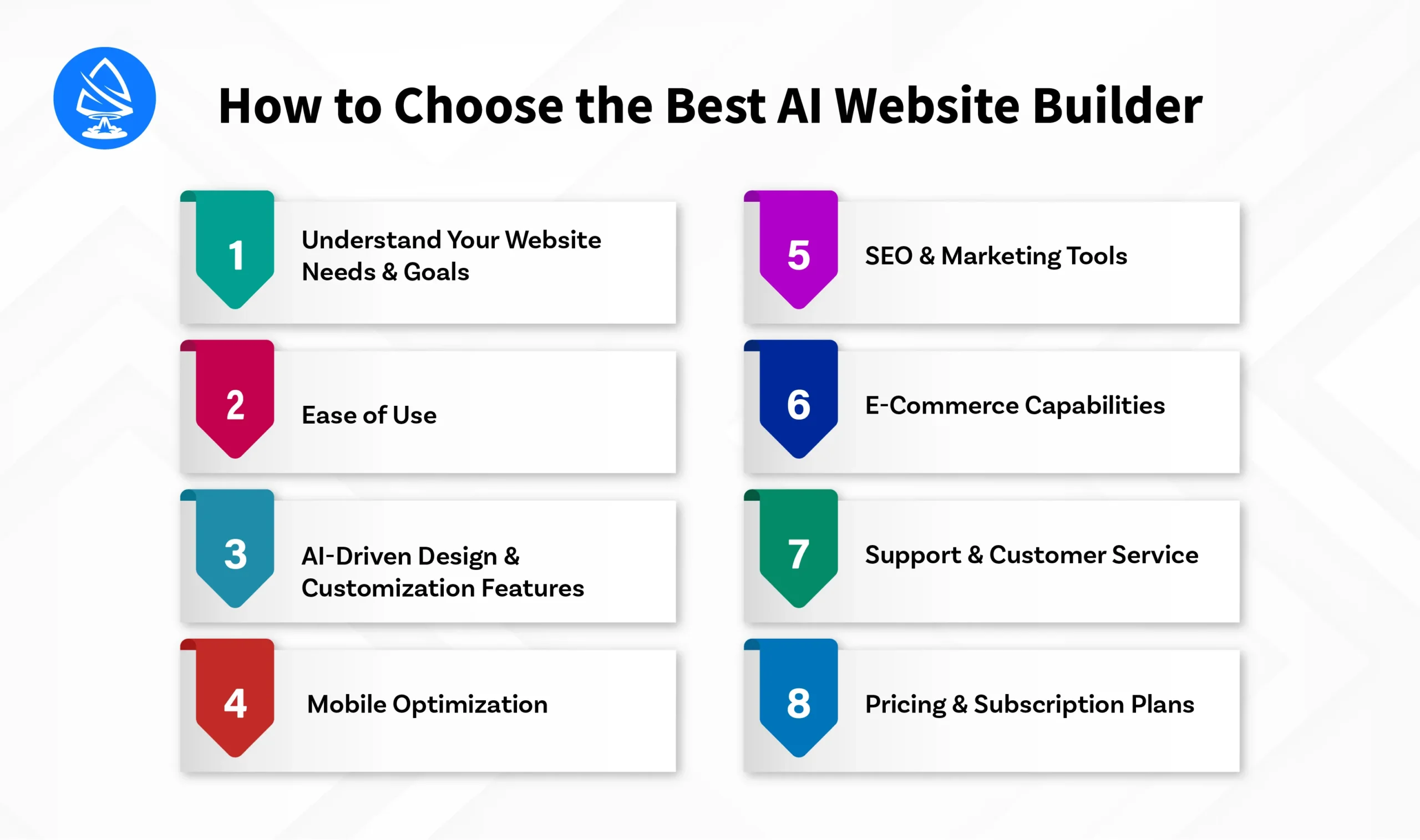
How to Choose the Best AI Website Builder
Choosing the right AI website builder is crucial due to varied features, templates, and customization options.
1. Understand Your Website Needs and Goals
Before choosing an AI website builder, you should have a clear understanding of your website goals. Different website builders cater to different needs, so it’s important to identify the following:
Type of Website: Are you building a personal blog, a portfolio, an e-commerce store, or a business site? Certain platforms are better suited for online stores, while others are more appropriate for personal or portfolio websites.
Budget: Consider your budget for the website creation. Some AI website builders offer free plans, but they may have limitations in features and customization. If you need advanced tools, SEO optimization, or e-commerce features, you may need to consider a paid plan.
Level of Customization: Determine how much control you want over the design. S
2. Ease of Use
One of the primary reasons for choosing an AI website builder is its ease of use, so it’s important to select a platform that provides an intuitive user interface. Here are the key aspects of ease of use to consider:
No Coding Required: Ensure that the platform allows you to create a website without needing coding skills. The whole point of using an AI website builder is to avoid the complexity of programming.
Step-by-Step Guidance: A good AI website builder should guide you through the process, helping you from start to finish. Whether it’s through pop-up instructions, tooltips, or customer support, the platform should make website creation as easy as possible.
3. AI-Driven Design and Customization Features
The power of AI lies in its ability to automate the design process.
Design Templates: Choose a platform that offers a wide range of AI-generated templates that match your industry and goals. The templates should be modern, responsive, and optimized for user experience.
Automated Content: Look for AI website builders that provide automated content suggestions.
4. Mobile Optimization
Since a large portion of internet traffic comes from mobile devices, ensuring that your website is mobile-optimized is essential. The AI website builder should automatically adjust the website design to be mobile-responsive:
Automatic Mobile Design Adjustments: The AI should automatically adjust the layout, fonts, and images to fit smaller screens without manual intervention.
Mobile-Friendly Features: Ensure that interactive elements such as navigation menus, buttons, and forms are optimized for touchscreen devices, improving the user experience for mobile visitors.
5. SEO and Marketing Tools
SEO is crucial for ensuring your website ranks well in search engines and attracts traffic. An AI website builder with built-in SEO features can save you time and effort by optimizing your site automatically:
SEO-Optimized Design: Choose an AI website builder that creates SEO-friendly layouts, meaning the design and structure of the site are automatically optimized for search engines.
Marketing Integrations: AI website builders often come with integrations for email marketing, social media, and analytics tools, which help you drive traffic and engage with your audience. Choose a platform that makes it easy to integrate with your existing marketing stack.
6. E-Commerce Capabilities
If you’re planning to run an online store, it’s essential to select an AI website builder that offers e-commerce features. Look for these features in the platform:
Product Pages: The AI builder should allow you to add product pages, complete with pricing, descriptions, product images, and other important details.
Order Processing and Customer Management: Look for features that allow you to manage orders, customer accounts, and shipping logistics directly from the platform.
7. Support and Customer Service
Even though AI website builders are designed to be user-friendly, it’s important to have access to reliable customer support in case you encounter issues or need guidance:
24/7 Support: Look for platforms that offer 24/7 customer support, either via live chat, email, or phone, to resolve any issues quickly.
Community and Forums: A helpful online community or forum can provide valuable insights from other users who may have had similar experiences or questions.
8. Pricing and Subscription Plans
Pricing is an important factor when choosing an AI website builder. While some builders offer free plans, they may come with limitations like watermarks, limited storage, or restricted features. Here’s what to consider:
Trial Period: Look for platforms that offer a free trial or money-back guarantee, allowing you to test the builder and its features before committing to a paid plan.
Scalability: Consider the platform’s scalability. As your website grows, you may need to upgrade to a higher-tier plan with more features, storage, or bandwidth.
Conclusion
Partnering with an artificial intelligence development company can further enhance the capabilities of these builders, ensuring that the websites are equipped with advanced AI-driven features and cutting-edge technologies.
Frequently Asked Questions
1. What is an AI website builder?
An AI website builder uses artificial intelligence to design and develop websites automatically based on user input, without requiring coding or technical skills.
2. Can I use a free AI website builder?
Yes, many AI website builders offer free versions with basic features. However, some advanced features may require a paid plan.
3. Are AI website builders customizable?
Yes, most AI website builders offer customization options, allowing you to adjust the design, content, and layout to fit your needs.
4. Do AI website builders optimize for SEO?
Yes, most AI website builders include SEO optimization features to help improve your website’s visibility on search engines.
5. Can AI website builders create e-commerce sites?
Yes, several AI website builders offer e-commerce features, such as shopping carts, payment gateways, and product management tools.
6. How long does it take to create a website using AI?
AI website builders can generate a fully functional website in as little as a few minutes.
7. What is the best AI website generator?
The best AI website generator depends on your needs. Popular options include Wix ADI, Jimdo Dolphin, and Bookmark AI.
8. How do I hire an AI developer for website creation?
You can hire AI developers through platforms like Upwork, Freelancer, or contact an artificial intelligence development company to help with more complex custom AI integrations.
Written By :
Artoon Solutions
Artoon Solutions is a technology company that specializes in providing a wide range of IT services, including web and mobile app development, game development, and web application development. They offer custom software solutions to clients across various industries and are known for their expertise in technologies such as React.js, Angular, Node.js, and others. The company focuses on delivering high-quality, innovative solutions tailored to meet the specific needs of their clients.



 For business inquiries only