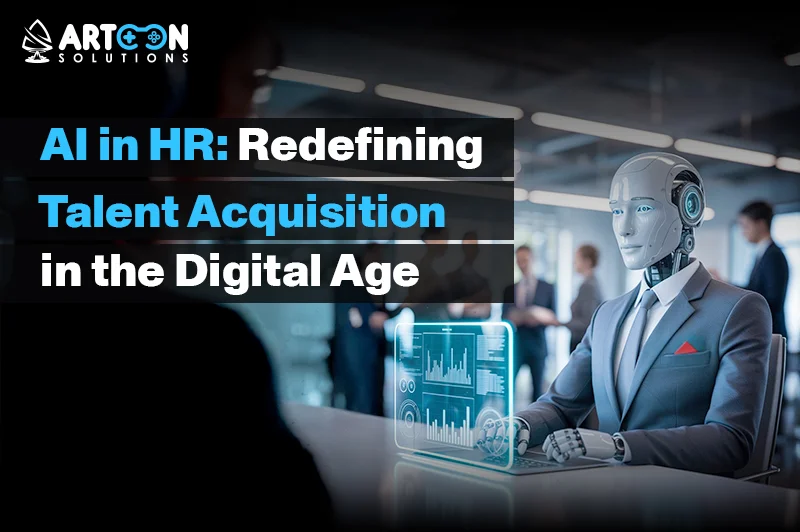
The rapid advancements in artificial intelligence (AI) are not limited to technology companies and industries traditionally associated with innovation. Today, AI in HR (Human Resources) is transforming the way organizations attract, engage, and retain top talent. As AI continues to advance, HR tools powered by AI are redefining talent acquisition, making it smarter, faster, and more efficient than ever before.
This post explores how AI is reshaping hiring, talent management, and future HR practices. It examines HR AI tools and the growing impact of generative AI. AI is changing how companies interact with talent in the digital age. Partnering with an AI application developer enables tailored solutions that streamline HR functions.
What Is AI in HR?
AI in HR integrates artificial intelligence to improve efficiency, decision-making, and HR processes. It uses ML, NLP, and analytics to automate recruitment, onboarding, performance management, and engagement.
As organizations become more data-driven, AI in human resources is transforming how HR professionals attract, assess, develop, and retain talent. Rather than merely assisting with routine tasks, AI offers data-driven insights and recommendations, allowing HR teams to make more informed decisions.
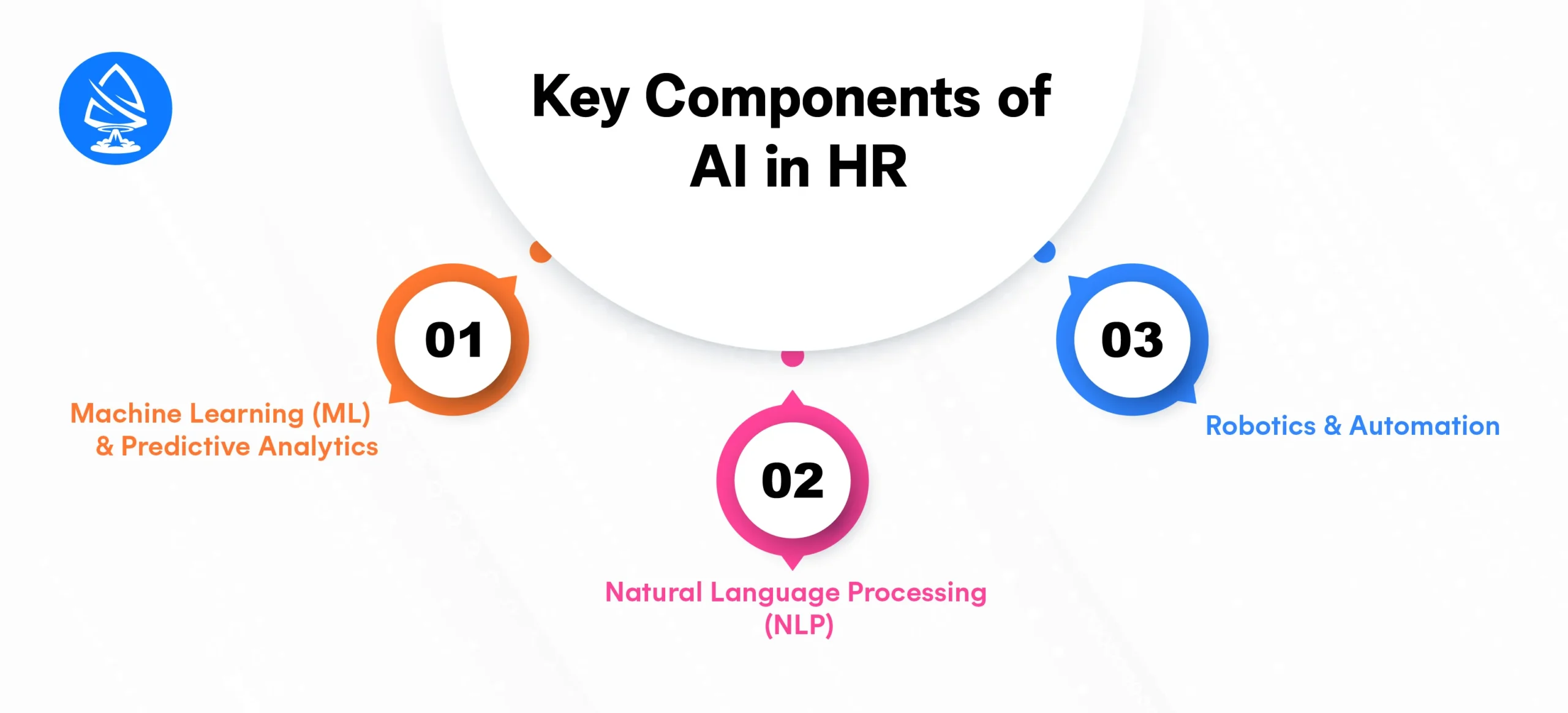
Key Components of AI in HR
AI’s application in HR spans multiple technologies and tools. Let’s explore the key components that make AI in HR such a powerful resource for human resource management:
1. Machine Learning (ML) and Predictive Analytics
Machine learning is the backbone of AI, enabling systems to learn from data and improve their predictions or actions over time. In HR, ML algorithms can predict the future behavior of employees based on historical data, enabling HR teams to anticipate trends like employee attrition, performance issues, and training needs.
Predictive Analytics: AI models analyze vast amounts of HR data (e.g., employee performance, turnover rates, and engagement levels) to predict which employees are likely to leave or which candidates might be the best fit for a particular role. This allows organizations to take proactive measures to address potential issues before they arise.
2. Natural Language Processing (NLP)
NLP enables machines to understand, interpret, and interact with human language. In the context of HR, NLP is used to process resumes, job descriptions, employee feedback, and other textual data to extract insights.
Resume Screening: AI tools powered by NLP can automatically analyze resumes and job applications, identifying key skills, qualifications, and experiences that match job requirements, dramatically reducing the time spent reviewing applications manually.
Sentiment Analysis: NLP can also be used to gauge employee satisfaction or sentiment from surveys, feedback, and reviews, providing HR teams with a clearer picture of workforce morale and engagement.
3. Robotics and Automation
AI in HR also extends to robotic process automation (RPA), which involves automating repetitive tasks such as scheduling interviews, updating employee records, and processing payroll. RPA reduces the manual workload of HR teams and helps streamline administrative processes.
Automated Onboarding: AI can guide new hires through onboarding processes, helping them complete forms, receive training, and get acquainted with company culture, all while reducing human error and enhancing the new employee experience.
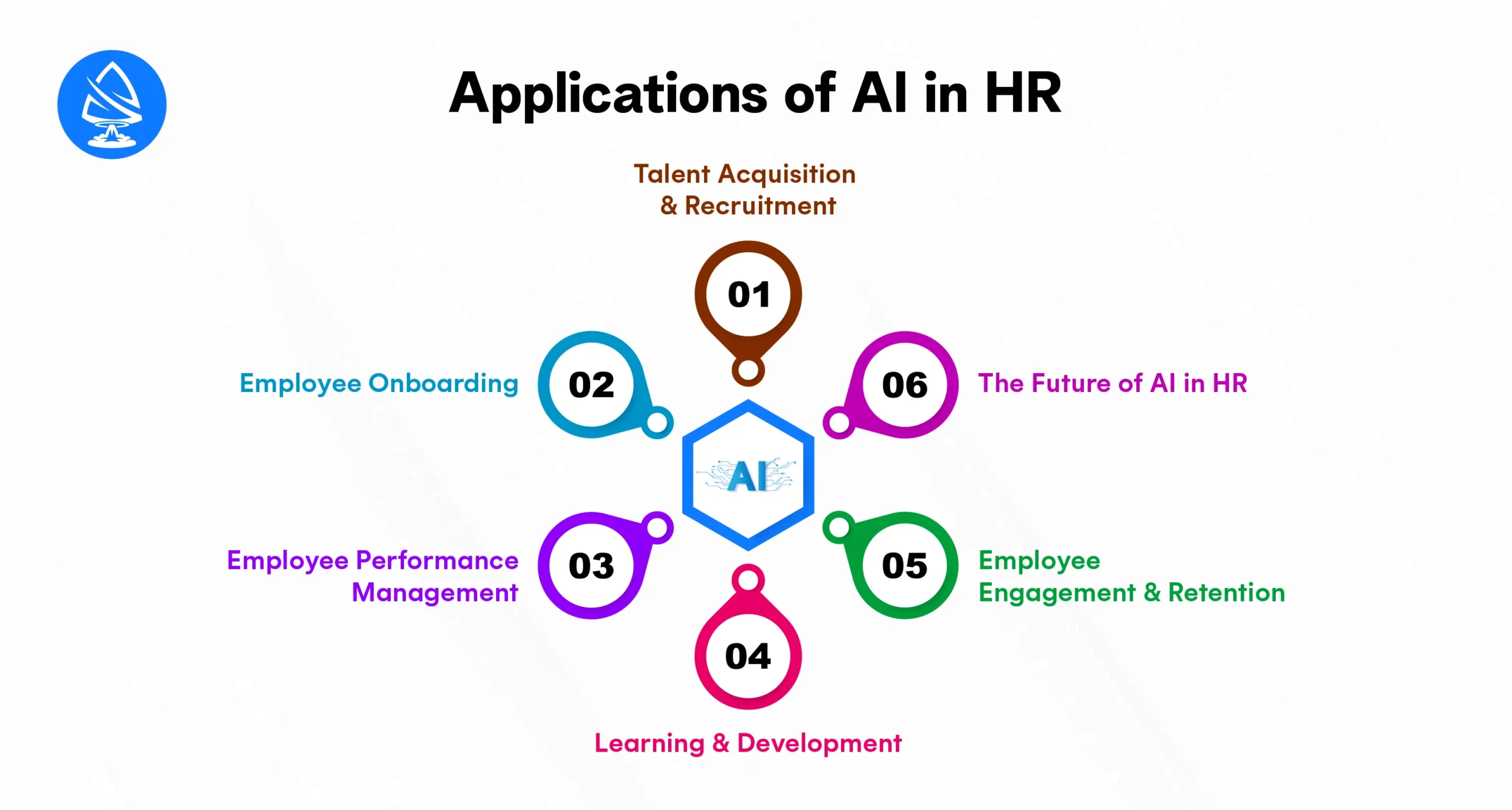
AI is not just a theoretical concept in HR; it’s already making an impact. Below are some of the core AI in HR examples and practical applications:
1. Talent Acquisition and Recruitment
One of the most notable applications of AI in HR is in talent acquisition. AI-powered tools help streamline the recruitment process by automating time-consuming tasks such as resume screening, candidate sourcing, and interview scheduling.
AI Resume Screening: AI algorithms can scan and analyze resumes at a much faster rate than humans, identifying the most qualified candidates based on keywords, skills, and experiences.
Candidate Sourcing: AI can search online platforms, such as LinkedIn or job boards, for passive candidates who may not have applied directly, increasing the talent pool.
Chatbots for Candidate Engagement: AI-driven chatbots engage with candidates, answer questions, and schedule interviews automatically, improving candidate experience and engagement throughout the hiring process.
2. Employee Onboarding
AI is transforming employee onboarding by automating and personalizing the experience for new hires. AI-driven systems can guide new employees through the onboarding process, providing them with resources, training modules, and information about company policies.
Automated Onboarding Platforms: AI tools can collect and process required documents, set up initial training schedules, and even assign mentors, making the process smoother and more engaging.
3. Employee Performance Management
AI-powered tools are becoming increasingly essential for performance management, helping HR teams monitor, assess, and support employee performance on an ongoing basis.
Continuous Feedback Systems: AI can gather feedback on employee performance in real time, allowing for more frequent evaluations and timely interventions. This data can be used to recommend personalized development plans or identify high-performing employees for rewards and promotions.
Data-Driven Insights: AI can analyze various employee data points (e.g., productivity levels, project completion rates, and collaboration) to offer managers insights into individual and team performance.
4. Learning and Development
AI in HR also plays a crucial role in learning and development (L&D). AI systems can recommend personalized learning paths based on an employee’s career goals, current skill set, and job requirements.
Personalized Learning Recommendations: AI-powered L&D platforms can offer employees courses, webinars, and resources based on their skill gaps and career aspirations.
Automated Training: AI can facilitate virtual training programs that adapt to individual learning styles and speeds, providing employees with tailored training experiences that enhance their skills and performance.
5. Employee Engagement and Retention
AI is instrumental in employee engagement and retention by monitoring employee sentiment and providing actionable insights that HR teams can use to improve workplace culture and job satisfaction.
Sentiment Analysis: AI tools can analyze employee feedback, surveys, and social interactions to gauge how employees feel about their roles, colleagues, and the organization as a whole. This helps HR teams identify issues before they escalate.
Predictive Analytics for Retention: AI models can identify patterns of behavior or performance that may indicate an employee is at risk of leaving. HR teams can use these insights to implement retention strategies before high-value employees resign.
The Future of AI in HR
The future of human resources is undeniably intertwined with AI, as more and more organizations seek to harness its capabilities to create smarter, more efficient HR processes. In the coming years, we can expect several developments:
Generative AI in HR: Generative AI has the potential to completely transform HR functions.
AI-Powered Diversity and Inclusion: AI will help eliminate biases in recruitment by promoting fairer and more inclusive hiring practices. AI can analyze hiring data to identify diversity gaps and suggest actionable steps to create a more inclusive workforce.
Benefits of the Future AI in HR:
Smarter, data-driven decision-making in recruitment, training, and employee retention
Enhanced employee experience, with personalized career development and growth opportunities
Greater operational efficiency and cost savings for HR teams, allowing them to focus on strategic planning
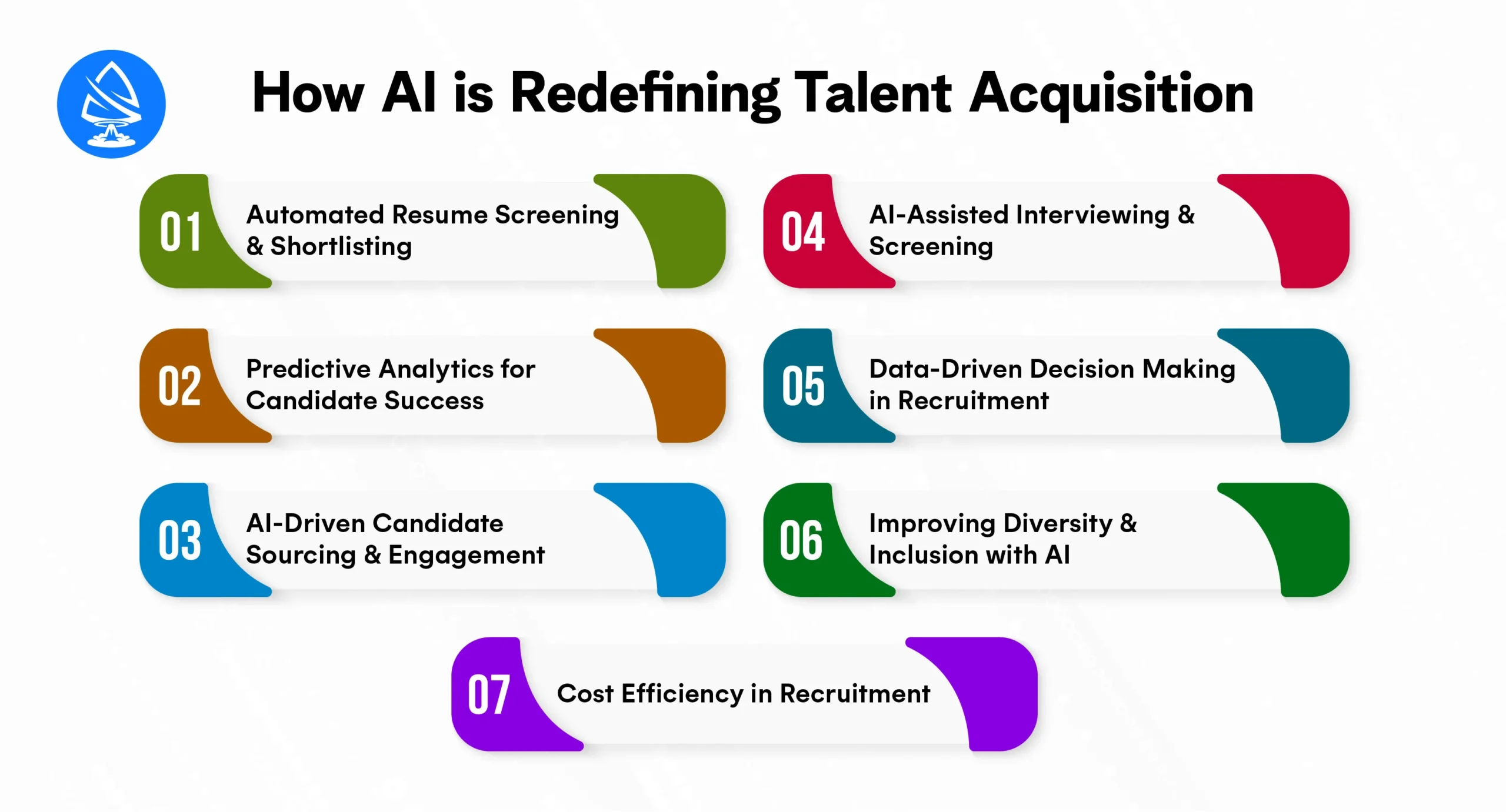
How AI is Redefining Talent Acquisition
Talent acquisition has traditionally been a time-consuming and often subjective process. However, AI in talent acquisition is radically changing how companies approach recruiting, making the process more efficient, data-driven, and objective. From AI-powered resume screening to predictive analytics and automated candidate engagement, artificial intelligence is transforming the hiring landscape.
In 2025, AI in HR is already helping businesses overcome challenges like high recruitment costs, biases in hiring, and lengthy recruitment cycles. Let’s dive deeper into the ways AI is reshaping the future of talent acquisition:
1. Automated Resume Screening and Shortlisting
One of the most significant applications of AI in talent acquisition is automated resume screening. In traditional recruitment, hiring managers and HR professionals manually sift through hundreds of resumes, searching for the best fit. This process can be time-consuming and prone to errors. AI, on the other hand, leverages machine learning (ML) and natural language processing (NLP) to quickly scan and analyze resumes based on predetermined criteria such as skills, qualifications, and experience.
AI Resume Screening Tools: HR AI tools such as HireVue, XOR, and Workable use AI to analyze resumes and rank candidates based on their fit for the role. These tools scan resumes for keywords, job titles, and specific skills that match the job description, significantly speeding up the hiring process.
Reducing Bias: AI can help reduce human bias in the recruitment process by focusing solely on the candidate’s qualifications and experience, ignoring irrelevant factors like gender, age, and ethnicity that may unconsciously influence hiring decisions.
Key Benefits:
Faster and more accurate shortlisting of candidates
Reduced bias and increased fairness in the hiring process
Streamlined workflow, allowing HR teams to focus on strategic decision-making
2. Predictive Analytics for Candidate Success
AI in talent acquisition is not limited to finding candidates based on keywords or qualifications. AI can predict a candidate’s potential success in a role by analyzing historical data and assessing key characteristics that correlate with long-term job performance and fit.
Predictive Modeling: By analyzing past hiring data, AI algorithms can identify trends that predict a candidate’s future success. For instance, the system may recognize that certain educational backgrounds or experience in specific roles tend to lead to higher performance in particular positions. Predictive analytics can also assess cultural fit by evaluating personality traits and values based on candidate responses during interviews or psychometric testing.
Candidate Matching: AI tools can analyze candidate profiles and match them to the right role based on an extensive range of factors, including behavioral traits, skills, previous job performance, and even potential career trajectory.
Key Benefits:
Better hiring decisions based on data-driven insights
Enhanced ability to predict candidate performance and retention
Reduces the risk of making bad hires that could be costly for the organization
3. AI-Driven Candidate Sourcing and Engagement
Traditionally, recruiting teams rely heavily on job boards, career fairs, and internal referrals to find candidates. However, AI is redefining the candidate sourcing process by using data to proactively find candidates, even if they aren’t actively applying for jobs.
AI-Powered Candidate Sourcing: Tools like LinkedIn Recruiter, Entelo, and HireEZ use AI to source candidates from a variety of platforms and databases. These tools analyze online profiles, social media activity, and other data points to identify potential candidates who match the qualifications needed for a role. AI can also reach out to passive candidates who may not be actively job hunting but could be a good fit for the position.
Automated Candidate Engagement: AI chatbots can engage with candidates in real-time, answering questions, providing job details, and scheduling interviews. This reduces the time HR teams spend on administrative tasks and keeps candidates engaged throughout the process. Chatbots also help enhance the candidate experience by providing instant communication and answers to common queries.
Key Benefits:
Access to a larger and more diverse talent pool
Proactive sourcing of candidates, reducing reliance on job boards
Better engagement with candidates, especially passive talent
4. AI-Assisted Interviewing and Screening
The interview process is another area where AI is making significant strides. Rather than relying solely on in-person interviews, AI is helping HR teams conduct more efficient, data-driven interviews and assessments.
AI Video Interviewing: Platforms like HireVue and Spark Hire use AI-powered video interviewing tools that analyze candidates’ responses to behavioral questions, facial expressions, and voice tone to assess their suitability for the role. These tools can score candidates based on their responses, providing HR teams with objective insights into the candidate’s communication skills, confidence, and personality traits.
Automated Skill Assessments: AI can also help with testing a candidate’s skills, particularly in technical fields. For instance, platforms like Codility and HackerRank use AI to test software engineering candidates by assessing their coding skills and problem-solving abilities in real-time.
Key Benefits:
Reduces human bias in interviews and assessments
More objective candidate evaluations based on data
Speeds up the interview process with automated assessments and scoring
5. Data-Driven Decision Making in Recruitment
AI empowers HR teams to make more informed, data-driven decisions by analyzing recruitment data from various sources. AI tools can provide actionable insights into hiring trends, the success of recruitment campaigns, and the effectiveness of different sourcing channels.
Recruitment Analytics: AI can track and analyze key recruitment metrics such as time-to-hire, cost-per-hire, candidate quality, and retention rates. By identifying patterns in hiring processes, HR teams can continuously optimize their recruitment strategies and improve their hiring outcomes.
Bias Detection: AI tools can also help detect biases in job descriptions, interview questions, and hiring decisions. For example, AI can ensure that job descriptions are gender-neutral and free from language that could unintentionally discourage certain candidates from applying.
Key Benefits:
Data-driven decisions that improve recruitment outcomes
Ongoing optimization of recruitment strategies
Detection and reduction of biases in hiring processes
6. Improving Diversity and Inclusion with AI
Diversity and inclusion are top priorities for many organizations today, and AI can play a critical role in fostering a more inclusive workplace. AI in HR helps reduce unconscious biases in the hiring process, ensuring that candidates are evaluated based on their skills and qualifications rather than factors like gender, ethnicity, or age.
Bias-Free Recruiting: AI can analyze job descriptions to ensure they are free from gendered or biased language that could deter certain groups from applying. Tools like Textio can help HR teams create more inclusive job postings that attract a diverse range of applicants.
AI-Driven Diversity Analytics: AI tools can assess the diversity of the candidate pool, identify areas where diversity is lacking, and suggest ways to improve hiring practices to promote inclusion.
Key Benefits:
Enhanced diversity in the workforce by reducing bias
More inclusive hiring practices that attract talent from all backgrounds
Improved organizational culture and creativity through diverse perspectives
7. Cost Efficiency in Recruitment
AI is helping companies reduce the cost of hiring by automating many manual processes and optimizing recruitment strategies. By streamlining recruitment workflows, AI minimizes the time spent on non-value-added tasks, reducing the overall cost-per-hire.
Automating Manual Tasks: AI can automate repetitive tasks like resume screening, interview scheduling, and candidate outreach, freeing up HR teams to focus on higher-value activities like relationship-building with top candidates.
Optimized Job Ad Spend: AI tools can analyze data to determine the most cost-effective channels for posting job ads, ensuring that recruitment budgets are spent efficiently.
Key Benefits:
Reduced time-to-hire and cost-per-hire
Efficient use of recruitment resources
Higher-quality candidates with a more streamlined process
Employee onboarding is a critical process for integrating new hires into an organization. A well-executed onboarding process improves employee engagement, accelerates productivity, and fosters long-term retention. Traditionally, onboarding has been a manual, time-consuming process that varies greatly between organizations and roles. However, AI in employee onboarding is transforming how companies manage this process, offering a more efficient, personalized, and seamless experience for new employees.
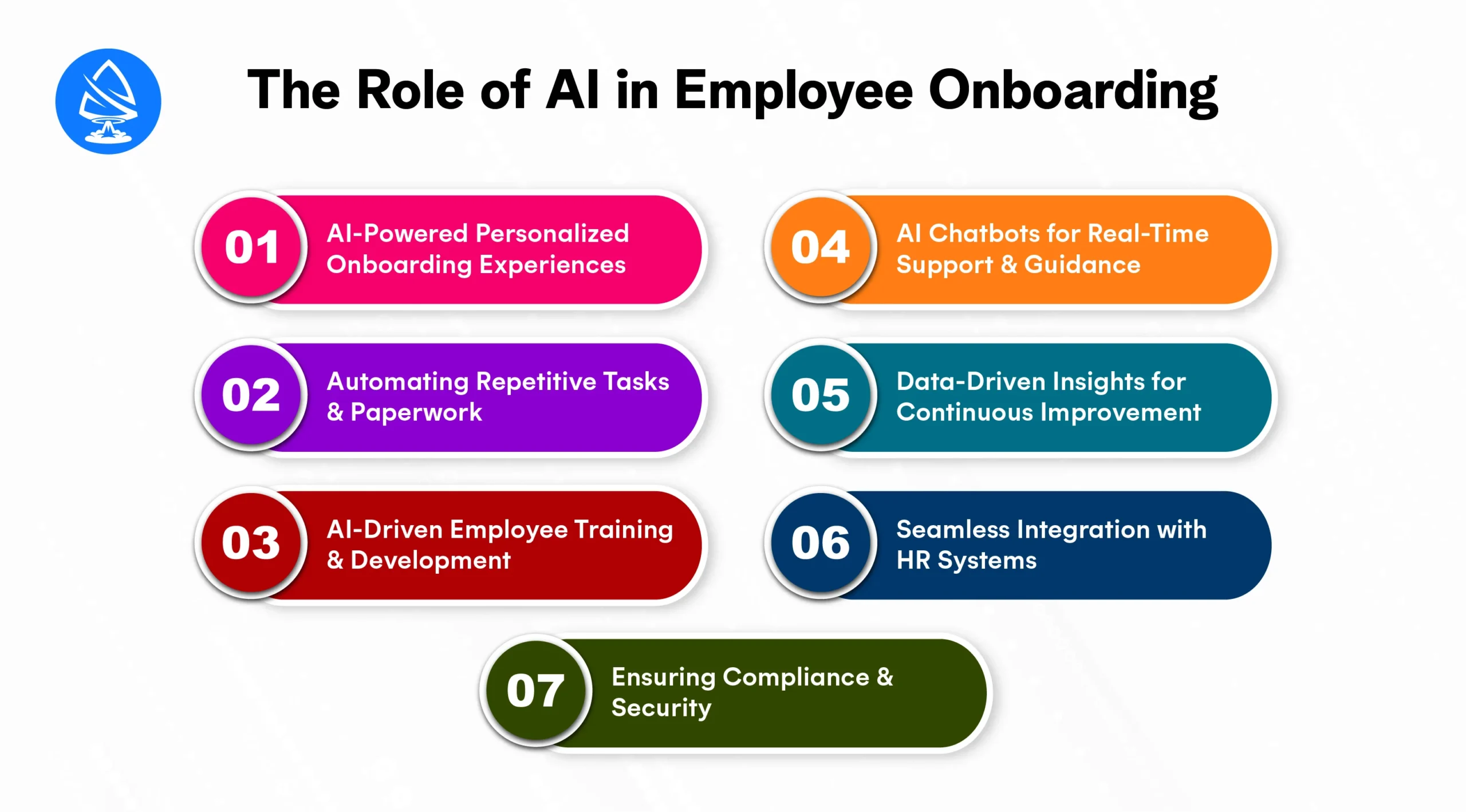
In 2025, AI plays a pivotal role in streamlining onboarding by automating repetitive tasks, personalizing training programs, and providing real-time support. Let’s dive deeper into how AI is reshaping employee onboarding and why it’s a game-changer for organizations:
1. AI-Powered Personalized Onboarding Experiences
One of the major challenges with traditional onboarding is ensuring that each new employee receives a personalized experience tailored to their role, department, and individual needs. AI in HR tools enables organizations to provide customized onboarding journeys based on the employee’s job profile, skills, and career goals.
Personalized Content: AI can analyze the new employee’s profile and create a personalized onboarding checklist that includes company resources, videos, documents, and training modules specific to the employee’s role and team.
Adaptive Learning: AI-driven onboarding platforms can assess the employee’s existing knowledge and adjust training materials accordingly. For instance, if an employee is already familiar with certain tools or concepts, the system can skip introductory content and focus on more advanced topics.
Key Benefits:
Tailored onboarding experiences that are relevant to the employee’s role and career path
Faster integration into the organization with role-specific resources
Increased engagement by focusing on areas where the employee needs development
2. Automating Repetitive Tasks and Paperwork
Employee onboarding typically involves a lot of paperwork, filling out forms, collecting documents, and complying with regulatory requirements. AI in employee onboarding can automate many of these tedious tasks, reducing administrative overhead and allowing HR teams to focus on more strategic activities.
Automated Document Collection: AI can automatically collect, verify, and process required documents (e.g., contracts, tax forms, and IDs), saving time and ensuring compliance with company policies and regulations.
Digital Signatures and Agreements: AI can also facilitate digital signatures, streamlining the document signing process and ensuring that everything is completed without delays.
Key Benefits:
Faster processing of paperwork and formalities
Reduced human error in document collection and processing
More efficient use of HR resources by automating routine tasks
3. AI-Driven Employee Training and Development
Training is a central component of any onboarding process. With AI, organizations can create dynamic, personalized training schedules and resources for new hires. AI-driven learning management systems (LMS) adapt content to suit the learner’s progress, providing employees with the tools they need to succeed in their roles.
AI Learning Paths: AI can analyze an employee’s learning progress and recommend the next best course or training material based on their pace and knowledge. For example, an employee who struggles with a specific software tool can be guided to more intensive tutorials, while another employee may move quickly through introductory materials.
Continuous Skill Development: AI platforms can track skill gaps and recommend training programs to close these gaps. This not only helps onboard employees faster but also supports their ongoing career development.
Key Benefits:
Personalized training that adapts to the individual learning style and pace
Faster skill acquisition and reduced time to productivity
Improved employee retention by providing continuous development opportunities
4. AI Chatbots for Real-Time Support and Guidance
One of the challenges new employees face during onboarding is finding answers to their questions, especially when HR staff or managers may be unavailable. AI-powered chatbots can provide real-time support, answering common queries, and guiding new hires through the onboarding process.
24/7 Availability: AI chatbots are available around the clock to answer questions related to company policies, benefits, work culture, and administrative tasks.
Interactive Q&A: Chatbots can answer frequently asked questions (FAQs) such as “How do I request time off?” or “What are the benefits enrollment deadlines?”. They can also direct new hires to appropriate resources or escalate more complex issues to HR.
Key Benefits:
Instant support for new employees, improving their experience
Reduced HR workload by automating the Q&A process
Higher employee engagement by providing continuous assistance
5. Data-Driven Insights for Continuous Improvement
AI can gather and analyze data from the onboarding process, providing HR teams with valuable insights into how well the process is working and where improvements can be made. By using predictive analytics, AI can identify potential roadblocks or pain points in the onboarding experience.
Feedback Loops: AI systems can solicit feedback from new employees during and after the onboarding process. This feedback can then be analyzed to assess employee satisfaction and highlight areas for improvement.
Identifying Bottlenecks: AI can also track the time it takes for employees to complete specific tasks in the onboarding process, helping HR teams identify and resolve bottlenecks that may slow down integration.
Key Benefits:
Continuous optimization of the onboarding process based on real-time feedback
Data-driven decisions that enhance the onboarding experience
Better employee retention by identifying and addressing common pain points
6. Seamless Integration with HR Systems
AI in employee onboarding integrates seamlessly with other HR software systems, such as human resource management systems (HRMS), performance management tools, and payroll systems. This integration allows HR teams to streamline the entire onboarding process and ensure that data flows smoothly across different platforms.
Unified Data Systems: AI can automatically update employee information in the HRMS, ensuring that all relevant systems are synchronized with the most current employee data.
Simplified Transition to Full Employee Status: Once the onboarding process is complete, AI ensures that the new hire’s status is updated across HR systems, including access to benefits, pay, and performance tracking systems.
Key Benefits:
Smooth data transfer between different HR platforms
Increased efficiency by reducing manual data entry
Easier transition from new hire to full employee status
7. Ensuring Compliance and Security
Compliance is an essential aspect of the onboarding process, especially when dealing with legal and regulatory requirements. AI helps ensure that employees complete all necessary forms, and that sensitive data is handled securely.
Automated Compliance Checks: AI can automatically verify that all necessary documents are completed correctly, ensuring that all regulatory requirements (e.g., tax forms, labor laws) are met.
Data Privacy: AI ensures that sensitive employee information is stored and managed securely, helping HR teams adhere to data protection regulations like GDPR or HIPAA.
Key Benefits:
Automatic compliance with regulatory requirements
Improved data security and privacy
Reduced risk of errors in completing mandatory documents
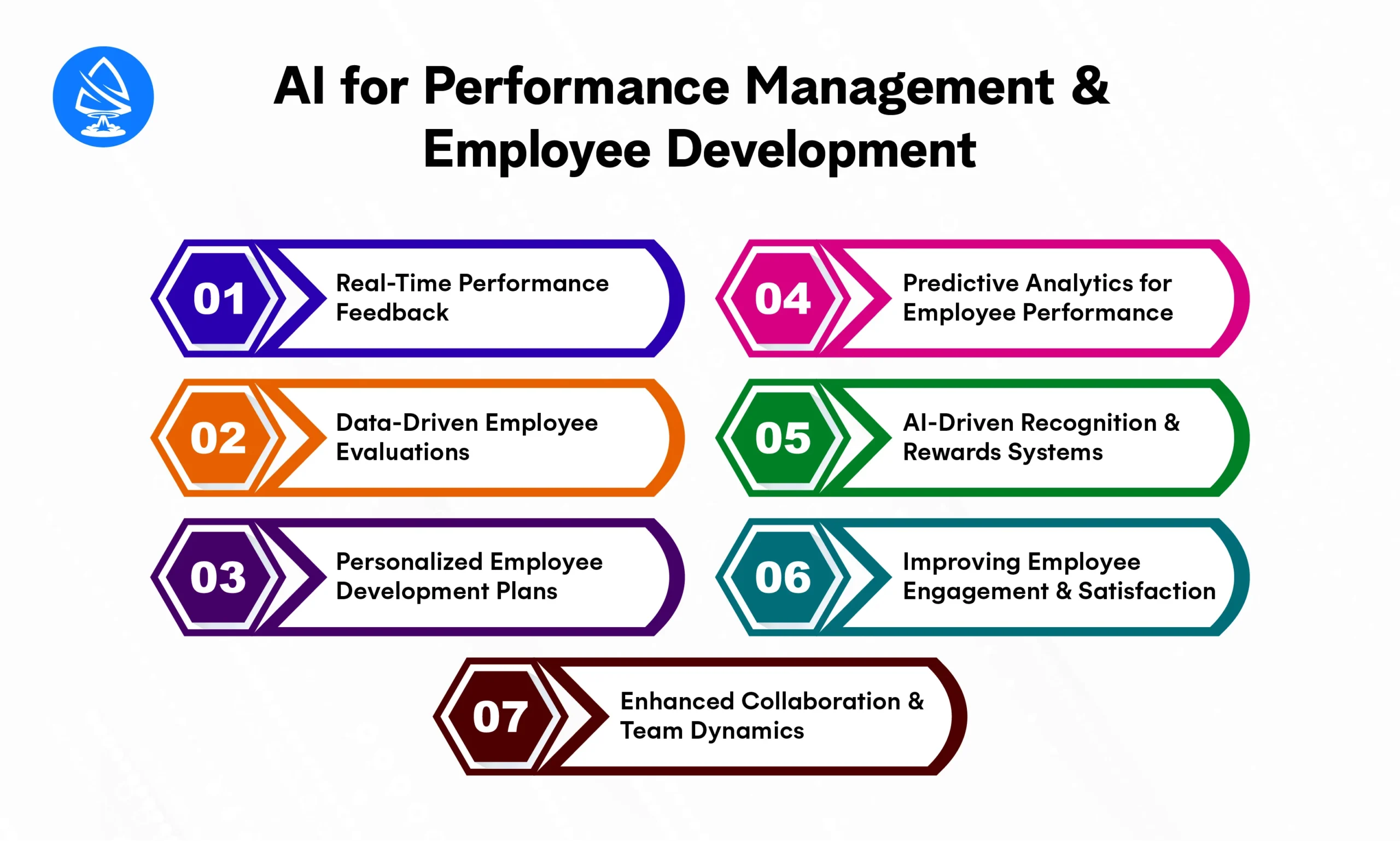
AI for Performance Management and Employee Development
In today’s rapidly evolving workplace, AI for performance management and employee development is reshaping how companies measure, support, and nurture talent. Traditional performance management systems, often based on annual reviews and subjective assessments, are being replaced by more agile, data-driven, and personalized approaches powered by artificial intelligence (AI).
AI in performance management uses data analytics, machine learning, and predictive analytics to assess employee performance, provide real-time feedback, and offer actionable insights for both employees and managers. This transition is helping organizations identify top talent, address performance issues quickly, and offer tailored growth opportunities for employees.
Let’s dive into how AI for performance management and employee development is transforming the workplace:
1. Real-Time Performance Feedback
Traditional performance management often relies on periodic performance reviews, typically conducted annually or semi-annually. However, this can lead to a disconnect between employee performance and timely feedback, making it harder to address issues or recognize achievements when they occur.
AI-powered Continuous Feedback: AI tools now allow for real-time performance monitoring and feedback. These systems track a variety of performance metrics, including sales figures, project completion rates, and even softer metrics like collaboration and communication. By continuously assessing performance, AI can help HR teams and managers provide ongoing feedback rather than waiting for scheduled reviews.
Instant Actionable Insights: AI systems analyze employee data and deliver insights to managers in real-time. This enables leaders to provide immediate feedback and course corrections when needed, leading to faster improvement and higher employee satisfaction.
Key Benefits:
Timely recognition and feedback, improving motivation and engagement
Faster identification of performance issues and areas for improvement
Continuous improvement through frequent, constructive feedback
2. Data-Driven Employee Evaluations
AI in performance management moves beyond subjective judgment and uses data to evaluate an employee’s performance more accurately and comprehensively. This helps reduce biases, ensuring that evaluations are objective, fair, and based on measurable performance metrics.
AI-Driven Performance Metrics: AI algorithms track a wide range of performance data, such as productivity, quality of work, customer satisfaction, and peer reviews. This holistic approach allows for a more complete picture of an employee’s contributions, rather than relying on individual opinions or isolated data points.
360-Degree Feedback: AI tools can gather feedback from various sources, managers, peers, subordinates, and even customers, providing a well-rounded view of the employee’s strengths and areas for development. This feedback is then analyzed to provide actionable recommendations for improving performance.
Key Benefits:
Objective and unbiased performance evaluations
Holistic view of employee performance across multiple metrics
More accurate identification of strengths and development areas
3. Personalized Employee Development Plans
Employee development is key to retaining top talent, fostering continuous learning, and enhancing productivity. AI is revolutionizing how employee development programs are tailored to meet individual needs and career aspirations.
Personalized Learning Paths: AI tools analyze employee performance, skills gaps, and career goals to recommend customized learning and development opportunities.
Career Growth Insights: By analyzing career trajectories and historical employee data, AI can identify potential future leaders or high performers, recommending development programs to prepare them for higher roles within the company.
Key Benefits:
Tailored development opportunities that match individual skills and goals
Faster career progression for high-potential employees
Higher employee satisfaction due to personalized career growth paths
4. Predictive Analytics for Employee Performance
AI powerfully predicts future employee behavior and performance. Predictive analytics uses historical data to forecast success and identify employees needing additional support.
Predicting Employee Success: AI tools can analyze patterns in employee performance, such as how previous achievements relate to future success in similar roles.
Identifying Potential Risks: AI can also predict when an employee might be at risk of underperformance or attrition.
Key Benefits:
Informed decision-making regarding promotions, transfers, and talent allocation
Proactive identification of employees who need additional support
Enhanced retention strategies by identifying employees at risk of leaving
AI-Driven Recognition and Rewards Systems
AI is helping companies develop more effective and personalized recognition and rewards systems that motivate employees and align recognition with their unique contributions.
Customized Rewards: AI can help identify the types of rewards that resonate most with individual employees, whether it’s monetary bonuses, career development opportunities, or non-monetary rewards like additional time off or public recognition.
Data-Backed Recognition: By continuously tracking performance and accomplishments, AI ensures that employees are recognized for their achievements in a timely manner. AI can also help ensure that recognition is aligned with business goals and objectives, driving engagement and motivation.
Key Benefits:
Increased motivation through personalized rewards
Timely recognition of achievements, fostering a positive work culture
Alignment of recognition with company objectives and goals
6. Improving Employee Engagement and Satisfaction
AI can help measure and improve employee engagement by continuously gathering feedback, analyzing sentiment, and providing HR teams with insights into the overall morale and satisfaction of the workforce.
Sentiment Analysis: AI tools can analyze surveys, emails, and other communication channels to assess employee sentiment. By understanding how employees feel about their work, management, and workplace culture, HR teams can address issues proactively.
Improved employee satisfaction through continuous feedback
Better employee retention by addressing concerns early
7. Enhanced Collaboration and Team Dynamics
AI can also help improve team dynamics and collaboration by analyzing how employees interact with one another and suggesting ways to optimize team structures. By examining communication patterns, AI can help HR teams understand team strengths and weaknesses and facilitate better collaboration.
Team Performance Insights: AI can provide insights into team dynamics, including how well team members collaborate, communicate, and work together. This information can help HR managers reassign roles or implement strategies to improve teamwork.
Collaboration Tools: AI-powered collaboration tools can recommend relevant resources, documents, or team members, helping employees work more efficiently and stay aligned with their team goals.
Key Benefits:
Improved team collaboration and communication
Stronger team dynamics through data-driven insights
Higher productivity due to better alignment and teamwork
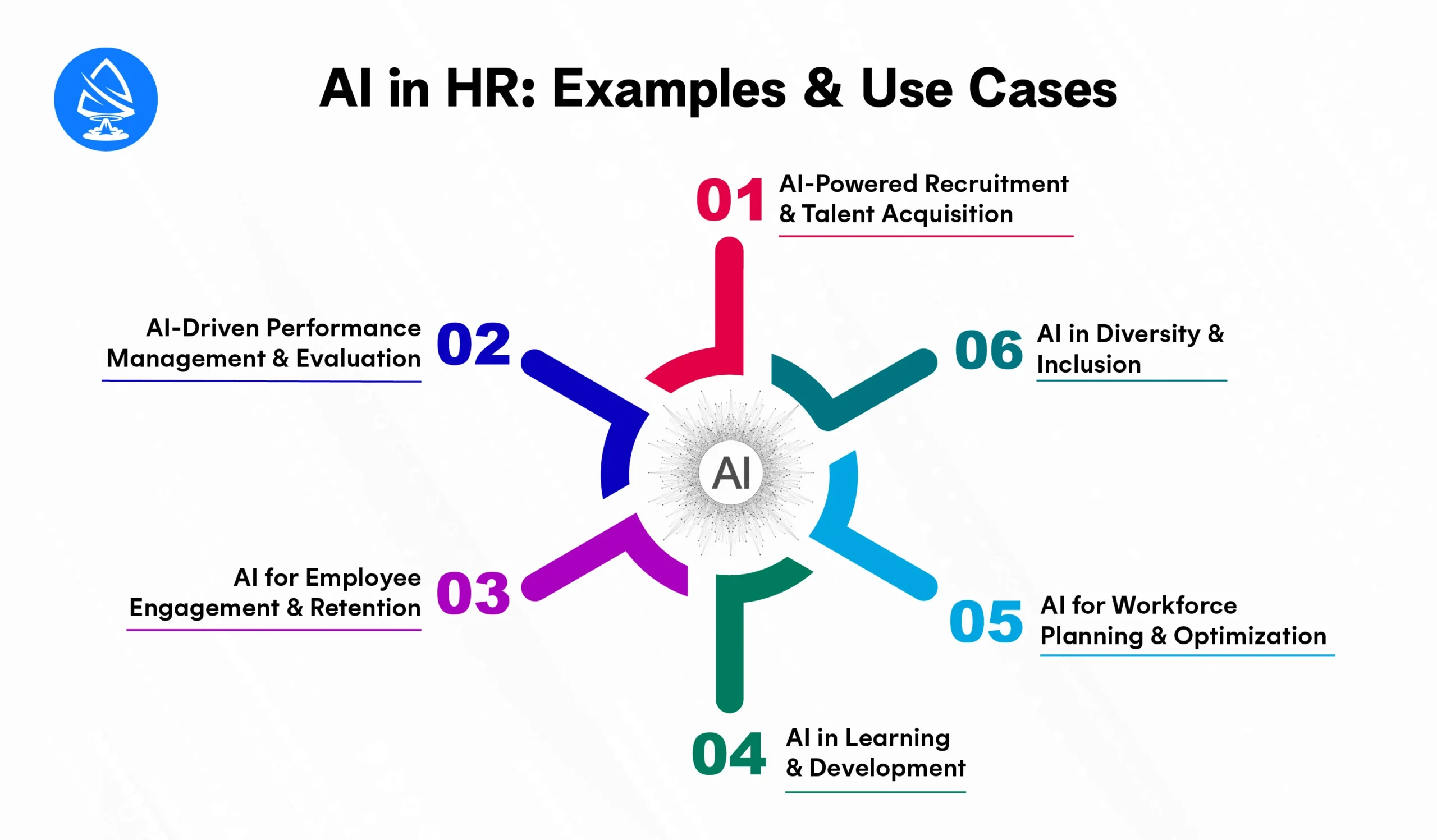
AI in HR: Examples and Use Cases
Artificial Intelligence is increasingly integrated into Human Resources, transforming workforce management practices. AI in HR enhances decision-making, improves employee experiences, and supports fair, data-driven processes. Using ML, NLP, and analytics, HR teams optimize recruitment, performance, talent management, and engagement.
In this section, we will explore several AI in HR examples and practical use cases that demonstrate how AI is reshaping HR practices and revolutionizing traditional human resource management.
1. AI-Powered Recruitment and Talent Acquisition
AI is revolutionizing talent acquisition, making it faster, more efficient, and less biased. Traditional recruitment processes often involve sifting through hundreds or even thousands of resumes, manually screening candidates, and conducting several rounds of interviews. AI is changing this by automating the initial stages of recruitment and ensuring a more objective and data-driven approach.
AI Resume Screening: AI tools, such as HireVue or Pymetrics, can scan resumes and cover letters to identify key qualifications, skills, and experiences.
Candidate Sourcing with AI: AI can scan job boards, LinkedIn, and other platforms to find potential candidates who are not actively looking for jobs but are a good match for a role. Tools like Entelo or XOR use AI to engage passive candidates, providing HR teams with a broader pool of talent.
Automated Chatbots: AI chatbots can interact with candidates in real-time, answering questions, scheduling interviews, and providing information about the role and company. This keeps candidates engaged throughout the process and saves HR staff time.
Benefits:
Faster and more efficient recruitment
Reduced bias in candidate selection
Enhanced candidate experience and engagement
2. AI-Driven Performance Management and Evaluation
Traditional performance management systems often rely on annual reviews, which can be ineffective, subjective, and delayed. AI in performance management allows for continuous monitoring, real-time feedback, and more accurate assessments of employee performance.
Continuous Feedback Systems: Tools like Lattice and 15Five use AI to provide continuous feedback to employees, enabling managers to offer timely support and guidance.
Data-Driven Insights: AI analyzes performance data to provide deeper insights into employee strengths and areas for improvement. It helps HR teams and managers identify high performers, potential leaders, and those who may need additional support or training.
Personalized Development Plans: AI-powered systems can create customized learning and development plans based on an employee’s performance data, helping them grow in areas where they need improvement.
Benefits:
Timely and continuous feedback on employee performance
More objective and data-driven performance evaluations
Improved employee growth through personalized development plans
3. AI for Employee Engagement and Retention
Employee engagement is critical for maintaining a motivated and productive workforce. AI tools are helping organizations monitor and improve employee engagement through continuous feedback, sentiment analysis, and predictive analytics.
Sentiment Analysis: AI can analyze employee feedback, surveys, emails, and even social media interactions to gauge employee sentiment and overall job satisfaction.
Pulse Surveys and Feedback: AI tools can automate pulse surveys, regularly gathering feedback from employees on their experience, satisfaction, and concerns. This data is then analyzed to track trends in engagement over time and provide actionable insights for improvement.
Predicting Employee Attrition: By analyzing historical data and employee behavior, AI can predict which employees are at risk of leaving the company.
Benefits:
Improved employee engagement and job satisfaction
Early detection of potential attrition risks
More personalized strategies for employee retention
4. AI in Learning and Development
AI is playing an increasingly important role in learning and development (L&D), enabling companies to offer personalized training programs, track learning progress, and ensure continuous skill development across the workforce.
Personalized Learning Paths: AI tools such as Cornerstone OnDemand and LinkedIn Learning use machine learning algorithms to recommend training content based on an employee’s skill gaps, career goals, and learning preferences. This ensures employees receive the right training materials tailored to their needs.
Skill Gap Analysis: AI can analyze an employee’s current skill set and compare it with the requirements of their role or future career aspirations.
Automated Training and Knowledge Sharing: AI can automatically assign training courses, track progress, and recommend relevant resources to employees, making the learning process more efficient and effective. Additionally, AI-powered chatbots can be used to answer questions or clarify concepts during the learning process.
Benefits:
Personalized learning experiences that match employee needs
Enhanced employee skills and readiness for future roles
More efficient learning processes and resource management
5. AI for Workforce Planning and Optimization
AI helps HR teams plan workforces and place the right talent at the right time. By analyzing data, AI predicts workforce needs and optimizes staffing decisions.
Predicting Workforce Needs: AI tools can analyze historical trends to predict the future demand for specific skills or roles. This helps HR teams plan for upcoming talent needs, ensuring that the organization has the right resources available when required.
Resource Allocation: AI can analyze employee workloads, productivity levels, and skill sets to recommend the best allocation of resources across different projects or teams, ensuring optimal staffing levels.
Identifying High-Potential Talent: AI can help identify high-potential candidates within the company who are ready for leadership roles, helping HR teams with succession planning and internal promotions.
Benefits:
Better alignment of talent with organizational goals
More proactive and data-driven workforce planning
Optimized resource allocation and reduced staffing shortages
6. AI in Diversity and Inclusion
Diversity and inclusion are critical elements of a strong, healthy workplace. AI tools can help eliminate unconscious bias from recruitment, performance evaluations, and employee engagement initiatives, ensuring that all employees are treated fairly and equally.
Bias-Free Recruiting: AI tools like Textio help HR teams create more inclusive job descriptions by identifying and eliminating biased language that could discourage certain candidates from applying. These tools help ensure that job postings are appealing to a diverse group of candidates.
Diversity Analytics: AI can also analyze recruitment data, employee demographics, and engagement feedback to identify diversity gaps within the organization and recommend strategies to address them.
Bias Detection in Performance Evaluations: AI can detect and flag biased language in performance reviews, ensuring that employees are evaluated based on their performance rather than subjective biases.
Benefits:
More inclusive hiring practices
Better tracking and analysis of diversity efforts
Reduced unconscious bias in recruitment and performance management
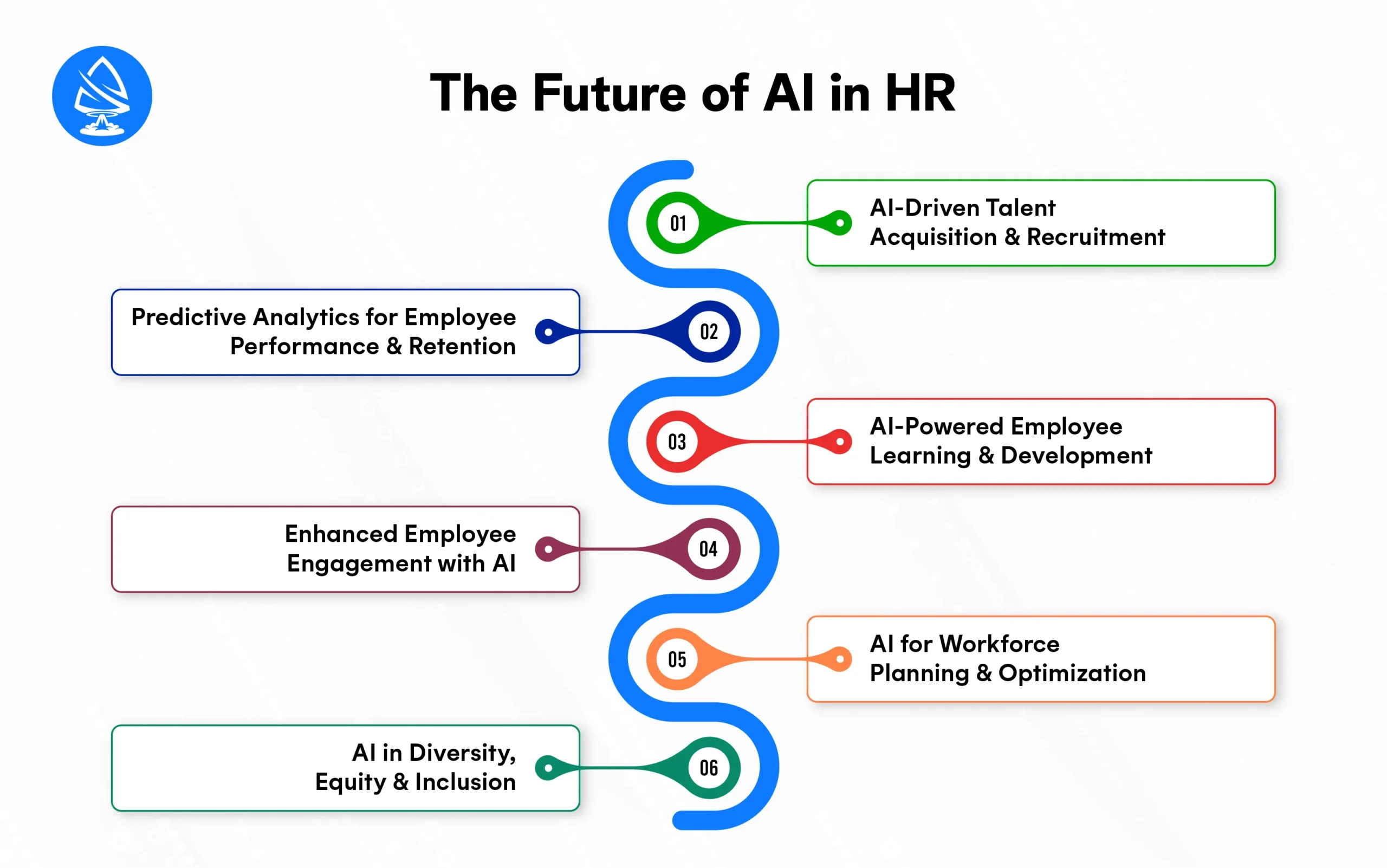
The Future of AI in HR
As the digital age advances, AI continues expanding its role in Human Resources. AI in HR streamlines recruitment, employee management, training, and engagement. Using machine learning, analytics, and NLP, HR teams make better data-driven decisions. These tools improve efficiency and support inclusive, engaging workplaces.
This transformation represents a cultural shift redefining how organizations manage and nurture their people.
Let’s explore future AI trends, advancements, and use cases shaping human resource management.
1. AI-Driven Talent Acquisition and Recruitment
One of the key areas where AI is already making a significant impact is in talent acquisition and recruitment. The future of AI in recruitment will bring even greater efficiency and sophistication, enhancing the way organizations find and hire top talent.
Predictive Hiring: Future AI recruitment tools will not only assess a candidate’s qualifications but also predict their long-term success within the organization.
Bias-Free Hiring: AI will help eliminate unconscious biases in hiring by ensuring that candidates are selected based on their qualifications and fit for the role, rather than subjective factors such as gender, age, or ethnicity. This will contribute to more diverse and inclusive hiring practices.
AI Chatbots and Virtual Assistants: AI-powered chatbots and virtual assistants will continue to evolve, automating candidate interactions, answering questions, and guiding candidates through the hiring process.
Key Benefits:
Faster, more efficient recruitment processes
More data-driven, objective hiring decisions
Enhanced diversity and inclusion through unbiased hiring
2. Predictive Analytics for Employee Performance and Retention
The future of AI in employee performance management will go beyond simple metrics and reviews to leverage predictive analytics for a deeper understanding of employee behavior, performance, and retention.
Predicting Employee Attrition: AI will continue to analyze vast amounts of data to predict which employees are at risk of leaving the organization.
Real-Time Performance Tracking: Future AI systems will offer even more sophisticated real-time performance feedback and insights, enabling managers to continuously monitor and support employees. AI will suggest personalized development plans based on employee performance, learning styles, and career goals.
Data-Driven Retention Strategies: By analyzing data from various sources such as employee feedback, performance reviews, and career progression, AI can help HR teams develop proactive employee retention strategies. This includes tailoring incentives, career development programs, and improving workplace culture based on the data gathered.
Key Benefits:
Proactive employee retention efforts based on predictive data
Continuous, personalized feedback and development
More accurate performance tracking and insights for career growth
3. AI-Powered Employee Learning and Development
The future of AI in employee development will allow organizations to create personalized learning experiences at scale. By analyzing employee performance and career goals, AI will recommend the most relevant training and development opportunities to help employees grow and succeed in their roles.
Personalized Learning Paths: AI will provide highly personalized learning paths for employees based on their current skill set, future career goals, and areas of improvement.
Skill Gap Analysis: AI tools will continue to assess skill gaps across the workforce and recommend targeted learning resources, such as courses, workshops, and certifications.
Smart Mentorship Programs: AI will play a key role in matching mentors with mentees based on individual skill sets, career aspirations, and learning preferences. This ensures that employees receive the guidance and support they need to accelerate their development.
Key Benefits:
Continuous, tailored learning experiences for employees
Enhanced employee skill development aligned with career goals
Scalable and cost-effective training programs
4. Enhanced Employee Engagement with AI
Employee engagement is essential for organizational success, and AI will continue to play a significant role in measuring and improving engagement levels in real-time.
Sentiment Analysis: AI-driven sentiment analysis tools will monitor employee feedback, surveys, and internal communications to gauge employee satisfaction and engagement levels. This will allow HR teams to identify potential issues early and address concerns before they affect morale and productivity.
AI-Powered Pulse Surveys: Future AI tools will make it easier to gather real-time feedback from employees through pulse surveys. These surveys will be sent out periodically to assess how employees feel about their work environment, leadership, and culture. AI will analyze this data to provide actionable insights that HR teams can use to improve engagement.
Personalized Employee Recognition: AI will help organizations identify when and how to recognize employees for their achievements.
Key Benefits:
Real-time employee sentiment analysis and feedback
More personalized and meaningful employee recognition
Increased overall employee satisfaction and engagement
5. AI for Workforce Planning and Optimization
Workforce planning is essential for ensuring that organizations have the right talent in place at the right time. AI will enhance workforce planning by analyzing data trends, predicting future talent needs, and optimizing staffing levels.
Demand Forecasting: AI will help HR teams forecast future workforce requirements based on data from various sources, such as historical trends, business goals, and industry benchmarks. This allows organizations to proactively plan for changes in demand, seasonal workforce needs, or expansion into new markets.
Optimized Talent Allocation: AI will ensure that the right employees are assigned to the right tasks or projects based on their skills, workload, and availability. This will maximize productivity and efficiency while ensuring that employees are not overburdened.
Scenario Planning: AI will support scenario planning by simulating different workforce scenarios and providing recommendations on how to allocate resources, manage talent pipelines, and address potential challenges.
Key Benefits:
Improved alignment of talent with organizational goals
More accurate workforce demand forecasting
Optimized resource allocation and reduced staffing inefficiencies
6. AI in Diversity, Equity, and Inclusion (DEI)
Diversity, equity, and inclusion (DEI) are increasingly important priorities for modern organizations. AI will continue to support DEI efforts by helping HR teams identify biases, track diversity metrics, and create more inclusive hiring practices.
Bias Detection and Mitigation: AI tools will help HR teams detect biases in recruitment, performance reviews, and pay disparities.
Diversity Analytics: AI will provide deeper insights into diversity metrics, helping organizations track the effectiveness of their DEI initiatives. These tools will identify areas for improvement and suggest actionable steps to create a more inclusive workforce.
Inclusive Recruitment Practices: AI will help remove biased language from job descriptions, ensuring that job postings are appealing to candidates from diverse backgrounds. AI-driven recruitment platforms will also promote more inclusive talent sourcing by expanding the talent pool to reach underrepresented groups.
Key Benefits:
More inclusive hiring and talent management practices
Reduced bias in recruitment and performance evaluations
Improved diversity and inclusion across the organization
Conclusion
AI is fundamentally changing the way organizations approach HR, especially in talent acquisition. AI tools help companies streamline recruitment, reduce bias, and improve candidate experiences with data-driven decisions. It also enhances employee development, performance management, and retention strategies. This creates a more engaged, efficient, and productive workforce.
Partnering with an AI development company helps businesses access advanced HR technologies. Hiring AI developers enables customized HR solutions that integrate seamlessly with existing systems.
Frequently Asked Questions
1. What is AI in HR?
AI in HR uses artificial intelligence to automate and improve recruitment, performance management, and workforce planning.
2. How is AI used in talent acquisition?
AI automates resume screening, candidate sourcing, chatbot interviews, and video interview assessments.
3. What are HR AI tools?
HR AI tools help teams with candidate sourcing, performance evaluation, onboarding, and engagement analysis.
4. Can AI improve employee performance management?
Yes, AI tracks performance, provides feedback, and recommends personalized development programs.
5. What are the benefits of AI in HR?
AI in HR benefits organizations by improving efficiency, reducing biases in hiring, providing personalized employee experiences, enhancing decision-making, and lowering recruitment costs.
6. How can AI help with employee engagement?
AI tools analyze employee feedback, sentiment, and behavior to provide insights into engagement levels, enabling HR teams to take proactive steps to improve workplace satisfaction.
7. What is generative AI in HR?
Generative AI in HR refers to AI technologies that can create customized content, such as job descriptions, training materials, and personalized employee development plans.
8. How does AI help with workforce planning?
AI analyzes historical data and workforce trends to predict future staffing needs, helping HR teams plan for talent acquisition, retention, and resource allocation.
Written By :
Artoon Solutions
Artoon Solutions is a technology company that specializes in providing a wide range of IT services, including web and mobile app development, game development, and web application development. They offer custom software solutions to clients across various industries and are known for their expertise in technologies such as React.js, Angular, Node.js, and others. The company focuses on delivering high-quality, innovative solutions tailored to meet the specific needs of their clients.



 For business inquiries only