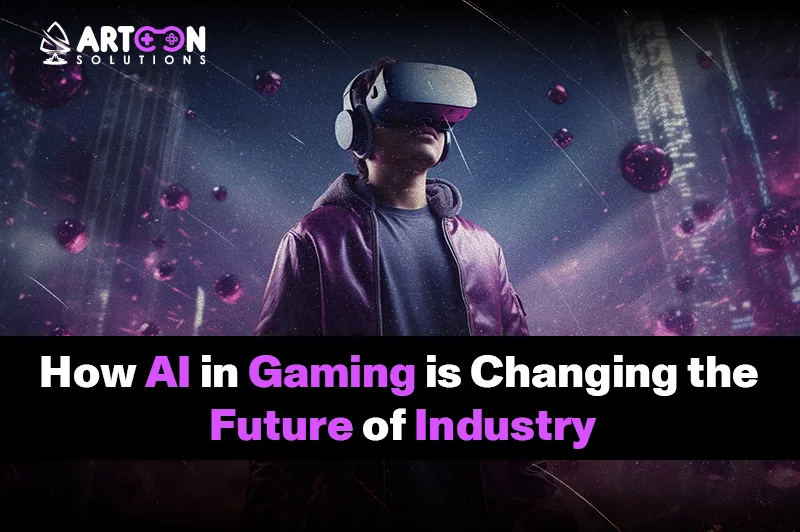
The gaming industry is experiencing a significant transformation, thanks to advancements in AI in gaming. Artificial intelligence has moved from simply enhancing game mechanics to becoming a core component of how games are designed, developed, and experienced. From creating more realistic game environments to driving dynamic gameplay, AI is reshaping the future of gaming. This blog post delves into how AI in gaming is changing the gaming industry, from game creation to player experience.
The Evolution of AI in Gaming
AI in gaming has been around for decades, but the rapid development of machine learning and neural networks has given developers more powerful tools to enhance gameplay, game development, and player engagement. Initially, AI was used to control non-player characters (NPCs) and enemies. Over time, its role expanded to procedural generation, content personalization, and dynamic world-building.
In the past, AI-powered characters followed pre-programmed scripts, which made gameplay predictable. However, today’s AI in game development leverages real-time learning, allowing for more complex and responsive AI behaviors that adapt to player actions and strategies.
AI in Game Development: Revolutionizing Design and Creation
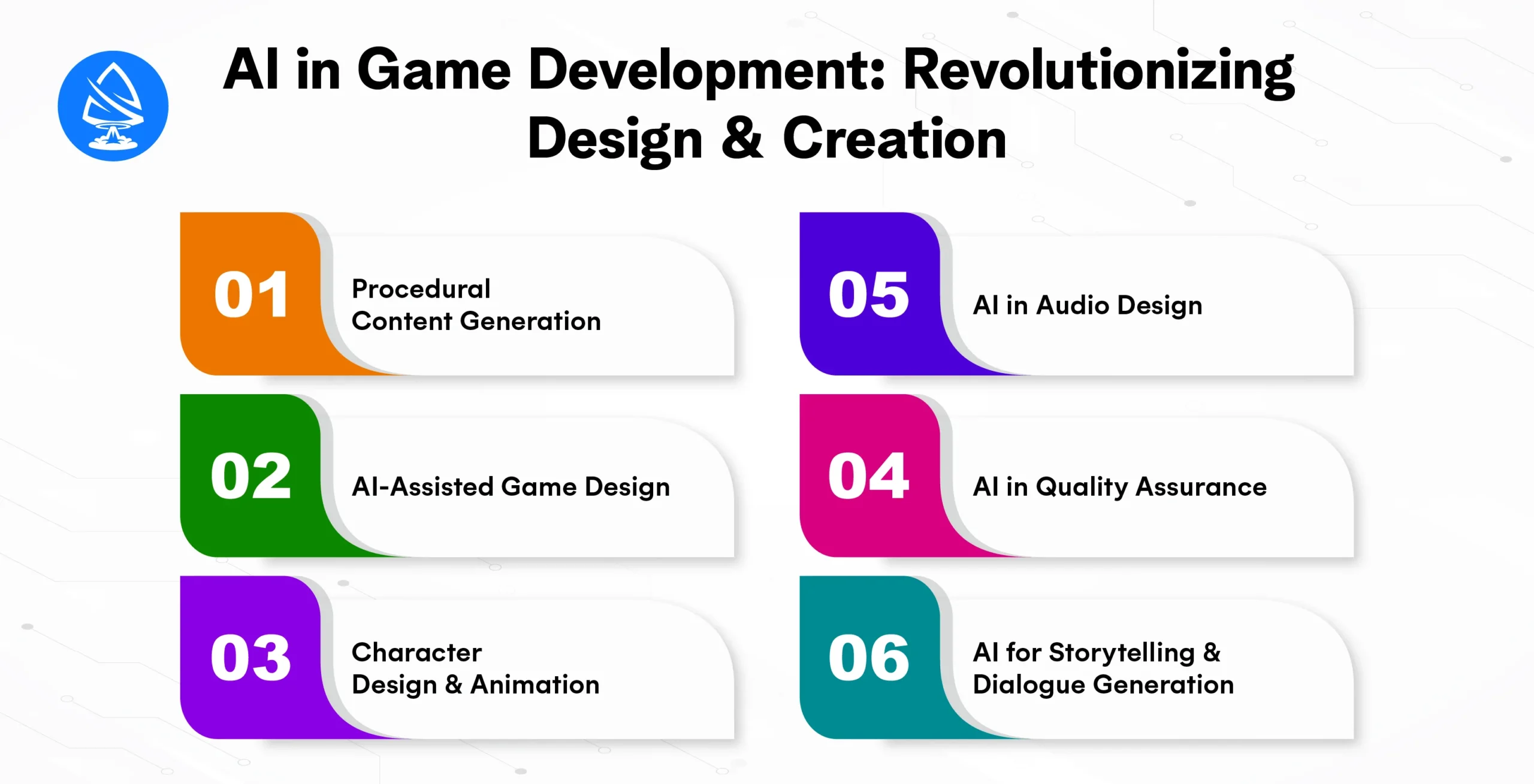
The integration of AI in game development is not only transforming how games are designed and created but also reshaping the entire process, making it faster, more efficient, and more innovative. AI is now playing a pivotal role in every stage of game development, from the initial concept to post-release updates. It is enabling developers to push the boundaries of creativity, streamline workflows, and enhance player experiences.
Here’s a detailed exploration of how AI is revolutionizing the design and creation of games:
1. Procedural Content Generation
One of the most profound impacts AI has had on game development is in the realm of procedural content generation (PCG). Procedural generation refers to the use of algorithms to automatically generate game content such as levels, environments, characters, and even entire worlds. This has enabled developers to create vast, diverse game worlds without the need for manual input for every detail.
Key Developments:
Endless Worlds: AI algorithms can generate vast, procedurally-created worlds that offer limitless exploration opportunities.
Dynamic Environments: AI-powered procedural generation isn’t just limited to landscapes; it can also dynamically generate weather patterns, ecosystems, and even narrative elements. This results in immersive, ever-changing environments that react to player actions or in-game events.
Efficient Content Creation: By leveraging AI for content generation, developers can save time and resources in world-building, allowing them to focus on other aspects of game development, such as gameplay mechanics and storyline. This democratizes game creation, allowing indie developers with limited resources to produce complex, expansive games.
2. AI-Assisted Game Design
In the past, game design was a labor-intensive process requiring massive amounts of manual work and iteration.
Key Developments:
AI-Powered Design Tools: AI is used in game creation tools to help designers automate repetitive tasks like asset creation, level design, and even storytelling.
Adaptive Difficulty Systems: AI can automatically adjust the difficulty of a game in real-time based on a player’s skill level, ensuring a balanced and engaging experience.
Procedural Narrative Design: AI is beginning to assist in creating dynamic narratives that evolve based on the player’s decisions. This is a huge leap from traditional linear storytelling, allowing for more interactive and personalized game experiences.
3. Character Design and Animation
In the realm of character design and animation, AI has been instrumental in making NPCs and player avatars more lifelike, interactive, and believable. Gone are the days of simple, repetitive NPC behaviors. AI allows characters to have dynamic, nuanced personalities and can even adapt to player actions.
Key Developments:
AI-Driven Animation: AI-powered systems are now used to automate character animation, such as walking, running, and interacting with objects. Through motion capture technology combined with AI, characters move more naturally and realistically. AI can adapt the animations based on the character’s environment and their interactions with players, creating smoother and more lifelike movements.
Autonomous NPC Behavior: In the past, NPCs followed simple scripted routines. Now, AI in game development can enable NPCs to make decisions based on their surroundings and the player’s actions.
AI for Character Customization: AI is also enhancing character creation tools, enabling deeper customization options for players. AI can recommend outfits, accessories, and even personality traits based on the player’s preferences or play style, making each character feel more personal and unique.
4. AI in Audio Design
Sound design is a critical element in game immersion, and AI is playing an increasingly significant role in generating dynamic and interactive soundscapes. AI systems can analyze the game environment, player actions, and story progression to generate relevant and reactive audio cues.
Key Developments:
Dynamic Music Composition: AI can generate music dynamically based on the emotional tone of the game or player actions. Games like No Man’s Sky have utilized AI-generated soundtracks that change based on player exploration or environmental factors, offering a personalized and immersive audio experience.
Reactive Sound Effects: AI can create sound effects that respond to in-game events. For instance, in a fast-paced action game, the AI might adjust the intensity of sound effects based on the situation, such as increasing the volume of explosions or character interactions to reflect the action’s intensity.
Real-Time Audio Feedback: AI also helps generate real-time audio feedback based on player actions, such as footsteps, ambient sounds, and voice interactions with NPCs. This enhances the realism of the game world and strengthens player immersion.
5. AI in Quality Assurance
AI has made a significant impact on game testing and quality assurance. Traditionally, game developers relied heavily on human testers to find bugs and glitches, but AI has automated many aspects of this process, drastically improving efficiency and reliability.
Key Developments:
Automated Bug Detection: AI-powered systems can now automatically detect bugs in the game by simulating thousands of different playthroughs and interactions. These AI tools analyze gameplay and identify issues such as glitches, crashes, or performance drops, speeding up the debugging process.
Performance Optimization: AI also helps optimize game performance by analyzing data from various devices and automatically adjusting graphical settings, rendering techniques, and load balancing based on the player’s hardware. This ensures that the game runs smoothly on a wide range of devices, from high-end gaming PCs to mobile phones.
AI for Regression Testing: AI is used to run automated regression tests that check for issues that might arise from changes in the game’s code. This helps AI developers ensure that new updates or patches don’t introduce new problems into the game.
6. AI for Storytelling and Dialogue Generation
In recent years, AI has also made strides in enhancing storytelling within video games. Developers are using AI to create adaptive, branching storylines and dynamic dialogues that respond to player choices, creating a more personalized experience.
Key Developments:
Procedural Storytelling: AI algorithms can dynamically generate or alter storylines based on player choices, leading to non-linear narratives that evolve in real time. Games like Detroit: Become Human have used AI to craft branching narratives that respond to the player’s moral decisions and actions.
Dynamic Dialogue Systems: AI-driven dialogue systems allow for more immersive character interactions. Instead of simply selecting from a list of fixed dialogue options, players can engage in more fluid, natural conversations with NPCs, with responses generated based on previous interactions or the state of the game world.
AI in Writing NPC Dialogue: Developers are using AI to assist with generating vast amounts of dialogue for NPCs. AI algorithms can help create varied, context-sensitive dialogue that feels dynamic, even in games with a massive number of characters and quests.
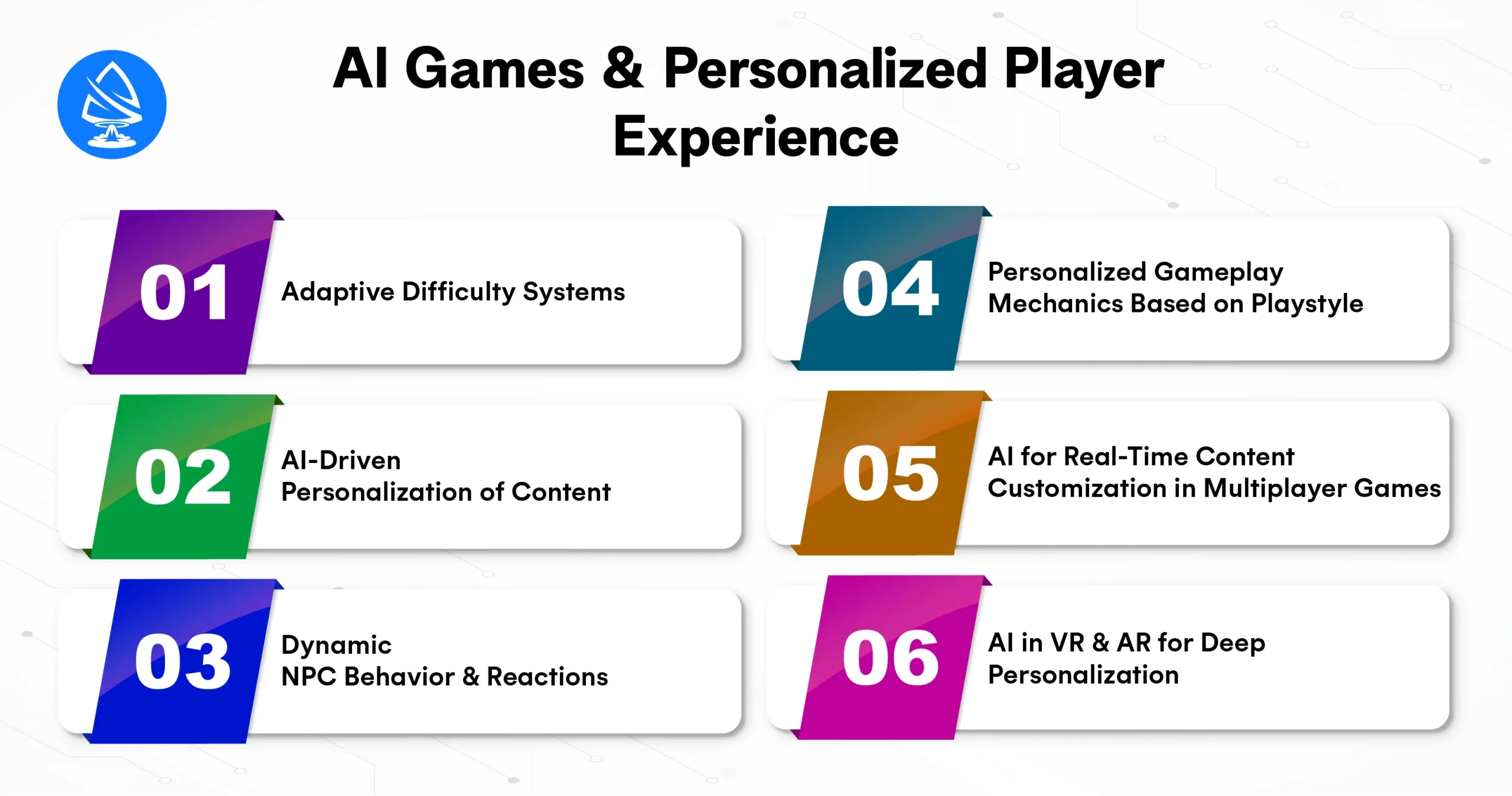
The integration of AI in gaming has not only enhanced the technical and visual aspects of gameplay but has also significantly contributed to personalizing the player experience. AI has revolutionized how games adapt to individual players, making each interaction feel more tailored, dynamic, and engaging. By analyzing player behavior, preferences, and decisions, AI can alter a game’s difficulty, storyline, and even NPC interactions to create a truly unique experience for every player.
Here’s a detailed exploration of how AI games are enhancing the personalized player experience:
1. Adaptive Difficulty Systems
One of the most impactful ways AI enhances the player experience is through adaptive difficulty. Rather than sticking to a fixed difficulty level throughout the game, AI-powered systems can adjust the game’s challenges in real-time based on the player’s performance, ensuring an enjoyable experience for players of all skill levels.
Key Developments:
Dynamic Difficulty Adjustment (DDA): AI algorithms monitor how players are progressing in the game. If a player is struggling with certain challenges, AI can automatically reduce the difficulty by altering enemy strength, puzzle complexity, or the number of obstacles. On the other hand, if a player is breezing through the game, the AI can increase the difficulty by introducing tougher enemies or more complex challenges.
Balanced Player Experience: AI ensures that the difficulty is constantly aligned with the player’s abilities. This prevents frustration for beginners and boredom for more advanced players, allowing them to enjoy a seamless and engaging experience throughout the game.
Examples: Games like Resident Evil 4 and Left 4 Dead use adaptive difficulty to change the intensity of combat scenarios, offering players a more balanced and enjoyable experience based on their skill level.
2. AI-Driven Personalization of Content
Beyond gameplay mechanics, AI in gaming can personalize content for individual players, creating a gaming experience that feels uniquely tailored. By analyzing player choices, playstyle, and preferences, AI can dynamically alter game content, such as character customization options, rewards, and even story progression.
Key Developments:
Personalized Rewards and Progression: AI can analyze a player’s behavior and offer personalized rewards or unlockables based on their playstyle.
Dynamic Character Customization: AI allows players to customize characters based on their preferences, such as adjusting facial features, clothing, or abilities. In some cases, AI can even recommend customization options based on the player’s past choices or current in-game activities, ensuring a more personalized and immersive experience.
Personalized Narrative Choices: AI is also used to shape the story of the game based on player choices.
3. Dynamic NPC Behavior and Reactions
AI in gaming is also making NPCs (non-player characters) more intelligent, realistic, and reactive. Rather than just following pre-programmed scripts, NPCs are becoming more responsive to the player’s actions and decisions. This shift makes NPC interactions feel more organic and immersive.
Key Developments:
Emotionally Intelligent NPCs: Advanced AI algorithms can allow NPCs to detect the player’s emotional state and adjust their behavior accordingly. If a player has been aggressive throughout the game, NPCs might react with fear or hostility, while cooperative players may receive more help or ally with NPCs more easily. This emotional depth makes NPCs feel like living characters in a dynamic world.
Context-Aware Dialogue and Actions: AI-powered systems can track the player’s decisions and responses throughout the game, enabling NPCs to remember past interactions and react accordingly. This creates a more immersive experience, as NPCs adapt their dialogue and actions based on the player’s choices, forming unique relationships with the player.
Behavioral Evolution: In some cases, AI allows NPCs to evolve. NPCs might start as neutral characters, but, depending on how players treat them, they could become friends, rivals, or even enemies. This results in richer, more engaging gameplay, where relationships and interactions feel earned rather than scripted.
4. Personalized Gameplay Mechanics Based on Playstyle
Every player approaches a game differently. Some focus on combat, while others may prefer exploration or puzzle-solving. AI in gaming can identify these preferences and adapt gameplay mechanics to better suit the player’s style, offering a personalized experience that enhances enjoyment and immersion.
Key Developments:
Playstyle Recognition: AI tracks the player’s behavior throughout the game, noting their preferences, such as combat tactics, exploration habits, or interactions with NPCs. Based on these observations, the AI can offer tailored gameplay experiences.
Dynamic Game Adaptation: AI allows games to adapt not just the difficulty but also gameplay mechanics based on the player’s choices. If a player often takes the stealth approach, AI might provide more opportunities for sneaky maneuvers and stealth-based abilities. Conversely, if a player prefers action-packed combat, the game can introduce more aggressive enemies or high-intensity scenarios to match that preference.
Personalized Story Paths: AI can also affect narrative choices based on playstyle. If a player consistently chooses to align with certain factions or characters, the game can present them with additional quests, challenges, or story arcs that align with their playstyle, deepening their connection to the game world.
5. AI for Real-Time Content Customization in Multiplayer Games
In multiplayer games, AI is used to personalize not only the single-player experience but also how players interact with each other in a shared environment. AI can analyze players’ actions, teamwork strategies, and playstyles, then dynamically adjust game content to enhance cooperation, competition, and overall player satisfaction.
Key Developments:
Personalized Matchmaking: AI-powered matchmaking systems can evaluate players’ skill levels, preferred playstyles, and past behaviors to match them with others who are likely to offer a similarly enjoyable experience. This ensures that players are constantly engaged with opponents or teammates of a comparable skill level, enhancing competitiveness and fun.
Dynamic Game Balance: In multiplayer games, AI can adjust the game mechanics on the fly to ensure balance and fairness.
Enhanced Team Dynamics: AI can help balance team dynamics in multiplayer games by analyzing individual player behavior and recommending strategies or roles that complement their teammates. It can even assist in suggesting optimal team compositions based on the skills and preferences of the players.
6. AI in VR and AR for Deep Personalization
With the rise of virtual reality (VR) and augmented reality (AR), AI is also enhancing the personalization of immersive experiences. In VR and AR games, AI is used to track a player’s movements, reactions, and interactions with the virtual world to create experiences that feel more real and engaging.
Key Developments:
Real-Time Adaptation: AI systems analyze player behavior in VR and AR environments, adjusting the game’s responses to ensure that the player feels immersed in the world.
Contextual Interaction: In VR games, AI can provide context-aware feedback based on the player’s in-game actions.
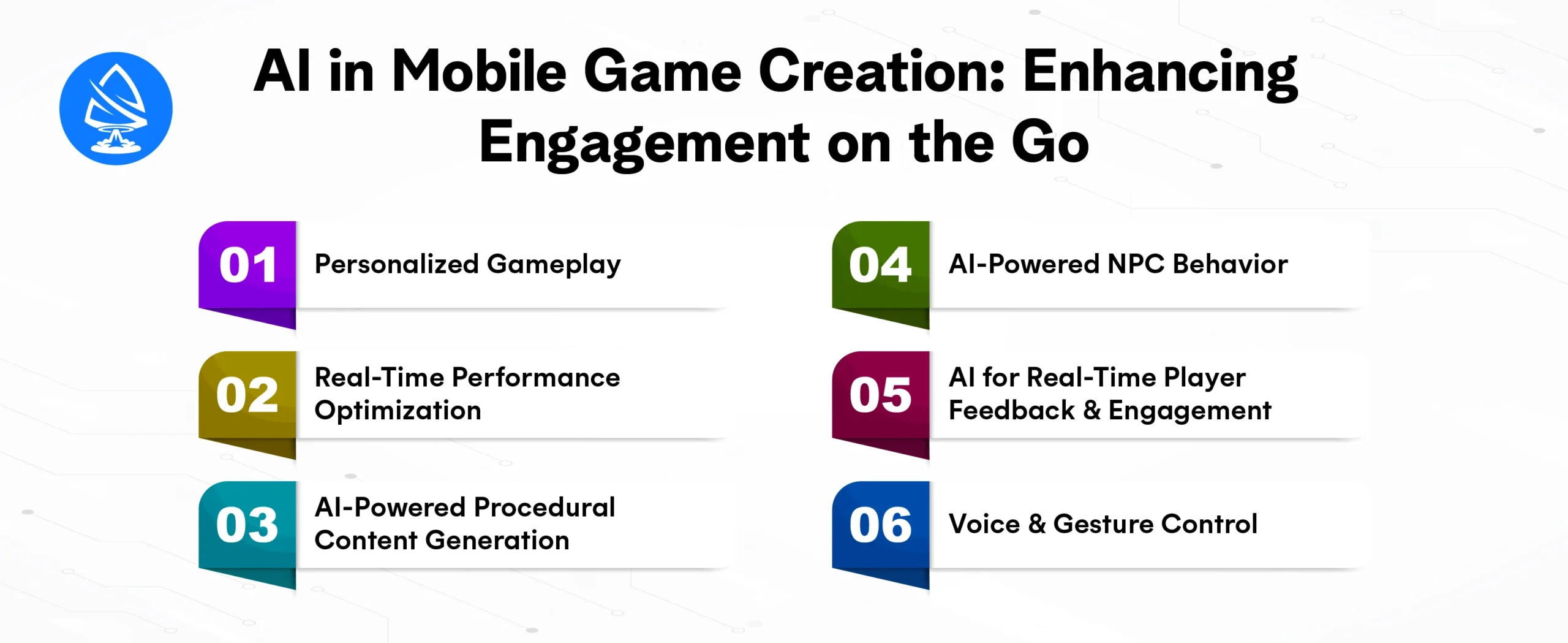
AI in Mobile Game Creation: Enhancing Engagement on the Go
The rise of mobile gaming has reshaped the gaming landscape, making gaming more accessible, portable, and convenient. With millions of mobile gamers worldwide, mobile game developers are continuously looking for ways to enhance user engagement and create dynamic, immersive experiences. One of the most powerful tools driving this transformation is artificial intelligence (AI). AI is significantly improving mobile game creation by personalizing the gaming experience, enhancing gameplay, optimizing game performance, and adapting to player behavior in real-time.
In this detailed exploration, we’ll look at how AI in mobile game creation is enhancing engagement and revolutionizing the mobile gaming experience.
1. Personalized Gameplay
One of the most notable impacts of AI in mobile game creation is the ability to personalize the gameplay experience for each player. By analyzing data from player actions, preferences, and behaviors, AI can adapt the game to create a tailored experience that resonates with individual players.
Key Developments:
Dynamic Difficulty Adjustment (DDA): AI algorithms track how well a player is performing in the game and adjust the difficulty in real-time. If a player is struggling with a certain level, the AI can lower the difficulty by changing enemy behavior, altering obstacles, or offering hints. Conversely, if a player is breezing through the game, the AI can increase the challenge, keeping the game engaging and ensuring that players don’t become bored.
Customized Rewards and Challenges: Based on the player’s actions, AI can create personalized rewards, quests, and challenges.
Behavioral Adaptation: AI systems can recognize player habits, such as whether they prefer a fast-paced action game or a slower strategy-based approach. The game can then adapt, offering content and suggestions that align with the player’s style, thus enhancing engagement.
2. Real-Time Performance Optimization
One of the biggest challenges in mobile game creation is optimizing performance across a wide range of devices.
Key Developments:
AI-Driven Dynamic Graphics Adjustment: AI can monitor real-time gameplay data and adjust the game’s graphics based on the player’s device performance.
Battery and Resource Management: AI can optimize the game’s resource usage, such as CPU, GPU, and memory, to ensure that the game doesn’t overburden the device’s hardware. This helps to conserve battery life and prevent overheating while ensuring smooth and uninterrupted gameplay.
Load Balancing for Multiplayer Games: In online mobile games, AI can manage server load and help with real-time matchmaking, ensuring that players experience low-latency and responsive gameplay, regardless of their location or network quality.
3. AI-Powered Procedural Content Generation
Mobile games are often limited by storage constraints, making it difficult to include vast, dynamic game worlds. AI-powered procedural content generation (PCG) addresses this challenge by enabling developers to create expansive, ever-changing environments without consuming excessive amounts of storage space.
Key Developments:
Endless, Dynamic Worlds: AI can generate game worlds, levels, and environments procedurally, offering players new and unique experiences every time they play.
Adaptive World Design: AI systems can adjust the game environment based on the player’s behavior. For instance, if a player consistently gravitates toward certain types of landscapes (forests, mountains, oceans), AI can create more of that type of environment to suit their exploration preferences. This results in a more immersive experience where the world feels naturally responsive to the player’s actions.
Content Generation on the Fly: In mobile games with limited storage, AI can generate content such as enemies, obstacles, or quests as needed, rather than preloading large amounts of data into memory. This makes games more expensive while conserving storage space, which is crucial for mobile platforms with limited resources.
4. AI-Powered NPC Behavior
Non-player characters (NPCs) in mobile games are becoming much more sophisticated thanks to AI. Rather than following rigid, predefined scripts, NPCs can now respond to player actions in real-time, creating a more dynamic and immersive game world.
Key Developments:
Intelligent NPC Interactions: AI allows NPCs to exhibit more natural, unpredictable behaviors.
Emotional Intelligence in NPCs: AI enables NPCs to detect the player’s emotional state through their actions and responses in the game.
Adaptive Storylines with NPCs: NPCs, powered by AI, can alter the storyline or quest lines based on the player’s choices.
5. AI for Real-Time Player Feedback and Engagement
Another significant way AI enhances the mobile game experience is through real-time feedback and engagement.
Key Developments:
In-Game Assistance: AI can track where players are struggling or where they may need help and offer hints, suggestions, or assistance at key points.
Player Retention Strategies: AI helps keep players engaged by offering personalized challenges or content based on their gameplay patterns.
Dynamic Events and Rewards: AI can dynamically generate events, such as limited-time challenges or in-game rewards, tailored to the player’s activity. These events can offer personalized rewards like unique skins or boosts, encouraging players to keep coming back for more.
6. Voice and Gesture Control
In recent years, AI in mobile games has extended beyond traditional touch controls, integrating voice recognition and gesture control to enhance player interactivity and immersion.
Key Developments:
Voice Recognition in Mobile Games: AI-powered voice recognition allows players to control characters, trigger actions, or interact with the game world through voice commands. Games like Star Wars: Galaxy of Heroes or various mobile AI games free incorporate voice commands, where players can perform actions like casting spells, issuing commands to NPCs, or even controlling in-game dialogue.
Gesture Recognition: AI can use the smartphone’s camera to recognize the player’s gestures.
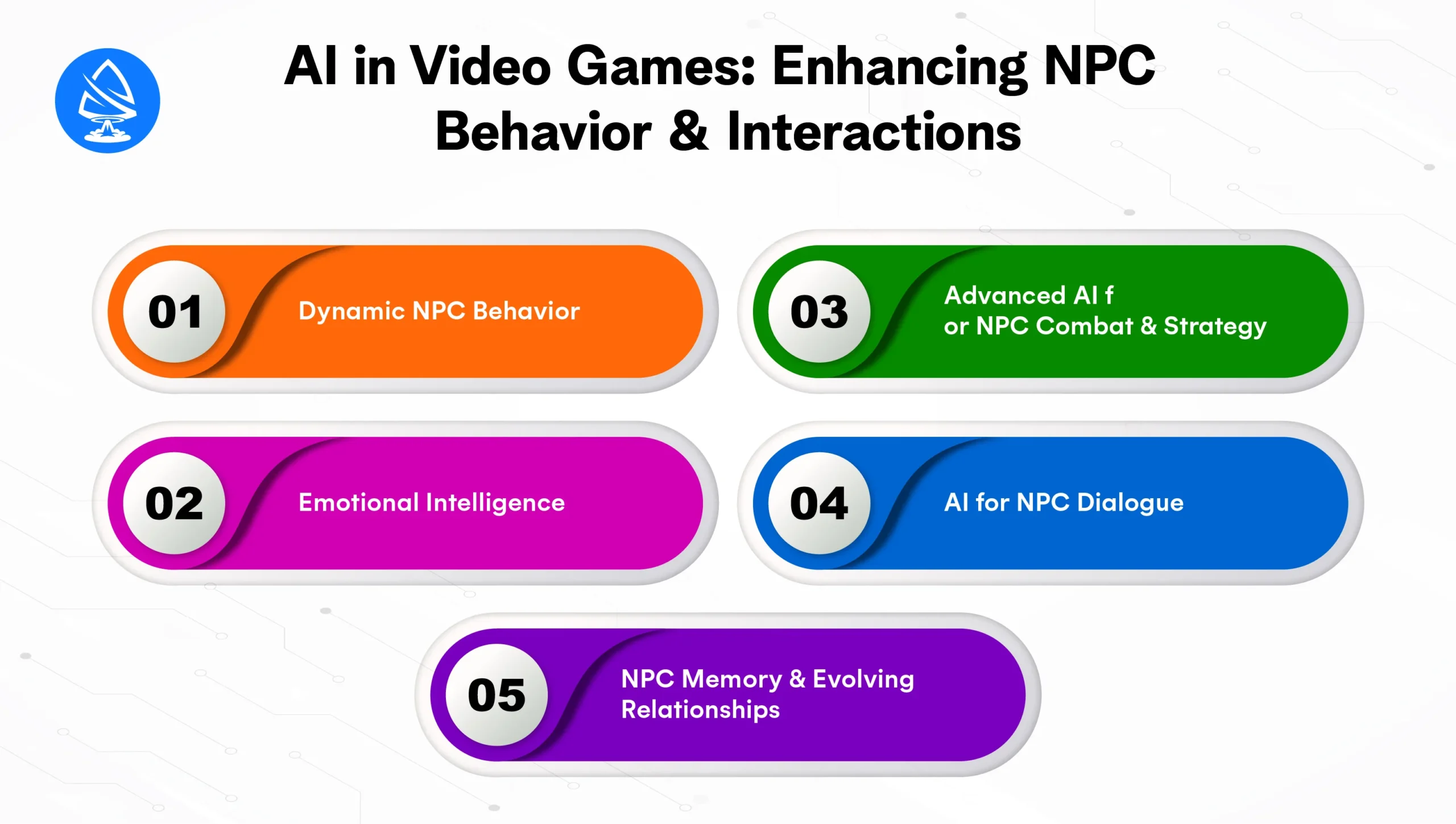
AI in Video Games: Enhancing NPC Behavior and Interactions
Non-player characters (NPCs) have long been a core element of video games, driving storylines, providing challenges, and contributing to immersive worlds. However, traditionally, NPCs were limited to following scripted paths and behaviors, making their actions predictable and often detached from the player’s actions. With the rise of AI in video games, NPCs have evolved into far more dynamic and responsive entities that react to the player’s behavior in increasingly sophisticated ways. AI is dramatically enhancing how NPCs behave, interact with players, and adapt to changing situations within the game.
1. Dynamic NPC Behavior
In traditional video games, NPC behavior was often governed by predefined scripts. These scripts dictated their actions and reactions in a limited, predictable manner. However, AI-driven NPCs can now operate based on real-time data, reacting to player actions, the game world, and even the decisions made during the game. This results in more natural and organic interactions that keep the gameplay fresh and engaging.
Key Developments:
Behavioral Trees and State Machines: Modern AI systems use behavior trees and finite state machines (FSM) to give NPCs more complex and varied actions. These systems allow NPCs to transition between different states based on the environment and player input.
Adaptive NPC Responses: AI allows NPCs to adapt to the player’s actions in real-time. If a player frequently helps NPCs or follows moral paths, the NPCs might react positively, offering assistance or information.
Context-Aware Decision Making: AI allows NPCs to make contextually appropriate decisions based on real-time game conditions.
2. Emotional Intelligence
AI is also enhancing the emotional depth of NPCs.
Key Developments:
Emotion-Responsive NPCs: AI-driven NPCs can gauge the player’s actions and alter their behavior based on emotional cues. If a player is compassionate or helpful, NPCs may express gratitude or trust, while aggressive actions might trigger fear, hostility, or anger in NPCs.
NPCs with Personalities: AI allows NPCs to have distinct personalities, which evolve.
Reactivity to In-Game Events: AI can enable NPCs to respond emotionally to significant events within the game.
3. Advanced AI for NPC Combat and Strategy
In the past, enemies in video games were often predictable and easy to outsmart. However, AI in video games is now being used to create challenging NPC opponents that use advanced tactics, adapt to the player’s strategies, and provide a dynamic and engaging challenge.
Key Developments:
Tactical Decision-Making: AI-powered enemies can now make strategic decisions during combat. exz
Learning from Player Behavior: Advanced AI systems can learn from the player’s strategies and adapt their own. This results in increasingly challenging combat encounters that feel organic and less predictable.
Complex AI Behaviors in Group Combat: In multiplayer games or AI-controlled team battles, AI allows NPCs to act as a cohesive group, making combat scenarios more intense.
4. AI for NPC Dialogue
Dialogue systems powered by AI in video games have seen major advancements, allowing for more natural, flexible conversations between players and NPCs. Traditional dialogue options in games were limited to a few pre-written responses.
Key Developments:
Context-Aware Dialogue: AI systems allow NPCs to engage in conversations that take into account previous interactions, the player’s choices, and the ongoing game narrative.
Dynamic Dialogue Choices: AI-driven dialogue systems can generate responses based on the player’s actions, character attributes, and past behavior. Instead of fixed dialogue options, NPCs might offer personalized responses, creating a unique conversation for every player. This makes the interaction feel more like a two-way conversation rather than a series of pre-written responses.
Natural Language Processing (NLP): Advanced AI systems using NLP can allow for more complex conversations where the player’s input is understood beyond simple keywords.
5. NPC Memory and Evolving Relationships
In the past, NPCs would act as though every encounter with the player was their first. However, with AI in video games, NPCs can now remember past interactions and evolve their relationships with the player over time, resulting in more complex, personalized experiences.
Key Developments:
NPC Memory Systems: AI-powered NPCs can remember the player’s actions and decisions from previous interactions. If a player consistently helps or harms an NPC, their behavior will evolve accordingly. An NPC may become more friendly, distrustful, or even hostile based on the player’s past choices.
Evolving Storylines Based on Relationships: NPC relationships can be dynamic, evolving based on the player’s actions and decisions. Conversely, an NPC who is wronged may refuse to cooperate or become a future adversary.
Reactivity to Player Reputation: In larger open-world games, AI-driven NPCs track the player’s reputation and adjust their behavior accordingly. If the player is notorious for committing crimes, NPCs might react with fear or hostility. If the player is known as a hero, NPCs might offer assistance or seek their help.
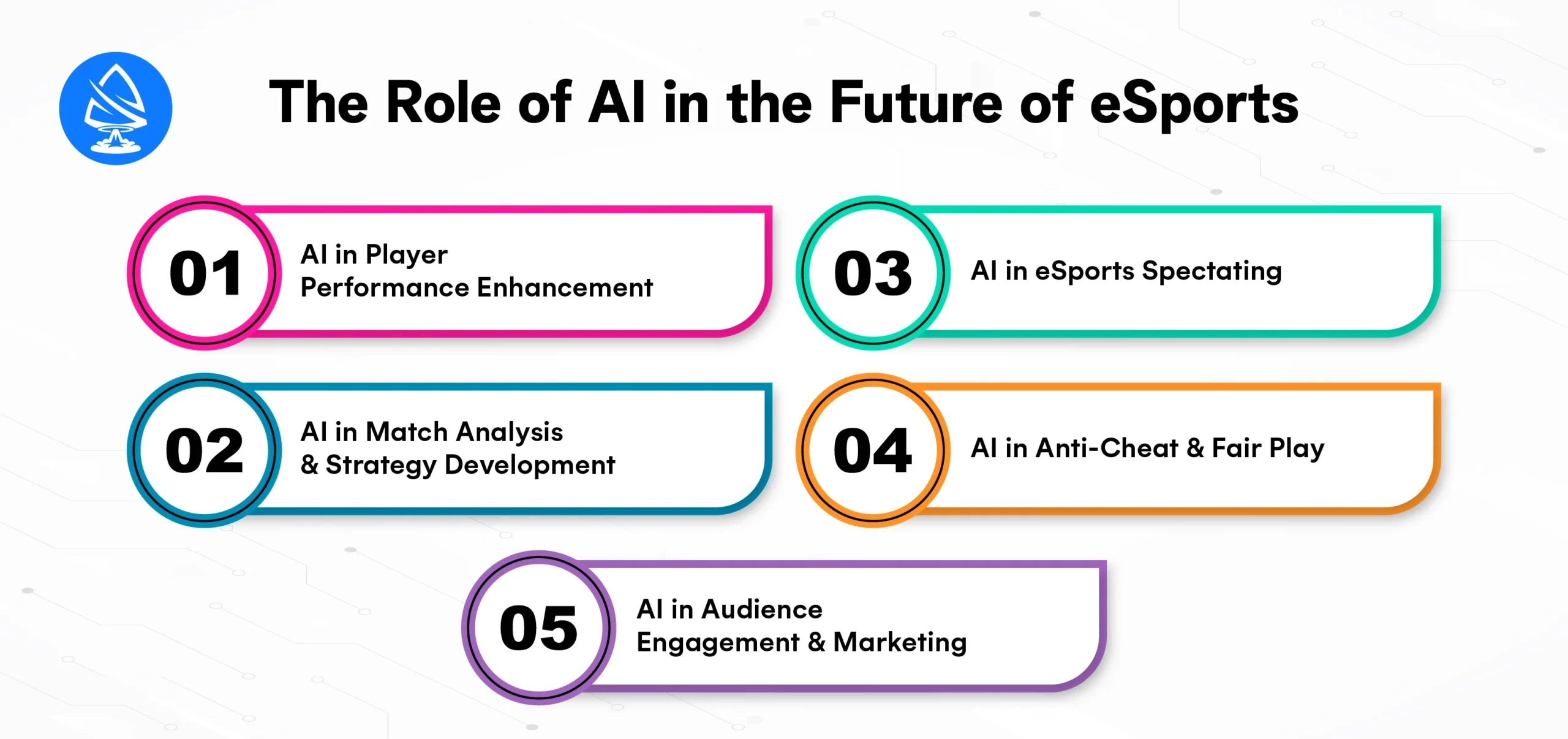
The Role of AI in the Future of eSports
eSports, the rapidly growing industry focused on competitive gaming, has become a global phenomenon, attracting millions of fans, players, and sponsors. As the industry continues to evolve, the role of AI in eSports is becoming increasingly significant.
1. AI in Player Performance Enhancement
One of the most immediate and impactful uses of AI in eSports is its ability to enhance player performance. Competitive gaming requires intense skills, quick reflexes, and a deep understanding of game mechanics. AI can provide tools and systems that help players improve, practice more efficiently, and refine their techniques.
Key Developments:
AI-Powered Coaching Tools: AI systems can track player performance in real-time, providing data-driven insights on individual strengths and weaknesses. These tools analyze in-game actions, decision-making, and reaction times, offering players and coaches a more objective view of their gameplay.
Personalized Training Regimens: AI can help create personalized training programs based on a player’s gameplay patterns.
Real-Time Performance Feedback: AI-driven systems can provide real-time feedback during a match, alerting players to potential mistakes or missed opportunities.
2. AI in Match Analysis and Strategy Development
AI’s impact on eSports isn’t limited to individual players; it also plays a significant role in match analysis and strategy development. Teams are increasingly relying on AI-powered tools to break down match data, analyze opponent strategies, and refine their approaches.
Key Developments:
Game and Match Data Analytics: AI systems can process vast amounts of match data, including player actions, game events, and outcomes, to identify patterns and trends. These insights can help teams understand what strategies worked, what failed, and why. By analyzing historical data from previous tournaments or matches, AI can provide valuable insights into team performance and opponent strategies.
Opponent Analysis and Counter-Strategies: AI can also be used to analyze an opponent’s playstyle and strategies in-depth. This allows teams to develop counter-strategies to outmaneuver their opponents in future matches.
Simulating Strategies and Outcomes: AI-driven simulations can help teams experiment with different strategies and predict the outcomes of specific tactics. This allows eSports teams to test new strategies in a controlled environment without risking actual tournament performance.
3. AI in eSports Spectating
AI is not only transforming how players train and compete but also how fans experience eSports. As eSports grows in popularity, enhancing the spectator experience is crucial for sustaining interest and expanding the audience. AI is playing a key role in improving how fans watch, engage with, and interact with eSports events.
Key Developments:
AI-Powered Commentary and Analysis: AI-driven commentary tools can analyze real-time match data and provide insights, predictions, and play-by-play commentary that enriches the viewing experience. These tools can highlight key moments, such as crucial player actions, critical team movements, or game-changing decisions.
Enhanced Visualizations and Data Overlays: AI can create dynamic visualizations and overlays that display key statistics, player performance metrics, and match progress in real-time.
Personalized Fan Engagement: AI can offer personalized content and experiences for fans.
4. AI in Anti-Cheat and Fair Play
As eSports becomes increasingly competitive, ensuring fair play is essential for maintaining the integrity of tournaments and games. AI in anti-cheat systems is rapidly evolving, providing more robust and sophisticated methods for detecting and preventing cheating during matches.
Key Developments:
Real-Time Cheating Detection: AI systems can detect unusual patterns in player behavior that may indicate cheating.
Predictive Cheating Prevention: AI can not only detect cheating in real-time but also predict and prevent it before it occurs.
Fair Matchmaking: AI can improve matchmaking by ensuring that players are grouped with opponents of similar skill levels, preventing smurfing, and ensuring fair and competitive matches. This contributes to the integrity of the competition and a better overall experience for all players.
5. AI in Audience Engagement and Marketing
As eSports continues to grow, reaching and engaging with the audience becomes more important than ever. AI is being used to enhance marketing efforts and connect with fans on a deeper level. AI can help organizers understand fan preferences, predict trends, and optimize content distribution.
Key Developments:
Predictive Analytics for Audience Engagement: AI can analyze fan data and predict future behavior, helping eSports organizations target their marketing efforts more effectively.
Automated Social Media Interaction: AI-powered chatbots and social media bots can interact with fans in real-time, answering questions, providing updates, and offering personalized content.
Content Personalization: AI can tailor content based on a fan’s viewing history and engagement.
Conclusion
AI in gaming is rapidly evolving and is set to play an even more critical role in shaping the future of the gaming industry. From enhancing game creation to personalizing player experiences and improving NPC behavior, AI-powered tools are revolutionizing how games are developed, played, and enjoyed. As AI technologies continue to improve, the potential for even more dynamic, immersive, and intelligent games is immense.
Written By :
Artoon Solutions
Artoon Solutions is a technology company that specializes in providing a wide range of IT services, including web and mobile app development, game development, and web application development. They offer custom software solutions to clients across various industries and are known for their expertise in technologies such as React.js, Angular, Node.js, and others. The company focuses on delivering high-quality, innovative solutions tailored to meet the specific needs of their clients.



 For business inquiries only