- HR:+91-879-9184-787
- Sales:+91-908-163-7774


Artificial Intelligence (AI) is transforming every sector, and the government is no exception. Governments worldwide are harnessing the power of AI to streamline operations, improve public services, and make data-driven decisions. However, as governments adopt AI, they must confront the delicate balance between leveraging the technology for efficiency and maintaining privacy and security standards. With sensitive data, citizens’ personal information, and national security at stake, the question arises: How can governments ensure AI applications are used responsibly without compromising individual privacy or security?
In this blog post, we will explore how AI is being integrated into government operations, the potential benefits, and the significant privacy and security challenges that come with it. Additionally, we will examine existing policies and regulations that aim to strike a balance between AI innovation and the protection of personal data. An AI app development company can play a key role in addressing these challenges by building responsible and secure AI solutions.
AI in government is playing a pivotal role in improving public services, enhancing decision-making, and increasing operational efficiency. Governments are adopting AI in a variety of ways, from improving public administration to enhancing national security efforts.
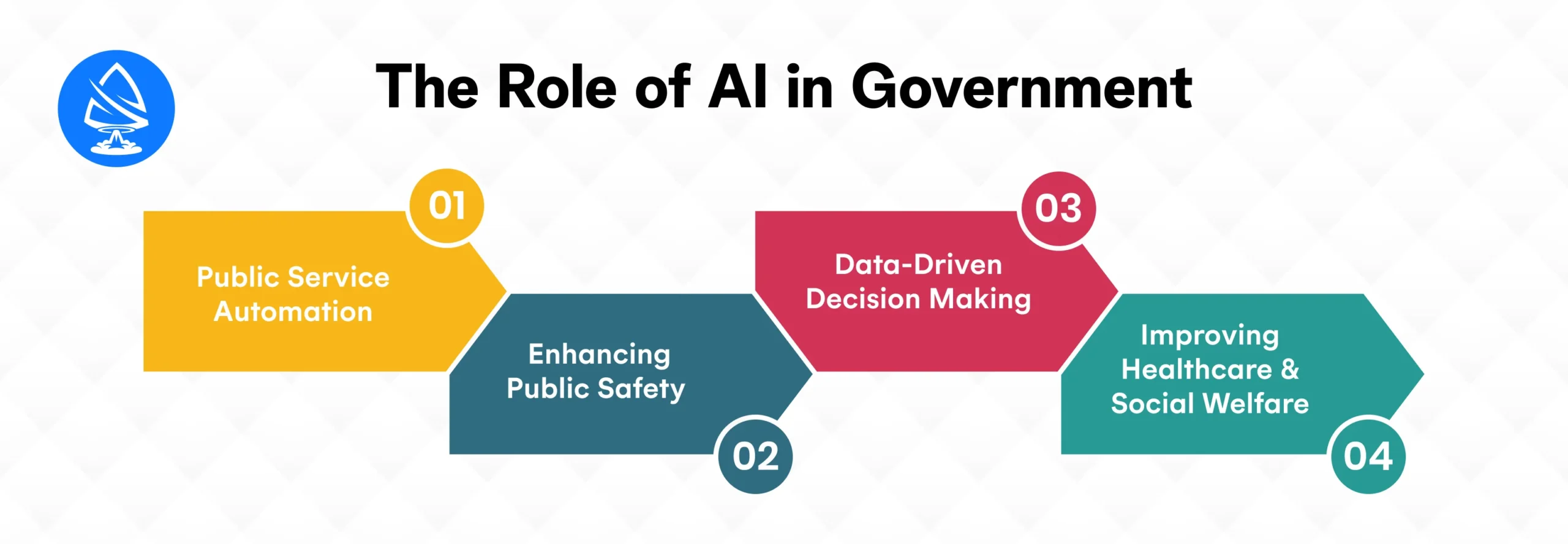
AI can automate many administrative tasks within government agencies, reducing bureaucracy, improving efficiency, and minimizing human error. Common applications include automating processes like:
For instance, in the AI in public sector applications, AI-powered systems have helped improve the efficiency of unemployment benefits distribution and simplified public health data management, especially during the COVID-19 pandemic.
AI is also being used to monitor and improve public safety through predictive analytics and surveillance technologies. Examples include:
While these applications can increase public safety, they raise concerns about privacy and surveillance overreach.
AI helps government agencies process large datasets and make better, more informed decisions. AI tools can:
AI is enhancing healthcare systems by improving diagnoses, predicting disease outbreaks, and optimizing the distribution of healthcare resources. Additionally, AI can streamline social welfare programs by providing better insights into recipients’ needs, ensuring that benefits reach those who need them most.
You may also want to know about AI in Construction
With the integration of AI, governments are handling more data than ever before, data that often includes sensitive personal and financial information. While AI can enhance the effectiveness of public services, it also raises significant concerns regarding privacy and data security.
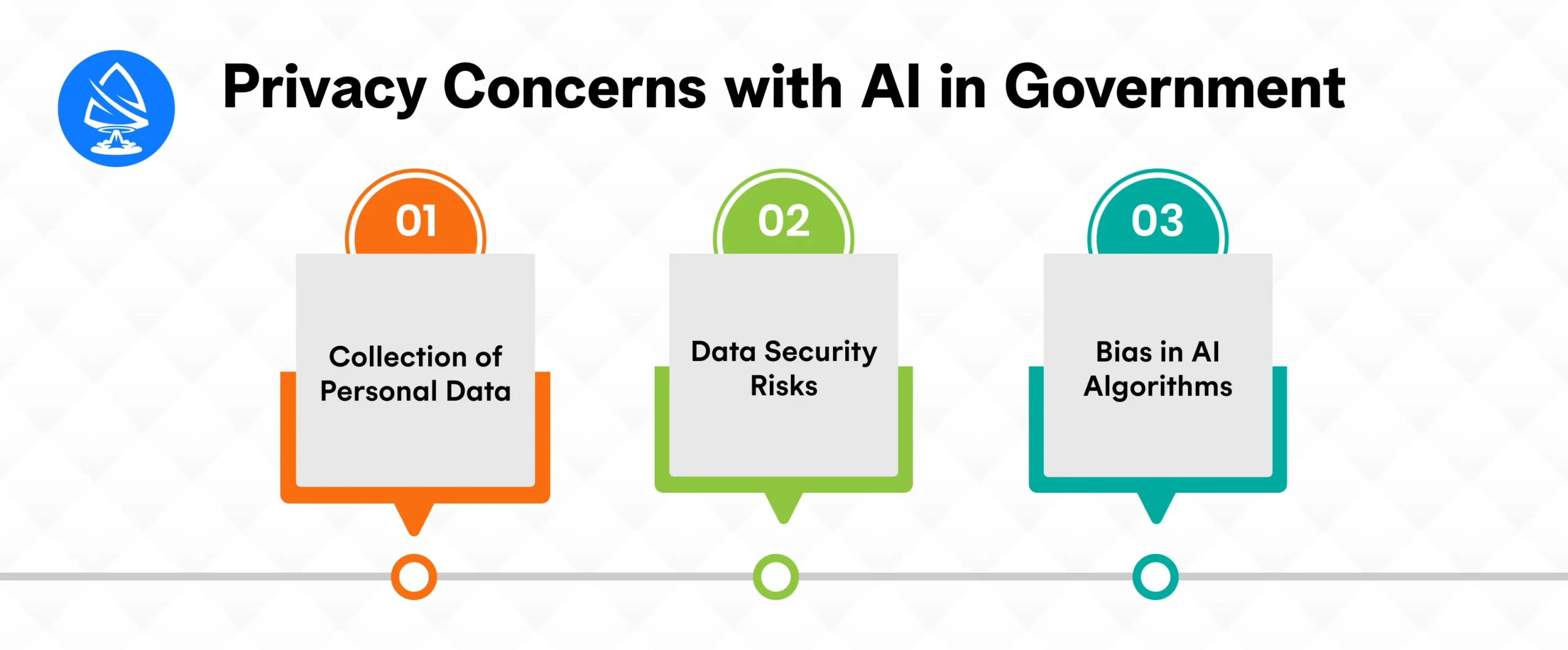
AI-powered systems rely on massive amounts of data to function effectively. Governments must collect data from citizens to provide services like healthcare, education, and social welfare. However, the collection of this data raises concerns about:
For instance, the AI-driven tracking of individuals’ movements through public cameras could lead to an invasion of privacy if not properly regulated.
AI applications, especially those involving public safety and national security, often require access to highly sensitive data. If this data is breached or mismanaged, it can lead to:
Recent security breaches in various government databases highlight the need for robust data protection measures when using AI.
AI systems often train on historical data, which can contain biases. If the data used to train AI models is biased, the models will also be biased, leading to discriminatory outcomes in decision-making. This is a significant concern in sectors like:
It is critical to ensure that AI models are trained on unbiased, representative data to prevent discrimination.
AI introduces new challenges in terms of security. As governments increasingly rely on AI to power critical infrastructure, they must also address vulnerabilities that can be exploited by malicious actors.
AI can be weaponized for cyberattacks. Hackers may use AI systems to automate attacks, including:
Governments must enhance cybersecurity measures to defend against these new types of AI-driven cyber threats.
Governments also face the challenge of combating the spread of misinformation and manipulation via AI-powered tools. Examples include:
Governments must be vigilant about the ethical use of AI and take steps to mitigate the impact of such technologies on public trust.
You may also want to know Geospatial AI
To address these concerns, policymakers have introduced various regulations to manage AI use in government while safeguarding privacy and security. For example, the AI executive order in the USA outlines strategies to ensure that developers implement AI technologies responsibly.
Some key regulatory areas include:
The European Union’s General Data Protection Regulation (GDPR) is an example of how governments are addressing the privacy concerns related to AI. The GDPR mandates that personal data must be processed in a lawful, transparent, and secure manner, providing individuals with greater control over their data.
AI has enormous potential to improve government operations and services, but governments must handle its integration carefully to balance privacy and security concerns. By doing so, they can harness the power of AI while safeguarding citizens’ data and maintaining public trust.
As AI continues to evolve, governments need to remain proactive in addressing the challenges and opportunities this technology brings. For businesses or developers working with AI in the public sector, understanding these complexities is crucial for creating secure, privacy-conscious solutions.
Want to estimate the cost of building your AI app? Use our AI Cost Calculator to get an accurate pricing estimate.
1. What are the primary benefits of AI in government?
AI helps improve operational efficiency, streamline services, enhance decision-making, and reduce administrative burdens in government agencies.
2. How can AI be used for national security?
AI is used for predictive policing, surveillance, cybersecurity, and analyzing data to identify security threats and protect citizens.
3. What are the privacy risks associated with AI in government?
The collection of personal data, data security vulnerabilities, and bias in AI algorithms all present significant privacy risks.
4. How do governments protect citizens’ privacy when using AI?
Governments enforce data protection laws and implement transparent policies to ensure that AI systems are used responsibly and ethically.
5. Can AI lead to biased decisions in government?
Yes, AI models can perpetuate existing biases in data, leading to unfair outcomes in areas such as law enforcement, social services, and healthcare.
6. What role does AI play in public safety?
AI helps monitor public spaces, predict crimes, and provide real-time emergency responses, all while enhancing public safety measures.
7. How can AI impact the future of government services?
AI will continue to automate processes, improve citizen interactions, and create more responsive, data-driven public services.
8. What are the regulatory measures for AI in government?
Governments are implementing regulations that prioritize transparency, security, and ethical use of AI technologies, such as the AI executive order in the USA.

Artoon Solutions
Artoon Solutions is a technology company that specializes in providing a wide range of IT services, including web and mobile app development, game development, and web application development. They offer custom software solutions to clients across various industries and are known for their expertise in technologies such as React.js, Angular, Node.js, and others. The company focuses on delivering high-quality, innovative solutions tailored to meet the specific needs of their clients.
 For business inquiries only