- HR:+91-879-9184-787
- Sales:+91-908-163-7774


In recent years, artificial intelligence (AI) has become a transformative force across multiple industries, and the construction sector is no exception. AI in construction offers immense potential to improve efficiency, reduce costs, and enhance safety on job sites. As the industry grapples with challenges such as labor shortages, rising costs, and tight deadlines, AI provides a unique opportunity to future-proof the construction process. From automated design to intelligent construction management, Artificial intelligence tools are revolutionizing every stage of the construction lifecycle.
In this article, we explore how AI is reshaping the construction industry and why it is essential for businesses to embrace these innovations. We will also highlight key Artificial intelligence tools for construction, AI software for construction management, AI app development services, and how Artificial intelligence contractors are gaining a competitive edge.
Artificial intelligence in construction is playing a crucial role in automating and optimizing various tasks. It assists in the entire construction process from the planning and design stages to project management, monitoring, and post-construction maintenance. Artificial intelligence technologies enable contractors, builders, and project managers to make more informed decisions, which can lead to better outcomes and faster completion times.
AI construction software is designed to simplify tasks, making the entire construction process more efficient and cost-effective. Key areas where AI software impacts construction include:
AI tools for construction are becoming indispensable in improving productivity on the job site. These tools enhance precision, reduce human error, and allow workers to focus on tasks that require human intervention. Some key AI tools include:
Construction management benefits significantly from AI by automating processes, optimizing resource allocation, and enhancing decision-making. Some ways AI is integrated into construction management include:
AI contractors are leveraging cutting-edge technology to streamline operations and improve project outcomes. These contractors use AI to design smarter buildings, reduce construction time, and enhance safety standards. They have access to a wealth of data and use it to make real-time decisions that help reduce costs and improve project efficiency.
AI contractors often use AI-powered construction software and tools to integrate design, planning, and construction into one cohesive workflow. They have a significant competitive edge, offering innovative solutions and faster turnaround times that traditional contractors struggle to match.
You may also want to know: Create an AI App Using OpenAI’s API
The future of Artificial intelligence in construction is an exciting prospect that promises to reshape the industry in profound ways. As technology continues to evolve, AI will play an increasingly pivotal role in addressing the challenges faced by construction professionals, such as labor shortages, rising costs, tight deadlines, and the need for more sustainable practices.
Here are some key areas where AI is expected to drive transformation in the construction industry:
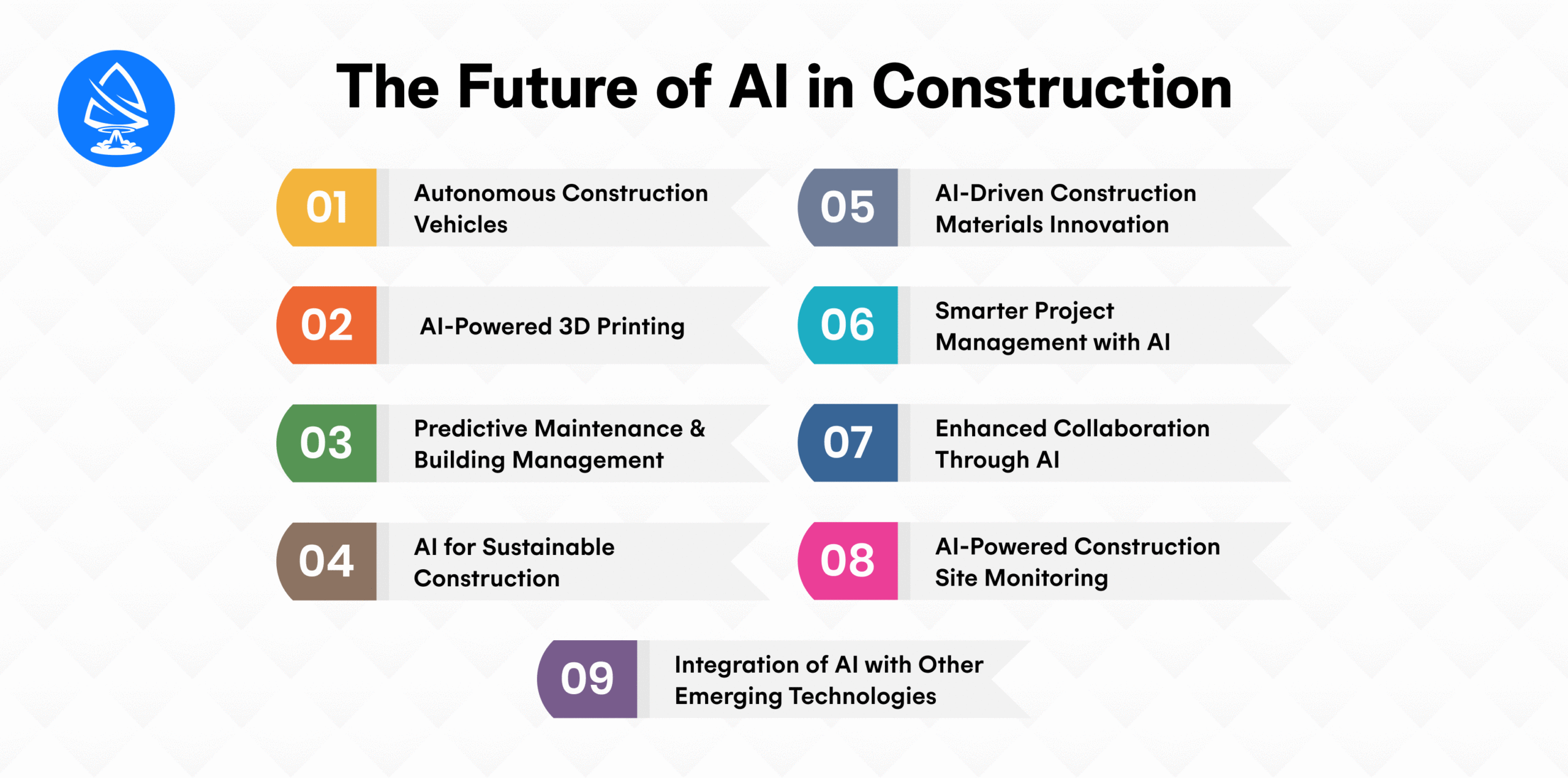
One of the most promising innovations in the future of Artificial intelligence in construction is the development of autonomous construction vehicles. Self-driving trucks, bulldozers, and excavators are already being tested on construction sites around the world. These vehicles can move materials, dig, or even clear debris without the need for human intervention, significantly reducing labor costs and improving safety by removing workers from hazardous environments.
These AI-driven vehicles are equipped with sensors, cameras, and GPS systems that enable them to navigate construction sites autonomously. As this technology advances, it will reduce construction time and increase productivity, as machines will work around the clock, uninterrupted by human fatigue.
AI-enhanced 3D printing is set to revolutionize the way buildings are constructed. In the future, 3D printers, powered by AI, will be able to fabricate entire building structures, layer by layer, using materials like concrete, metal, or even sustainable resources. This process will not only reduce construction waste but also enable greater customization of designs with fewer limitations.
AI will optimize the printing process by adjusting printing speed, material usage, and precision based on real-time feedback. This technology will drastically cut down on labor costs and construction time, and create more sustainable buildings, minimizing the need for traditional building materials.
AI’s ability to process vast amounts of data in real time will lead to predictive maintenance in buildings and infrastructure. AI will monitor the health of buildings continuously through IoT sensors and predictive algorithms. For example, AI systems will track the performance of HVAC systems, electrical grids, and plumbing to predict when maintenance is required, allowing owners to address issues before they turn into costly repairs or safety hazards.
Building management systems (BMS) will also become smarter with AI, optimizing energy consumption, improving air quality, and ensuring that buildings operate at peak efficiency.
Sustainability is a growing concern in the construction industry. The future of Artificial intelligence in construction will see more advanced Artificial intelligence systems helping to design and build sustainable, energy-efficient structures. AI can optimize building designs to use natural light more effectively, reduce energy consumption, and select environmentally friendly materials.
Furthermore, AI will assist in tracking a building’s environmental impact throughout its lifecycle, from construction to operation and demolition. This could help reduce the carbon footprint of construction projects and lead to more eco-friendly practices in the industry.
AI is also expected to influence the development of new construction materials that are stronger, more sustainable, and cost-effective. Artificial intelligence algorithms will simulate the properties of materials and help researchers and manufacturers identify innovative alternatives to traditional construction materials. This could lead to the creation of lighter, more durable, and more eco-friendly materials that reduce the environmental impact of construction projects.
For example, AI could be used to create materials that are more resistant to wear and tear, or materials that can heal themselves when damaged, reducing the need for repairs and extending the lifespan of buildings and infrastructure.
The future of Artificial intelligence in construction will see an increased reliance on AI-driven project management tools. These systems will automate tasks such as scheduling, resource allocation, risk management, and progress tracking. AI algorithms will use real-time data to predict potential delays, resource shortages, and other issues, and recommend proactive solutions to keep projects on track.
These AI systems will help streamline communication across teams, improve collaboration, and reduce the administrative burden of managing complex construction projects. Project managers will be able to make data-driven decisions faster, resulting in more efficient and cost-effective project execution.
In the future, AI will play a central role in enhancing collaboration between different teams, including architects, engineers, contractors, and clients. AI-powered Building Information Modeling (BIM) platforms will allow real-time updates and data sharing, ensuring that all stakeholders are on the same page throughout the lifecycle of a project. AI will enable better communication, reduce errors, and help prevent costly redesigns by ensuring that all modifications are tracked and communicated effectively.
Additionally, AI will facilitate virtual reality (VR) and augmented reality (AR) experiences for stakeholders to walk through projects before construction even begins. This will help visualize designs, identify potential issues, and make changes early on in the process.
AI will make construction sites smarter and safer by providing continuous monitoring through drones and Artificial intelligence-based sensors. These devices can detect hazards such as unsafe working conditions, machinery malfunctions, or the presence of workers in dangerous areas. Drones will also be used to monitor construction progress, track inventory, and provide real-time updates to project managers.
Moreover, AI systems will assist in ensuring compliance with safety regulations by analyzing data from safety equipment and checking that workers are adhering to the correct procedures on site. This will help prevent accidents and increase worker safety.
As the construction industry continues to embrace digital transformation, Artificial intelligence will be integrated with other emerging technologies like the Internet of Things (IoT), blockchain, and 5G connectivity. IoT sensors will feed real-time data into AI systems, enabling better decision-making in areas like resource allocation, safety monitoring, and predictive maintenance.
Blockchain will provide a secure and transparent way to track contracts, payments, and progress on construction projects. 5G connectivity will enhance AI’s ability to process and transmit data in real time, enabling faster decision-making and more accurate predictions.
You may also want to know about AI in Government
The demand for Artificial intelligence solutions in the construction industry is growing rapidly. MarketsandMarkets reports that the Artificial intelligence in construction market will reach $4.5 billion by 2026, growing at a CAGR of 34.7% from 2021 to 2026. This growth comes from the increasing adoption of Artificial intelligence technologies to address construction challenges such as safety, cost overruns, and labor shortages.
Small business owners and tech professionals in the construction industry must recognize the potential of Artificial intelligence to stay competitive. Embracing AI will not only help improve operational efficiency but will also give businesses a chance to lead in an increasingly tech-driven market.
Artificial intelligence in construction is not just a trend; it’s a transformative force that is reshaping the industry. By adopting Artificial intelligence tools and software, construction businesses can streamline their operations, reduce costs, and enhance safety, ultimately future-proofing their business for years to come.
As AI continues to evolve, businesses that embrace these technologies will gain a competitive advantage, while those that fail to adapt may risk falling behind. For construction professionals, Artificial intelligence presents an exciting opportunity to innovate, improve efficiency, and drive growth.
Get started today and explore how Artificial intelligence can benefit your construction business by using our AI Cost Calculator.
1. What is Artificial intelligence in construction?
Artificial intelligence in construction uses artificial intelligence to optimize project management, design, safety, and equipment management.
2. How does AI help in construction management?
Artificial intelligence enhances construction management by automating scheduling, risk assessment, supply chain, and workforce planning for efficient project completion.
3. Can AI improve safety on construction sites?
Artificial intelligence-powered tools predict and prevent safety hazards by analyzing real-time construction site data and alerting workers to risks.
4. What is AI construction software?
AI construction software uses machine learning and predictive analytics to improve planning, cost estimation, design automation, and risk management.
5. How does AI assist in construction design?
AI aids construction design by automating tasks, enhancing BIM collaboration, and generating optimized design solutions for project requirements.
6. What are AI tools for construction?
Artificial intelligence tools for construction include drones, robots, predictive analytics tools, and BIM software that help automate tasks, enhance precision, and improve safety on job sites.
7. How can AI help small businesses in construction?
AI can help small businesses by optimizing project timelines, reducing costs, improving safety, and automating administrative tasks, allowing businesses to focus on growth and innovation.
8. What is the future of Artificial intelligence in construction?
The future of AI in construction includes autonomous vehicles, 3D printing, sustainability, and predictive maintenance, reshaping design and construction.

Artoon Solutions
Artoon Solutions is a technology company that specializes in providing a wide range of IT services, including web and mobile app development, game development, and web application development. They offer custom software solutions to clients across various industries and are known for their expertise in technologies such as React.js, Angular, Node.js, and others. The company focuses on delivering high-quality, innovative solutions tailored to meet the specific needs of their clients.
 For business inquiries only




