The hospitality industry has always been customer-centric, where delivering exceptional experiences defines success. But in an age where technology evolves at lightning speed, the game has changed. Artificial Intelligence (AI) has emerged as a pivotal force, revolutionizing how hotels engage with guests and manage operations. AI represents a fundamental shift in how the hotel industry operates. It creates seamless guest experiences while optimizing internal processes.
This blog explores how AI transforms guest engagement in the hotel industry. It increases occupancy rates and builds long-term guest loyalty. From smart room automation to personalized services, the best AI development company helps hotels reach new heights.
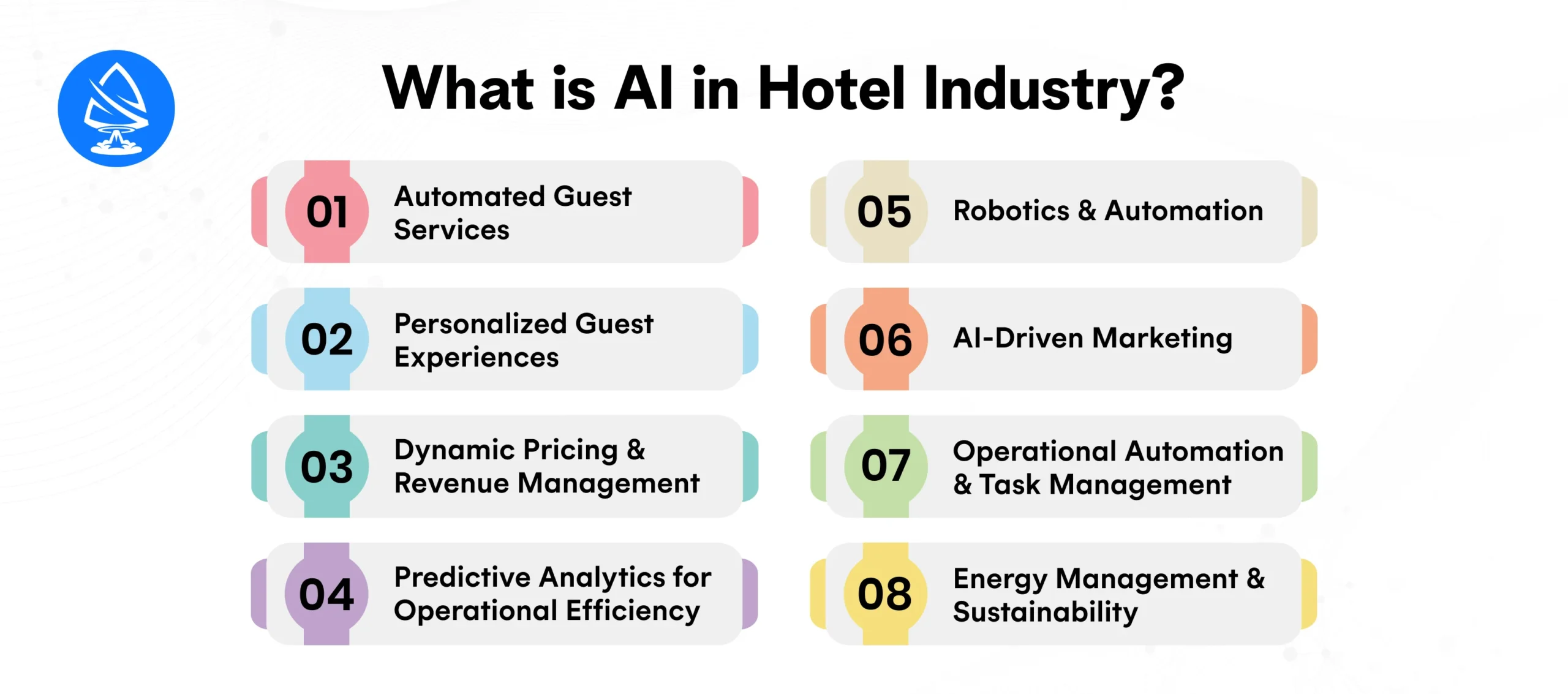
What is AI in Hotel Industry?
Artificial Intelligence in the hotel industry uses advanced algorithms and machine learning. It automates processes, enhances guest experiences, and optimizes operations. It’s a game-changing tool that enables hotels to deliver personalized services while improving efficiency and reducing operational costs. From AI-powered chatbots to dynamic pricing models, AI in hotels is reshaping how the hospitality industry functions.
Here’s a detailed look at what AI in the hotel industry encompasses:
1. Automated Guest Services
AI Chatbots and Virtual Assistants: AI-powered chatbots help hotels provide 24/7 customer service. They assist guests with booking, check-in, answering FAQs, and handling complaints. Virtual assistants can also manage room preferences and provide personalized recommendations based on guest data.
A guest could interact with a chatbot for seamless check-in and inquire about amenities, making the process faster and more efficient.
2. Personalized Guest Experiences
Custom Recommendations: AI analyzes guest data, such as previous stays, preferences, and behaviors, to offer personalized experiences. From recommending tailored activities to offering customized room setups, AI ensures each guest feels unique and valued.
If a guest regularly orders a specific dish, AI systems can anticipate this and have it available on the menu during their stay.
3. Dynamic Pricing and Revenue Management
AI in Hotel Pricing: AI-powered revenue management systems use historical data, demand patterns, and competitor pricing to adjust room rates dynamically, ensuring optimal occupancy and maximum profitability.
A hotel might raise room rates during peak seasons and lower them during slow periods using AI, ensuring that they stay competitive and profitable.
4. Predictive Analytics for Operational Efficiency
Predicting Demand: AI uses predictive analytics to forecast hotel demand, helping businesses optimize staffing, inventory, and other resources. By anticipating when rooms will fill up, AI enables hotel management to make better decisions regarding resource allocation.
AI may suggest adding extra cleaning staff before a peak period or adjusting amenities for high-demand periods to ensure the hotel runs smoothly.
5. Robotics and Automation
Room Service and Housekeeping Automation: Robots powered by AI can deliver room service, assist with luggage, or perform tasks like cleaning and restocking amenities. This not only improves guest service but also reduces reliance on manual labor, cutting operational costs.
A robot in a hotel lobby might deliver towels to guest rooms, enhancing the guest experience while allowing human staff to focus on more complex tasks.
6. AI-Driven Marketing
Targeted Campaigns: AI helps hotels create personalized marketing campaigns based on customer data, such as past stays, browsing behavior, and booking history. This enables hotels to target the right audience with the right offers, increasing conversion rates.
AI can send personalized email promotions to guests who frequently visit the spa, offering them discounts on future spa bookings.
7. Operational Automation and Task Management
Efficient Task Allocation: AI systems can optimize hotel staff schedules and task management by analyzing data from booking patterns and guest requests.
AI can automatically assign housekeeping staff to clean rooms based on check-out times and guest arrivals, improving room turnover.
8. Energy Management and Sustainability
AI for Smart Energy Control: AI can help hotels manage energy consumption by controlling room temperature, lighting, and other systems based on guest preferences or occupancy status. This reduces energy costs and supports sustainability efforts.
If a guest leaves a room and the system detects no movement for a period of time, AI can automatically adjust the temperature and lighting, saving energy.
AI is rapidly transforming the hotel industry through efficiency, better guest experiences, and higher profitability. It analyzes data, automates tasks, personalizes services, and keeps hotels competitive in dynamic markets. Here’s a closer look at the power of AI in the hotel industry and how it’s reshaping hospitality.
1. Enhancing Guest Experience with Personalization
Tailored Recommendations: AI systems analyze guest preferences, past behaviors, and demographics to provide personalized recommendations. From suggesting room preferences to recommending activities or local attractions, AI helps make each guest feel valued and understood.
Example: AI may recommend specific spa treatments, dining options, or local experiences based on a guest’s past stay or browsing history, enhancing their overall experience.
Why It Matters: Personalization builds a connection with guests, encouraging repeat visits and increasing customer loyalty.
2. Streamlining Hotel Operations
Automating Routine Tasks: AI eliminates the need for human intervention in routine tasks such as check-in, room allocation, and guest queries.
Example: Automated check-in kiosks or AI-powered chatbots provide seamless guest service, reducing wait times and enhancing operational efficiency.
Why It Matters: By streamlining operations, AI reduces labor costs and minimizes the potential for errors, contributing to a more efficient and profitable business.
3. Optimizing Pricing Strategies with Dynamic Pricing
Revenue Management: AI uses advanced algorithms to forecast demand and optimize pricing strategies.
Example: AI might increase room prices during peak seasons or special events, while reducing them during low-demand periods to fill rooms and maintain high occupancy rates.
Why It Matters: By using AI for dynamic pricing, hotels can optimize their revenue, ensuring they are charging the right price at the right time, which directly impacts the bottom line.
4. Improving Operational Efficiency with Predictive Analytics
Forecasting Demand: AI-powered predictive analytics helps hotels anticipate booking patterns, enabling them to allocate resources and staff more effectively. By forecasting demand, AI can suggest operational adjustments, such as staffing levels or inventory management, to match anticipated guest needs.
Example: AI might predict high demand during a local conference and recommend adding extra housekeeping staff to ensure efficient room turnover.
Why It Matters: Predictive analytics allows hotels to prepare in advance, ensuring they have the right resources in place to meet guest needs without overstaffing or underdelivering.
5. AI-Driven Marketing for Targeted Campaigns
Customer Segmentation: AI enables hotels to segment their audience and create personalized marketing campaigns.
Example: If a guest has a history of booking spa treatments, AI-driven marketing can send targeted promotions offering discounts or special packages related to the spa.
Why It Matters: Personalized marketing improves conversion rates and customer retention by delivering relevant content to the right people at the right time.
6. Automating Customer Support with AI Chatbots
24/7 Availability: AI chatbots provide round-the-clock customer support, answering guest inquiries, assisting with bookings, and resolving issues.
Example: A guest can ask the chatbot about room service options, book a restaurant reservation, or inquire about the nearest tourist attractions, all without waiting for a human agent.
Why It Matters: AI chatbots improve guest satisfaction by providing immediate responses to common questions, allowing human staff to focus on more complex needs.
7. Robotics and AI for Efficiency in Housekeeping
AI-Driven Robotics: Hotels are increasingly using robots powered by AI to automate tasks like room service delivery, cleaning, and restocking amenities. These robots not only save time but also reduce the dependency on human labor, which can be costly and inconsistent.
Example: AI-powered robots can deliver towels or toiletries directly to guest rooms, while autonomous cleaning robots ensure that public areas are spotless.
Why It Matters: Robotics allows hotels to reduce labor costs while maintaining high standards of cleanliness and service, contributing to overall operational efficiency.
8. AI for Energy Management and Sustainability
Smart Room Management: AI helps hotels optimize energy consumption through smart room systems that adjust lighting, temperature, and HVAC settings based on guest preferences or room occupancy. This reduces energy wastage and supports sustainability efforts.
Example: When a guest leaves their room, AI-powered systems can automatically adjust the room temperature and lighting, reducing energy consumption and lowering utility costs.
Why It Matters: AI-driven energy management systems contribute to cost savings and support eco-friendly initiatives, appealing to environmentally conscious guests and stakeholders.
Real-World Examples of Hotels Using Artificial Intelligence
The Marriott Chain
Marriott Hotels has embraced AI across several aspects of its operations. The chain has implemented AI-powered chatbots to assist guests in booking, checking in, and making special requests. Additionally, Marriott uses AI for targeted marketing, offering guests personalized recommendations based on their past stays.
Hilton’s “Connie”
Hilton Hotels introduced Connie, an AI-powered robot concierge, to enhance guest experiences.
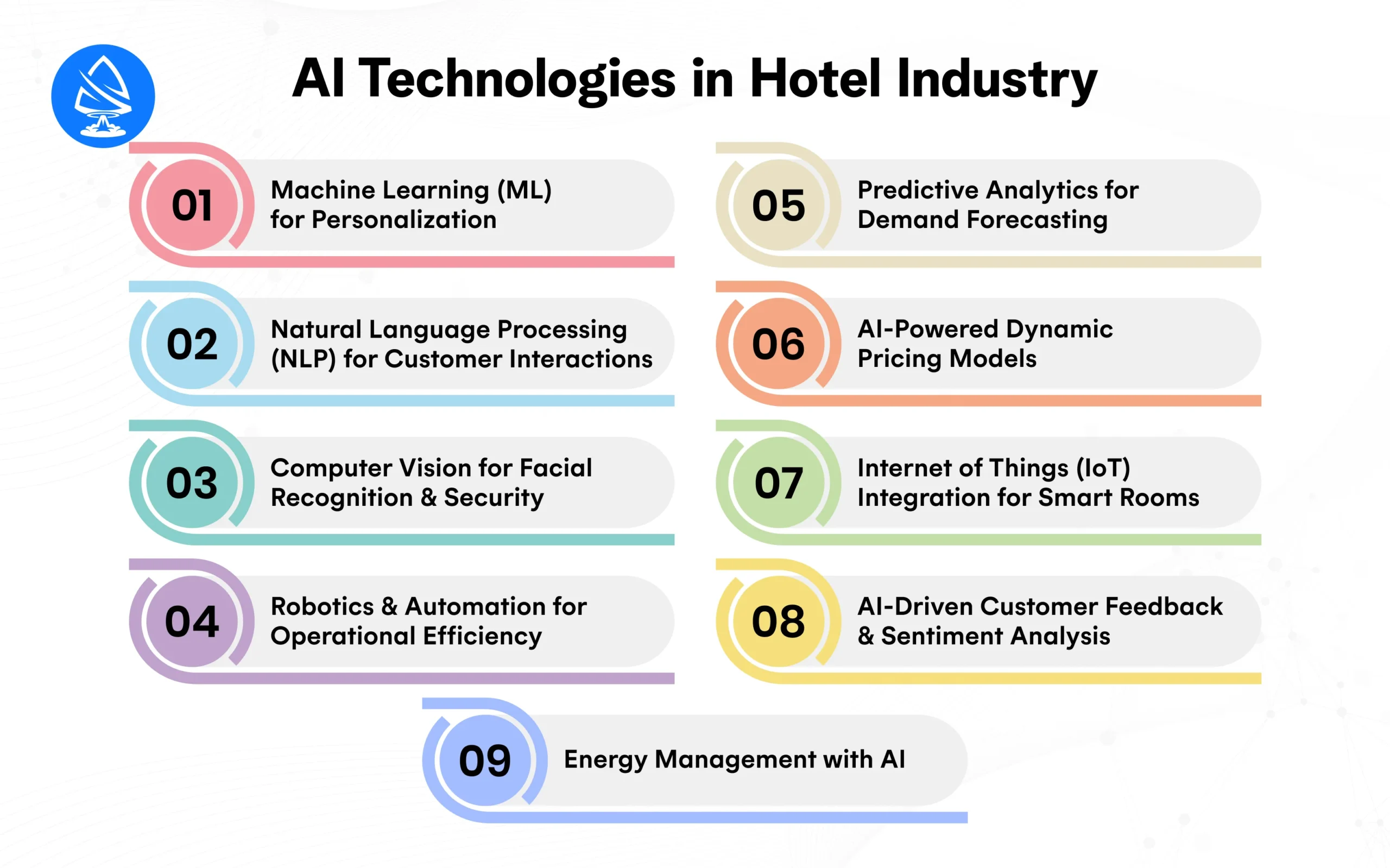
AI technologies are at the forefront of innovation in the hotel industry, driving efficiency, personalization, and improved guest experiences. From predictive analytics to robotics, AI is transforming how hotels operate and interact with guests. These technologies enable hotel businesses to streamline operations, optimize pricing strategies, and provide unique, customized experiences for their guests. Here’s a detailed look at the AI technologies in the hotel industry and how they are reshaping the future of hospitality.
1. Machine Learning (ML) for Personalization
Tailored Experiences for Guests: Machine learning algorithms analyze large datasets from guests’ past behaviors, booking history, and preferences to predict their future needs. This enables hotels to provide highly personalized experiences, from room preferences to activity recommendations.
Example: A guest who frequently books spa treatments can receive personalized promotions or recommendations for similar services during their stay.
Why It Matters: Machine learning makes it possible to anticipate guest preferences, improving customer satisfaction and fostering loyalty.
2. Natural Language Processing (NLP) for Customer Interactions
AI Chatbots and Virtual Assistants: NLP is the technology behind AI chatbots and virtual assistants that communicate effectively with guests in natural language. These AI tools handle everything from answering common questions to making bookings or handling service requests.
Example: A hotel’s AI chatbot can assist guests by answering queries about room availability, restaurant menus, and amenities, all through a conversational interface.
Why It Matters: NLP enhances the user experience by offering real-time, personalized communication with guests, ensuring that they always have access to immediate assistance, even outside of regular business hours.
3. Computer Vision for Facial Recognition and Security
Streamlining Check-In: AI-powered facial recognition systems are being increasingly used for seamless, contactless check-ins. Guests can simply scan their faces to access their rooms or check in, enhancing convenience and security.
Example: A hotel could implement a facial recognition system where guests can use their faces to check into their rooms, avoiding the need for physical keys or waiting in line at the front desk.
Why It Matters: This technology speeds up the check-in process, reduces human errors, and enhances guest privacy and security.
4. Robotics and Automation for Operational Efficiency
AI-Powered Robots: Robotics in hotels powered by AI are used for a variety of tasks, such as room service delivery, cleaning, and even concierge services. These robots use AI to navigate through the hotel, interact with guests, and perform simple tasks.
Example: Hotels like Hilton and Marriott use robots to deliver amenities such as towels or toiletries to guest rooms, providing a unique experience while reducing the need for human staff.
Why It Matters: Automation through robotics reduces labor costs, increases operational efficiency, and ensures consistent service delivery.
5. Predictive Analytics for Demand Forecasting
Optimizing Room Occupancy: Predictive analytics tools use AI to analyze historical data and predict future trends, such as guest booking patterns, occupancy rates, and revenue. These insights help hotels adjust their strategies for room pricing, staff allocation, and inventory management.
Example: AI-powered systems can predict low-demand periods and recommend promotions or discounts, while also anticipating peak seasons and adjusting room prices accordingly.
Why It Matters: Predictive analytics helps hotels optimize revenue and improve their operational planning by forecasting future demand accurately.
6. AI-Powered Dynamic Pricing Models
Real-Time Price Optimization: AI in dynamic pricing allows hotels to adjust room prices in real-time based on demand, competition, and other external factors.
Example: A hotel may use AI to increase room prices on days when there is high demand due to local events, while offering lower prices during off-peak times to maintain occupancy.
Why It Matters: Dynamic pricing powered by AI maximizes profitability by adjusting prices based on real-time data, making sure hotels capture the optimal value for every room.
7. Internet of Things (IoT) Integration for Smart Rooms
Smart Room Technology: The integration of AI with IoT enables hotels to offer smart room experiences, where everything from lighting to temperature to entertainment can be controlled automatically based on guest preferences. IoT-enabled devices can communicate with AI systems to adjust the environment for maximum comfort and energy efficiency.
Example: A guest can enter their room, and the temperature, lighting, and even the television settings can be automatically adjusted to their preferred settings using an IoT-enabled smart system powered by AI.
Why It Matters: IoT integration with AI enhances guest satisfaction by providing seamless, personalized experiences that make the stay more comfortable and convenient.
8. AI-Driven Customer Feedback and Sentiment Analysis
Analyzing Guest Sentiment: AI systems can monitor and analyze customer feedback, both online and in real-time, to understand guest sentiment and identify areas for improvement. These tools aggregate data from online reviews, surveys, and social media to provide actionable insights to hotel management.
Example: A hotel could use AI to analyze guest reviews and identify patterns or common complaints, allowing the management team to address issues and improve the guest experience.
Why It Matters: AI-driven sentiment analysis helps hotels identify strengths and weaknesses, allowing them to continuously improve their services and guest satisfaction.
9. Energy Management with AI
AI-Powered Energy Optimization: AI helps hotels reduce energy consumption by optimizing HVAC systems, lighting, and other energy-dependent services based on occupancy and guest preferences. This technology helps reduce waste, lower operational costs, and contribute to sustainability efforts.
Example: An AI system could adjust heating or cooling in a guest room based on the guest’s schedule or preferences, ensuring energy is only used when necessary.
Why It Matters: Efficient energy management not only reduces costs but also promotes sustainability, which is an increasingly important consideration for eco-conscious travelers.
Conclusion
AI is transforming the hotel industry by increasing occupancy rates, enhancing guest experiences, and driving loyalty. AI automates tasks, optimizes pricing, and delivers personalized services. It is now essential for staying competitive in the evolving hospitality market. If you’re looking to integrate AI into your hotel business, consider partnering with an AI app development company or exploring artificial intelligence app development services to build the tools your hotel needs to succeed.
By embracing AI, hotels can meet and exceed guest expectations. This creates memorable experiences that encourage repeat visits. Ready to take your hotel business to the next level with AI? Use our Cost Calculator to find the most efficient AI solutions for your hotel today.
Frequently Asked Questions
1. What is AI in the hotel industry?
AI in the hotel industry uses artificial intelligence to automate operations and enhance guest services. It also helps optimize business strategies, increasing occupancy and customer loyalty.
2. How does AI increase hotel occupancy?
AI increases hotel occupancy by optimizing pricing strategies, predicting demand, and targeting the right audience with personalized marketing campaigns.
3. Can AI improve guest loyalty in hotels?
Yes, AI personalizes guest experiences by understanding preferences and needs. This increases guest satisfaction and long-term loyalty.
4. What AI technologies are used in hotels?
Common AI technologies in hotels include machine learning, natural language processing, robotics, and IoT. Together, they enhance guest experiences and improve operational efficiency.
5. Are there hotels using artificial intelligence?
Yes, leading hotels like Marriott use AI-powered solutions across their operations. Hilton applies AI to guest services, pricing, marketing, and operational optimization.
6. How does AI enhance hotel customer service?
AI enhances customer service through chatbots, voice assistants, and automated systems that provide instant assistance and personalized interactions for guests.
7. What are the benefits of AI for hotels?
Benefits include improved operational efficiency, dynamic pricing, personalized guest experiences, energy optimization, and reduced labor costs.
8. How can I integrate AI into my hotel business?
You can integrate AI by partnering with an AI development company. Tailored solutions address unique hotel needs, from marketing automation to personalized guest services.
Written By :
Artoon Solutions
Artoon Solutions is a technology company that specializes in providing a wide range of IT services, including web and mobile app development, game development, and web application development. They offer custom software solutions to clients across various industries and are known for their expertise in technologies such as React.js, Angular, Node.js, and others. The company focuses on delivering high-quality, innovative solutions tailored to meet the specific needs of their clients.



 For business inquiries only