- HR:+91-879-9184-787
- Sales:+91-908-163-7774


The world of IT operations has evolved significantly over the past decade, and the introduction of Artificial Intelligence for IT Operations (AIOps) is transforming how organizations manage and optimize their IT environments. AIOps is a powerful solution that leverages AI and machine learning (ML) to streamline, automate, and enhance IT operations. With IT systems growing more complex and data-driven, AIOps provides the tools needed to manage these environments efficiently while reducing human intervention.
In this detailed guide, we will explore how AIOps, or Artificial Intelligence for IT operations, is reshaping the IT landscape, the key components of AIOps platforms, and how businesses can leverage AI to enhance their IT infrastructure, improve performance, and solve operational challenges.
AIOps, short for Artificial Intelligence for IT Operations, is a set of technologies that leverage artificial intelligence developers and machine learning (ML) to automate and enhance various aspects of IT operations. It is a modern approach to managing IT infrastructure that aims to address the growing complexity and volume of data within IT systems, enabling organizations to achieve smarter, more efficient operations.
AIOps is designed to provide real-time insights, automate routine tasks, predict issues before they arise, and help IT teams respond quickly to incidents. As businesses scale and adopt more complex IT environments, traditional manual approaches to managing IT operations often fail to keep up. AIOps addresses this challenge by providing an AI-powered platform that can continuously monitor, analyze, and optimize IT systems, all while reducing human intervention and error.
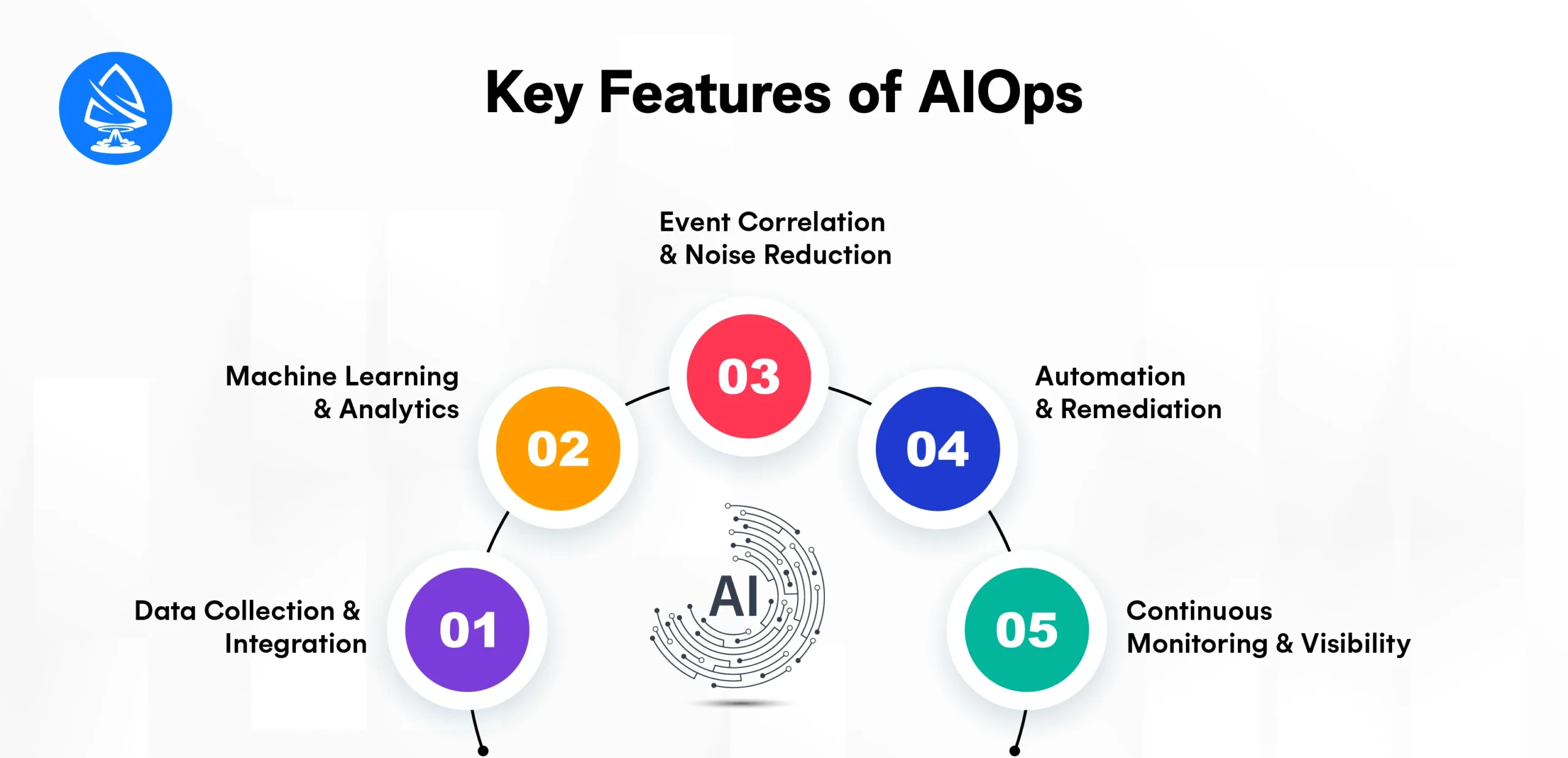
AIOps platforms aggregate vast amounts of data from various sources within the IT infrastructure, including servers, network devices, cloud systems, and applications. This data may include logs, metrics, events, and alerts. The AI platform then processes and analyzes this data in real-time to provide actionable insights.
Once the data is collected, machine learning algorithms are used to analyze and interpret the data. These algorithms are capable of identifying patterns, detecting anomalies, and even predicting potential issues before they disrupt operations. By learning from historical data, AIOps can enhance its predictive capabilities over time.
AIOps helps IT teams deal with the overwhelming volume of alerts and events generated by IT systems. By using advanced event correlation techniques, AIOps groups related events together to pinpoint the cause of an issue. This reduces the noise from unrelated alerts and allows IT staff to focus on critical problems.
One of the most significant advantages of AIOps is its ability to automate many routine IT tasks. This includes automatically responding to incidents, running diagnostics, and even applying fixes when specific issues arise. By automating routine tasks, AIOps significantly reduces the time spent on manual operations and enables faster resolution of issues.
AIOps provides continuous visibility into the health and performance of IT systems, enabling businesses to monitor infrastructure and applications in real-time. Through AI-powered dashboards and data visualizations, IT teams can quickly identify any performance anomalies, security threats, or potential risks that may impact business operations.
You may also want to know AI App Developers
As organizations continue to expand their digital infrastructure, managing IT operations becomes more complex. Traditional methods of IT monitoring, troubleshooting, and management are no longer sufficient to keep pace with the volume and complexity of modern IT environments. This is where AIOps (Artificial Intelligence for IT Operations) comes into play, offering a revolutionary approach to IT management. By combining AI, machine learning (ML), and big data analytics, AIOps is transforming how IT teams handle infrastructure, security, and performance.
The rapid growth of digital systems, cloud infrastructures, IoT devices, and the sheer volume of data being generated each day presents significant challenges for IT departments. Organizations today are running more applications, services, and systems than ever before, and this complexity requires an intelligent system to keep it all running smoothly. AIOps is essential for IT operations because it addresses these challenges effectively by automating routine tasks, identifying issues in real time, and optimizing performance.
AIOps empowers IT teams by automating and streamlining processes, enabling faster response times, better issue resolution, and more proactive management. Here’s why AIOps is crucial for modern IT operations:
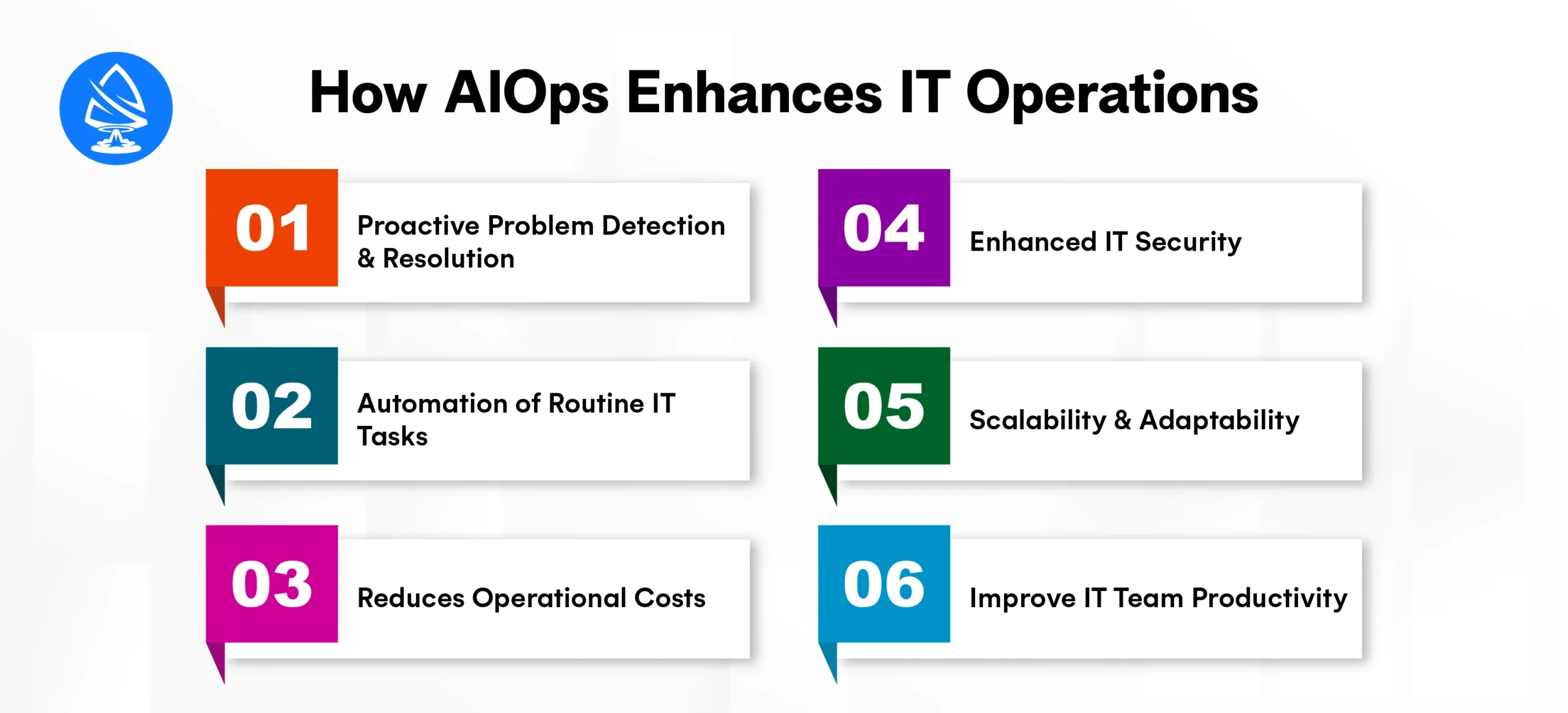
One of the most significant advantages of AIOps is its ability to detect potential issues before they escalate. Through predictive analytics and anomaly detection, AIOps platforms can analyze historical data to identify patterns and predict when a problem may arise.
AIOps helps automate many of the repetitive tasks that traditionally consume IT staff time. This includes activities like alert handling, incident management, performance monitoring, and root cause analysis. By offloading these tasks to AI-driven systems, IT teams can focus on more strategic initiatives.
AIOps significantly reduces the operational costs associated with IT management. By automating routine tasks, improving the speed of issue detection, and preventing costly downtime, AIOps helps organizations operate more efficiently.
AIOps also plays a vital role in enhancing IT security. By analyzing vast amounts of data from various sources, including logs, events, and network traffic, AIOps tools can quickly detect security threats such as malware, data breaches, and unauthorized access.
As businesses grow, so does the complexity of their IT systems. AIOps provides the scalability and adaptability needed to manage these complex, growing environments.
As IT environments grow more complex, the role of IT teams becomes more demanding. AIOps empowers IT teams by providing them with the tools they need to work smarter and more efficiently.
You may also want to know AI in Finance
An AIOps platform is composed of various tools and technologies that work together to enhance IT operations through AI-driven capabilities. Let’s take a look at the main components that make up an AIOps solution:
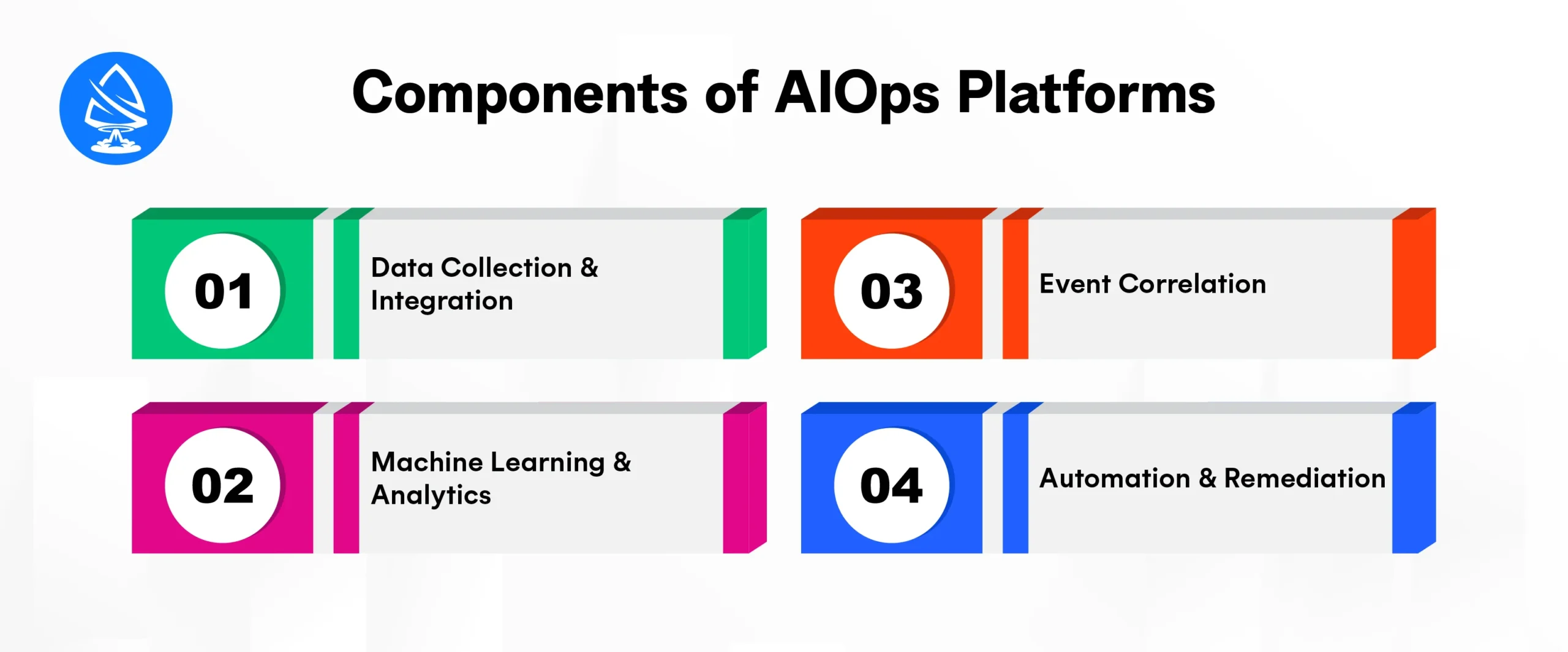
AIOps platforms collect data from a variety of sources, including servers, network devices, cloud environments, and applications. This data can include performance metrics, logs, events, and configuration information. Integration with existing IT tools and systems is crucial for gathering comprehensive data from all aspects of the IT infrastructure.
Once data is collected, machine learning algorithms are used to analyze and interpret it. These algorithms identify patterns, detect anomalies, and predict future behavior. Through AI-powered analytics, AIOps can correlate events and provide actionable insights that help IT teams identify issues early.
Event correlation is the process of linking different events and incidents together to determine the root cause of an issue.
AIOps platforms use automation to remediate common issues without requiring manual intervention. This reduces downtime and helps to maintain optimal performance.
There are many ways AIOps can be applied to IT operations. Here are a few use cases where AI-driven operations can provide significant value:
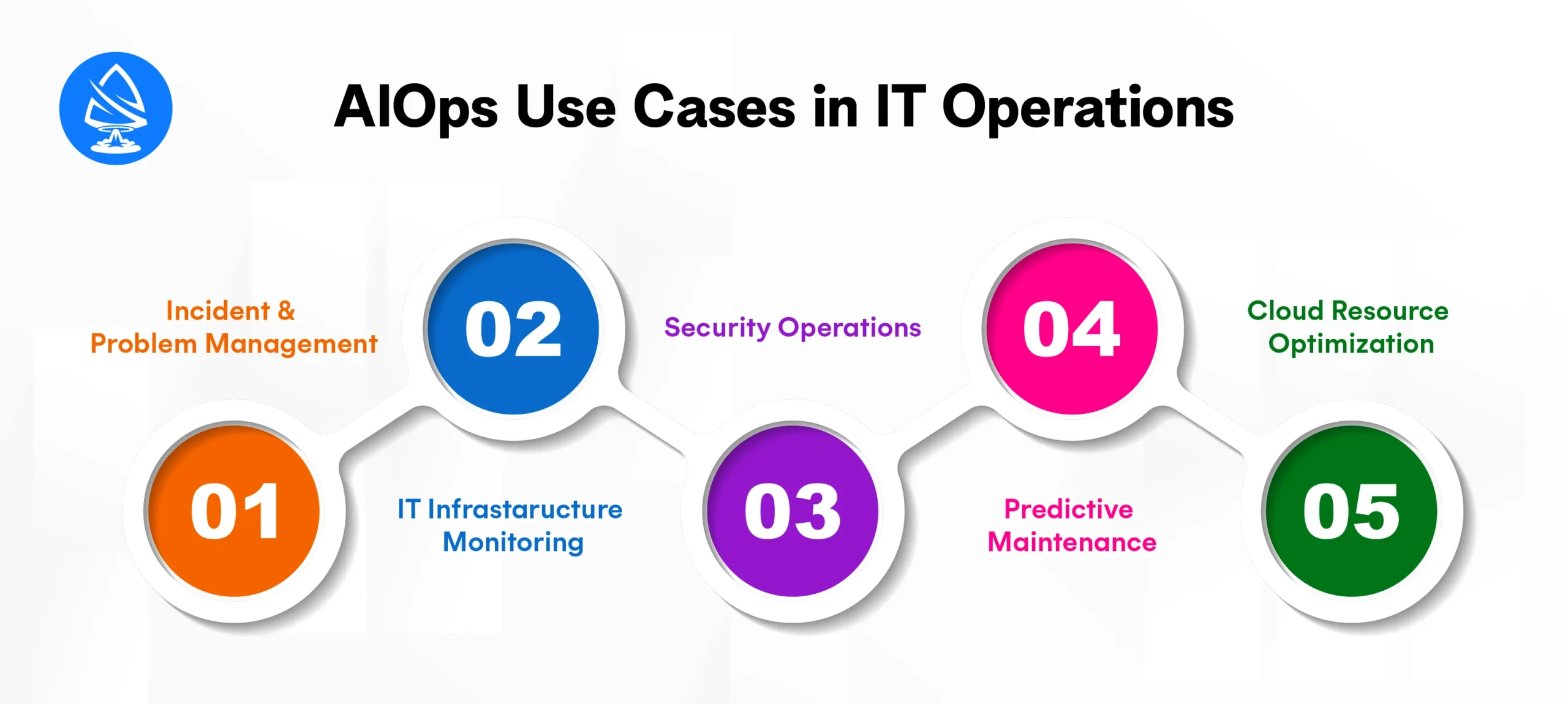
AIOps tools automatically identify, correlate, and resolve incidents without manual intervention. This enables IT teams to respond faster, with fewer errors, and enhances system uptime.
AIOps platforms provide real-time visibility into the health of IT systems, enabling proactive monitoring of performance metrics, network traffic, and system resources. They also provide insights into infrastructure bottlenecks and resource allocation issues.
AIOps can be used to detect security threats and potential breaches by analyzing logs and patterns from across the network. AI models identify suspicious activities and vulnerabilities in real-time, enabling faster security responses.
By analyzing historical data, AIOps can predict when equipment or systems are likely to fail, allowing businesses to schedule maintenance and prevent unexpected downtime. This is especially useful in industries where uptime is critical, such as finance, healthcare, and e-commerce.
AIOps can help businesses optimize their cloud resources by automatically adjusting capacity based on demand. This ensures that businesses are only paying for the resources they need, reducing cloud costs.
There are many AIOps platforms available, each with its own set of features and capabilities. Some of the leading platforms in the market today include:
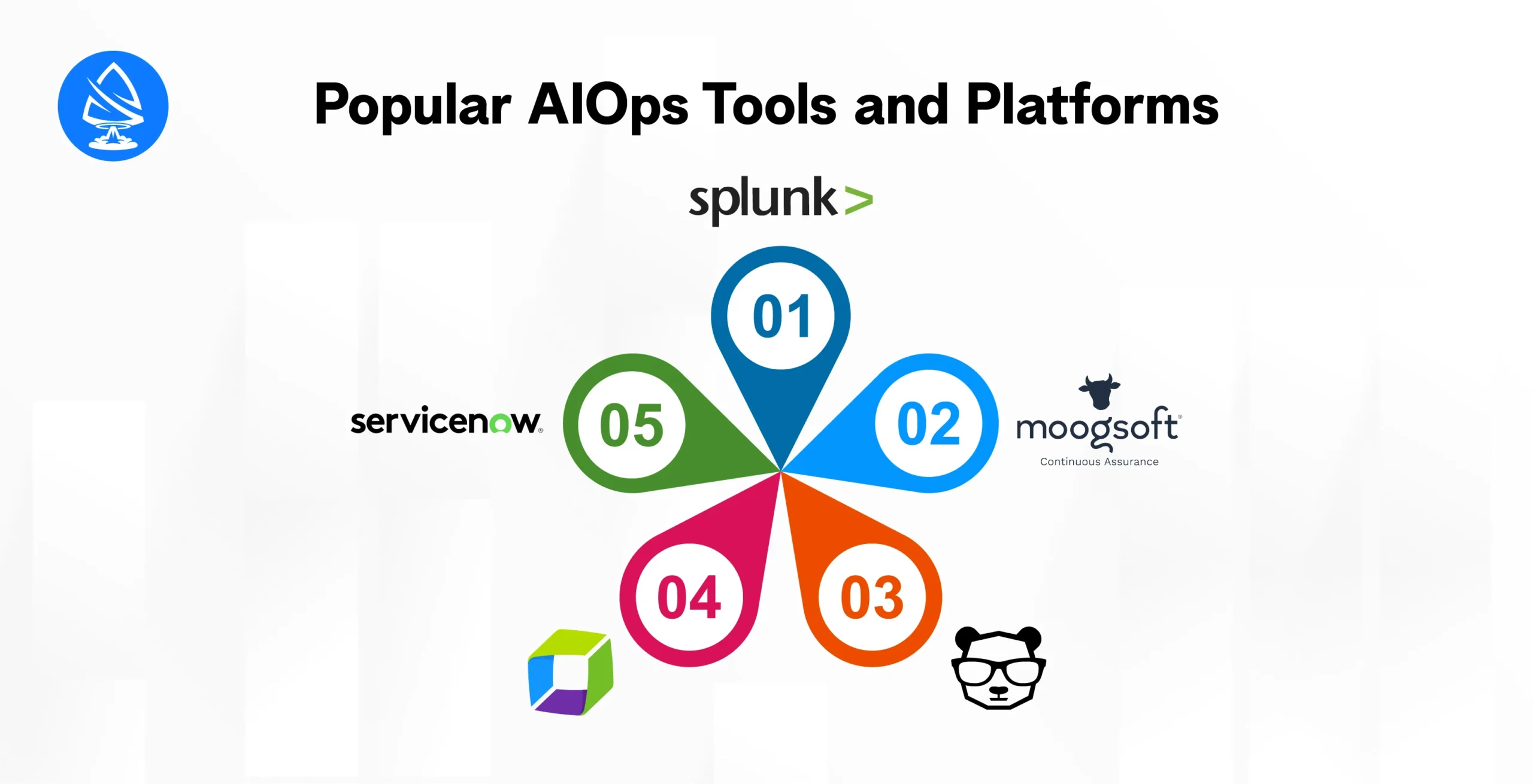
Splunk provides a comprehensive AIOps solution with robust features for data collection, real-time monitoring, and incident management. It leverages AI to analyze large volumes of machine data, detect anomalies, and predict future performance.
Moogsoft offers an AI-powered AIOps solution that combines machine learning and data analytics to help IT teams identify and resolve incidents faster. It offers features like event correlation, automation, and root cause analysis to improve efficiency.
BigPanda uses AI to deliver advanced event correlation and incident management capabilities. It helps organizations manage IT alerts, reduce noise, and identify critical incidents with greater accuracy.
Dynatrace provides AI-driven monitoring and observability for cloud and enterprise environments. Its Artificial Intelligence for IT Operations features include root cause analysis, problem detection, and performance monitoring in real-time.
ServiceNow integrates AI and machine learning into its IT service management (ITSM) platform, providing organizations with proactive issue resolution, automation, and intelligent workflows.
As businesses continue to evolve in the digital age, the complexity and scale of their IT environments are growing exponentially. AIOps helps manage IT complexity, improve operational efficiency, and support smarter decision-making. Its future includes advanced predictive analytics, automation, cloud optimization, and AI-driven decisions.
In this section, we will explore the key trends and innovations that will shape the future of AIOps and how they will impact IT operations in the coming years.

The future of AIOps will feature advanced AI and ML models resolving IT issues autonomously. These models will predict, detect, and fix problems with minimal human intervention. AI systems will identify patterns, make decisions, and act without predefined rules.
As businesses adopt multi-cloud and hybrid strategies, AIOps becomes essential for managing complex IT infrastructures. AIOps monitors and optimizes cloud, data center, and on-premises environments using aggregated data analysis.
The future of AIOps will be defined by its ability to take automation to the next level. Beyond automation, AIOps orchestrates IT operations to ensure systems, applications, and resources work efficiently.
DevOps and Artificial Intelligence for IT Operations are naturally complementary technologies.
AI-powered security operations (SecOps) is another area where Artificial Intelligence for IT Operations will play an increasingly important role. As cyber threats become more sophisticated, businesses need advanced tools to detect, analyze, and mitigate security risks in real time.
Artificial Intelligence for IT Operations will also improve the user experience (UX) by analyzing end-user behavior and system performance data to identify areas where applications or services can be enhanced.
AIOps – Artificial Intelligence for IT Operations is transforming the way businesses manage and optimize their IT environments. AIOps uses AI and machine learning to enable proactive issue resolution and automated workflows. It improves IT system performance, reliability, and operational efficiency. AIOps helps businesses reduce downtime and manage complex digital environments effectively.
Partnering with an AI development company or hiring AI developers for custom AIOps solutions can help businesses implement the right tools to manage their IT operations effectively and drive future growth.
1. What is AIOps?
AIOps refers to Artificial Intelligence for IT operations, which combines AI, machine learning, and data analytics to automate and enhance IT management tasks.
2. How does AIOps improve IT operations?
AIOps improves IT operations by automating monitoring, identifying issues in real-time, correlating events, and providing predictive insights to prevent problems before they occur.
3. What are the benefits of AIOps?
AIOps offers benefits like proactive problem resolution, improved efficiency, faster incident response, cost reduction, and enhanced IT visibility.
4. How does AIOps help with cloud resource management?
AIOps optimizes cloud resource management by predicting resource demand, scaling resources automatically, and ensuring cost-effective use of cloud infrastructure.
5. Can AIOps be integrated with existing IT systems?
Yes, AIOps can be integrated with existing IT systems to enhance their capabilities, provide real-time insights, and automate workflows.
6. What industries benefit most from AIOps?
AIOps benefits industries like finance, healthcare, e-commerce, and telecommunications, where uptime, security, and efficient IT operations are critical.
7. Is AIOps only for large enterprises?
No, AIOps is beneficial for businesses of all sizes. Small and medium-sized enterprises (SMEs) can also leverage AIOps to improve operational efficiency and reduce IT costs.
8. How do I implement AIOps in my business?
To implement AIOps, partner with an AI development company that specializes in AI-driven IT operations or hire experienced AI developers to customize and integrate AIOps solutions.

Artoon Solutions
Artoon Solutions is a technology company that specializes in providing a wide range of IT services, including web and mobile app development, game development, and web application development. They offer custom software solutions to clients across various industries and are known for their expertise in technologies such as React.js, Angular, Node.js, and others. The company focuses on delivering high-quality, innovative solutions tailored to meet the specific needs of their clients.
 For business inquiries only




