- HR:+91-879-9184-787
- Sales:+91-908-163-7774


In the world of artificial intelligence (AI), ChatGPT is one of the most innovative advancements. Developed by OpenAI, ChatGPT AI is a sophisticated language model that uses deep learning to generate human-like text. From enhancing customer service to aiding creative writing and programming, ChatGPT is transforming how we interact with machines and paving the way for AI to become an integral part of our everyday lives.
This article explores ChatGPT Artificial Intelligence, its capabilities, applications, and how it is unlocking the future of AI technology. We will dive into the key features of ChatGPT artificial intelligence, its use cases, and the potential impact on various industries.
ChatGPT artificial intelligenceis an advanced artificial intelligence model developed by OpenAI that is designed to understand and generate human-like text based on the input it receives. The model, based on the GPT (Generative Pre-trained Transformer) architecture, uses deep learning techniques to process and generate language, making it capable of performing a wide range of tasks, from answering questions to composing essays or even engaging in casual conversations.
At its core, ChatGPT AI is a sophisticated natural language processing (NLP) tool that allows computers to interact with humans conversationally, understanding the context, nuances, and intent behind written text. It has become one of the most popular AI models in use today, thanks to its ability to mimic human-like conversations across multiple domains.
The power behind ChatGPT artificial intelligence lies in the underlying GPT model, which uses a transformer architecture to process text data. Let’s break down the key components that make ChatGPT AI so effective:
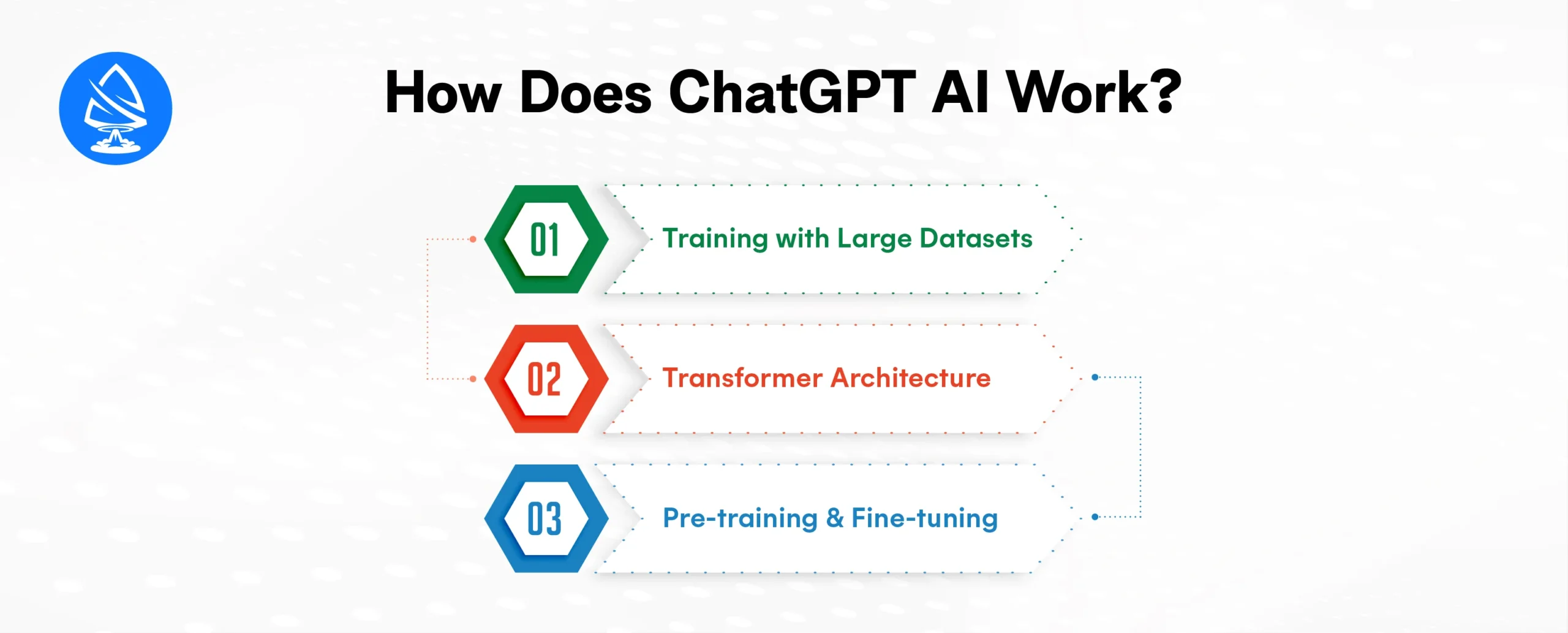
ChatGPT artificial intelligence is trained on massive datasets that include a wide range of text data sourced from books, websites, articles, and other publicly available content. This training allows the model to learn the structure of language, how sentences are formed, and how to predict the next word or phrase in a conversation.
At the heart of ChatGPT artificial intelligence is the transformer architecture, which is a type of deep learning model specifically designed for natural language processing (NLP) tasks. The transformer model uses an attention mechanism that enables the system to consider the relationships between words in a sentence, even when they are far apart. This is key to ensuring that ChatGPT can generate coherent, contextually relevant responses in real-time conversations.
You may also want to know AI Pattern Recognition
ChatGPT artificial intelligence comes with several powerful features that enhance its ability to engage in natural, meaningful conversations with users:
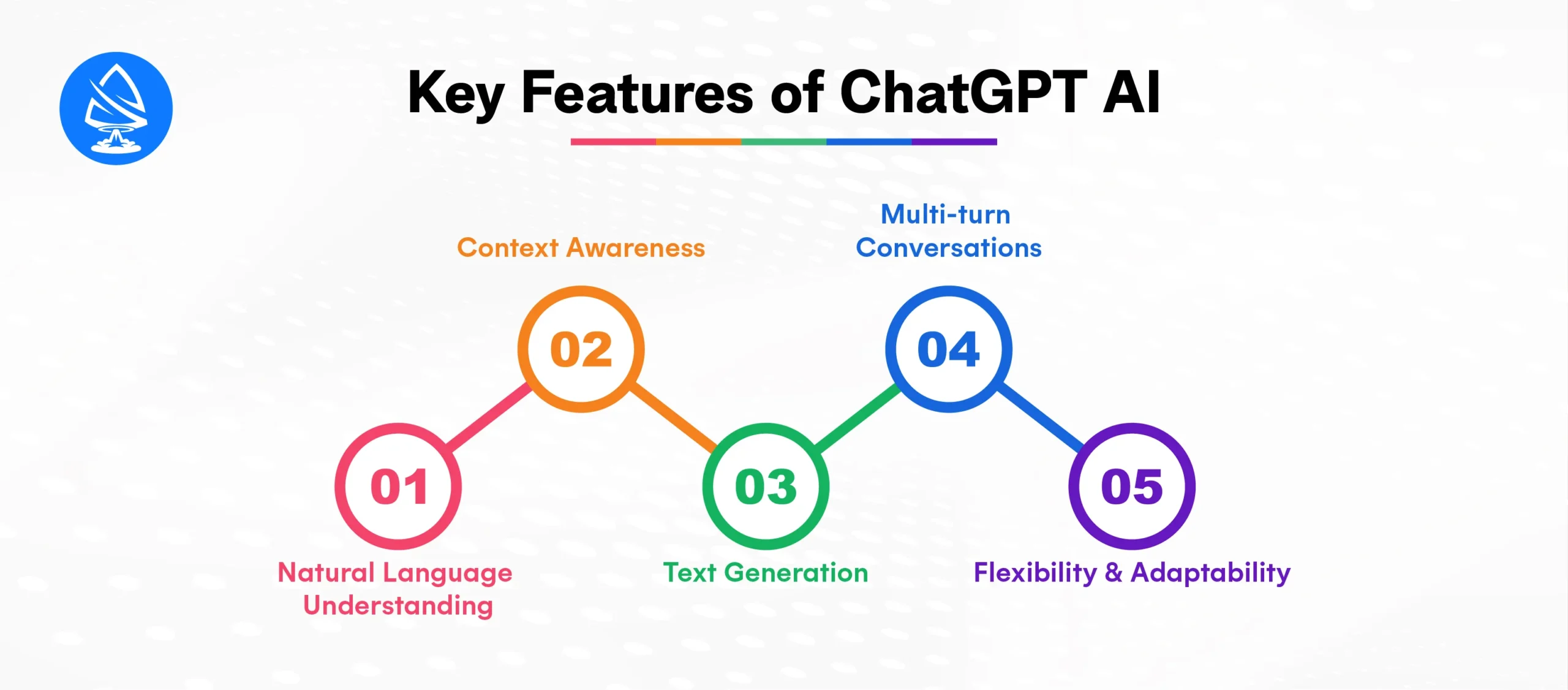
ChatGPT uses advanced NLU capabilities to understand the meaning and intent behind user input. It doesn’t just rely on keywords but can analyze sentence structures, context, and nuances to generate appropriate responses.
One of the unique features of ChatGPT artificial intelligence is its ability to maintain context across a conversation. Unlike traditional chatbots, which often lose track of previous interactions, ChatGPT can remember earlier parts of the conversation, allowing for more coherent and logical dialogues.
The primary function of ChatGPT artificial intelligence is text generation. By predicting the most likely next word or phrase in a sentence, ChatGPT can produce text that is grammatically correct, coherent, and relevant to the user’s query or input. This capability makes it versatile for a wide variety of applications, from answering questions to writing essays.
ChatGPT excels in multi-turn conversations, which means it can participate in ongoing dialogues with users, remembering the context and providing relevant responses even as the conversation evolves. This is essential for creating more interactive and personalized user experiences.
ChatGPT artificial intelligence can adapt to different contexts, adjusting its tone and style based on the input it receives. Whether it’s a formal inquiry or a casual conversation, ChatGPT adjusts its responses accordingly, making it suitable for a wide variety of use cases.
The versatility of ChatGPT AI has made it applicable in a wide range of use cases. Here are some of the key applications:
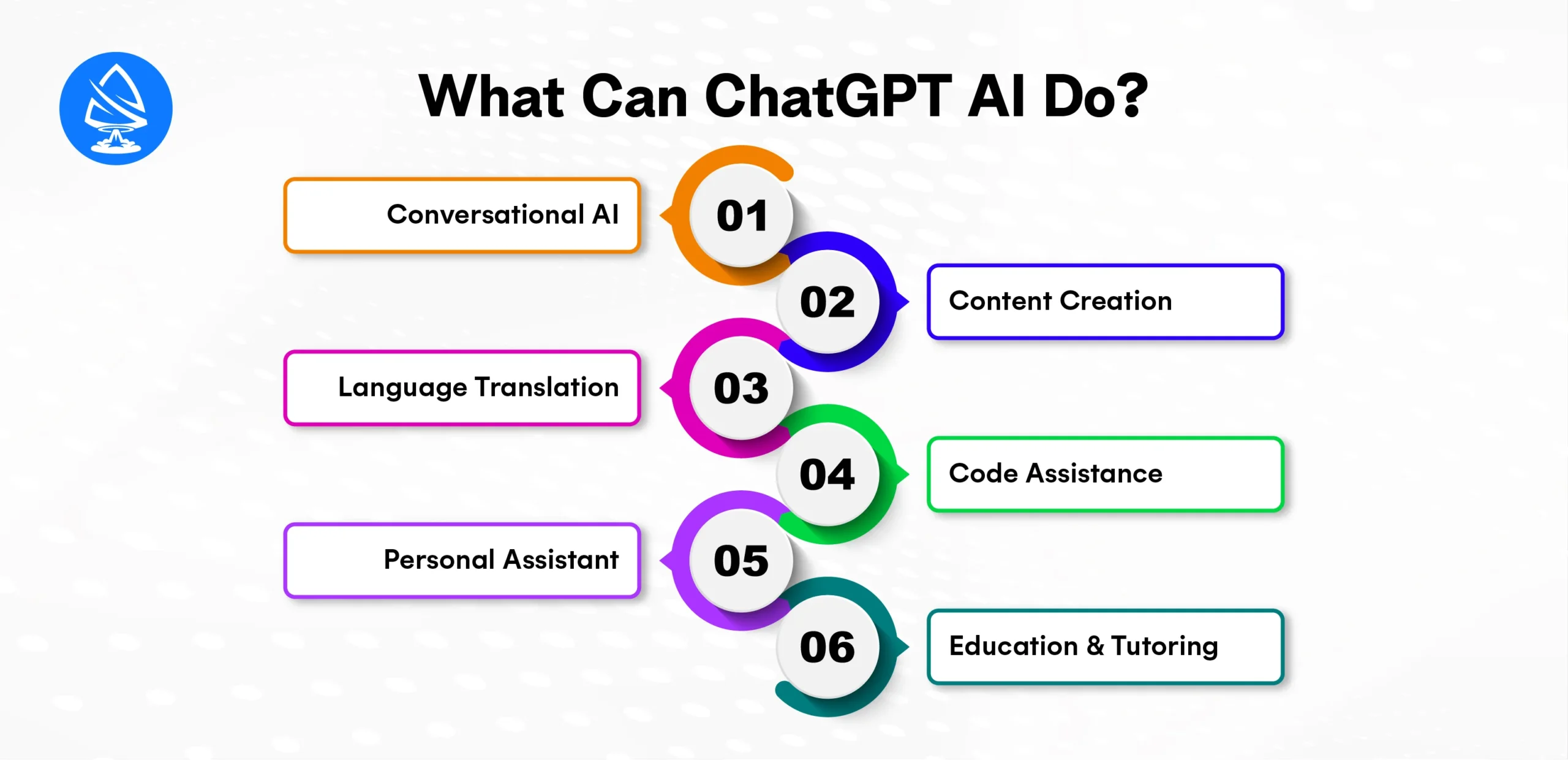
ChatGPT AI is widely used in chatbots to interact with customers, answer questions, and provide support. It can handle simple inquiries, troubleshoot problems, and even engage in detailed conversations, making it a valuable tool for customer service departments.
ChatGPT can generate written content, making it useful for businesses, bloggers, and writers. It can help generate ideas, create outlines, and even draft full-length articles. Its ability to write coherent and relevant content quickly makes it a powerful tool for content marketers.
Though not as specialized as translation services like Google Translate, ChatGPT AI can understand and generate text in multiple languages, making it useful for basic translation tasks.
Developers can use ChatGPT AI to generate code snippets, explain programming concepts, or help debug issues. It has a growing understanding of programming languages and can assist in various stages of software development.
ChatGPT AI is increasingly being used as a personal assistant to help with scheduling, reminders, and answering personal queries. By integrating it into personal devices or apps, users can benefit from having an AI that understands context and adapts to their needs.
ChatGPT AI is used as a tutor or assistant for students. It can explain concepts, solve problems, and provide learning resources in subjects ranging from mathematics to literature.
You may also want to know about AI in Education
As ChatGPT AI continues to evolve, its impact across various industries is becoming more profound. Here are some key industries where ChatGPT AI is making a significant impact:
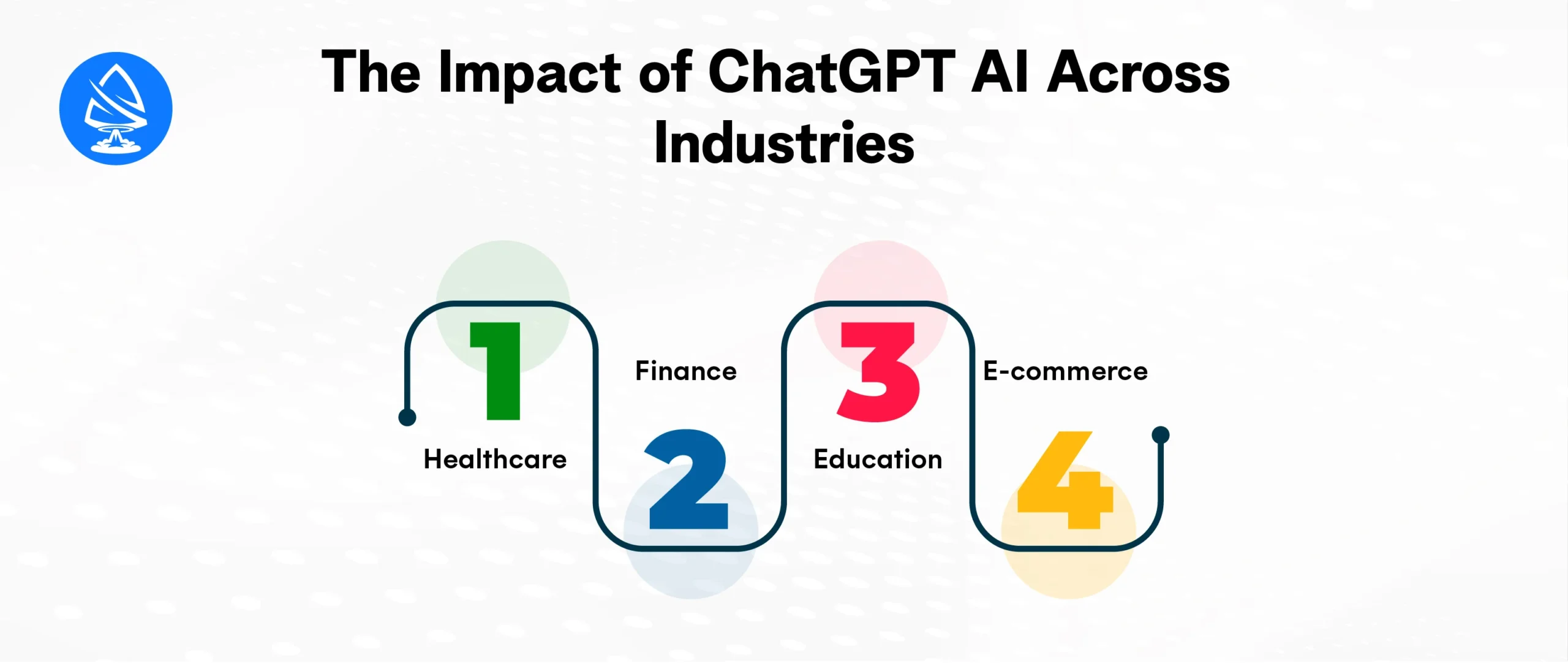
In healthcare, ChatGPT AI is being used to assist with patient interactions, helping individuals with medical inquiries, scheduling appointments, and even providing mental health support. Additionally, it is being used to assist healthcare professionals with research by summarizing medical journals and answering clinical questions.
In the financial industry, ChatGPT AI is used to automate customer support, provide financial advice, and assist with transaction processing. It helps improve customer experience and enables more efficient financial operations.
ChatGPT AI is used to provide personalized tutoring, help students understand complex topics, and assist teachers with administrative tasks like grading and feedback. It makes learning more accessible and interactive.
For e-commerce platforms, ChatGPT AI can assist customers in finding products, answering pre-sale queries, and helping with order status updates. It enhances the customer experience by providing quick and efficient service.
The future of ChatGPT AI is promising, with ongoing developments aimed at improving its capabilities. As the technology continues to evolve, ChatGPT AI will become even more adept at understanding human emotions, delivering highly personalized responses, and integrating into various platforms seamlessly.
Exciting Possibilities Include:
ChatGPT OpenAI represents one of the most powerful advancements in the field of Conversational AI. Developed by OpenAI, ChatGPT is a state-of-the-art language model that leverages deep learning and natural language processing (NLP) to engage in human-like conversations. Unlike traditional chatbots, which rely on simple decision trees or rule-based systems, ChatGPT uses transformer architecture, a deep learning technique that allows it to process and generate text in a highly coherent and contextually relevant manner.
The power of ChatGPT OpenAI lies in its ability to understand and generate natural language, making it capable of performing a wide range of tasks, such as answering questions, providing explanations, assisting in writing, and even engaging in casual conversation. Whether it’s a customer inquiry or an advanced problem-solving task, ChatGPT OpenAI brings sophisticated conversational capabilities to a wide range of industries and applications.
Let’s break down the key aspects of ChatGPT OpenAI, its capabilities, and why it is considered a leader in the field of Conversational AI.
The core strength of ChatGPT OpenAI lies in its ability to engage in natural, human-like conversations. It doesn’t rely on simple keyword matching or pre-defined answers, as traditional chatbots do. Instead, it can generate dynamic, context-aware responses, making it highly effective for a wide range of use cases.
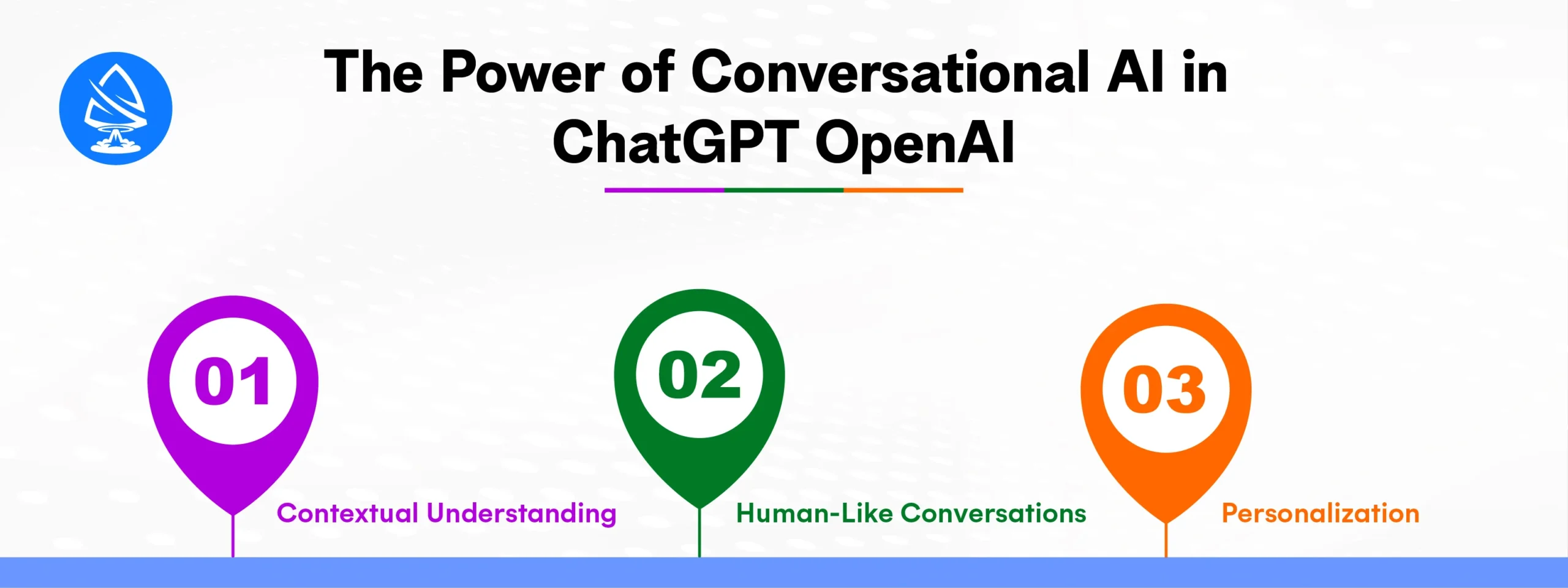
One of the most significant advantages of ChatGPT OpenAI over previous chatbot technologies is its contextual understanding. This means that ChatGPT doesn’t just generate a response based on the immediate query; it also considers the broader context of the conversation, ensuring that its answers are coherent and relevant to the ongoing discussion.
For example, if a user asks ChatGPT about the weather and then follows up with a question about activities to do on a rainy day, ChatGPT will remember the context of the conversation and provide suggestions that are appropriate to the earlier mention of rain.
With its ability to understand the nuances of language, ChatGPT OpenAI is capable of mimicking human conversation with impressive accuracy. It can understand humor, sarcasm, tone, and even complex linguistic structures, such as idioms and metaphors.
ChatGPT OpenAI has the ability to personalize its responses based on previous interactions, making it more adaptive to individual users. It can learn user preferences, past queries, and conversational patterns, ensuring that the interaction is tailored to the specific needs of the individual.
For example, a customer service chatbot powered by ChatGPT can recall previous issues a customer has faced, offer personalized solutions, and provide updates based on the customer’s account or history.
In today’s digital world, AI-powered chat systems are transforming how businesses interact with customers. One of the most notable advancements in this space is ChatGPT AI, which is revolutionizing AI chat online interactions. By using ChatGPT AI, companies can offer highly personalized, real-time communication with users, improving customer experience, support, and engagement.
ChatGPT AI, developed by OpenAI, is a cutting-edge conversational model built on deep learning and natural language processing (NLP). It leverages vast amounts of text data to understand and generate responses that mimic human-like conversations. Whether you’re engaging with a customer service bot or seeking answers to your queries, ChatGPT AI powers many of the AI chat online experiences you encounter.
Let’s explore how ChatGPT AI is enhancing user interaction through AI chat online, what makes it unique, and the benefits it brings to businesses and users alike.
Before diving into how ChatGPT AI enhances user interaction, it’s important to understand the evolution of AI chat online. Traditional chatbots relied on predefined scripts or decision trees to interact with users. These chatbots could only respond to specific queries that matched their programmed patterns, often leading to rigid, repetitive, and sometimes frustrating experiences for users.
ChatGPT AI, on the other hand, is powered by transformers and advanced machine learning algorithms, which enable it to handle more dynamic and complex conversations. Unlike traditional chatbots, ChatGPT AI is capable of understanding context, nuances, and even user intent, which makes interactions feel more natural and human-like.
ChatGPT AI functions by processing user input using NLP techniques, generating contextually relevant responses. It doesn’t rely on static scripts but instead generates dynamic responses based on what it has learned from vast datasets. This enables the AI to maintain coherent conversations, even across multiple exchanges, providing a much more engaging and effective experience.
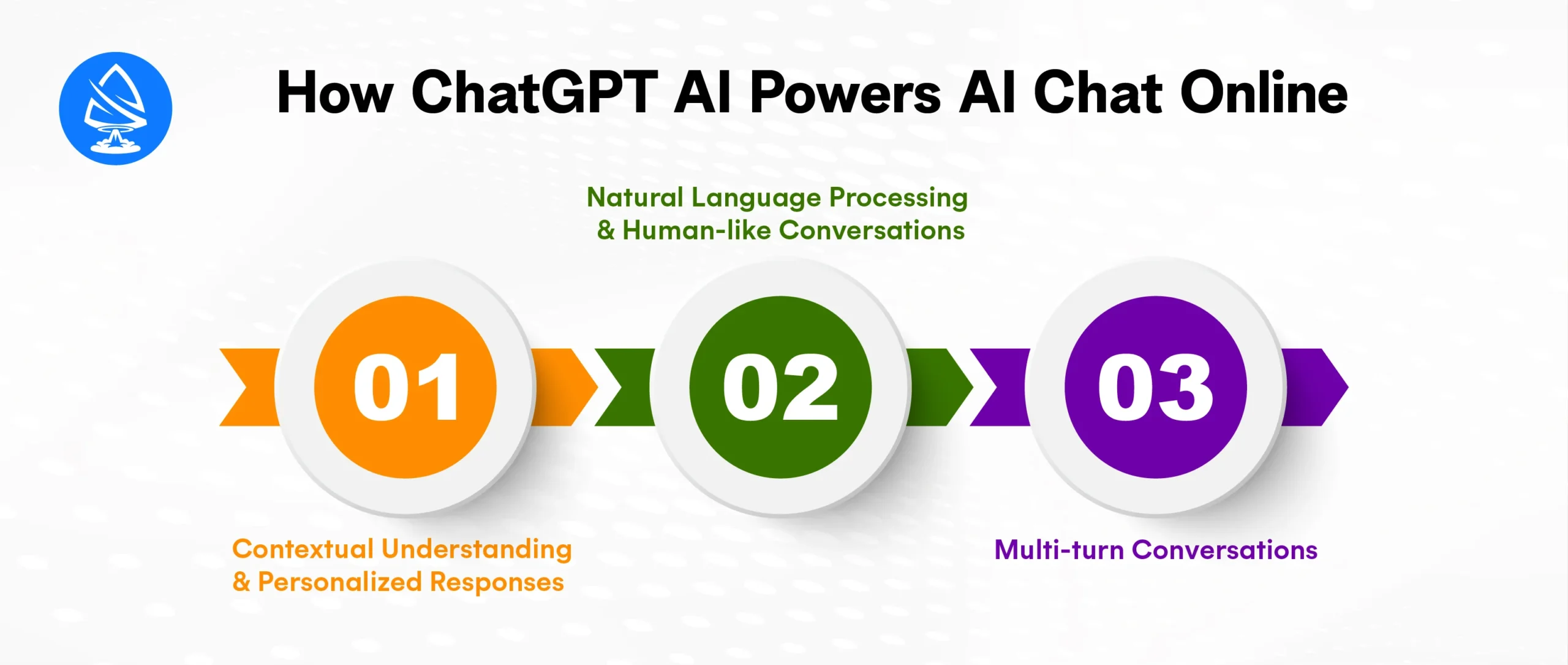
One of the standout features of ChatGPT AI is its ability to remember the context of a conversation. Traditional AI chatbots often fail to maintain context over multiple interactions, leading to disjointed or irrelevant responses. ChatGPT AI, however, can process a series of messages, retain key details, and offer personalized responses that are relevant to the ongoing conversation.
For example, in a customer service setting, ChatGPT AI can remember a user’s earlier queries and provide more meaningful follow-up responses. If a user asks about a product, then later in the conversation inquires about shipping details, the AI can reference the product mentioned earlier, enhancing the customer’s experience.
ChatGPT AI uses advanced NLP to break down and understand human language. It doesn’t just match keywords to predefined answers but comprehends the meaning behind the words, identifying sentence structure, tone, and even implied meaning. This ability allows ChatGPT AI to engage in human-like conversations and respond in a manner that feels intuitive and natural.
This makes ChatGPT AI an ideal choice for businesses looking to provide high-quality customer interactions, as it can handle diverse topics, understand complex questions, and respond appropriately. Whether it’s answering a simple query or discussing a detailed product feature, ChatGPT AI can adjust its tone and complexity based on the user’s language and request.
Another benefit of ChatGPT AI in AI chat online interactions is its ability to manage multi-turn conversations. Unlike traditional chatbots that may struggle to keep track of a conversation over multiple exchanges, ChatGPT AI can engage in extended dialogues and maintain context over a longer conversation.
The integration of ChatGPT AI in online chat experiences brings several significant benefits, both for businesses and users.
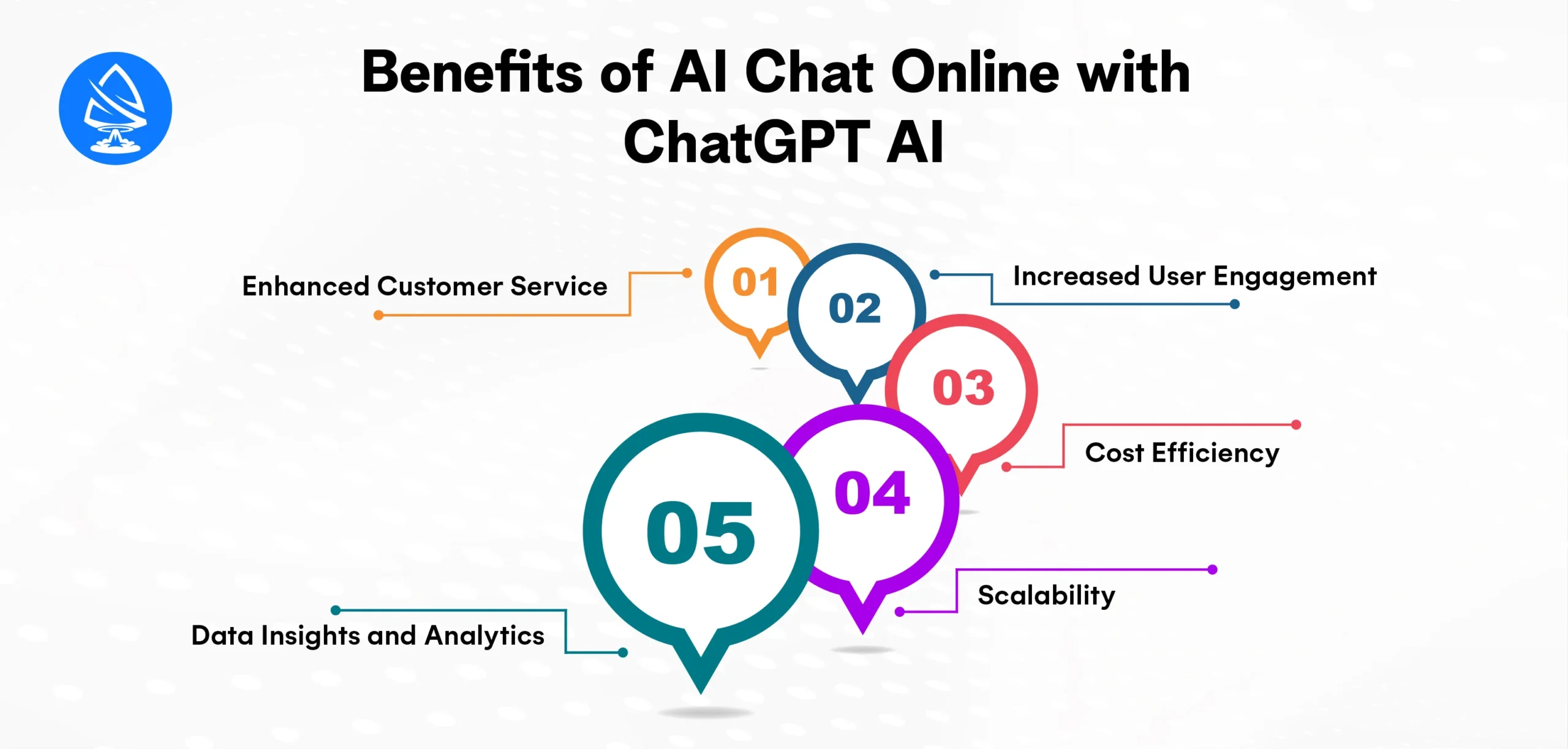
One of the most notable applications of ChatGPT AI is in customer service. With AI chat online powered by ChatGPT, businesses can automate responses to customer inquiries 24/7, ensuring that users get timely assistance regardless of time or location. This leads to quicker response times, reduced waiting periods, and a more efficient support process.
Unlike traditional chatbots that may seem robotic or impersonal, ChatGPT AI offers more engaging and meaningful conversations. Its ability to understand and respond contextually increases the likelihood of users continuing their interaction, resulting in higher levels of engagement.
By automating customer interactions, businesses can save on high costs of customer service teams. ChatGPT AI can handle a large volume of inquiries simultaneously, providing consistent and reliable responses while reducing the need for human intervention in routine tasks.
As businesses grow, the volume of customer inquiries often increases. ChatGPT AI scales easily, ensuring that businesses can handle larger volumes of interactions without compromising quality. It can interact with an unlimited number of users simultaneously, ensuring that each one receives a personalized, real-time experience.
ChatGPT AI can help businesses gain valuable insights from user interactions. By analyzing AI chat online conversations, businesses can identify common customer concerns, popular products, and areas of improvement. These insights can then be used to optimize operations, improve products, and enhance the customer experience.
ChatGPT AI is revolutionizing content generation, enabling businesses, marketers, and content creators to produce high-quality, relevant, and engaging content quickly and efficiently. Developed by OpenAI, ChatGPT AI is a powerful natural language processing (NLP) model that leverages deep learning to generate human-like text. It has transformed how we create content for websites, blogs, social media, product descriptions, and more.
The use of ChatGPT AI in content generation offers numerous benefits, including faster turnaround times, cost savings, improved content quality, and the ability to generate tailored content at scale. Let’s explore in detail how ChatGPT AI is applied to content generation and its potential to revolutionize the content creation process.
At its core, ChatGPT AI generates human-like text by analyzing patterns in large datasets of textual information. It’s trained on a vast array of documents from books, websites, articles, and more, enabling it to understand syntax, grammar, style, and the contextual relationships between words. This makes ChatGPT AI particularly suited for content generation tasks across a wide variety of domains.
Here’s how ChatGPT AI enhances content generation:
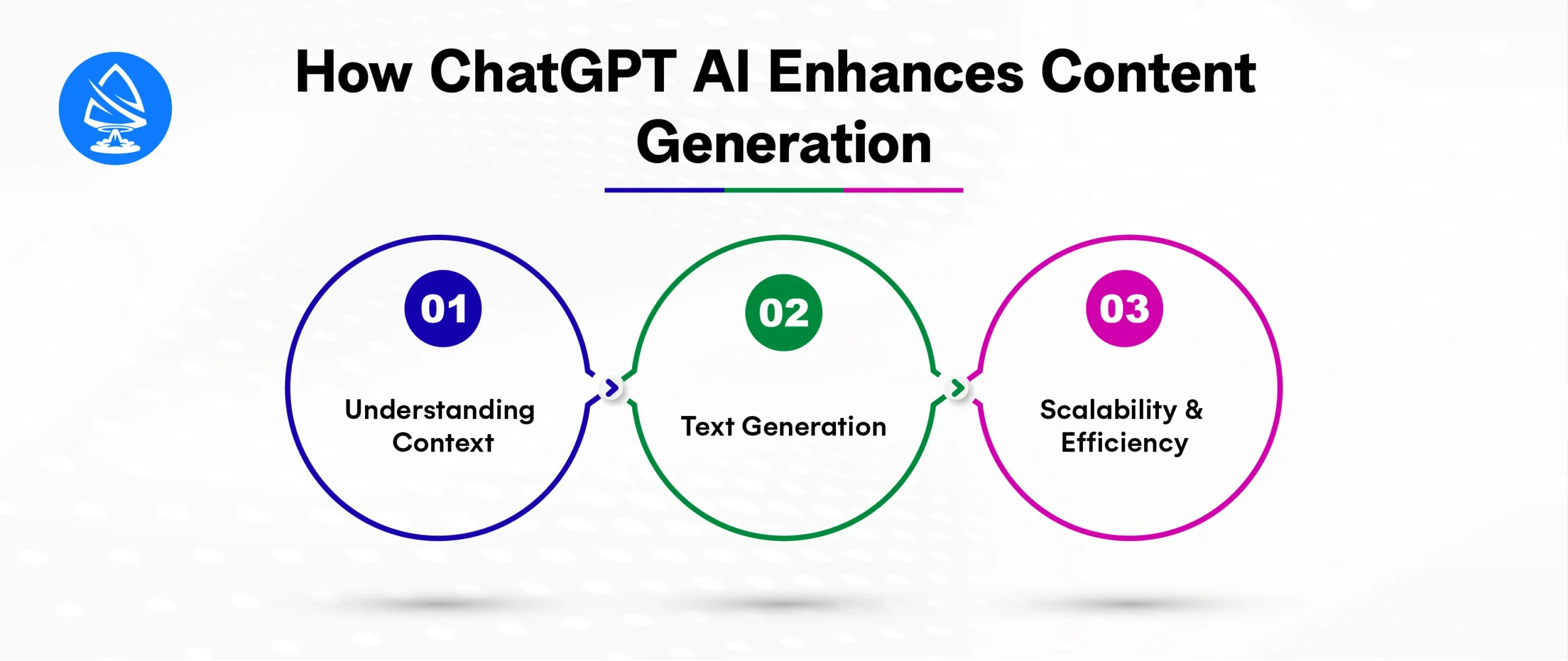
ChatGPT AI uses its deep learning architecture to analyze and understand the context of the prompt or question provided to it. This contextual understanding allows the AI to generate responses that are not only grammatically correct but also coherent and contextually relevant.
Once ChatGPT AI understands the prompt and context, it generates text by predicting the next words or sentences based on the given input. This makes ChatGPT AI incredibly versatile, as it can generate anything from simple sentences to long-form articles.
ChatGPT AI allows for the rapid generation of content, which is especially beneficial for businesses and content creators who need to produce large volumes of text. Whether you need a single blog post or hundreds of product descriptions, ChatGPT AI can generate content at scale, significantly speeding up the content creation process.
The applications of ChatGPT AI in content generation are diverse, and it can be used in many areas to streamline workflows and enhance the quality of content. Below are some key applications of ChatGPT AI in content creation:
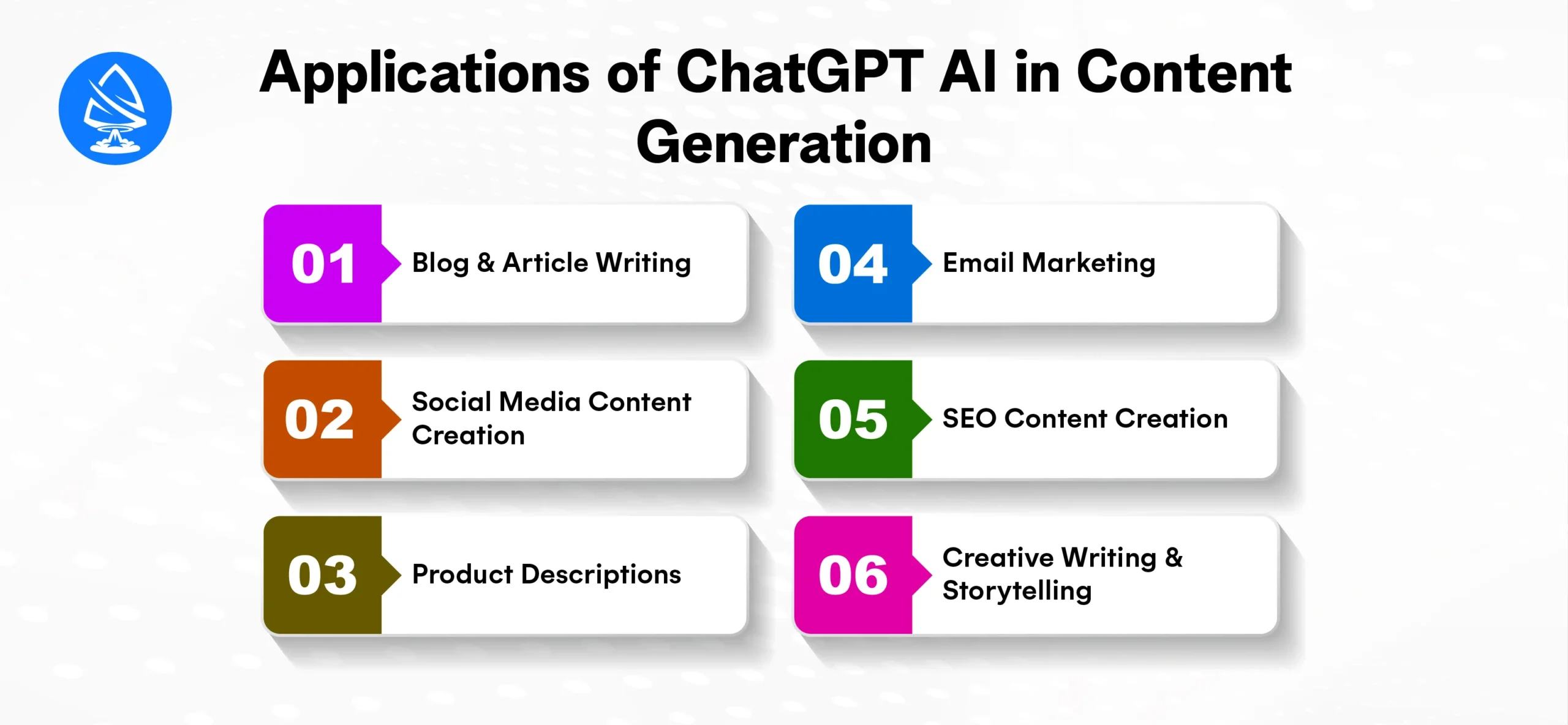
ChatGPT AI is particularly useful for generating long-form content such as blog posts, articles, and news stories. By providing a clear topic or outline, you can have ChatGPT AI write full-length articles that are coherent, engaging, and informative.
Creating engaging content for social media platforms is crucial for businesses looking to maintain an active online presence. ChatGPT AI can generate catchy and relevant social media posts, captions, and hashtags that resonate with the target audience.
For e-commerce businesses, writing product descriptions is a repetitive but essential task. ChatGPT AI can generate high-quality product descriptions that are both informative and optimized for search engines, helping to improve conversion rates and organic search rankings.
ChatGPT AI can be used to create personalized email campaigns, newsletters, and promotional content for email marketing purposes. It can help businesses communicate effectively with their subscribers, offering relevant information in a tone that matches the brand’s voice.
SEO is essential to content marketing, and ChatGPT AI can generate search-optimized content. It uses relevant keywords and structure to create reader-friendly, search engine-ready content.
ChatGPT AI can also be used to generate creative content, such as short stories, poems, scripts, or even brainstorming ideas for novels. Writers can use ChatGPT AI as a tool for inspiration, brainstorming, or co-writing creative works.
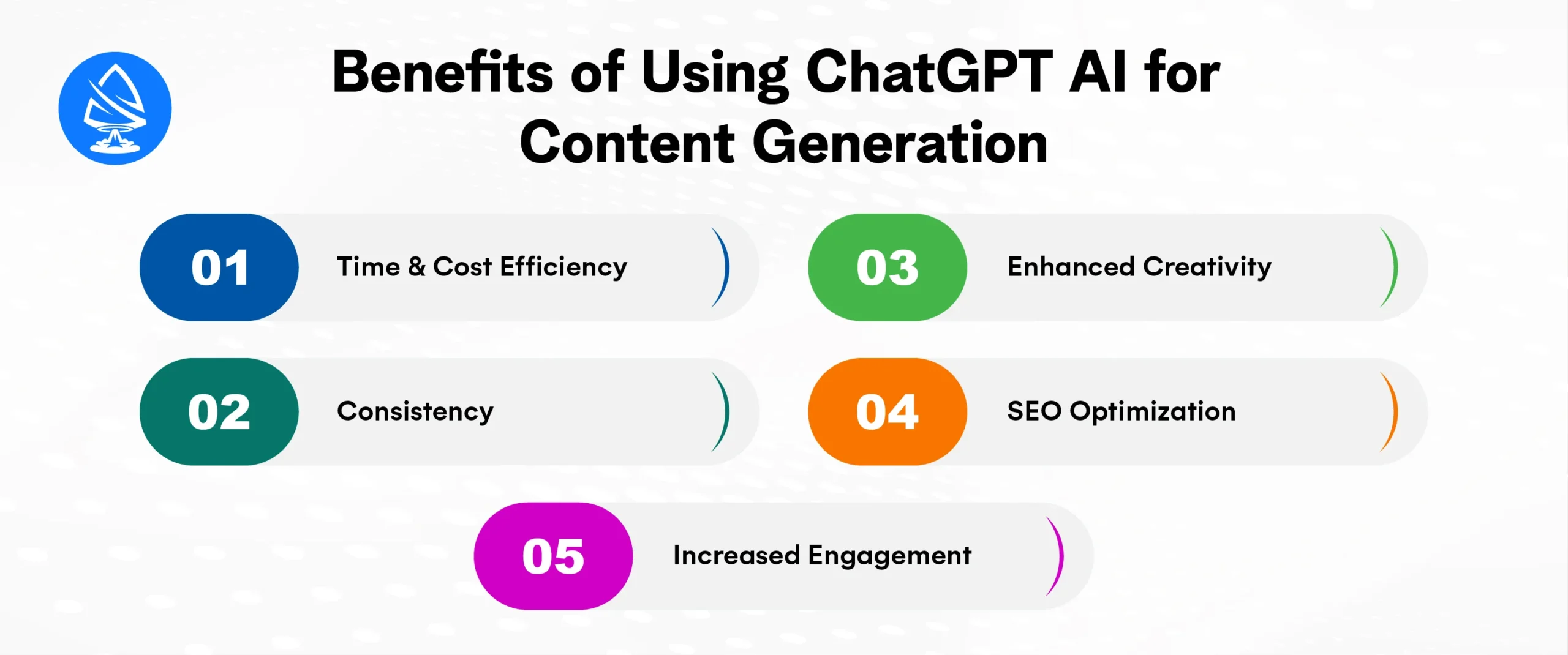
ChatGPT AI allows businesses and content creators to produce high-quality content quickly and at scale, significantly reducing the time and effort required to write manually. This also leads to cost savings, as businesses can allocate fewer resources to content creation.
By using ChatGPT AI for content generation, businesses can maintain consistency in tone, style, and messaging across all forms of content, from social media posts to blog articles. This is important for maintaining a cohesive brand voice.
While ChatGPT AI can generate text based on the input provided, it can also suggest new ideas, angles, and perspectives that writers may not have considered. This enhances creativity and helps content creators think outside the box.
ChatGPT AI can be used to generate SEO-optimized content, ensuring that the right keywords are included in the text for better search engine rankings. It can also optimize meta descriptions, headings, and content structure to meet SEO best practices.
The ability to create personalized and engaging content quickly allows businesses to connect with their audience more effectively. Whether it’s an engaging social media post or a well-written product description, ChatGPT AI helps businesses keep their audience interested and involved.
ChatGPT AI plays a key role in business automation and customer engagement. Businesses use OpenAI’s ChatGPT to automate time-consuming and error-prone tasks. By integrating ChatGPT AI into their operations, companies can streamline workflows, improve efficiency, and enhance the overall customer experience.
At its core, ChatGPT AI is a powerful natural language processing (NLP) model capable of understanding, generating, and interacting with human-like text. This makes it ideal for automating communication processes, content generation, and customer service tasks, among others. Let’s delve into how ChatGPT AI is transforming business automation and its impact across different sectors.
ChatGPT AI uses deep learning and transformer models to understand and generate human-like language. These capabilities support automation in customer support, data analysis, and content creation. Here’s how ChatGPT AI contributes to business automation:
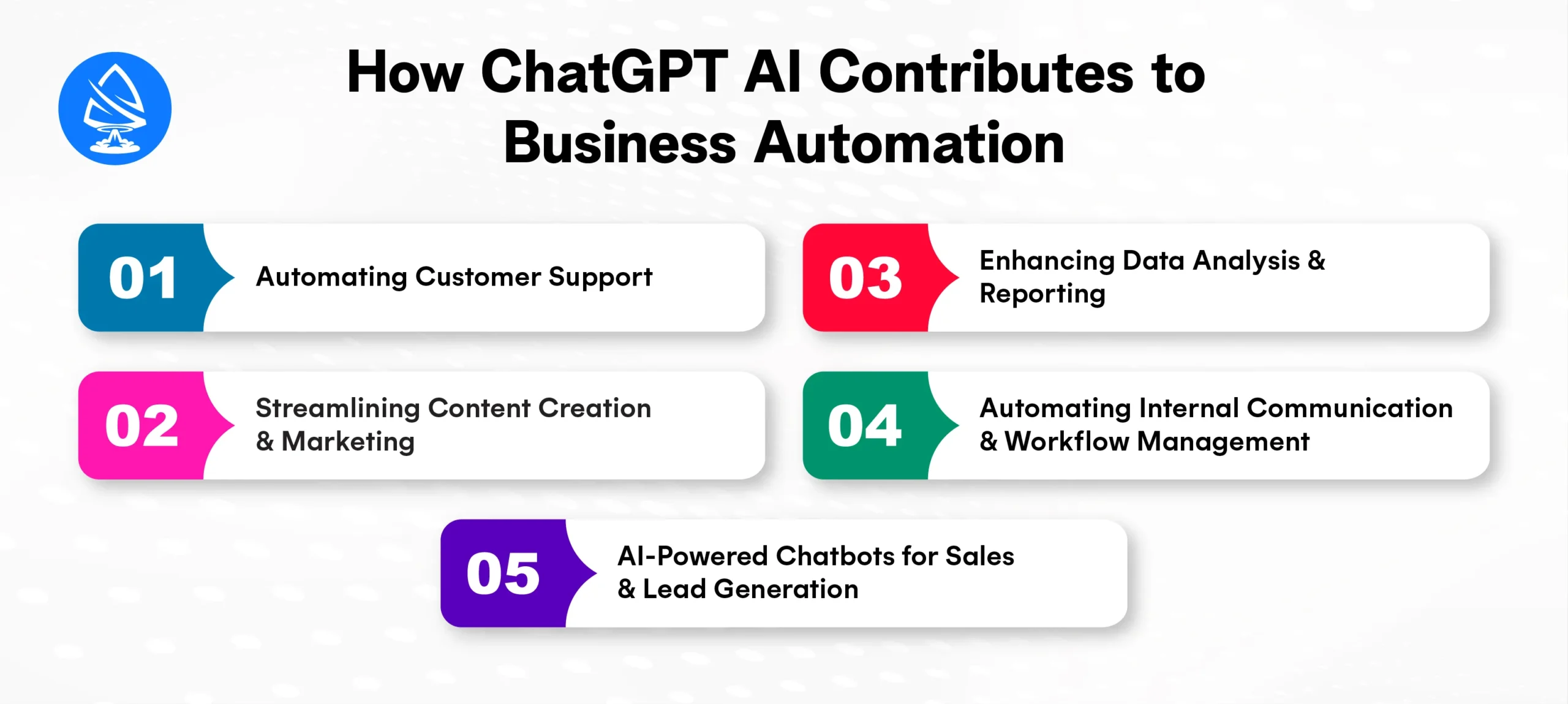
One of the most significant areas where ChatGPT AI is making an impact is in customer support automation.
Another area where ChatGPT AI excels in business automation is content creation. Businesses constantly need fresh, high-quality content for websites, blogs, marketing campaigns, social media, and more. ChatGPT AI can assist in generating this content quickly and efficiently, automating what would otherwise be a time-consuming task.
ChatGPT AI can also assist in automating data analysis and report generation.
Internal communication and workflow management are essential to smooth business operations, but they often involve repetitive administrative tasks.
Example: HR departments use ChatGPT AI to automatically schedule interviews, send onboarding materials, and answer employee queries about company policies.
ChatGPT AI is also enhancing sales automation by serving as a powerful tool for lead generation and qualification.
The integration of ChatGPT AI into business automation processes provides several key benefits:
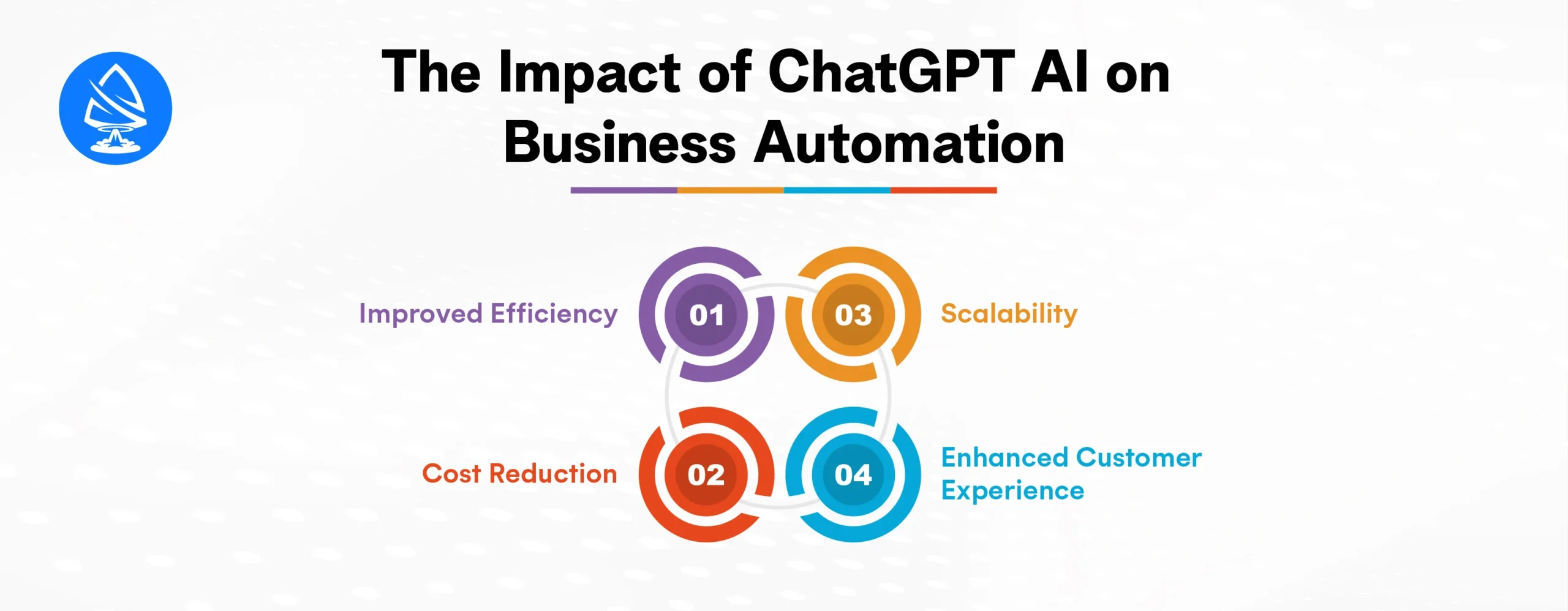
By automating repetitive tasks, ChatGPT AI allows businesses to save time and resources.
It can also help reduce operational overhead by streamlining workflows and improving overall productivity.
With ChatGPT AI, businesses can handle a larger volume of interactions without having to scale their workforce accordingly.
By providing real-time, personalized responses and immediate assistance, ChatGPT AI enhances the customer experience.
ChatGPT is transforming a wide range of industries by making complex tasks more efficient, improving communication, and driving automation. From healthcare to finance, ChatGPT AI has the potential to revolutionize how we work, interact, and solve problems.
Example: AI chatgpt is used in healthcare chatbots to assist patients with common queries about their conditions, helping healthcare providers offer better support.
The future of ChatGPT AI is incredibly promising. As technology evolves, ChatGPT AI will play a central role in automation and human-machine interaction. Built on NLP, ChatGPT is powerful today with vast future potential across industries.
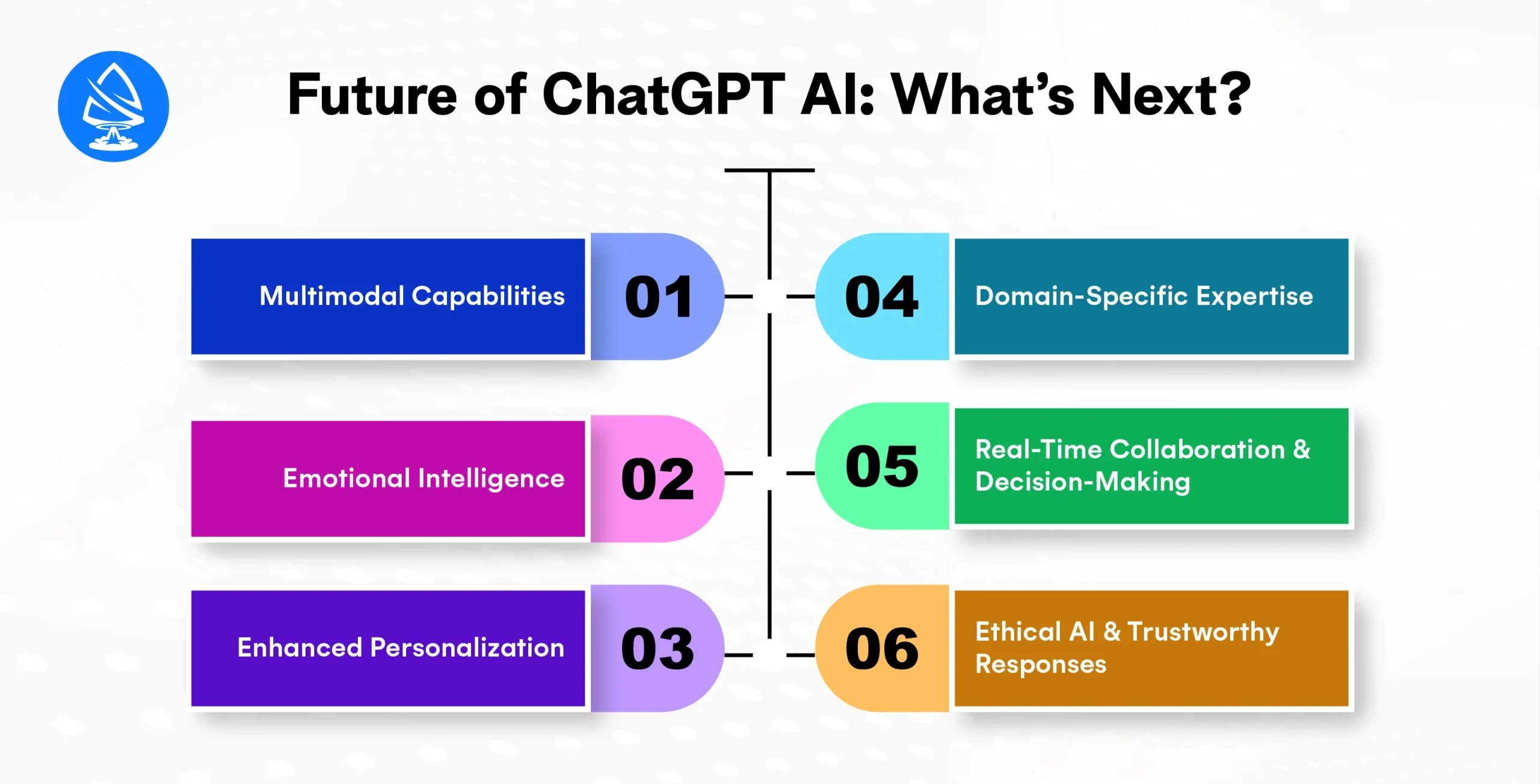
One of the most anticipated advancements for ChatGPT AI is its move toward multimodal capabilities.
Currently, ChatGPT AI is capable of generating contextually relevant text but has limited capacity for recognizing and responding to emotions.
The future of ChatGPT AI will see it becoming even more personalized.
In the future, ChatGPT AI will expand its capabilities to provide more specialized, domain-specific expertise.
Another exciting area for the future of ChatGPT AI is its potential to assist in real-time collaboration and decision-making.
As ChatGPT AI evolves, developers will focus more on ethical and trustworthy responses. AI ethics is increasingly important in sectors like healthcare, finance, and law.
ChatGPT AI is not just a technological marvel; it’s a game-changer in how we interact with machines, process information, and solve complex problems. By unlocking the power of ChatGPT, businesses can improve customer experiences, streamline operations, and enhance productivity.
As artificial intelligence advances, ChatGPT AI will unlock new possibilities for businesses and individuals. Partnering with an AI development company ensures tailored ChatGPT solutions for specific operational needs.
1. What is ChatGPT?
ChatGPT is an AI language model developed by OpenAI that generates human-like text based on input, making it ideal for customer support, content creation, and more.
2. How does ChatGPT work?
ChatGPT uses deep learning techniques, particularly the transformer architecture, to process and generate text based on large-scale datasets.
3. Can I use ChatGPT for free?
Yes, there are free versions of ChatGPT artificial intelligence available for personal and business use, offering a limited number of interactions per day.
4. What industries can benefit from ChatGPT?
Industries such as healthcare, finance, customer service, and entertainment can all benefit from ChatGPT artificial intelligence for improving communication and automating tasks.
5. Is ChatGPT good for content creation?
Yes, ChatGPT is widely used for generating articles, blog posts, product descriptions, and social media content.
6. How does ChatGPT improve customer support?
ChatGPT artificial intelligence provides 24/7 customer support by answering common questions, resolving issues, and offering personalized recommendations.
7. Can ChatGPT understand multiple languages?
Yes, ChatGPT is trained on multilingual data, enabling it to understand and generate text in multiple languages.

Artoon Solutions
Artoon Solutions is a technology company that specializes in providing a wide range of IT services, including web and mobile app development, game development, and web application development. They offer custom software solutions to clients across various industries and are known for their expertise in technologies such as React.js, Angular, Node.js, and others. The company focuses on delivering high-quality, innovative solutions tailored to meet the specific needs of their clients.
 For business inquiries only