- HR:+91-879-9184-787
- Sales:+91-908-163-7774


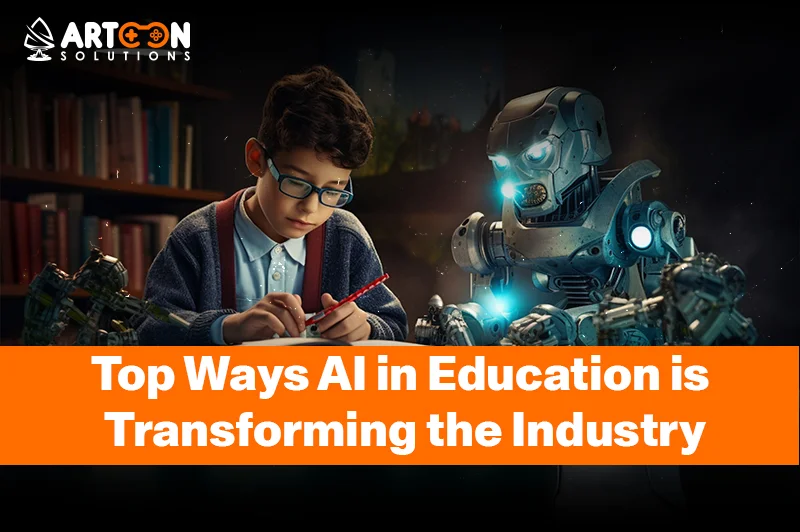
Artificial Intelligence (AI in Education) is rapidly changing the landscape of learning and teaching. AI in education is transforming classrooms with tools that support both students and educators.
These technologies create smarter, interactive learning environments tailored to individual needs. This article explores why educators, students, and institutions are adopting AI in education.
AI’s role in education includes personalized learning, automation, and training future data scientists. Free and online AI courses are reshaping education for modern learners. As an artificial intelligence app development company, we are at the forefront of integrating AI tools to enhance learning. Let’s dive into the key ways AI in schools and AI for learning are reshaping the educational experience.
Personalized learning is one of the most powerful ways AI in education is transforming traditional classroom settings. Traditionally, education systems followed a one-size-fits-all approach, where all students were taught the same material at the same pace. However, AI in education has unlocked the ability to tailor learning experiences to the needs, strengths, and weaknesses of individual students, resulting in more effective and engaging learning outcomes.
Let’s explore how AI is enabling personalized learning in education and the profound benefits it brings to students, teachers, and educational institutions.
Personalized learning with AI analyzes student data to guide content, pace, and instructional style.
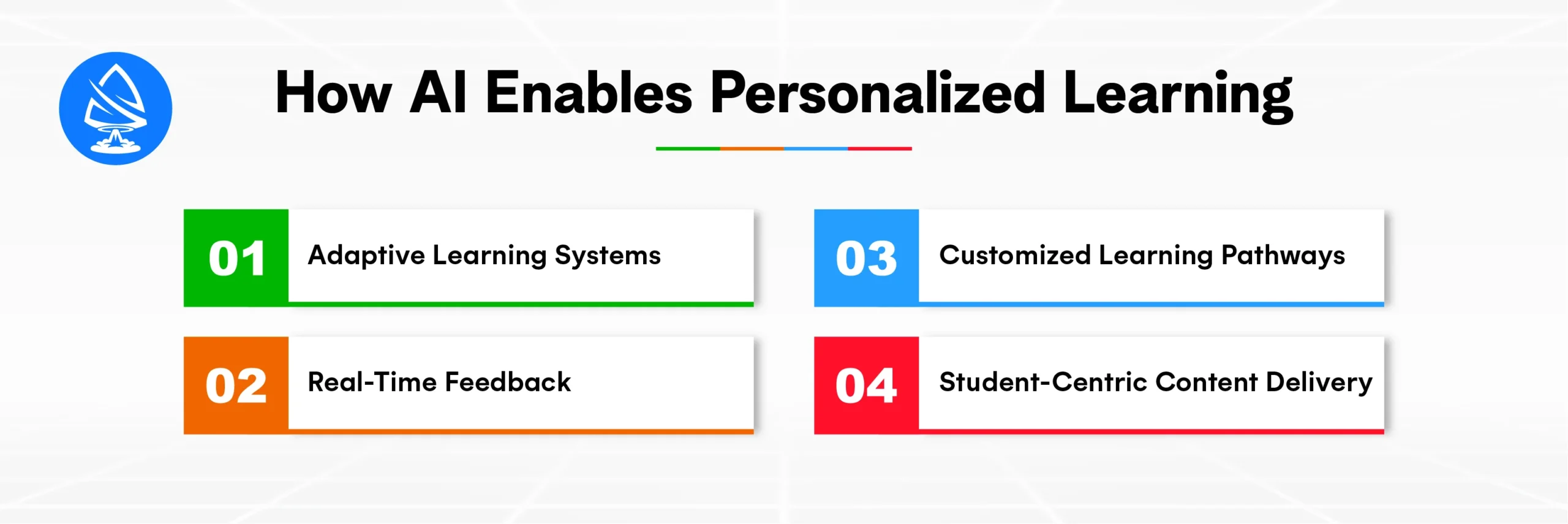
AI-powered adaptive learning systems dynamically adjust the learning path for each student based on their progress. When a student encounters difficulty with a particular topic, the system provides additional resources or alternative explanations to help them master the concept.
One of the most significant benefits of AI in personalized learning is its ability to provide real-time feedback. Instead of waiting for a teacher to grade assignments or offer corrections, students can receive immediate feedback on their work, helping them to understand mistakes and improve before they move on to new material.
AI systems can create customized learning pathways based on each student’s individual needs, learning style, and pace. This means that no two students have the same educational experience, and they are not bound by the constraints of a fixed curriculum.
AI is transforming how content is delivered in the classroom. Instead of relying on a standard curriculum for every student, AI-powered platforms offer content that is best suited to each learner’s cognitive abilities, engagement level, and subject area interests.
You may also want to know about ChatGPT Artificial Intelligence
Personalized learning powered by AI offers multiple benefits for students, educators, and educational institutions. Let’s explore some of the key advantages:
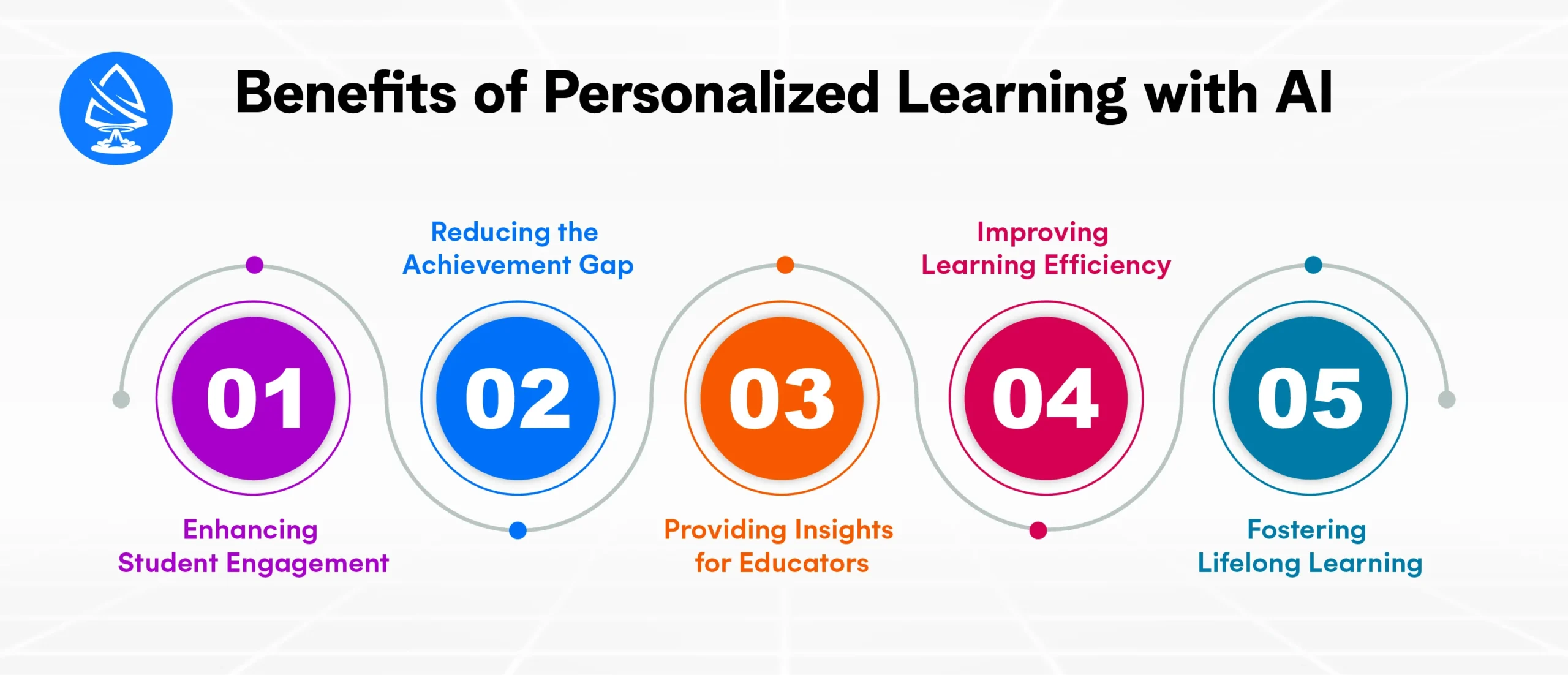
Students are more likely to stay engaged and motivated when learning content is tailored to their needs. AI for learning ensures that students receive relevant, appropriately challenging material, which prevents boredom from repetitive tasks and frustration from tasks that are too difficult.
By adapting content to each student’s learning style and pace, AI in schools helps reduce the achievement gap between students of varying abilities. Struggling students receive extra support, while advanced learners are provided with enrichment activities that challenge them to go deeper.
AI in education offers teachers valuable insights into student performance. AI-powered tools track student progress over time, providing teachers with detailed reports on each student’s strengths, weaknesses, and learning patterns.
Personalized learning powered by AI promotes more efficient learning, as students spend less time on topics they have already mastered and more time on areas where they need improvement. This leads to faster learning progress and a more efficient use of classroom time.
With AI tools offering flexible, personalized learning experiences, students are encouraged to become self-directed learners. By fostering curiosity and providing resources that cater to their interests, AI for students helps instill a lifelong love of learning.
Artificial Intelligence (AI) is increasingly being integrated into the field of education to assist educators in streamlining their administrative tasks. Traditionally, teachers and school administrators have been burdened with a significant amount of time-consuming tasks that take away from their core responsibilities—teaching and interacting with students. These tasks include grading papers, tracking attendance, managing schedules, preparing reports, and more.
By incorporating AI for educators, many of these administrative tasks can be automated, reducing the administrative load on teachers and allowing them to focus on what truly matters—enhancing the learning experience for students. The integration of AI in education systems is transforming how administrative operations are managed and is enabling educators to operate more efficiently, with fewer errors and less time spent on repetitive tasks.
Let’s explore in detail how AI for educators is reshaping administrative tasks and improving productivity within schools and other educational settings.
AI technology is making a significant impact in education by automating a range of administrative tasks. By incorporating machine learning and natural language processing (NLP), AI systems are able to process data, make predictions, and automate decisions that were previously time-consuming for educators. Let’s break down some of the key administrative tasks that AI is streamlining:
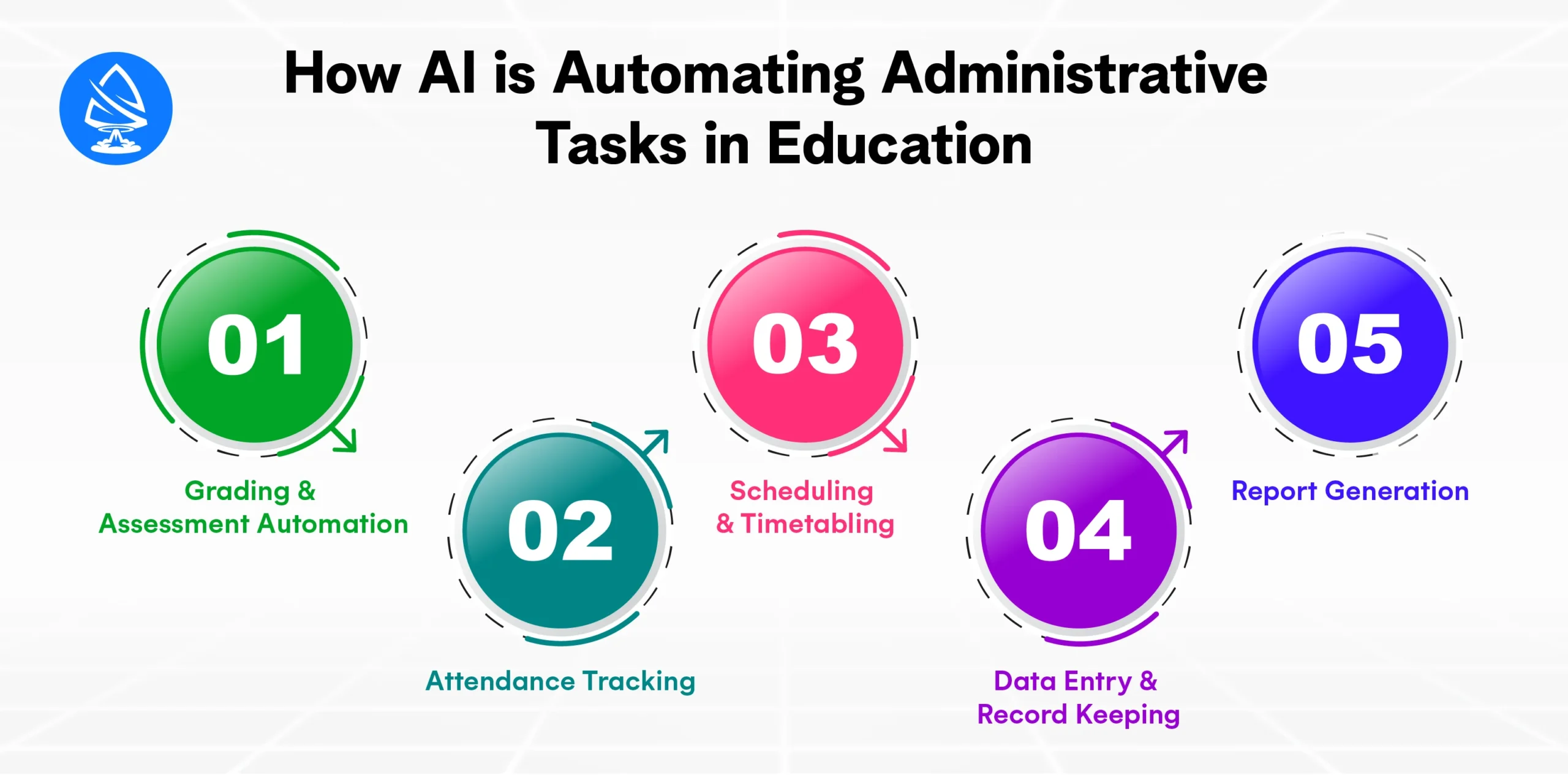
Grading assignments, quizzes, and exams is one of the most time-consuming aspects of teaching. With AI for educators, this process can be automated, providing instant feedback to students and allowing teachers to focus on more meaningful tasks.
Example: AI-based platforms like Gradescope use machine learning to grade assignments and exams, saving teachers valuable time while maintaining accuracy and fairness in grading.
Manual attendance tracking is another administrative task that can be time-consuming and prone to errors. AI for educators can automate this process using facial recognition, RFID technology, or biometric sensors.
Example: In AI-assisted classrooms, facial recognition technology can automatically mark attendance as students enter the classroom, making the process seamless and error-free.
Managing school schedules, including class timetables, teacher assignments, and room bookings, is a complex and often cumbersome task. AI for educators can help streamline scheduling and ensure efficient use of resources.
Example: Schools and universities use AI-powered tools to schedule classes, optimize room allocations, and even adjust timetables in real-time when unforeseen changes, such as teacher absences, occur.
Educators spend a considerable amount of time entering and updating student data, including grades, attendance records, and personal information. AI for educators can automate this tedious process, reducing the chances of human error and saving valuable time.
Example: AI-driven Learning Management Systems (LMS) like Moodle or Canvas automatically update records based on student interactions, assessments, and performance, eliminating the need for manual data input.
Creating reports on student performance, attendance, and other metrics can be a time-consuming task for teachers and administrators. AI for educators can automate the creation of detailed, accurate reports based on real-time data.
Example: Platforms like PowerSchool use AI to generate detailed reports on student progress, offering insights into areas of improvement and helping educators and parents stay informed.
You may also want to know about AI in Asset Management
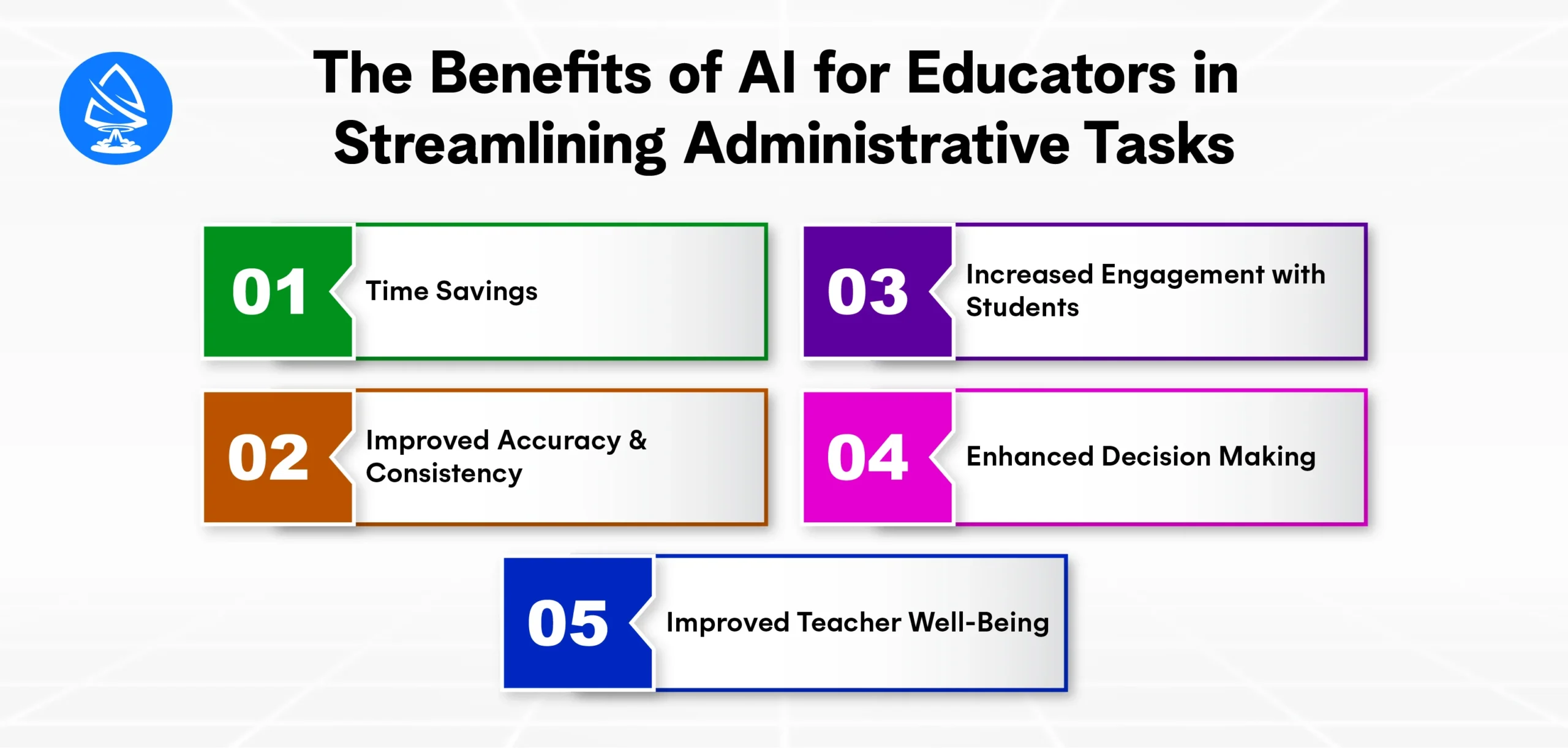
The most significant advantage of using AI for administrative tasks is the time saved. Automating repetitive tasks like grading, scheduling, and data entry gives educators more time to focus on teaching, lesson planning, and engaging with students.
AI systems are designed to minimize human error. By automating tasks like grading and data entry, AI ensures greater accuracy and consistency, leading to more reliable results.
With AI handling administrative tasks, teachers can spend more time engaging with students in meaningful ways. Instead of getting bogged down in paperwork, teachers can offer personalized feedback, have one-on-one conversations, and create interactive learning experiences.
AI can provide educators and administrators with data-driven insights that inform decision-making. By analyzing patterns in student performance, attendance, and other key metrics, AI can help identify areas that need improvement or highlight opportunities for targeted interventions.
Administrative tasks are a significant source of stress for educators, contributing to burnout and job dissatisfaction. By automating these tasks, AI can reduce teacher workload and stress, allowing them to focus more on their passion for teaching.
The integration of AI in schools is transforming the traditional classroom environment. AI-powered tools and systems are enhancing classroom interactions, making learning more interactive, personalized, and engaging for both students and teachers. By using AI to create dynamic learning experiences, schools can foster more meaningful connections between students and educators, optimize teaching methods, and enable real-time learning assessments.
Gone are the days when learning was limited to traditional textbooks and one-size-fits-all teaching methods. With AI in education, educators can now offer a more customized, engaging, and efficient learning experience for their students, helping them stay connected, motivated, and better equipped to succeed.
Let’s explore in more detail how AI in schools is improving classroom interactions, enabling a more personalized and interactive educational experience for students and teachers alike.
The role of AI in schools goes beyond just automating administrative tasks. It is actively changing the way students engage with lessons, collaborate with peers, and communicate with their teachers. Here are some ways AI is transforming classroom interactions:
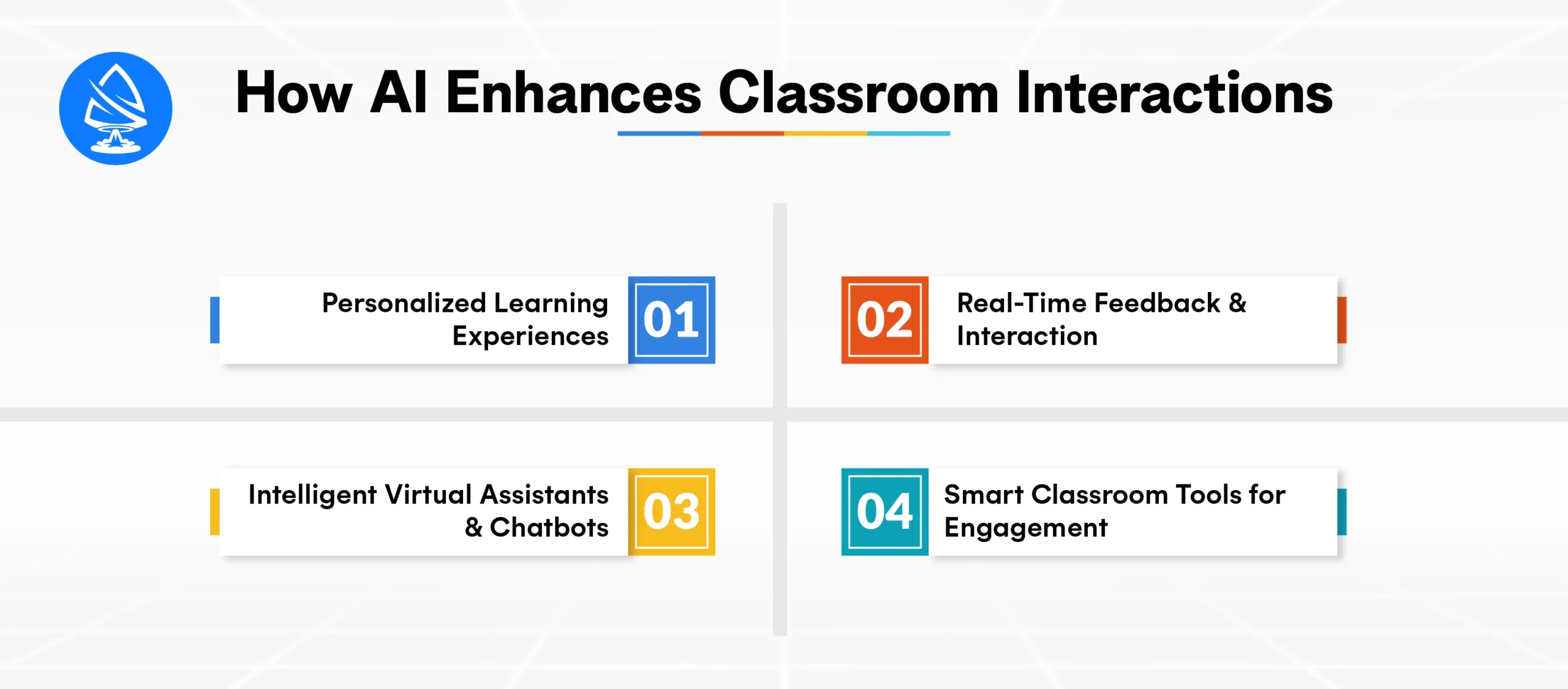
AI in schools allows educators to offer personalized learning experiences tailored to the individual needs of each student. Instead of a one-size-fits-all approach, AI-driven tools adapt to the learning pace and style of each student, helping them engage with the material in ways that best suit their strengths and areas for improvement.
Example: AI-powered platforms like DreamBox in K-12 education offer personalized math lessons that adjust in difficulty based on how well a student performs in real time.
One of the biggest benefits of AI in schools is the ability to provide real-time feedback. AI-driven tools can instantly assess student work, providing immediate insights that help students improve and stay engaged.
Example: In a language learning classroom, an AI language tutor can correct pronunciation and grammar mistakes in real time, allowing students to practice and improve their skills continually.
AI-powered virtual assistants and chatbots are enhancing the interaction between students and teachers. These intelligent systems can act as a 24/7 resource for answering student queries, providing educational support, and facilitating communication between students and teachers.
Example: AI chatbots integrated into school learning management systems (LMS) can answer questions about homework assignments, provide clarification on lessons, and offer suggestions for additional resources.
AI-powered tools are making classroom interactions more interactive and engaging. Whether it’s through gamification, simulations, or interactive quizzes, AI in the classroom fosters an environment where students are more active participants in their learning journey.
Example: AI-powered tools like Kahoot! make learning fun and interactive by enabling students to participate in real-time quizzes and games, which increases student engagement and retention of material.
Beyond day-to-day classroom interactions, AI in schools has broader implications for enhancing educational outcomes, improving classroom management, and supporting students and teachers in innovative ways.
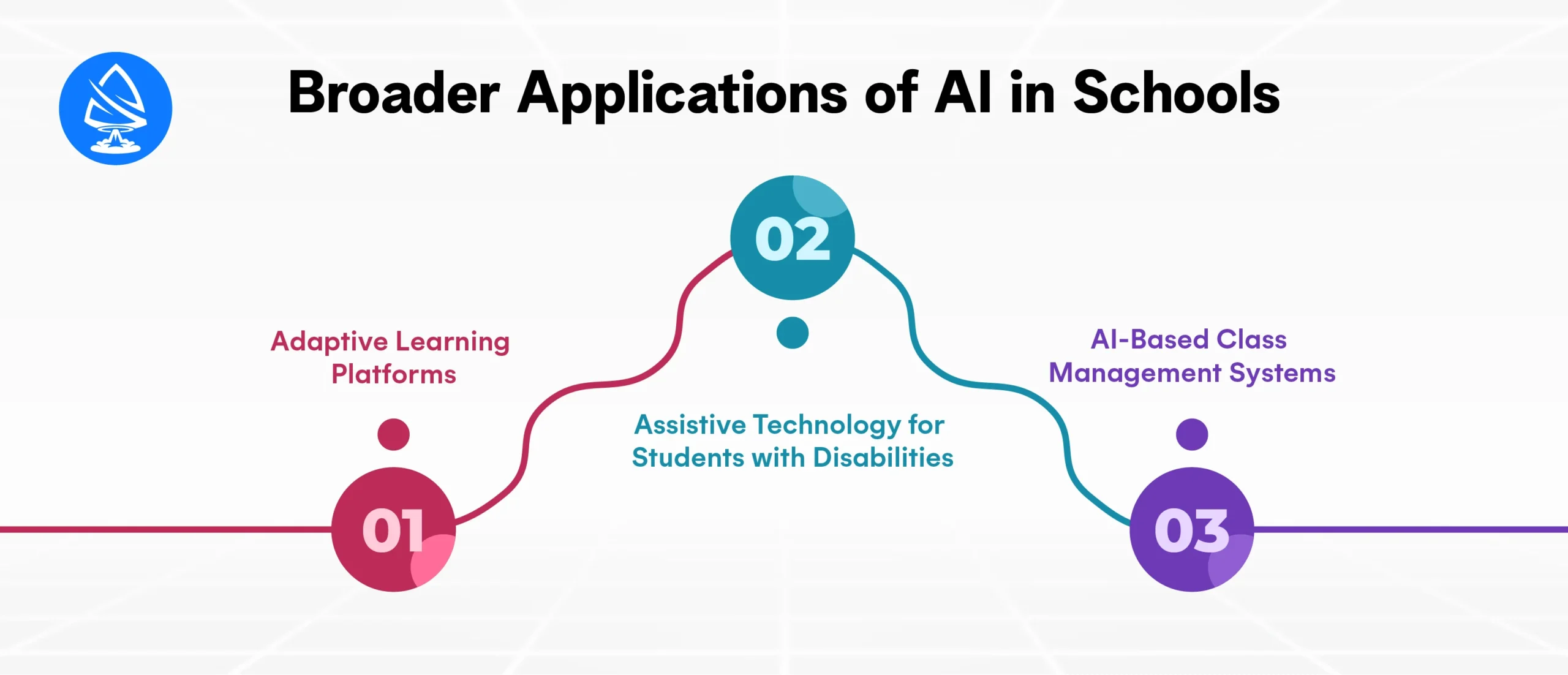
AI-driven adaptive learning platforms deliver customized content based on individual student needs. They monitor progress, identify weaknesses, and provide real-time support at each student’s pace.
Example: AI-based learning platforms like Socrative help teachers create personalized quizzes that adapt to the students’ performance, ensuring optimal learning experiences for each student.
AI in schools is also playing a critical role in improving accessibility for students with disabilities. AI-powered assistive technology can help students with visual or hearing impairments, learning disabilities, and other challenges access and engage with the educational content.
Example: AI-powered tools like Read&Write provide text-to-speech features and assistive technology to help students with learning difficulties such as dyslexia.
Classroom management can be challenging, especially in large classrooms with many students. AI for classroom management is helping educators by tracking student behavior, attendance, and engagement levels, as well as providing insights into how well students are responding to specific teaching methods.
Example: AI-powered classroom management tools like Classcraft allow teachers to track student participation, assign rewards for good behavior, and ensure that students remain engaged throughout lessons.
The integration of AI in schools is still in its early stages, but the growth potential is immense. As AI technology continues to evolve, its role in the classroom will expand to offer even more sophisticated and innovative solutions for enhancing classroom interactions.
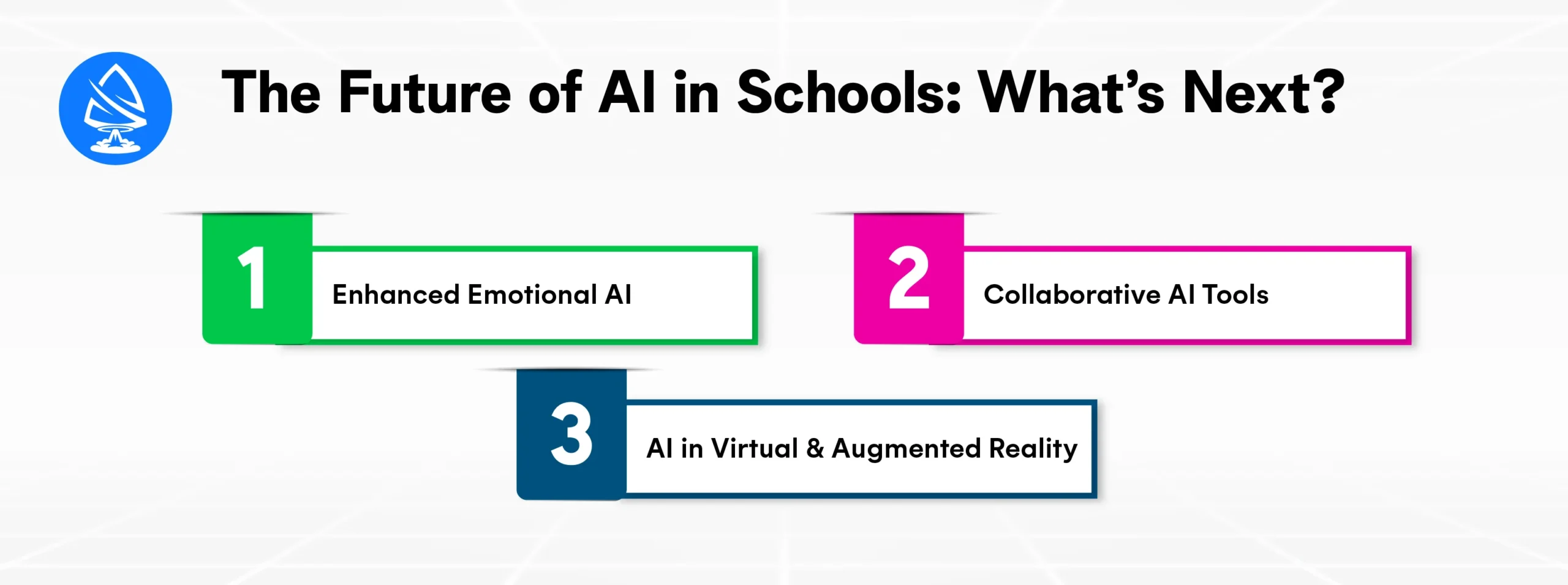
In the future, AI in schools may integrate emotional AI to detect student emotions. These systems can adjust responses to support students facing emotional challenges.
AI will become even more collaborative, helping students and teachers work together in new ways. Imagine an AI-powered assistant that helps students brainstorm ideas, solve problems in groups, or even analyze complex datasets. These tools will create more interactive and collaborative classroom settings, fostering better teamwork and creativity.
As AI is combined with virtual reality (VR) and augmented reality (AR), students will be able to experience fully immersive learning environments. They could explore historical events, conduct virtual science experiments, or practice real-life scenarios in a safe, controlled environment.
As AI integrates into education, teachers must gain skills to use these tools effectively. AI training courses prepare educators for future teaching demands. They enhance learning, automate tasks, and support personalized student education.
AI technologies can greatly improve education when educators are properly trained. AI training courses help teachers use AI confidently in curricula and daily teaching.
Let’s explore how AI training courses for educators are helping reshape the future of education and why they are a crucial resource for teachers looking to embrace AI in their classrooms.
Educators play a vital role in shaping the future of students, and with AI increasingly being integrated into the education system, teachers must be prepared to navigate this new landscape. Here are some key reasons why AI training is essential for teachers:
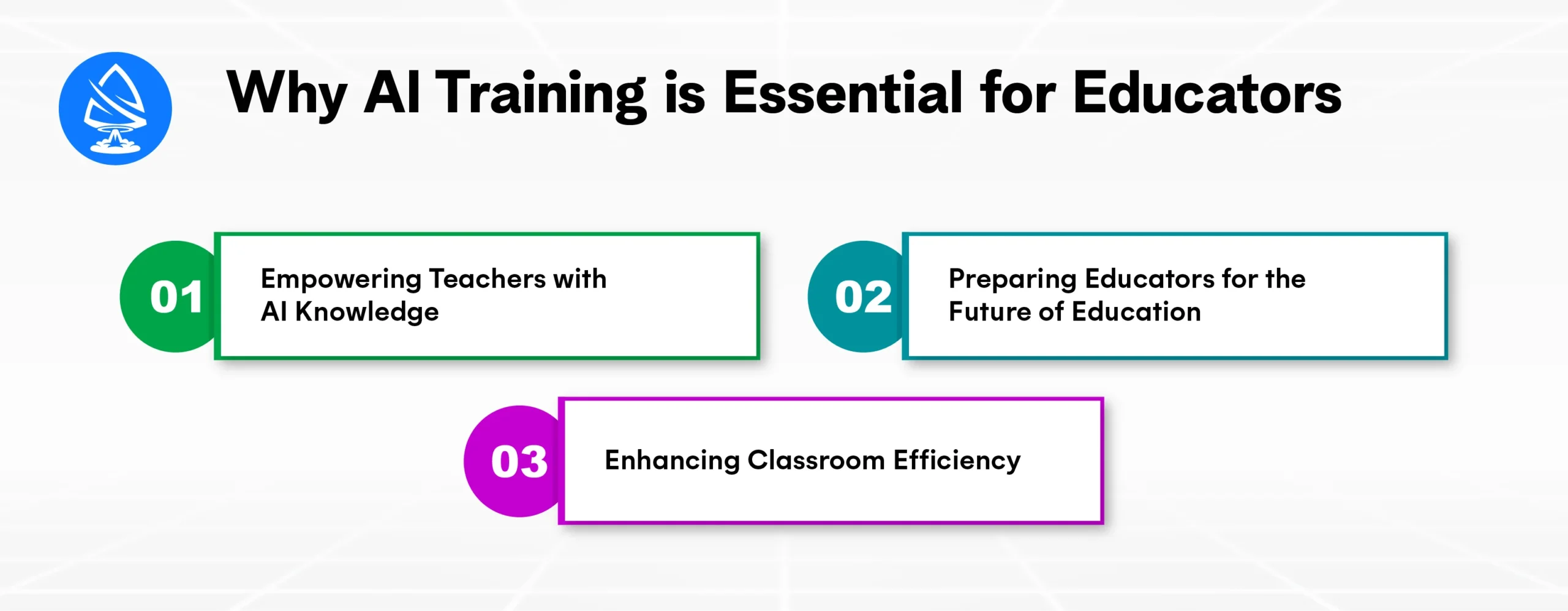
AI is a complex and multifaceted technology. For educators to fully understand its applications and potential, they need structured training. AI training courses provide teachers with the foundational knowledge of AI, machine learning, and how these technologies can be applied in educational settings.
AI is not just a trend; it is the future of education. By taking AI training courses, educators can prepare for the classroom of tomorrow. AI is already being used in schools to provide personalized learning, automate administrative tasks, and assess student performance. Teachers who are trained in AI will be better positioned to harness these tools and adapt to changing education standards.
AI can automate time-consuming administrative tasks like grading, attendance, and report generation, allowing educators to spend more time teaching and less time on administrative duties. AI training courses teach teachers how to use AI-powered platforms to streamline classroom management.
AI training courses for teachers cover topics from basic concepts to advanced educational applications. These courses suit beginners and equip teachers to use AI effectively in classrooms.
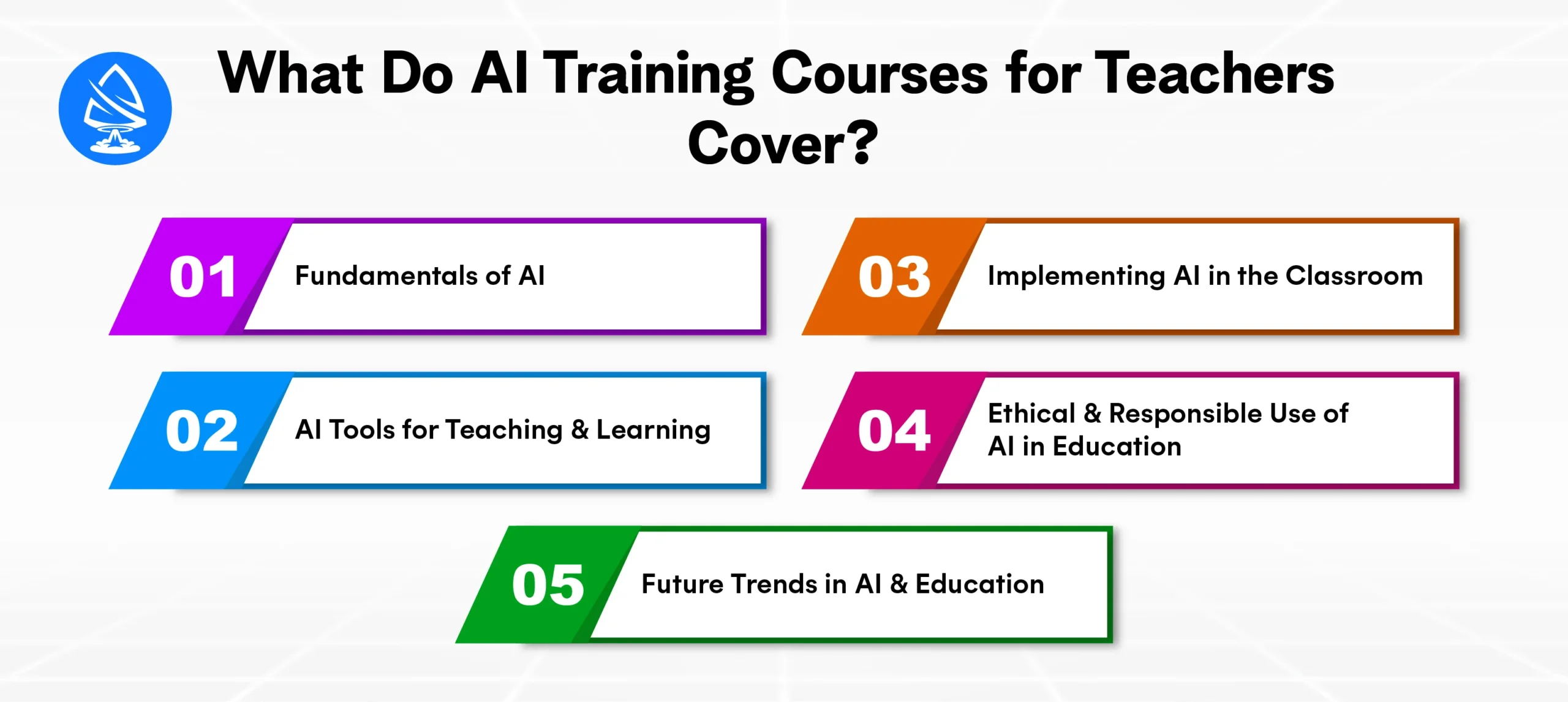
Training courses start with the basics of AI, providing teachers with a solid foundation in the technology. This includes understanding how AI works, its capabilities, and its limitations.
AI offers a variety of tools that can be used to enhance teaching and learning. Artificial intelligence training for educators covers how to use these tools effectively, from personalized learning platforms to automated grading systems.
Once teachers understand the basics of AI, the next step is learning how to integrate AI into their classroom environment. AI training courses provide guidance on how to use AI tools to support personalized learning, track student progress, and automate administrative tasks.
As with any technology, there are ethical considerations when using AI in education. AI training for educators emphasizes the importance of understanding AI’s limitations and ethical concerns, such as data privacy, bias, and fairness.
AI is an ever-evolving technology, and AI training courses for educators also cover emerging trends and future developments in AI and how they will continue to shape education.
AI training courses provide numerous benefits for teachers and the education system as a whole. Here are some of the key advantages:
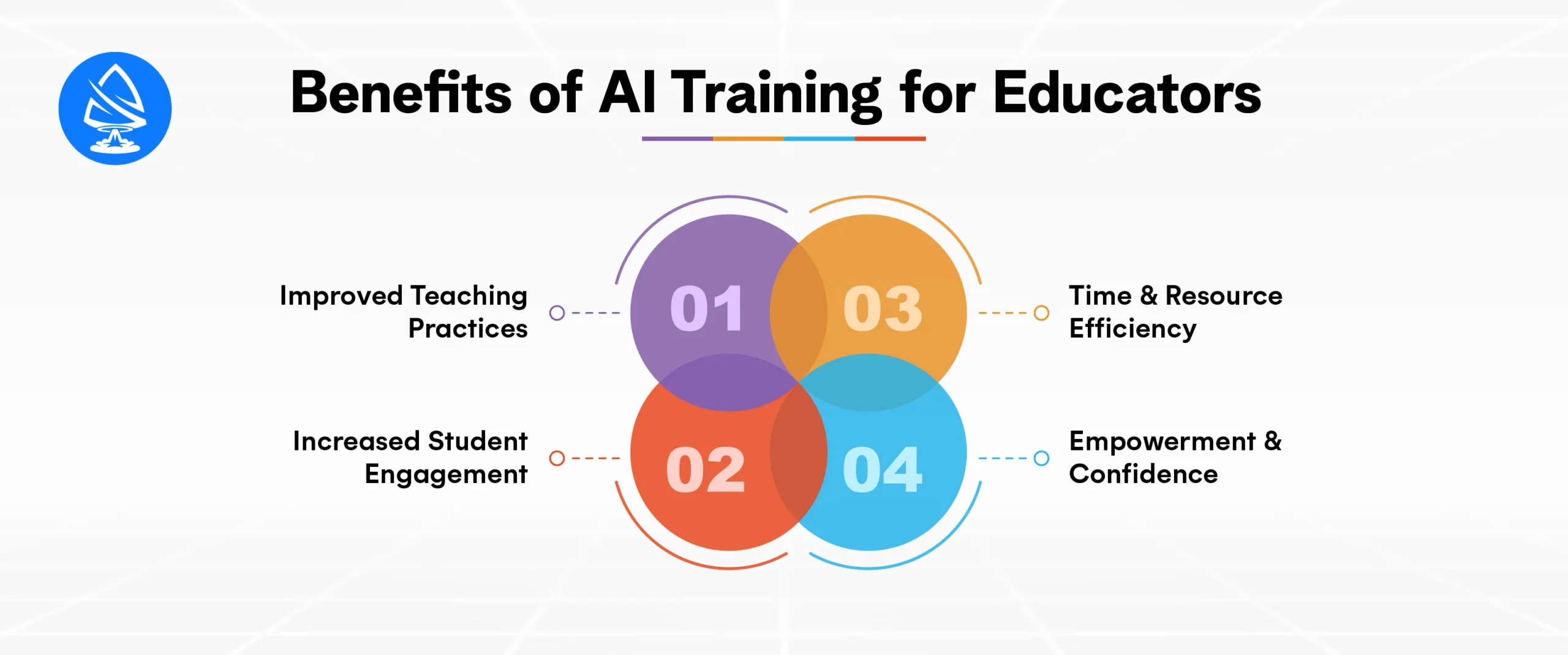
AI can help teachers understand their students better by analyzing performance data and providing insights into each student’s learning style and progress. AI training for educators ensures teachers can use these insights to adapt their teaching methods to meet individual student needs.
AI offers dynamic, interactive tools that can engage students in ways traditional methods cannot. By learning how to use AI tools like educational games, interactive quizzes, and AI-powered tutors, teachers can make learning more engaging for students.
AI can handle routine administrative tasks like grading, scheduling, and data entry, freeing up teachers’ time to focus on teaching and interacting with students. AI training courses help educators understand how to maximize these tools to work more efficiently.
By gaining knowledge of AI and its capabilities, teachers become empowered to adopt new teaching methods and tools confidently. AI training courses provide teachers with the skills and support they need to integrate AI effectively into their classrooms.
Artificial Intelligence (AI) is playing a crucial role in making education more accessible to a diverse range of students, including those with disabilities, language barriers, and varying learning abilities. By leveraging AI, education systems can break down traditional barriers to learning, offering more inclusive, flexible, and personalized learning experiences.
AI technologies provide multiple ways to support accessibility, ensuring that students, regardless of their abilities, backgrounds, or learning challenges, can engage with educational materials in meaningful ways. Here are some of the key methods through which AI in education promotes accessibility:
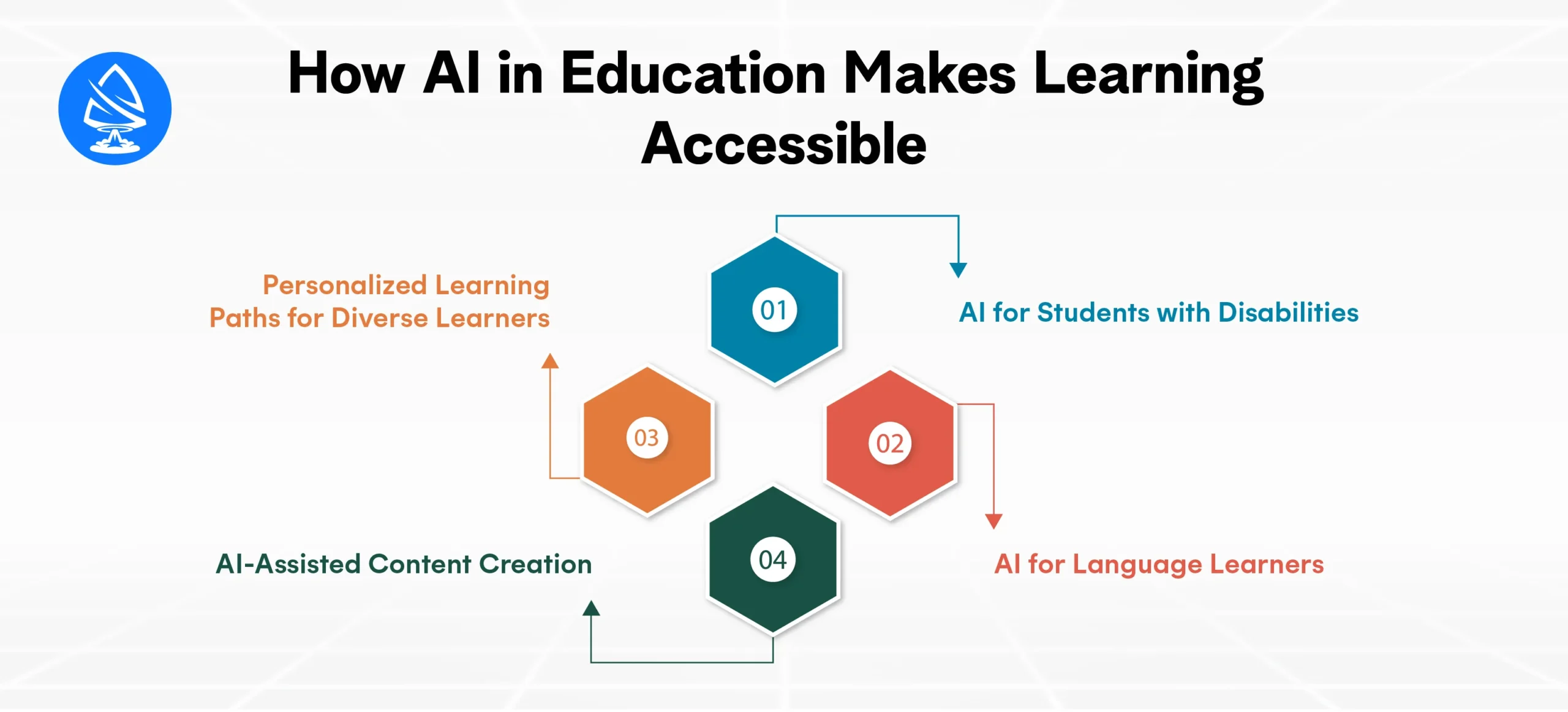
Students with disabilities often face challenges in accessing traditional learning materials, but AI-powered tools are helping bridge the gap.
Language barriers are a significant hurdle for non-native speakers in educational settings.
AI allows for highly personalized learning experiences tailored to the unique needs of each student. This ensures that learners can progress at their own pace, receive the support they need, and engage with content in a way that suits their learning style.
AI is making it easier to create accessible educational content by automating the process of adapting materials for diverse learners. Whether it’s creating audio versions of textbooks or offering visual support for content, AI tools can help ensure that learning materials are accessible to all students.
The benefits of AI for accessibility in education are vast, not only improving how students engage with content but also creating a more inclusive, equitable, and personalized learning experience. Let’s look at some of the key advantages:
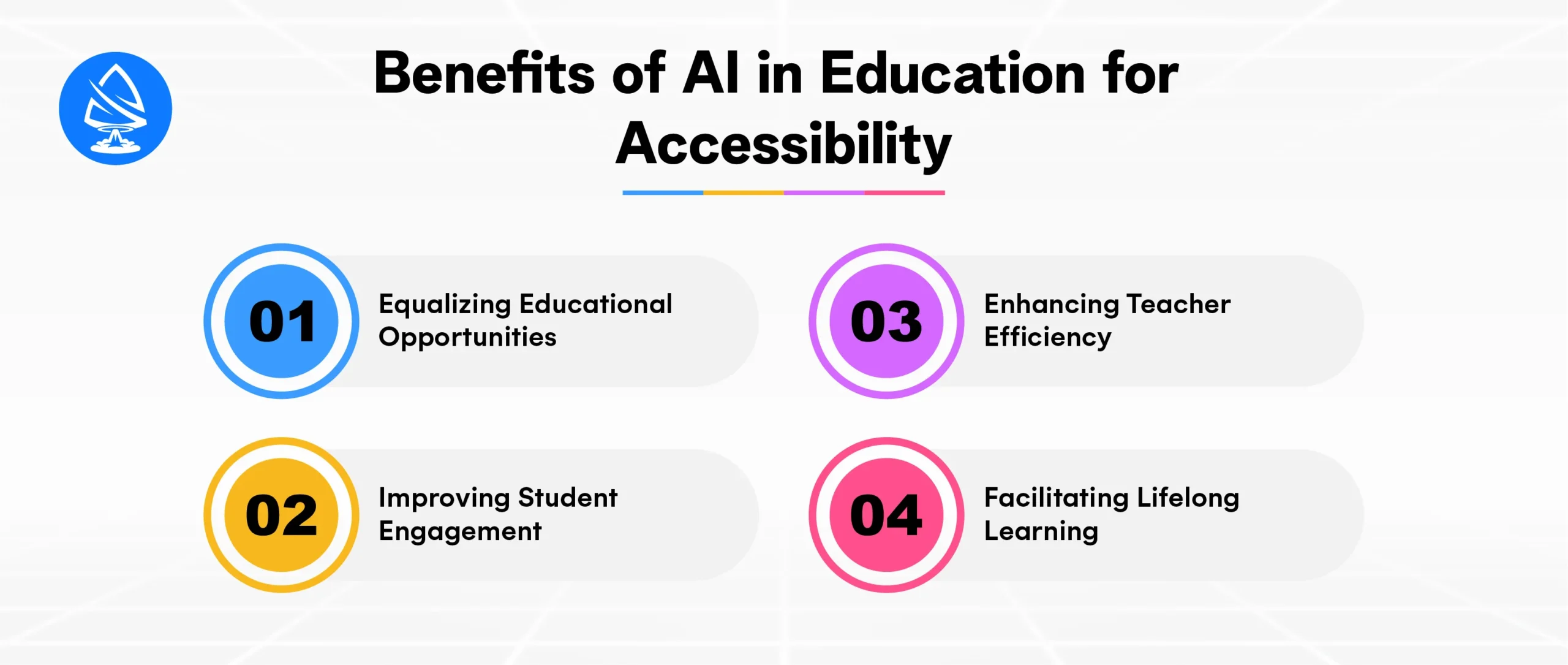
AI helps level the playing field for students with disabilities or those who face language barriers. By providing customized learning experiences and removing traditional barriers, AI ensures that all students have equal access to quality education.
Students are more likely to engage with content when it is presented in a format they can understand. By offering content in multiple formats (text, audio, video), AI increases student engagement, making learning more interactive and effective.
AI tools can automate administrative tasks and offer data-driven insights into student performance.
AI-powered learning tools are not just beneficial for traditional school-age students; they also support lifelong learning for individuals of all ages. With AI, learners can access resources and educational materials anytime, anywhere, fostering continuous learning and self-improvement.
As artificial intelligence (AI) continues to evolve, it is playing a pivotal role in shaping the future of education. Today’s students will enter a world increasingly dominated by AI, automation, and emerging technologies. Education systems must teach core subjects while preparing students for an AI-driven future. AI in education builds critical skills, enhances learning, and encourages engagement with future technologies.
Educators use AI-powered curricula and learning environments to prepare students for technology-focused careers. These careers include data science, machine learning, robotics, and related fields. This section explores how AI education prepares students for AI-driven life and work.
AI in education is not just about teaching students how to use AI; it’s about equipping them with the skills to think critically, solve complex problems, and adapt to an ever-changing technological landscape. Here’s how AI in education is preparing students for the future:
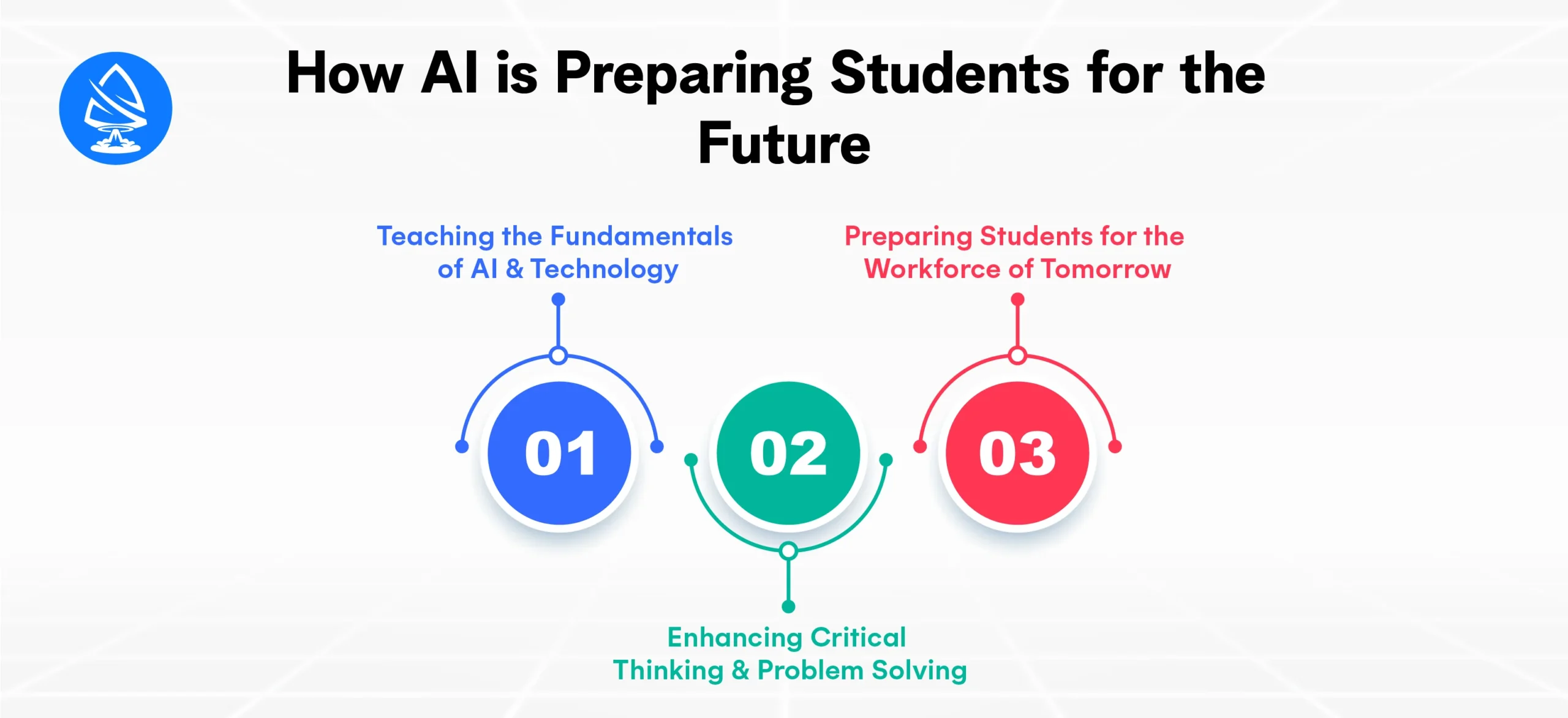
One of the primary ways AI in education prepares students for the future is by introducing them to the concepts and fundamentals of AI, machine learning, and other related technologies. By incorporating these subjects into school curricula, students gain a solid foundation that will serve them well in the future.
AI fosters critical thinking and problem-solving skills by encouraging students to tackle real-world challenges using innovative approaches. AI technologies often present students with problems that require creative thinking and adaptability to solve.
As AI technologies evolve, so too do the job markets. By incorporating AI into the classroom, educators are preparing students for careers in these fields.
In the digital age, data has become a powerful tool for improving educational outcomes. AI in education leverages the vast amount of data generated by students’ interactions with learning platforms, assessments, and classroom activities. This data-driven approach empowers educators, administrators, and students to make informed decisions, improving the overall learning experience.
AI uses predictive analytics to forecast outcomes, recommend interventions, and personalize learning experiences.
This section explores how data-driven insights enhance student learning, teacher effectiveness, and educational planning.
AI systems in education are designed to gather, analyze, and interpret data in ways that are difficult or impossible for humans to replicate manually. Here’s how AI uses data-driven insights to improve the learning experience:
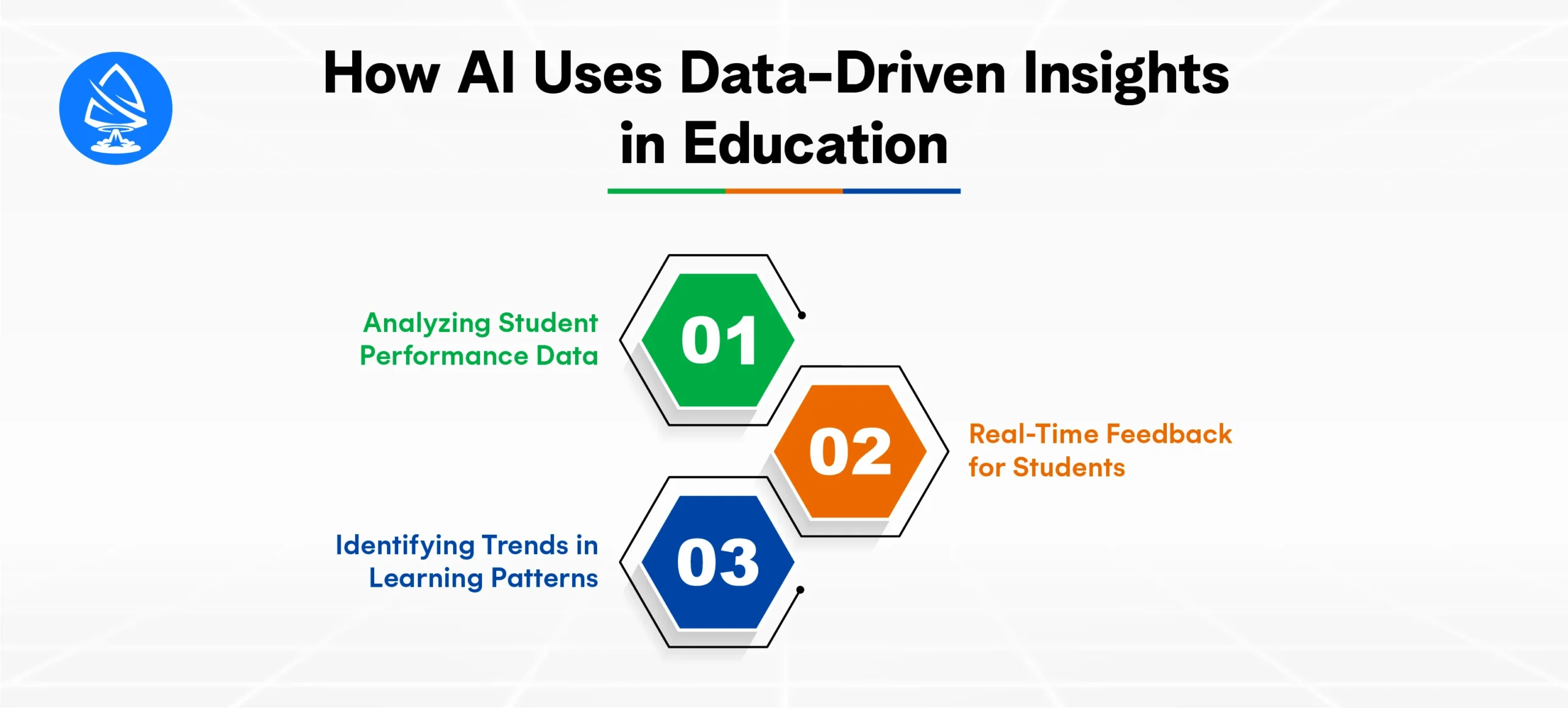
AI systems can process a large volume of student performance data, such as grades, assessments, quiz results, and even behavioral data, to provide actionable insights about how students are performing. By analyzing patterns in student responses, AI can offer teachers a deeper understanding of individual and group performance.
AI systems provide real-time feedback, helping students identify strengths and areas needing improvement. By analyzing assignments and quizzes, AI delivers instant insights for adjusting learning strategies.
AI systems can analyze data over time to identify trends in learning patterns, for example, which topics students are most likely to struggle with, common misconceptions, or which teaching methods yield the best results. These insights can help educators optimize lesson plans and make data-driven decisions.
Predictive analytics powered by AI has the potential to revolutionize how educational institutions plan, assess, and intervene in student learning. By analyzing historical data and recognizing trends, AI can predict future outcomes and provide early warnings about students who might need extra support.
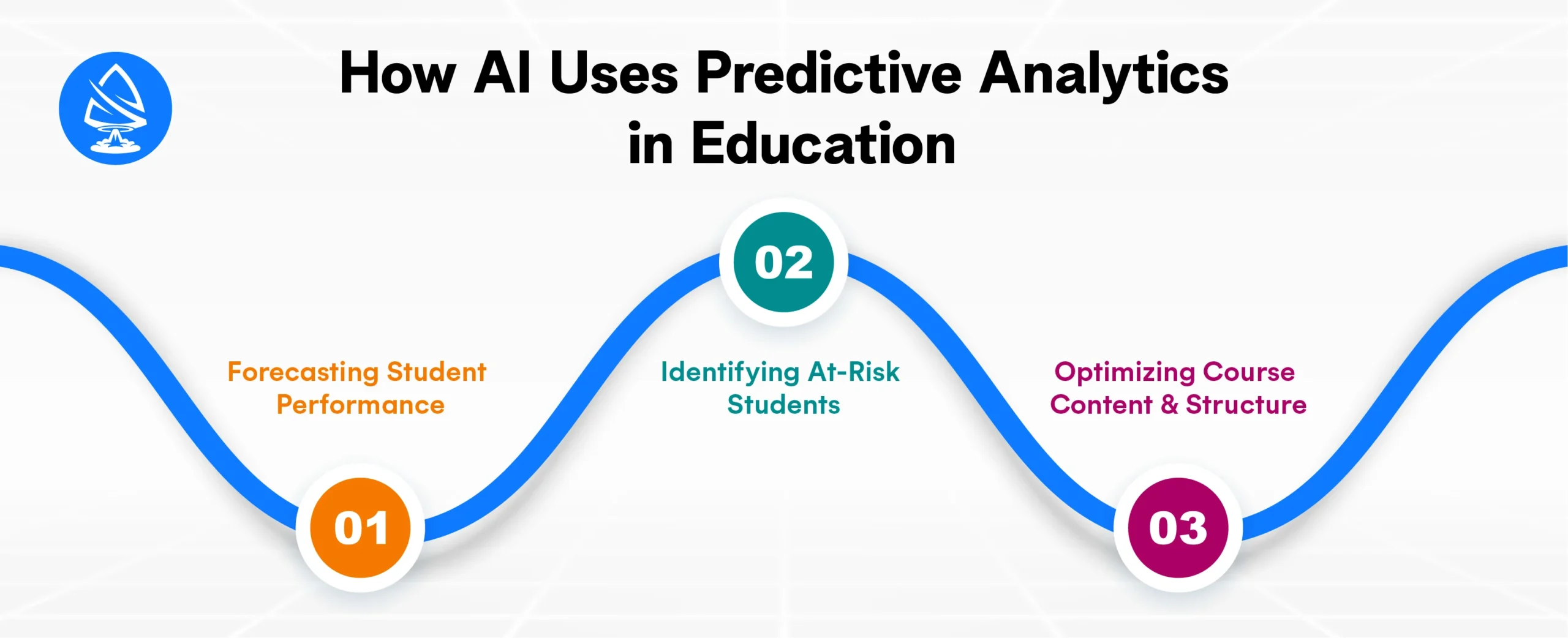
AI predictive analytics assess student success or failure using historical academic data. AI analyzes performance, engagement, and participation to predict future outcomes.
AI predicts academic performance to identify students at risk of failing or dropping out. It analyzes engagement, attendance, grades, and participation to flag students needing support.
Predictive analytics in AI also optimizes course content, delivery methods, and instructional strategies. AI analyzes student engagement and outcomes to identify the most effective learning activities.
AI in education is transforming how we teach, learn, and interact in the classroom. AI offers vast potential in education through personalized learning and AI-powered teaching tools. It automates tasks, provides real-time feedback, and supports inclusive learning environments. This enables more effective, engaging, and personalized learning experiences.
As AI evolves, its role in education will continue to expand. AI helps students and educators navigate a technology-driven world. Schools can use AI to equip students with essential future-ready skills. As an AI application developer, we create solutions that enhance learning and prepare students for the future.
1. What is AI in education?
AI in education uses artificial intelligence to enhance learning, automate tasks, and deliver personalized education.
2. How is AI used for personalized learning?
AI in education assesses student progress and adjusts learning materials to individual needs.
3. Can AI help teachers with administrative tasks?
Yes, AI automates grading, scheduling, and data analysis, allowing teachers to focus more on teaching.
4. How does AI help students with disabilities?
AI in schools provides accessibility features and customized learning materials for diverse student needs.
5. Are there free AI courses for educators?
Yes, free AI courses train educators to integrate AI into teaching and improve classroom efficiency.
6. How does AI prepare students for future careers?
Teaching AI fundamentals prepares students for technology and other STEM careers.
7. What are the benefits of AI in education?
AI in education improves learning outcomes by personalizing content, automating tasks, offering real-time feedback, and helping students with diverse learning needs.

Artoon Solutions
Artoon Solutions is a technology company that specializes in providing a wide range of IT services, including web and mobile app development, game development, and web application development. They offer custom software solutions to clients across various industries and are known for their expertise in technologies such as React.js, Angular, Node.js, and others. The company focuses on delivering high-quality, innovative solutions tailored to meet the specific needs of their clients.
 For business inquiries only